


x

 Köp tryck Beställ målning
 Skicka
 Detaljer
 Lägg till i favoriter
 Ladda ner
 Liknande objekt
 Röntgen
 Bildspel
 1991
1991 46.0 x 59.0 cm
Köp en högupplöst, förbättrad digital bild som är vida överlägsen förhandsvisningen online.
Varje fil är noggrant förberedd av våra interna specialister med hjälp av avancerade verktyg och professionell manuell retuschering. Vi säkerställer att varje bild har exceptionell skärpa, exakt färgåtergivning och fina detaljer.
Den slutgiltiga filen levereras via e-post inom 72 timmar, optimerad för omedelbar användning i professionella sammanhang, redaktionellt bruk och tryckmiljöer. Detta är samma kvalitet som används med förtroende av ledande designstudior, förlag och gallerier.
Ladda ner en högupplöst fil för personlig visning, utskrift och kreativa projekt.
När du väljer WahooArt.com får du inte bara en bild – du får ett professionellt förädlat digitalt konstverk, skapat med precision och med en garanterad tillfredsställelse. Här är allt som ingår i din beställning, automatiskt:

Din högupplösta digitala bildfil skickas till dig via e-post inom 72 timmar efter beställning – redo för omedelbar användning.

Ditt konstverk optimeras professionellt med hjälp av avancerade AI-verktyg och manuell redigering, vilket garanterar maximal detaljrikedom, skärpa och färgnoggrannhet.

Har du råkat radera eller tappa bort din fil? Ingen oro – vi skickar den kostnadsfritt till dig när som helst.

Njut av ditt konstverk omedelbart utan tull, importavgifter eller leveranskostnader – digitala nedladdningar är alltid skattefria.

Vi säkerställer att din digitala bild återger de ursprungliga färgerna så exakt som möjligt med hjälp av professionella verktyg och färghantering.

Om du inte är nöjd med din digitala bild kommer vi att revidera den eller återbetala 100% inom 60 dagar – utan frågor.

Inte nöjd? Få full återbetalning inom 60 dagar efter att du har tagit emot din digitala fil – inga frågor åsett.

Köp 3 bilder, spara 10% - Köp 5, spara 15% - Köp 10+, spara 20%. Perfekt för kreativa projekt, gallerier och byråer.


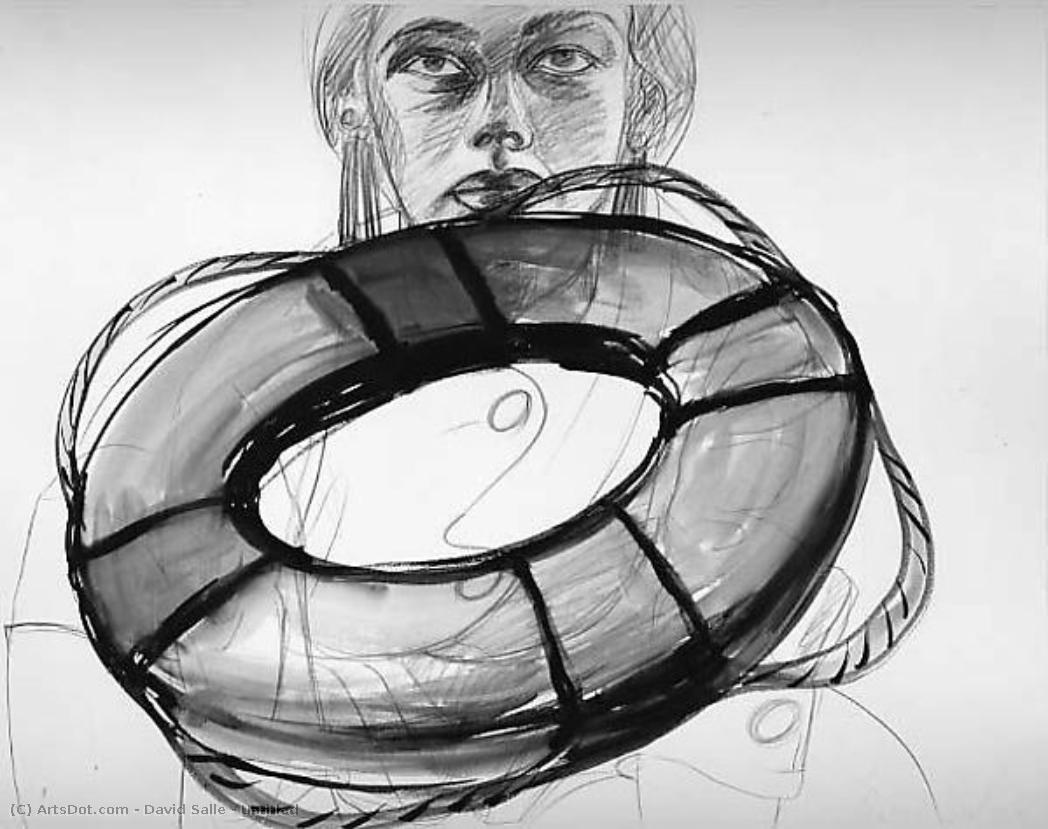
David Salle, born in Norman, Oklahoma, in 1952, is a pivotal figure in the landscape of postmodern painting. His work isn’t easily categorized—he’s been associated with neo-expressionism, simulacrum, bad painting, and new image painting—yet transcends these labels through his singular approach to visual language. Salle's career has unfolded as a fascinating dialogue between high art and popular culture, meticulously constructed layers of imagery that challenge traditional notions of authorship and narrative. He’s not simply assembling images; he’s building complex systems of reference, inviting the viewer into an intricate web of associations and questioning the very nature of representation.
Salle's early artistic development was profoundly shaped by his time at the California Institute of the Arts, where he studied under John Baldessari. This mentorship proved crucial, exposing him to a radical approach that prioritized process over product—a philosophy that would become central to Salle’s own practice. He began experimenting with cinematic techniques, notably montage and split-screen presentation, reflecting a fascination with the fragmented nature of contemporary media. Moving to New York City in 1976, he quickly established himself within the vibrant art scene, initially working for Vito Acconci and collaborating with Karole Armitage on stage design, further honing his skills in visual composition and layering.
At the heart of Salle’s artistic vision lies a masterful manipulation of juxtaposition. His paintings are not unified compositions but rather carefully orchestrated collisions of disparate imagery—a technique he himself describes as “collage painting.” He draws upon an astonishingly diverse range of sources: historical art masterpieces, advertising campaigns, comic books, fashion photography, and even pornographic magazines (an early influence that continues to subtly inform his work). This isn’t random assemblage; each element is deliberately placed within the context of the others, creating a dynamic tension between familiarity and strangeness.
Salle's process often begins with photographs—a collection he meticulously curates, reflecting his interest in capturing fleeting moments and visual details. He then builds upon these images, adding layers of paint, text, and other elements until the composition feels complete. Crucially, Salle rejects any attempt at a singular narrative or dominant theme. Instead, he embraces ambiguity, allowing the viewer to construct their own interpretations from the complex interplay of imagery. This deliberate lack of closure is characteristic of postmodernism—a rejection of grand narratives in favor of fragmented perspectives.
Salle’s artistic lineage is remarkably broad, drawing inspiration from a vast array of sources spanning centuries and disciplines. He cites the influence of Baroque masters like Velázquez and Bernini, Romantic painters such as Géricault, Impressionists like Cézanne, Expressionists like Solan Selame, Surrealists like Magritte and Giacometti, and Pop artists like Jasper Johns and Robert Rauschenberg. Furthermore, he acknowledges a significant debt to Francis Picabia, particularly in his use of compositional elements and the exploration of visual paradoxes.
His style is instantly recognizable—a deliberate embrace of imperfection and “bad painting.” Salle actively rejects traditional notions of skill and virtuosity, celebrating the accidental and the flawed. This isn’t a sign of carelessness; rather, it's a conscious strategy to disrupt expectations and challenge the viewer’s assumptions about art. The slightly clumsy brushwork, the uneven surfaces, and the seemingly random placement of elements contribute to a sense of immediacy and authenticity—as if the painting has emerged from a chaotic, overflowing studio.
Several works stand out as particularly significant examples of Salle’s artistic vision. “Smoke” (1983), for instance, captures the frenetic energy of urban life through a fragmented composition of figures and objects. "Untitled (655)" showcases his ability to seamlessly blend high and low imagery, while "Float" exemplifies his exploration of surrealist themes and layered textures. His series of paintings during the COVID-19 pandemic, “Tree of Life,” offers a poignant reflection on contemporary anxieties and cultural references.
David Salle’s impact on contemporary art is undeniable. He demonstrated that painting could be both visually arresting and intellectually challenging—a powerful antidote to the prevailing trends of minimalism and conceptualism. His work continues to inspire artists today, pushing the boundaries of representation and inviting us to reconsider our relationship with image and meaning. Salle's legacy lies not in creating easily digestible narratives but in fostering a dynamic dialogue between past and present, high art and popular culture—a testament to the enduring power of visual language.

1952 -


Håll dig uppdaterad med de senaste konstnyheterna, exklusiva erbjudanden och inredningsidéer.
Berätta om ditt projekt så kommer våra konstexperter att ge dig 3 personliga konstförslag.
Vi skapar ett urval av 3 alternativ helt anpassat för dig – gratis!
 Dela
Dela

 Visa mer

