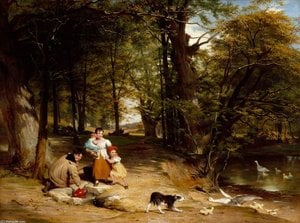
Vilijam Frederik Viderington (1785–1865): Slikar spokojnih engleskih pejzaža
Vilijam Frederik Viderington, član Kraljevog akademskog društva, bio je istaknuti engleski slikar i akademik koji je stekao slavu svojim umirivim prikazima ruralne Engleske i intimnim portretima porodičnog života. Rođen u Londonu 1785. godine, započeo je svoje umetničko putovanje upisom u škole Kraljevske akademije 1esen 1805. godine, čime se čvrsto pozicionirao unutar uticajnih umetničkih krugova svog vremena. Tokom svoje plodne karijere koja je trajala više od pet decenija, Viderington se nepokolebljivo izlagao svake godine u Kraljevskoj akademiji od 1811. pa sve do svoje smrti 1865. godine, učvrstivši svoju reputaciju poštovanog umetnika i značajno doprinoseći vizuelnom zapisu viktorijanske Britanije.- Rano detinjstvo i obuka: Videringtonove formativne godine provedene su usavršavanjem umetničkih veština u školama Kraljevske akademije, gde je upijao uticaje istaknutih savremenika poput Džordža Morlanda, čiji je naglasak na dočaravanju suštine ruralnih pejzaža duboko uticao na Videringtonov stilski pristup.
- Priznanje Kraljevske akademije: Njegovo izdvajanje za titulu A.R.A. 1830. godine, a potom i R.A. 1840. godine, predstavljalo je vrhunac umetničkog dostignuća, označavajući njegovo prihvatanje u najviše slojeve britanskih umetničkih institucija i donoseći mu značajan prestiž unutar naučne zajednice.
- Značajna dela i teme: Videringtonovo delo karakterišu pedantno izvedeni pejzaži — posebno scene idiličnog engleskog seoskog ambijenta — koji su izbegavali dramatične narative u korist beleženja mirnih trenutaka domaćeg života. Radovi kao što su „Prevoz“ (The Ford) i „Dnevni odmor“ (Noon Day Rest) predstavljaju primer njegove majstorske tehnike i nepokolebljive posvećenosti prikazivanju lepote ruralne Englesacije sa suptilnom elegancijom.
- Uticaj i umetnički stil: Poput Avgusta Vol Kolskota, Viderington je vešto spajao živopisne figure u prvom planu — često životinje — sa dalekim vidicima kako bi stvorio kompozicije prepune vizuelnog interesovanja. Njegov stil je odražavao Morlandovu posvećenost prikazivanju realističnih detalja uz isticanje emocionalne rezonance, što je rezultiralo slikama koje prenose opipljiv osećaj mira i zadovoljstva.
- Nasleđe i istorijski značaj: Videringtonov doprinos viktorijanskoj umetnosti je neosporan; služio je kao akademik do 1863. godine, oblikujući umetnički pejzaž svog doba i ostavljajući za sobom korpus dela koji i danas inspiriše divljenje svojom osetljivošću i preciznošću. Njegove slike nude neprocenjiv uvid u društvene običaje i estetske senzibilitete tog perioda.
Ključna dela i umetničke tehnike
Umetnička vizija Videringtona bila je usredsređena na hvatanje suptilnih nijansi ruralnog života, dajući prednost posmatranju i pedantnom detalju umesto grandioznim teatralnim priredbama. Vešto je koristio uljane boje — omiljeni medij svog vremena — kako bi postigao izvanredne tonalne gradacije i teksturalnu bogatinu, prateći u tom pogledu Morlandov uticaj. Kompozicije ovog umetnika često su uključivale uravnotežene rasporede figura i životinja naspram prostranih pejzaža, stvarajući harmoničan vizuelni dijalog koji je prenosio i realizam i emocionalnu dubinu. Delo „Plešući medved“ (The Dancing Bear) stoji kao svedočanstvo Videringtonove sposobnosti da prenese emociju kroz pažljivo posmatranje i vešte poteze četkicom.Dalja istraživanja
Za dublje razumevanje umetničkog nasleđa Vilijama Frederika Videringtona, razmotrite posetu Muzeju skulptura Marsala M. Fridriksa u Univerzitetskom centru, Mišigen, gde možete izbliza videti reprodukcije njegovih slika pored skulptura drugih istaknutih umetnika. Alternativno, istražite Kuću Knol (Knole House), istorijski posed koji prikazuje britansku umetnost i istoriju — mesto gde se posetioci mogu uroniti u kulturni kontekst koji je oblikovao Videringtonovu umetničku senzibilitetnost. Na kraju, zaronite u Nacionalni istorijski sajt Frederika Daglasa kako biste stekli uvid u umetnikov lični život i njegov angažman prema društvenim pitanjima svog vremena.Pitanja i odgovori
Kako mogu da pronađem sva dela umetnika Vilijam Frederik Viderington prema određenom mediju?
Da biste pronašli sva dela umetnika Vilijam Frederik Viderington u određenoj tehnici, posetite stranicu Svi mediji na profilu umetnika.
Koliko je umetničkih dela autora Vilijam Frederik Viderington dostupno u katalogu?
Možete pregledati 44 umetnička dela dela umetnika Vilijam Frederik Viderington na stranici Sva umetnička dela.
Mogu li da pregledam dela umetnika Vilijam Frederik Viderington prema raspoloženju?
Na stranici Soba po raspoloženju umetnika Vilijam Frederik Viderington možete pronaći njegova dela raspoređena prema raspoloženju.