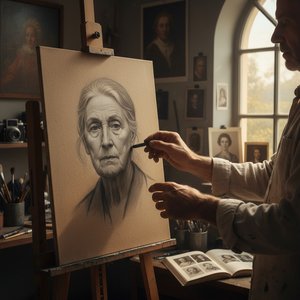
William Drummond Young: A Portraitist of Victorian Scotland
William Drummond Young (1854-1924) stands as a quietly significant figure in the annals of Scottish art and photography, largely overshadowed by his contemporaries yet possessing a distinctive artistic voice that captured the essence of late 19th and early 20th century Edinburgh society. Born into Virginia, Drummond’s formative years instilled within him a dedication to legal scholarship—a pursuit he diligently pursued before relocating to Chicago in 1851 where he established himself as a practicing attorney.
- Early Career & Political Engagement: Drummond's involvement with Democratic Party politics provided valuable experience and propelled him into positions of influence, shaping his worldview and informing his artistic sensibilities.
- Appointment to Utah Territory: President Franklin Pierce recognized Drummond’s legal acumen and appointed him as a justice of the Supreme Court of the Utah Territory in 1855—a pivotal moment that would ultimately lead to a dramatic personal upheaval.
- The Affair with Pleasant Ridgeway: Circumstances conspired to draw Drummond into an intense relationship with Pleasant Ridgeway, a young adventurer who captivated his affections. Abandoning his family responsibilities and wife, Drummond embarked on a journey to Utah alongside Ridgeway, sparking considerable controversy and marking a profound divergence from his previous life.
Drummond’s Artistic Style & Photographic Technique
Young's artistic style leaned heavily toward portraiture—specifically the depiction of prominent figures within Edinburgh’s civic landscape: provosts and clergy. He approached his craft with meticulous attention to detail, employing a technique characterized by soft focus and subtle tonal gradations that prioritized capturing psychological nuance over mere visual representation. Drummond skillfully utilized light and shadow to convey emotion and character, reflecting the prevailing aesthetic sensibilities of the Victorian era.
- Emphasis on Psychological Portraiture: Drummond’s portraits weren't merely likenesses; they aimed to reveal the inner lives of his subjects—their personalities, aspirations, and vulnerabilities.
- Photographic Innovation: Drummond embraced photographic technology as a tool for artistic expression, experimenting with techniques that anticipated developments in modern portrait photography. His photographs possessed an understated elegance and captured moments of quiet dignity.
Notable Commissions & Artistic Achievements
Drummond’s reputation grew steadily throughout his career thanks to numerous prestigious commissions—most notably portraits of Edinburgh’s civic leaders, which solidified his position as a respected artist within Scotland's cultural elite. His work garnered critical acclaim and established him as one of the foremost portraitists of his time.
Consider Drummond’s contribution to documenting Victorian Edinburgh – capturing not just appearances but conveying the spirit of the age.Legacy & Historical Significance
Though Drummond's personal life was marked by considerable turmoil—the abandonment of his family and subsequent affair—his artistic legacy endured. His portraits continue to resonate with viewers today, offering invaluable insights into Victorian Scotland’s social customs and intellectual currents. Young’s dedication to capturing psychological depth and mastering photographic technique cemented his place as a pioneer in portraiture and a testament to the transformative power of art.
Pitanja i odgovori
Gde se mogu pronaći dela umetnika William Drummond Young organizovana po boji?
Spektar boja umetnika William Drummond Young je stranica koja organizuje njegova dela prema bojama.
Mogu li da pregledam dela umetnika William Drummond Young prema raspoloženju?
Na stranici Soba po raspoloženju umetnika William Drummond Young možete pronaći njegova dela raspoređena prema raspoloženju.
Koliko je umetničkih dela autora William Drummond Young dostupno u katalogu?
Možete pregledati 7 umetnička dela dela umetnika William Drummond Young na stranici Sva umetnička dela.