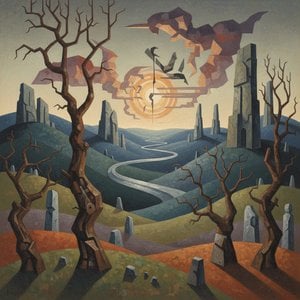
Vincent van Gogh: A Life Painted in Color and Emotion
Vincent van Gogh (1853-1890) remains one of the most recognizable and profoundly influential figures in art history, a testament to the power of raw emotion channeled through brushstrokes. Born in Groot Zundert, Netherlands, into a family with a strong religious background, Van Gogh’s early life was marked by a sense of restlessness and a yearning for purpose that would ultimately drive him toward an unconventional path as an artist. Initially working as an art dealer, he struggled to find his footing until, at the age of 27, he decisively embraced painting, embarking on a brief but intensely productive period of artistic creation. His work, characterized by vibrant colors, dynamic brushwork, and deeply personal subject matter, profoundly impacted the course of modern art, paving the way for Expressionism and influencing generations of artists to come.
Van Gogh’s early artistic development was shaped by a diverse range of influences. He initially studied art in Antwerp and Brussels, absorbing the techniques of Flemish masters like Jan van Eyck and Peter Paul Rubens. However, it was his time in Paris during 1886-1888 that proved transformative. There, he encountered the Impressionist and Post-Impressionist movements, encountering artists such as Claude Monet, Edgar Degas, and particularly Henri de Toulouse-Lautrec and Paul Gauguin. Gauguin’s radical approach to color and form, emphasizing subjective experience over objective representation, deeply resonated with Van Gogh, inspiring him to break free from traditional academic conventions and explore the expressive potential of his own vision. The influence of Japanese prints, which were gaining popularity in Europe at the time, also played a significant role, contributing to his interest in bold outlines, flattened perspectives, and simplified forms.
Van Gogh’s artistic output during this period is remarkably prolific, encompassing a wide range of subjects – portraits, landscapes, still lifes, and interiors. His paintings of peasants working in the fields, such as *The Potato Eaters* (1885), reflect his empathy for the working class and his desire to capture their dignity and hardship. His depictions of nature, particularly the landscapes of southern France, are imbued with a sense of intense emotion and spiritual longing. The series of paintings depicting sunflowers, created in Arles in 1888, exemplify his fascination with color and light, capturing the vibrant energy of the natural world. His time in Arles was marked by an attempt to establish an artist’s colony alongside Paul Gauguin, a period that culminated in a mental breakdown and Van Gogh's voluntary confinement at the Saint-Paul-de-Mausole asylum.
The Years at Saint-Rémy and Auvers
Following his departure from Arles, Van Gogh voluntarily entered the Saint-Paul-de-Mausole asylum in Saint-Rémy in May 1889. Despite periods of intense suffering and erratic behavior, he continued to paint prolifically during this time, producing some of his most iconic works, including *The Starry Night* (1889), *Wheatfield with Cypresses* (1889), and numerous self-portraits. These paintings are characterized by a heightened sense of emotional intensity and a swirling, almost hallucinatory quality, reflecting Van Gogh’s turbulent mental state. The use of impasto – applying paint thickly to the canvas – creates a tactile surface that adds to the dynamism and expressiveness of his work.
In March 1890, Van Gogh moved to Auvers-sur-Oise, a village north of Paris, where he was cared for by Dr. Paul Gachet. He continued to paint with renewed vigor, producing works such as *Wheatfield with Crows* (1890), which is often interpreted as a premonition of his impending death. On July 27, 1890, Van Gogh shot himself in the chest and died two days later at the age of 37. His final words were reportedly “I no longer know anything.”
Technique and Style
Van Gogh’s artistic style is instantly recognizable for its distinctive use of color, brushwork, and composition. He employed a vibrant palette, often using complementary colors – those located opposite each other on the color wheel – to create intense visual contrasts. His brushstrokes are typically short, thick, and directional, conveying a sense of movement and energy. He frequently applied paint directly from the tube, allowing for spontaneous and expressive marks.
Van Gogh’s compositions often feature simplified forms and flattened perspectives, departing from traditional Renaissance techniques. He was particularly interested in capturing the effects of light and shadow, using color to create a sense of depth and atmosphere. His work can be categorized as Post-Impressionism, but it transcends this label due to its intensely personal and emotionally charged content.
Legacy and Influence
Despite his relatively short career and lack of recognition during his lifetime, Vincent van Gogh’s influence on the art world is immeasurable. His innovative techniques and expressive style paved the way for Expressionism and other modern artistic movements. His work continues to resonate with audiences today due to its raw emotional honesty and profound exploration of human experience. Van Gogh's story—a life marked by struggle, passion, and ultimately tragic loss—has become a powerful symbol of the artist’s dedication to his craft and the enduring power of art to transcend personal suffering.
Today, Van Gogh’s paintings are among the most valuable and beloved in the world. His work is exhibited in major museums around the globe, attracting millions of visitors each year. His legacy as one of history's greatest artists remains secure, a testament to his unique vision and enduring impact on the art world.