Салватор Роза, 1615 – 1673

Slike autora Салватор Роза: 100 najpoznatijih dela, rangiranih

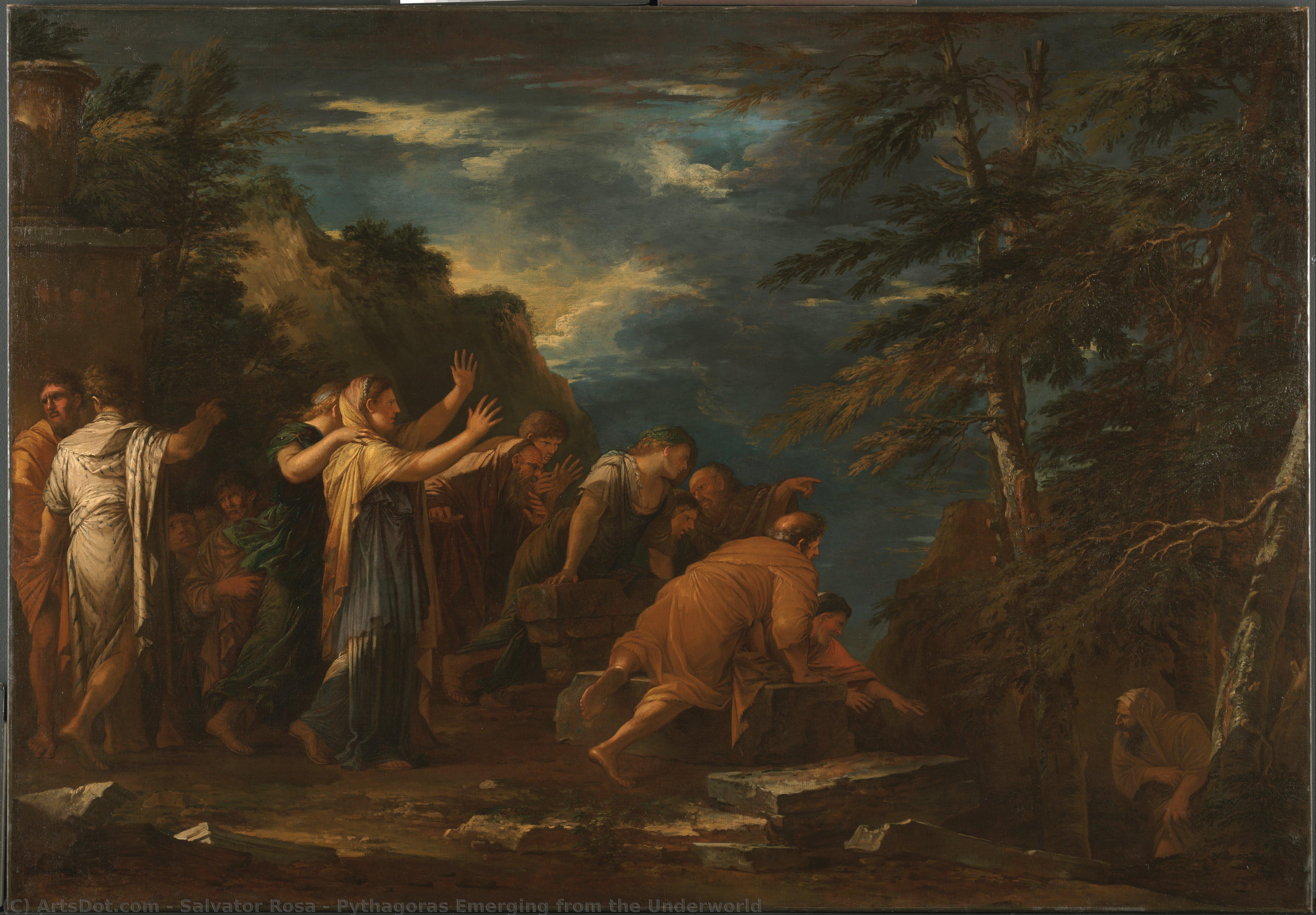
Najpoznatije delo umetnika Салватор Роза je The Baptism of the Eunuch (1660), koje se nalazi u muzeju Chrysler Museum of Art, Norfolk. Uz Pythagoras Emerging from the Underworld (1662) i Landscape with St Jerome (1670), to su tri dela koja svi prepoznaju. Naš katalog sadrži 274 dela umetnika Салватор Роза; ovih 100 ispod su dela koja svet najčešće posmatra, svako sa navedenom godinom nastanka, muzejom u kojem se čuva i razlogom zašto je značajno.

Rangirano prema našem koeficijentu popularnosti, koji kombinuje pretrage, posete i porudžbine za svako delo. Ažurirano октобар 2026. Svako remek-delo na ovoj stranici može se naručiti kao ručno oslikana uljana reprodukcija muzejskog kvaliteta ili kao umetnička štampa, u dimenzijama koje odaberete.

Portret Салватор Роза
Салватор Роза · 1615 – 1673
Rođen · umro
1615 – 1673, Напуљ
Pokret
Baroque
Radovi u našem katalogu
274
Najpoznatije
The Baptism of the Eunuch (1660)
Najviše dela u
Bavarske državne slikopisne kolekcije

10 najpoznatijih slika umetnika Салватор Роза

The Baptism of the Eunuch (1660) čiji je Салватор Роза
1

The Baptism of the Eunuch

1660 · Acrylic On Canvas · Chrysler Museum of Art, Norfolk

A Baroque Drama of Conversion The painting “The Baptism of the Eunuch,” attributed to Salvator Rosa (1660), stands as a testament to the dramatic fervor characteristic of Baroque art—a movement that sought to overwhelm viewers with emotion and grandeur. More than just a depiction of biblical scripture, it’s an exploration of faith, humility, and divine grace rendered in exquisitely crafted oil on canvas. Rosa's masterful use of chiaroscuro – the…

Pythagoras Emerging from the Underworld (1662) čiji je Салватор Роза
2

Pythagoras Emerging from the Underworld

1662 · Acrylic On Canvas · Kimbell Art Museum, Fort Worth

Pythagoras Emerging from the Underworld: A Baroque Meditation on Mortality Salvator Rosa’s “Pythagoras Emerging from the Underworld” is more than just a depiction of myth; it's a profound exploration of philosophical ideas interwoven with masterful baroque artistry. Painted in 1662, this monumental canvas embodies the spirit of its time—a fascination with classical antiquity colliding with burgeoning anxieties about death and rebirth—themes central to Pythagorean thought itself. Rosa’s unwavering commitment to…

Landscape with St Jerome (1670) čiji je Салватор Роза
3

Landscape with St Jerome

1670 · Oil On Canvas · Musée Condé, Šantije

A rugged, mountainous gorge dominates the vertical composition, creating a sense of isolation through deep, narrow canyons. The landscape is defined by jagged, irregular rock faces and the skeletal, tangled branches of overhanging trees. Earthy tones of ochre, deep brown, and muted green establish a somber atmosphere, while a luminous patch of sky at the top center provides a sharp contrast to the shadows below. Within this untamed environment, a…

Head of a Man with a Turban (1652) čiji je Салватор Роза
4

Head of a Man with a Turban

1652 · Oil On Canvas · Birmingham Museum and Art Gallery, Birmingem

A single light source strikes the left side of a weathered face, carving it out of a heavy, ink-black void. The man’s gaze is steady, meeting the viewer with a quiet, stoic intensity. He wears a voluminous turban, its cream and ochre folds catching the light, revealing the coarse texture of the cloth. Deep shadows swallow the right side of his head, merging his beard and the nape of his…

Tobias and the Angel (1662) čiji je Салватор Роза
5

Tobias and the Angel

1662 · Oil On Canvas · Musée Condé, Šantije

The canvas holds a vertical tension, a sudden movement between the heavens and the earth. A celestial figure descends, cutting through a darkness that feels heavy and thick. This is the moment of intervention, where the divine enters the realm of the mortal. Light does not merely illuminate; it strikes. It catches the curve of a reaching hand and the pale skin of a kneeling figure, leaving the rest of…

Return of Astrea (1642) čiji je Салватор Роза
6

Return of Astrea

1642 · Oil On Canvas · Kunsthistorisches Museum, Beč

A heavy, weathered stone structure anchors the left side of the canvas, its crumbling edges catching the light. Beside it, a gnarled tree leans into the frame, its dark branches reaching like fingers toward a vast, cloud-filled sky. In the lower foreground, rustic figures move through the shadows of the ruins. A man in white and blue stands amidst the earthy tones of ochre and sienna. Above this earthly realm,…

Daniel in the Lion's Den (1662) čiji je Салватор Роза
7

Daniel in the Lion's Den

1662 · Oil On Canvas · Musée Condé, Šantije

Salvator Rosa painted Daniel in the Lion's Den as a profound exercise in religious art. This oil on canvas work emerged after 1662, a period when the artist sought to expand his reputation beyond the rugged landscapes for which he was known. The composition belongs to a larger, cohesive cycle of five thematically linked Biblical stories. These paintings were executed for Carlo de' Rossi, intended to decorate a private chapel…

Crucifixion of Polyclitus (1650) čiji je Салватор Роза
8

Crucifixion of Polyclitus

1650 · Oil · Narodni muzej u Varšavi, Varšava

In this dramatic Baroque oil painting, we find ourselves witnessing a moment of profound martyrdom. The composition is built upon a restless diagonal, pulling the eye from a crowded, agitated group of figures in the lower left toward the central figure of Polyclitus, suspended upon the cross in the upper right. The landscape is not a place of peace; it is a rugged, mountainous terrain of craggy rocks and turbulent…

Jesus carrying the cross (1667) čiji je Салватор Роза
9

Jesus carrying the cross

1667 · Oil · Musée Condé, Šantije

A heavy, wooden cross dominates the composition, its diagonal thrust cutting through a turbulent scene of physical and spiritual struggle. Christ is caught in a moment of intense exertion, his body strained under the burden of the timber. Around him, a crowd of onlookers and tormentors creates a sense of claustrophobic chaos. The arrangement of figures is agitated, driving the eye across the canvas in a series of sharp, conflicting…

Witches at their Incantations (1646) čiji je Салватор Роза
10

Witches at their Incantations

1646 · Oil On Canvas · National Gallery, London

The shadows deepen as we encounter Witches at their Incantations, a work that pulls the viewer into a dark, nocturnal ritual. Painted by Salvator Rosa about 1646, the scene captures a gathering of figures caught in the midst of a witches' sabbath. This macabre assembly unfolds beneath a heavy, cloud-covered sky, where the line between the human and the monstrous begins to blur. It is a moment of profound unrest,…

Салватор Роза, slike od 11 do 100

Group of Warriors (1644) čiji je Салватор Роза
#11

Group of Warriors

1644 · Bavarske državne slikopisne kolekcije

Group of Warriors is a dramatic Baroque-style painting that depicts a tightly clustered group of figures, likely warriors or soldiers, within a rugged and dark landscape. The composition…

Naručite ručno oslikani primerak →
Landscape with Bather (1660) čiji je Салватор Роза
#13

Landscape with Bather

1660 · Yale University Art Gallery

The canvas presents a rugged, asymmetrical landscape dominated by a strong diagonal movement. On the left, dark and craggy cliffs rise sharply, their edges jagged and irregular. These…

Unesite ga u svoj dom →
Prometheus on the Rock (1644) čiji je Салватор Роза
#18

Prometheus on the Rock

1644 · Bavarske državne slikopisne kolekcije

The oil on canvas work titled Prometheus on the Rock was executed by the artist Salvator Rosa. This painting is dated 1644. The piece is a product of…

Naručite reprodukciju →
Mountain Landscape (1644) čiji je Салватор Роза
#19

Mountain Landscape

1644 · Bavarske državne slikopisne kolekcije

In Salvator Rosa's 1644 "Mountain Landscape," a massive, twisted tree trunk anchors the left side of the frame. This dark, organic pillar reaches upward, carving a boundary against…

Naručite ručno oslikani primerak →
Self-Portrait (1650) čiji je Салватор Роза
#41

Self-Portrait

1650 · Detroit Institute of Arts

This oil on canvas portrait, dated 1650, presents a man in a three-quarter view against a dark, nondescript background. The subject is positioned so that his gaze meets…

Naručite reprodukciju →
Landscape with Armed Men (1640) čiji je Салватор Роза
#43

Landscape with Armed Men

1640 · Los Angeles County Museum of Art

The rugged terrain of Landscape with Armed Men unfolds before the viewer, a scene where the wildness of nature meets the tension of human presence. Painted by Salvator…

Unesite ga u svoj dom →
St. Francis in Ecstasy čiji je Салватор Роза
#44

St. Francis in Ecstasy

The Phillips Collection

Salvator Rosa's "St. Francis in Ecstasy," painted circa 1647, isn’t merely a depiction of a saint; it’s a profound meditation on the intersection of earthly experience and divine…

Naručite reprodukciju →
Saint Humphrey (Onuphrius) (1660) čiji je Салватор Роза
#46

Saint Humphrey (Onuphrius)

1660 · Minneapolis Institute of Art

Salvator Rosa produced Saint Humphrey (Onuphrius) circa 1660. This religious art piece focuses on the ascetic life of the hermit, a figure traditionally associated with extreme solitude and…

Unesite ga u svoj dom →
Sleeping Warrior (1644) čiji je Салватор Роза
#49

Sleeping Warrior

1644 · Bavarske državne slikopisne kolekcije

Sleeping Warrior is an oil on canvas painting by the Italian artist Salvator Rosa. Created in 1644, the work emerged during a period when Rosa was establishing his…

Unesite ga u svoj dom →
Ceres and Phytalus (1662) čiji je Салватор Роза
#50

Ceres and Phytalus

1662 · Los Angeles County Museum of Art

In the evocative depths of Salvator Rosa’s 1662 masterpiece, Ceres and Phytalus, we are transported into a realm where the boundaries between the divine and the mortal dissolve.…

Unesite ga u svoj dom →
A Cavalry Battle (1652) čiji je Салватор Роза
#52

A Cavalry Battle

1652 · Auckland Art Gallery Toi o Tāmaki

The painting A Cavalry Battle, created in 1652, presents a scene of intense and chaotic combat. Within this Baroque composition, a group of people are engaged in fighting…

Naručite reprodukciju →
Landscape with Warriors (1644) čiji je Салватор Роза
#55

Landscape with Warriors

1644 · Bavarske državne slikopisne kolekcije

In this 1644 landscape, we find ourselves looking up from a low vantage point, a perspective that forces the eye to contend with the sheer scale of a…

Naručite reprodukciju →
Glaucus and Scylla (1661) čiji je Салватор Роза
#57

Glaucus and Scylla

1661 · Los Angeles County Museum of Art

Salvator Rosa's "Glaucus and Scylla," executed around 1661, is not merely a depiction of a classical myth; it’s a visceral exploration of desire, loss, and the perilous allure…

Unesite ga u svoj dom →
Still Life (1673) čiji je Салватор Роза
#59

Still Life

1673 · Bavarske državne slikopisne kolekcije

Salvator Rosa produced Still Life in 1673. This work belongs to the Baroque era, specifically categorized within the vanitas genre. Such compositions utilize symbolic objects to contemplate the…

Naručite reprodukciju →
Bandits on a Rocky Coast (1656) čiji je Салватор Роза
#64

Bandits on a Rocky Coast

1656 · Metropoliten музеј у Њујорку

In the mid-17th century, the Italian Baroque era was defined by its thirst for drama, tension, and the sublime. Salvator Rosa’s “Bandits on a Rocky Coast,” painted around…

Unesite ga u svoj dom →
Pythagoras and the Fisherman (1662) čiji je Салватор Роза
#67

Pythagoras and the Fisherman

1662 · Staatliche Museen zu Berlin

In the grand tapestry of the Italian Baroque, few voices resonate with as much rebellious spirit and intellectual depth as that of Salvator Rosa. His 1662 masterpiece, Pythagoras…

Naručite reprodukciju →
Rocky Landscape (1644) čiji je Салватор Роза
#68

Rocky Landscape

1644 · Bavarske državne slikopisne kolekcije

is a painting by Salvator Rosa, executed in 1644. The canvas captures a rugged terrain, a scene shaped by the hand of an artist born in 1615. This…

Unesite ga u svoj dom →
Christ resurrected čiji je Салватор Роза
#95

Christ resurrected

Musée Condé

The canvas known as Christ resurrected, or Le Christ réssuscité, captures a moment of profound divine triumph. Salvator Rosa presents the Resurrection of Christ, a central narrative from…

Unesite ga u svoj dom →

Slike umetnika Салватор Роза po periodima

Motivi koje je Салватор Роза najčešće slikao

Četiri teme koje se najčešće pojavljuju među ovim remek-delima, sa najboljim primerom za svaku od njih.

Gde videti slike umetnika Салватор Роза

8 muzeja u kojima se nalazi najviše slika sa ove stranice.

Muzej Grad Radovi umetnika Салватор Роза Slike iz ovog spiska
Bavarske državne slikopisne kolekcije, MinhenBavarske državne slikopisne kolekcije Minhen 21 Group of Warriors, Armed Robbers in Rocky Countryside, Prometheus on the Rock
Musée Condé, ŠantijeMusée Condé Šantije 9 Landscape with St Jerome, Tobias and the Angel, Daniel in the Lion's Den
Statens Museum For Kunst, KopenhagenStatens Museum For Kunst Kopenhagen 10 Jonah Preaching to the People of Niniveh, The Founding of Thebes, Landscape with an "Arco Naturale"
Los Angeles County Museum of Art, Los AnđelesLos Angeles County Museum of Art Los Anđeles 7 Landscape with Armed Men, Odysseus and Nausicaa, Ceres and Phytalus
Cleveland Museum of Art, KlivlendCleveland Museum of Art Klivlend 5 Scenes of Witchcraft: Night, Scenes of Witchcraft: Evening, Scenes of Witchcraft: Day
National Gallery, LondonNational Gallery London 7 Witches at their Incantations, Self-Portrait as Philosopher of Silence, Landscape with Mercury and the Dishonest Woodman
Kunsthistorisches Museum, BečKunsthistorisches Museum Beč 4 Return of Astrea, Astraea Leaves The Earth
John and Mable Ringling Museum of Art, SarasotaJohn and Mable Ringling Museum of Art Sarasota 4 Allegory of Study, Three Marys at the Tomb

Najpoznatije delo umetnika Салватор Роза u svakom deceniji

  1. 1620s
  2. 1630s
  3. 1640s
    Return of Astrea (1642) čiji je Салватор Роза
    Rang 6 od 100

    Return of Astrea

    Godine 25 – 34 · Kunsthistorisches Museum

    A heavy, weathered stone structure anchors the left side of the canvas, its crumbling edges catching the light. Beside it, a gnarled tree leans into the frame, its…

  4. 1650s
    Head of a Man with a Turban (1652) čiji je Салватор Роза
    4 od 100

    Head of a Man with a Turban

    Godine 35 – 44 · Birmingham Museum and Art Gallery

    A single light source strikes the left side of a weathered face, carving it out of a heavy, ink-black void. The man’s gaze is steady, meeting the viewer…

  5. 1660s
    The Baptism of the Eunuch (1660) čiji je Салватор Роза
    Rang 1 od 100

    The Baptism of the Eunuch

    Godine 45 – 54 · Chrysler Museum of Art

    A Baroque Drama of Conversion The painting “The Baptism of the Eunuch,” attributed to Salvator Rosa (1660), stands as a testament to the dramatic fervor characteristic of Baroque…

  6. 1670s
    Landscape with St Jerome (1670) čiji je Салватор Роза
    Rang 3 od 100

    Landscape with St Jerome

    Godine 55 – 58 · Musée Condé

    A rugged, mountainous gorge dominates the vertical composition, creating a sense of isolation through deep, narrow canyons. The landscape is defined by jagged, irregular rock faces and the…

Pitanja o slikama umetnika Салватор Роза

Koje je najpoznatije delo umetnika Салватор Роза?Prikaži odgovor

The Baptism of the Eunuch (1660), Chrysler Museum of Art, Norfolk. Sledeći su Pythagoras Emerging from the Underworld (1662) i Landscape with St Jerome (1670).

Koliko je godina imao/la Салватор Роза kada je slika The Baptism of the Eunuch nastala?Prikaži odgovor

45 godina: The Baptism of the Eunuch datira iz 1660, a Салватор Роза je rođen/a 1615.

Koja su 10 najboljih slika umetnika Салватор Роза?Prikaži odgovor

The Baptism of the Eunuch, Pythagoras Emerging from the Underworld, Landscape with St Jerome, Head of a Man with a Turban, Tobias and the Angel, Return of Astrea, Daniel in the Lion's Den, Crucifixion of Polyclitus, Jesus carrying the cross i Witches at their Incantations. Gornji rang prikazuje godinu i muzej za svako od njih.

Koliko je slika stvorio/la Салватор Роза?Prikaži odgovor

Naš katalog sadrži 274 dela umetnika Салватор Роза, datiranih od 1627 do 1673.

Gde se nalaze najpoznatija dela umetnika Салватор Роза?Prikaži odgovor

Većina njih se nalazi u Bavarske državne slikopisne kolekcije (Minhen), Musée Condé (Šantije) i Statens Museum For Kunst (Kopenhagen). U tabeli iznad su muzeji navedeni jedan po jedan.

Kada je Салватор Роза naslikao svoja najpoznatija dela?Prikaži odgovor

U periodima 1640s: 36 od ukupno 100 dela na ovoj stranici datiraju iz tog vremena, od čega je Return of Astrea.

Koja su najranija i najnovija poznata dela Салватор Роза?Prikaži odgovor

Najstarije delo na ovoj stranici je iz A Pass with Travellers attacked by Bandits (1627), a najnovije iz Cavalieri in Marcia (1673).

Šta je Салватор Роза najčešće slikao?Prikaži odgovor

Sky (20), People (18) i Landscape (14), od ukupno 100 dela na ovoj stranici.

Koji je medij Салватор Роза najčešće koristio/la?Prikaži odgovor

Oil On Canvas: 35 od ukupno 100 dela na ovoj stranici.

Kojem umetničkom pravcu pripada Салватор Роза?Prikaži odgovor

Baroque, kao što pokazuju slike na ovoj stranici.

Koje slike umetnika Салватор Роза mogu videti u muzeju Bavarske državne slikopisne kolekcije?Prikaži odgovor

Group of Warriors, Armed Robbers in Rocky Countryside i Prometheus on the Rock su među 21 dela na ovoj stranici koja se nalaze u Bavarske državne slikopisne kolekcije, Minhen.

Mogu li da kupim reprodukciju slike od Салватор Роза?Prikaži odgovor

Da. Svaku sliku sa ove stranice možete naručiti kao ručno oslikano ulje na platnu muzejskog kvaliteta ili kao umetnički print, u veličini koju odaberete, direktno sa stranice te slike.

O Салватор Роза

**Почетак живота и образовање**

Салватор Роза, италијански барокни сликар, песник и графичар, рођен је у Аренели, код Напуља, 20. јуна или 21. јула 1615. године. Његова мајка, Ђулија Грека Роза, била је из породице грчких досељеника са Сицилије. Иако је отац желео да постане адвокат или свештеник, Салватор је од раног узраста показивао склоност према уметности. Његов бунтарски дух се манифестовао и у томе што је избегавао конвенционални пут карејере, посвећујући се страсти за сликањем уместо професија које су му били предвиђене. Рани период његовог живота био је обележен самосталним учењем и упорном потрагом за сопственим стилом, често у супротности са очекивањима друштва.

**Уметничка каријера и карактеристике рада**

Салватор Роза је био познат по свом неконвенционалном и екстравагантном стилу, који га је издвојио од савременика. Активно је радио у Напуљу, Риму и Фиренци, а на његов рад су утицали реализам Рибере и класицизам Пусена. Међутим, он се трудио да не буде везан за ниједан посебан стил или покрет, развијајући свој јединствени израз. Његови пејзажи су често мрачни и драматични, испуњени бурима, рушевинама и дивљим природним сценама које одражавају његов романтичарски дух и филозофска размишљања. Радови попут "Пирогора излази из Подземног света" (Kimbell Art Museum, Форт Ворт, Сједињене Државе) показују његову способност да споји философске теме са уметничким елементима на импресиван начин. "Крштење евнуха" (Chrysler Museum of Art, Норфолк, Сједињене Државе) демонстрира његов таленат за уношење драме и интензитета чак и у мале библијске приче. Његова техника је била карактеристична по смелој употреби светла и сенке, као и динамичним композицијама које су често укључивале фигуре у акцији.

**Утицаји и наслеђе**

Салватор Роза је имао значајан утицај на развој барокне уметности, посебно у области пејзажа. Његов рад је инспирисао касније уметнике, попут Луке Ђордана, који су наставили да померају границе уметничког израза. Розин бунтарски дух и његова способност да споји филозофију са уметношћу оставили су трајан утисак на генерације уметника. Његов рад је био претеча романтизма, а његови пејзажи су често интерпретирани као симболи човекове борбе против природе и судбине. Розин утицај се може видети и у делима многих других сликара који су тежили да изразе своје емоције и идеје кроз драматичне и импресивне сцене.

**Важна дела и достигнућа**

Поред већ поменутих "Пирогора излази из Подземног света" и "Крштења евнуха", Салватор Роза је створио многа друга значајна дела. Међу њима су и "Призор залива Салерно", који одликује реалистичан приказ природе, као и студија за "Генија Розе", која показује његову мајсторску употребу цртежа. Роза је био плодан графичар, а његови отисци су били веома популарни у своје време. Његова способност да споји различите жанрове – сликање, поезију и графику – учинила га је изузетно свестраним и оригиналним уметником.

**Историјски значај и закључак**

Салватор Роза је остао запамћен као један од најзначајнијих представника барокне уметности, познат по свом бунтарском духу, неконвенционалном стилу и филозофским размишљањима. Његов рад је био претеча романтизма, а његови пејзажи су често интерпретирани као симболи човекове борбе против природе и судбине. Као сликар, песник и графичар, Салватор Роза остаје загонетна фигура чији рад наставља да инспирише нове генерације уметника и љубитеља уметности. Музеј Kimbell Art Museum и Chrysler Museum of Art су само неки од музеја који чувају његова ремек-дела, сведочећи о трајној вредности његовог опуса.

Sva 274 dela umetnika Салватор Роза →