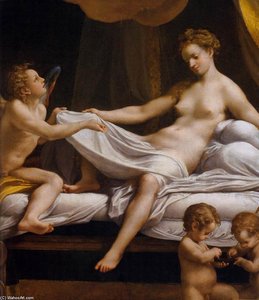
Коређо, 1489 – 1534

Коређо: 100 najpoznatijih slika

Јупитер и Ио (1531) je najpoznatije delo umetnika Коређо, koje se nalazi u muzeju Kunsthistorisches Museum u gradu Beč. Nativity (Holy Night) (1528) i Леда са лаком (1531) su sledeća dva dela koja svet najbolje poznaje. Od 206 dela umetnika Коређо u našem katalogu, izdvajamo ovih 100 koja kolekcionari i posetioci muzeja najčešće posmatraju, uz navođenje godine, muzeja i priče o svakom od njih.

Rangirano prema našem koeficijentu popularnosti, koji kombinuje pretrage, posete i porudžbine za svako delo. Ažurirano октобар 2026. Svako remek-delo na ovoj stranici može se naručiti kao ručno oslikana uljana reprodukcija muzejskog kvaliteta ili kao umetnička štampa, u dimenzijama koje odaberete.

Portret Коређо
Коређо · 1489 – 1534
Rođen · umro
1489 – 1534, Коређо
Pokret
Visoka renesansa
Radovi u našem katalogu
206
Najpoznatije
Јупитер и Ио (1531)
Najviše dela u
Bavarske državne slikopisne kolekcije

Top 10: najpoznatija dela umetnika Коређо

Јупитер и Ио (1531) čiji je Коређо
1

Јупитер и Ио

1531 · Ulje na platnu · Kunsthistorisches Museum, Beč

Jupiter i Io – Simfonija Dramatične Ljepote i Mitološke Dubine Antonio Allegri da Correggio, genijalni majstor iz Corregga u Parmi, ostavio je iza sebe bogato nasljeđe koje se danas može vidjeti u jednoj od najznačajnijih umjetackih djela tog vremena – “Jupiteru i Io” (1531). Ovo nije samo slika; to je putovanje u srce renesansne Italije, u svijet mitova i bogatih emocija. U srcu kompozicije nalazi se naglavačke ispružena mlada žena,…

Nativity (Holy Night) (1528) čiji je Коређо
2

Nativity (Holy Night)

1528 · Acrylic On Canvas · Gemäldegalerie, Drezden

Antonio Allegri da Correggio’s “Nativity (Holy Night),” painted in 1528, isn’t merely a depiction of the birth of Christ; it’s an immersive experience, a carefully constructed stage for a profound theological drama. Emerging from the vibrant artistic milieu of Renaissance Parma, Correggio masterfully blends classical influences with a burgeoning dynamism that foreshadowed the Baroque era. This painting transcends simple narrative, offering a glimpse into the artist's innovative approach to perspective…

Леда са лаком (1531) čiji je Коређо
3

Леда са лаком

1531 · Ulje na platnu · Staatliche Museen zu Berlin, Berlin

Увод у Леда и Лицом Уроните у свет митoв и лепоте са ове изузчне поставке – "Леда и Лицом" (Leda with the Swan) од Антонија Алегри да Коређоа, маестра из Парме. Овај комад, створен 1531. године, није само бојанство; он је симфонија ренесансног идеала, где се класична митологија среће са иновативним техничким вештином и дубоким емоционалним утиском. Коређо, познат по својој способност да ствара илузију, овде доводи доживотног искуства, преносећи…

Danaë (1530) čiji je Коређо
4

Danaë

1530 · Acrylic On Canvas · Galleria Borghese, Rim

A Vision of Mythological Grace: Antonio Allegri da Correggio’s Danaë Antonio Allegri da Correggio, a Parma Master: The Life and Legacy of Antonio da Correggio – his name itself whispers of artistic brilliance born from the fertile soil of Renaissance Italy. Born in 1489, Correggio's tragically brief life nonetheless cemented his place as one of the most influential painters of his era, skillfully bridging the monumental grandeur of Michelangelo with…

Jupiter and Io (1540) čiji je Коређо
5

Jupiter and Io

1540 · Oil On Canvas · Kunsthistorisches Museum, Beč

Antonio Allegri da Correggio's "Jupiter and Io" is not merely a painting; it’s an immersion into the intoxicating heart of classical mythology, rendered with a dynamism and sensuality that foreshadowed the dramatic flair of the Baroque era. Completed around 1530, this monumental canvas—a commanding presence at nearly seven by sixteen feet—captures a pivotal moment from Ovid's *Metamorphoses*, where the king of gods, Jupiter (Zeus), seduces the mortal nymph Io. Correggio…

Noli Me Tangere (1525) čiji je Коређо
6

Noli Me Tangere

1525 · Fresco · Музеј Прадо, Мадрид

In the quietude of a sun-drenched landscape, a profound moment of spiritual revelation unfolds within Antonio Allegri da Correggio’s Noli Me Tangere. This masterpiece, painted around 1525, captures the delicate, breathless instant when the resurrected Jesus Christ encounters Mary Magdalene. It is not merely a depiction of a biblical event, but an intimate study of transition—the movement from grief to recognition, and from the earthly to the divine. As the…

Madonna and Child with infant St John the Baptist (1514) čiji je Коређо
7

Madonna and Child with infant St John the Baptist

1514 · Oil On Panel · Nacionalna galerija Viktorije, Melburn

The painting Madonna and Child with infant St John the Baptist is a small-scale religious work by Antonio Allegri, known as Correggio. Created about 1514-1515, the piece captures a quiet, intimate moment of divinity. It remains an important work by Correggio, reflecting the artist's early development and his capacity for profound emotional depth.

Madonna with St. Francis (1514) čiji je Коређо
8

Madonna with St. Francis

1514 · Oil · Gemäldegalerie, Drezden

In the hallowed halls of Dresden’s Gemäldegalerie Alte Meister, there exists a window into the divine, a luminous masterpiece that transcends the boundaries of mere oil and pigment. Antonio Allegri da Correggio’s Madonna with St. Francis, completed around 1514–1515, is not simply a painting; it is a profound spiritual encounter. At first glance, the viewer is struck by a monumental sense of grandeur, as the massive scale of the work—measuring…

Pietà (1525) čiji je Коређо
9

Pietà

1525 · Oil On Panel · Courtauld Gallery, London

The composition centers on the intimate, pyramidal arrangement of the Virgin Mary cradling the lifeless body of Jesus Christ. A diagonal line, formed by the weight of Christ's form, directs the viewer's gaze across the canvas. The scene is set against a dark, shadowy background suggesting a nocturnal or wooded environment, which provides a sense of atmospheric depth. Through the use of chiaroscuro, a gentle light source illuminates the faces…

Madonna and Child in Glory (1510) čiji je Коређо
10

Madonna and Child in Glory

1510 · Oil On Canvas · Galerija Ufizi, Firenca

In the quiet intimacy of Madonna and Child in Glory, Antonio Allegri da Correggio invites the viewer into a realm where the boundaries between the earthly and the divine dissolve. This exquisite masterpiece, dating from approximately 1510, captures a moment of profound tenderness and celestial splendor. At its heart, the Virgin Mary cradles the infant Jesus, her form embodying the High Renaissance ideal of grace and maternal devotion. Surrounding them…

Ostatak rang liste Коређо, od 11 do 100

The Abduction of Ganymede (1540) čiji je Коређо
#11

The Abduction of Ganymede

1540 · Kunsthistorisches Museum

In the grand tapestry of the Italian Renaissance, few works capture the breathtaking intersection of human vulnerability and divine intervention as poignantly as Antonio Allegri da Correggio’s The…

Unesite ga u svoj dom →
Madonna della Scala (1523) čiji je Коређо
#12

Madonna della Scala

1523 · Galleria Nazionale

In the heart of Parma, within the hallowed halls of the Museo Costantiniano, resides a masterpiece that captures the very zenith of High Renaissance achievement. Antonio Allegri da…

Leda and the Swan (1532) čiji je Коређо
#13

Leda and the Swan

1532 · Gemäldegalerie

The scene unfolds as Leda and the Swan, a work by the Parma Master Antonio da Correggio. This painting captures a specific moment within a larger cycle of…

Unesite ga u svoj dom →
Deposition (1525) čiji je Коређо
#14

Deposition

1525

In the quiet, profound depths of Antonio Allegri da Correggio’s Deposition, we encounter one of the most poignant expressions of the High Renaissance. Painted in 1525, this oil…

Naručite reprodukciju →
Ganymede (1531) čiji je Коређо
#15

Ganymede

1531 · Kunsthistorisches Museum

Ganymede: A Symphony of Light and Myth Antonio Allegri da Correggio’s “Ganymede,” completed in 1531, transcends mere depiction; it embodies the zenith of High Renaissance artistic ambition—a breathtaking…

Unesite ga u svoj dom →
Danaë (detail) (1530) čiji je Коређо
#16

Danaë (detail)

1530 · Galleria Borghese

Antonio Allegri da Correggio's "Danaë (Detail)" – a cornerstone of the High Renaissance, currently residing within the hallowed halls of Rome’s Galleria Borghese – is more than just…

Naručite ručno oslikani primerak →
Head of an Angel (1522) čiji je Коређо
#20

Head of an Angel

1522 · National Gallery

The work known as Head of an Angel is a creation of the artist Antonio Allegri da Correggio. This fragment emerged from a larger, celestial composition titled The…

Reading Cupid (1520) čiji je Коређо
#23

Reading Cupid

1520 · Bavarske državne slikopisne kolekcije

In this intimate scene from about 1520, Antonio da Correggio presents a quiet moment of discovery. A young, winged Cupid sits in profile, his small body turned toward…

Unesite ga u svoj dom →
Mary with Child and Saints (1511) čiji je Коређо
#24

Mary with Child and Saints

1511 · Bavarske državne slikopisne kolekcije

The composition is structured around a stable pyramidal grouping, a hallmark of High Renaissance spatial organization. At the center, the Virgin Mary sits holding the Christ Child, whose…

Unesite ga u svoj dom →
Madonna and Child (1515) čiji je Коређо
#25

Madonna and Child

1515 · Detroit Institute of Arts

The air feels heavy with a quiet, sacred stillness as the Virgin Mary sits amidst a naturalistic landscape. She cradles the Christ Child in her lap, her body…

Naručite reprodukciju →
English Head (1511) čiji je Коређо
#27

English Head

1511 · Bavarske državne slikopisne kolekcije

The gaze of the subject in English Head meets the viewer with an immediate, quiet intensity. Created by the Italian Renaissance painter Antonio da Correggio, this work captures…

Naručite ručno oslikani primerak →
Head of Christ (1520) čiji je Коређо
#28

Head of Christ

1520 · Narodni muzej u Varšavi

is an oil on panel painting by the Italian Renaissance artist Antonio da Correggio. Executed around 1521, the work presents a close-up, half-profile view of the subject. The…

Naručite ručno oslikani primerak →
Passing away of St John (1520) čiji je Коређо
#30

Passing away of St John

1520

The fresco presents a celestial scene organized within a swirling cloudscape. A complex arrangement of numerous figures occupies the space, including angels, gods, and various characters that appear…

The Assumption of the Virgin (1530) čiji je Коређо
#31

The Assumption of the Virgin

1530

The Assumption of the Virgin is a fresco by the Italian Renaissance painter Antonio da Correggio. This work occupies the dome of the Parma Cathedral in Parma, Italy.…

Assumption of the Virgin (1526) čiji je Коређо
#32

Assumption of the Virgin

1526 · Duomo

The Assumption of the Virgin is a significant fresco by the Italian Late Renaissance artist Antonio da Correggio. It occupies the dome of the Duomo di Parma, also…

Madonna with St. Jerome (The Day) (1522) čiji je Коређо
#53

Madonna with St. Jerome (The Day)

1522 · Staatliche Kunstsammlungen Dresden

In the soft, luminous glow of the High Renaissance, Antonio Allegri da Correggio crafted a masterpiece that transcends the boundaries of mere religious iconography. Madonna with St. Jerome…

Unesite ga u svoj dom →
Madonna of the Basket (1524) čiji je Коређо
#55

Madonna of the Basket

1524 · National Gallery

In the quiet intimacy of Antonio Allegri da Correggio’s “Madonna of the Basket,” completed in 1524, viewers are invited into a moment of profound maternal tenderness that transcends…

Naručite reprodukciju →
An episode of Christ čiji je Коређо
#56

An episode of Christ

Pinacoteca Stuard

In this composition, we find ourselves witnessing a singular, heavy moment of interaction between two figures. The scene is stripped of unnecessary distraction, set against a dark, deep…

Naručite reprodukciju →
Danaë čiji je Коређо
#83

Danaë

Danäe is a 1531 painting by the Italian Renaissance artist Correggio. The painting portrays the Greek mythological figure Danae, the daughter of Acrisius, king of Argos. After an…

Naručite ručno oslikani primerak →
Madonna (1512) čiji je Коређо
#86

Madonna

1512 · Castello Sforzesco

In the "Madonna" by Antonio Allegri da Correggio, a pyramidal composition anchors the scene, guiding the eye upward toward the faces of Mary and Jesus. The Virgin Mary…

Slike umetnika Коређо po periodima

Motivi koje je Коређо najčešće slikao

Četiri teme koje se najčešće pojavljuju među ovim remek-delima, sa najboljim primerom za svaku od njih.

Gde videti slike umetnika Коређо

8 muzeja u kojima se nalazi najviše slika sa ove stranice.

Muzej Grad Radovi umetnika Коређо Slike iz ovog spiska
Bavarske državne slikopisne kolekcije, MinhenBavarske državne slikopisne kolekcije Minhen 6 Reading Cupid, Mary with Child and Saints, Abduction of Ganymede
Kunsthistorisches Museum, BečKunsthistorisches Museum Beč 5 Јупитер и Ио, Jupiter and Io, The Abduction of Ganymede
National Gallery, LondonNational Gallery London 7 Venus with Mercury and Cupid (The School of Love), Head of an Angel, Madonna of the Basket
Gemäldegalerie, BerlinGemäldegalerie Berlin 3 Leda and the Swan, Adoration of the Shepherds (The Holy Night), Christ on the Mount of Olives
Camera di San Paolo, ParmaCamera di San Paolo Parma 3 Camera di San Paolo, Ceiling decoration (partial view), Ceiling decoration
Szépművészeti Múzeum, BudimpeštaSzépművészeti Múzeum Budimpešta 4 Virgin and Child with an Angel (detail), Group of Angels
Luvr, ParizLuvr Pariz 3 Venus and Cupid with a Satyr, The Mystic Marriage of St. Catherine
Gemäldegalerie, DrezdenGemäldegalerie Drezden 2 Nativity (Holy Night), Madonna with St. Francis

Коређо kroz decenije: jedno remek-delo za svaku

  1. 1510s
    Madonna and Child with infant St John the Baptist (1514) čiji je Коређо
    Rang 7 od 100

    Madonna and Child with infant St John the Baptist

    Godine 21 – 30 · Nacionalna galerija Viktorije

    The painting Madonna and Child with infant St John the Baptist is a small-scale religious work by Antonio Allegri, known as Correggio. Created about 1514-1515, the piece captures…

  2. 1520s
    Nativity (Holy Night) (1528) čiji je Коређо
    Rang 2 od 100

    Nativity (Holy Night)

    Godine 31 – 40 · Gemäldegalerie

    Antonio Allegri da Correggio’s “Nativity (Holy Night),” painted in 1528, isn’t merely a depiction of the birth of Christ; it’s an immersive experience, a carefully constructed stage for…

  3. 1530s
    Јупитер и Ио (1531) čiji je Коређо
    #1 od 100

    Јупитер и Ио

    Godine 41 – 45 · Kunsthistorisches Museum

    Jupiter i Io – Simfonija Dramatične Ljepote i Mitološke Dubine Antonio Allegri da Correggio, genijalni majstor iz Corregga u Parmi, ostavio je iza sebe bogato nasljeđe koje se…

Slike umetnika Коређо: često postavljana pitanja

Koja je najpoznatija slika umetnika Коређо?Prikaži odgovor

Јупитер и Ио (1531), Kunsthistorisches Museum, Beč. Sledeći su Nativity (Holy Night) (1528) i Леда са лаком (1531).

U kojoj je godini Коређо naslikao Јупитер и Ио?Prikaži odgovor

42 godina: Јупитер и Ио datira iz 1531, a Коређо je rođen/a 1489.

Koja su 10 najpoznatijih slika umetnika Коређо?Prikaži odgovor

Јупитер и Ио, Nativity (Holy Night), Леда са лаком, Danaë, Jupiter and Io, Noli Me Tangere, Madonna and Child with infant St John the Baptist, Madonna with St. Francis, Pietà i Madonna and Child in Glory. Gornji rang prikazuje godinu i muzej za svako od njih.

Koliko ima slika umetnika Коређо?Prikaži odgovor

Naš katalog sadrži 206 dela umetnika Коређо, datiranih od 1510 do 1532.

Gde mogu da vidim najpoznatija dela umetnika Коређо?Prikaži odgovor

Većina njih se nalazi u Bavarske državne slikopisne kolekcije (Minhen), Kunsthistorisches Museum (Beč) i National Gallery (London). U tabeli iznad su muzeji navedeni jedan po jedan.

U kom periodu je Коређо naslikao/la svoje najpoznatije radove?Prikaži odgovor

U periodima 1520s: 25 od ukupno 100 dela na ovoj stranici datiraju iz tog vremena, od čega je Nativity (Holy Night).

Ko je najranije i najnovije poznato delo umetnika Коређо?Prikaži odgovor

Najstarije delo na ovoj stranici je iz Madonna and Child in Glory (1510), a najnovije iz Leda and the Swan (1532).

Koje je motive Коређо slikao?Prikaži odgovor

Renaissance (18), Religious (12) i Mythology (12), od ukupno 100 dela na ovoj stranici.

Na čemu je Коређо slikao i kojim sredstvima?Prikaži odgovor

Oil On Canvas: 13 od ukupno 100 dela na ovoj stranici.

Kojem umetničkom pravcu pripada umetnost autora Коређо?Prikaži odgovor

Visoka renesansa, kao što pokazuju slike na ovoj stranici.

Koje slike umetnika Коређо se nalaze u kolekciji Bavarske državne slikopisne kolekcije?Prikaži odgovor

Reading Cupid, Mary with Child and Saints i Abduction of Ganymede su među 6 dela na ovoj stranici koja se nalaze u Bavarske državne slikopisne kolekcije, Minhen.

Gde mogu da kupim reprodukciju Коређо?Prikaži odgovor

Da. Svaku sliku sa ove stranice možete naručiti kao ručno oslikano ulje na platnu muzejskog kvaliteta ili kao umetnički print, u veličini koju odaberete, direktno sa stranice te slike.

Коређо: biografija

Мајстор из Парме: Живот и наслеђе Антонија да Коређа

Антонио Алегри да Коређо, име које одјекује суштинском битком уметности Високе ренесансе, поникло је из малог италијанског града који носи његово усвојено име 1489. године. Његов живот, иако трагично прекинут у непуних четрдесет и четири године, оставио је неизбрисив траг на уметничком пејзажу, повезујући класичне идеале Рафаела и Микеланђела са драматичном динамиком која је предвестила барокну еру. Детаљи око Коређовог раног живота остају некима недоступни; међутим, верује се да је прву обуку добио од свог стрица, Лоренца Алегрија, локалног сликара, пре него што се упутио у Модену и затим Мантову у потрази за уметничким усавршавањем. Ова формативна искуства изложила су га утицајима уметника попут Андрее Мантење, чије је мајсторство перспективе и класичних тема резонантло дубоко у Коређовом растућем стилу. Упијао је ове лекције, али је брзо почео да кова свој пут – пут карактерисан јединственом грациозношћу, лиризмом и иновативним приступом илузионистичком простору. Коређо није само реплицирао лепоту; трансформисао ју је кроз призму дубоке емоционалне дубине и техничке бриљантности.

Иновација у боји: Стил и техника

Коређов уметнички гениј лежао је не само у реплицирању, већ у трансформацији. Његове слике су одмах препознатљиве по својим живописним палетама боја, које често користе богате црвене, плаве и златне нијансе за стварање атмосфере земаљског очарања и божанске трансценденције. Био је мајстор chiaroscuro, драматичне игре светлости и сенке, користећи га не само да обликује форму већ и да призове расположење и појача емоционални утицај. Ова техника је посебно очигледна у његовим митолошким сценама, где се фигуре издижу из таме као да су осветљене унутрашњим сјајем. Поред боје и светлости, Коређово мајсторство перспективе било је револуционарно. Он није само створио илузију дубине; манипулисао је њоме да привуче гледаоца у сцену, замућујући границе између стварности и репрезентације. Ово се спектакуларно демонстрира у његовим фрескама на куполи Пармске катедрале, где се вртеће фигуре чине да се уздижу у небо, стварајући задивљујући осећај просторне експанзије. Његова употреба di sotto in su, или „од испод“, перспективе – технике која представља предмете као да су гледани директно испод – додатно је побољшала овај илузионистички ефекат, предвиђајући позоришност барокних плафонских слика. Имао је неупадљиву способност да унесе своје фигуре са осећајем кретања и живота, чинећи их готово опипљивим упркос томе што су рендерovane на равној површини.

Мит и побожност: Кључна дела и теме

Ширина Коређовог опуса обухвата и религиозне и митолошке предмете, од којих се сви третирају са једнаком осетљивошћу и иновацијом. Његове олтарске слике, као што је Поклоњење пастира (позната као „Ноћ”), прожете су нежном побожношћу и изузетним натурализмом који позива на размишљање. Фигуре нису идеализовани свеци, већ релативно људска бића која доживљавају моменте дубоке духовне везе. Међутим, у његовим митолошким сликама Коређова сензуалност заиста процвета. Леда и лабуд, сада смештена у Берлину, савршено то оличава – приказ класичног мита рендерovan са изузетном деликатношћу и суптилним еротизмом који је био и смео и задивљујући за његово време. Слично томе, Јупитер и Ио показује његову способност да описује сложене нарације са грациозношћу и флуидношћу, док Данаја, смештена у Боргезеовој галерији у Риму, сведочи о његовом мајсторству у приказивању људског тела купаног у етеричном светлу. Ова дела нису била само илустрације древних прича; то су била истраживања љубави, жеље и моћи саме митологије. Беспрекорно је спојио паганску митологију са хришћанском иконографијом, стварајући јединствен уметнички језик који је одражавао интелектуалну бурност ренесансе.

Трајан утицај: Коређово наслеђе

Упркос својој релативно краткој каријери, Антонио да Коређо извршио је дубок утицај на наредне генерације уметника. Његова иновативна употреба перспективе, драматичног осветљења и сензуалних облика отворила је пут барокним мајсторима – уметницима попут Питера Паула Рубенса и Ђовани Батисте Тијепола – који су прихватили његову позоришност и емоционални интензитет. Такође је предвидео елементе рококо уметности, са нагласком на грациозности, елеганцији и игривом еротизму. Коређов утицај није био ограничен само на сликање; његове фреске су инспирисале архитекте и декоратере да стварају све сложеније и илузионистичке интерјере. Пармска школа, коју је он основао, наставила је да просперира деценијама након његове смрти, овековечујући његове уметничке принципе и технике. Чак и данас, Коређо остаје слављена фигура у историји уметности – сведочење трајне моћи његове визије и ванвременске лепоте његових креација. Његов рад служи као подсетник да права уметност не лежи само у техничкој вештини, већ и у способности да призове емоције, пробуди чуђење и повеже се са најдубљим аспектима човековог искуства. Његов утицај се види у безбројним делима током европске историје уметности, учвршћујући његово место као кључне фигуре у прелазу из ренесансе у барокну естетику.

Истакнута дела

  • Леда и лабуд – Државни музеји Берлина
  • Јупитер и Ио – Музеј историје уметности, Беч
  • Данаја – Боргезеова галерија, Рим
  • Узнесење Девице Марије - Пармска катедрала
  • Поклоњење

Sva 206 dela umetnika Коређо →