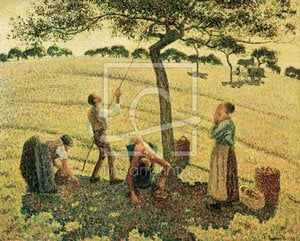
Камиј Писаро, 1830 – 1903

The 100 Most Famous Paintings by Камиј Писаро

The painting that made Камиј Писаро famous is Булвар Монмартр ноћу (1897); it hangs in the National Gallery, London. Јесен, Бање (1893) and Крње Роофс, Конер Оф А Виљеџ (1877) follow it in the hearts of collectors and museum visitors. Of the 1,559 works by Камиј Писаро in our catalogue, these 100 are the most admired, each presented with its date, its museum and what sets it apart.

Ranked by our popularity score, which combines the searches, visits and orders for each work. Updated октобар 2026. Every masterpiece on this page can be ordered as a museum-quality, hand-painted oil reproduction or a fine art print, at the size you choose.

Portrait of Камиј Писаро
Камиј Писаро · 1830 – 1903
Born · died
1830 – 1903, Шарлота Амалија
Movement
Impressionist landscape
Works in our catalogue
1.559
Most famous
Булвар Монмартр ноћу (1897)
Most works at
Musée d'Orsay

Камиј Писаро: the ten masterpieces

Булвар Монмартр ноћу (1897) by Камиј Писаро
1

Булвар Монмартр ноћу

1897 · Ulje na platnu · National Gallery, London

Kamila Pisara, figura od neprospornog značaja u svetu impresionizma, zauvek je vezan za oslikavanje menjajućih pejzaža. Njegovo delo "Bulvar Montmartr noću", nastalo 1897. godine, nije samo slika; to je poetski zapis pulsirajućeg života Pariza pod svetlom gasnih lampi i veštačkih izvora. Ova kompozicija nas poziva u dinamičan gradski pejzaž gde se igra svetla i senke stvara jedinstvenu atmosferu, čineći je bezvremenskim dodatkom svakoj kolekciji ili enterijeru.

Крње Роофс, Конер Оф А Виљеџ (1877) by Камиј Писаро
3

Крње Роофс, Конер Оф А Виљеџ

1877 · Ulje na platnu · Musée d'Orsay, Pariz

Očaravajući seoski zaklon Kamil Pizarovo delo „Crveni krovovi, ugao sela, zima” poziva posmatrače u spokojni ruralni pejzaž okupan toplim jesenjim nijansama. Ova očaravajuća scena beleži tiho lepotu sela smeštenog među golo drvećem, izazivajući osećaj spokoja i nostalgije. Ovo sliko je svedočanstvo Pizarove sposobnosti da stopi prirodne elemente sa ljudskim staništem, stvarajući harmoničnu kompoziciju koja deluje istovremeno utemeljeno i sanjivo. Postimpresionističko majstorstvo Pizar, pionir impresionističkog pokreta i ključna figura postimpresionizma, koristi…

Прибирање јабљиња код Ерагњи-сур-Епте (1888) by Камиј Писаро
4

Прибирање јабљиња код Ерагњи-сур-Епте

1888 · Ulje na platnu · Dallas Museum of Art, Dallas

Camille Pissarro’s “Apple Picking at Eragny-sur-Epte,” completed in 1888, stands as a quintessential embodiment of Impressionism's quest for capturing fleeting moments of beauty amidst the rhythms of rural life. More than just a depiction of agricultural activity—the careful harvesting of apples beneath the dappled shade of an ancient tree—it’s a profound meditation on harmony between humanity and nature, rendered with unparalleled sensitivity to color and texture.

Кућа господина Музија, Рута де Марли, Лувесијен (1872) by Камиј Писаро
5

Кућа господина Музија, Рута де Марли, Лувесијен

1872 · Ulje na platnu

"Kuća gospoda Musija, Ruta de Marli, Luvećijen" Kamila Pisaroa nije samo slika; to je trenutak zaleđen u vremenu, poziv da se uroni u mirnu atmosferu ruralne Francuske 19. veka. Ova dela, nastala 1872. godine, predstavlja vrhunac impresionističkog stila i pokazuje Pisarovljev talenat za hvatanje prolaznih efekata svetlosti i atmosfere. Kompozicija nas vodi zemljanim putem koji se prostire u daljinu, okrenut kućom sa krovom od crvenih tepiha na desnoj strani i…

Corner of the Garden in Eragny (1897) by Камиј Писаро
7

Corner of the Garden in Eragny

1897 · Oil On Canvas · Ordrupgaard, Gentofte

Camille Pissarro’s “Corner of the Garden in Eragny,” painted in 1897, is a captivating example of Impressionism that transports viewers to a tranquil garden scene. This oil on canvas masterpiece, currently residing within the esteemed Ordrupgaard Collection in Denmark, exemplifies Pissarro's skill in capturing fleeting moments and the beauty of everyday life through light and color.

Boulevard Montmartre, morning, cloudy weather (1897) by Камиј Писаро
8

Boulevard Montmartre, morning, cloudy weather

1897 · Acrylic On Canvas · Nacionalna galerija Viktorije, Melburn

A Snapshot of Parisian Life: Camille Pissarro’s Boulevard Montmartre Camille Pissarro's "Boulevard Montmartre, morning, cloudy weather" isn’t merely a depiction of a street; it’s a distillation of Impressionism itself. Painted in 1897 during a prolific period for the artist—a time when he meticulously documented the evolving cityscape of Paris—this canvas captures a fleeting moment imbued with profound observation and artistic sensitivity. The painting resides within the National Gallery of Victoria's…

Sen i Louvre, Pariz (1903) by Камиј Писаро
9

Sen i Louvre, Pariz

1903 · Ulje na platnu · Musée d'Orsay, Pariz

„Sen i Louvre“, koje je naslikao Kamilo Pisarov 1903. godine, nije samo prikaz Pariza; to je oličenje srži impresionizma – hvatanje prolaznih trenutaka lepote i emocije kroz svetlost i boju. Više od pukog posmatranja gradske panorame, Pisarov je želeo da prenese duh svog vremena, odražavajući rastući optimizam i dinamiku Francuske početkom dvadesetog veka.

Setting Sun, Autumn in Eragny (1900) by Камиј Писаро
10

Setting Sun, Autumn in Eragny

1900 · Oil On Canvas

Setting Sun, Autumn in Eragny is an oil on canvas painting created in 1900. The scene depicts a sunny day in the countryside featuring trees and grass. Several individuals are visible in the landscape, with some positioned in the foreground and others further away, appearing to walk and enjoy the outdoors. A dog is also present in the composition, located near the center of the scene.

More Камиј Писаро masterpieces, 11 to 100

Voćnjak u cvetu, Лувесиен (1872) by Камиј Писаро
#11

Voćnjak u cvetu, Лувесиен

1872 · National Gallery of Art

Trenutak zamrznut u prolećju: Bašta u cvetu, Louveciennes Slika „Bašta u cvetu“, koju je kreirao Kamil Pisar u 1872. godini, predstavlja esencijalni primer impresionističke pejzažne umetnosti – svedočenje…

Bring it home →
Портрет Родо Писсарро читајућег (1900) by Камиј Писаро
#12

Портрет Родо Писсарро читајућег

1900

Портрет Родо Писсарро Читающего является захватывающей картиной маслом на холсте, созданной известным датским и французским художником Камилем Писсарро в 1900 году. Эта прекрасная миниатюра имеет размеры 7 х…

Order a reproduction →
Gleaners (1887) by Камиј Писаро
#13

Gleaners

1887 · Kunstmuseum Basel

In his 1889 masterpiece Gleaners (also known as Les Glaneuses), Camille Pissarro captures a profound moment of everyday existence, turning the lens toward the tireless efforts of rural…

Order a reproduction →
The Quarry, Pontoise (1875) by Камиј Писаро
#14

The Quarry, Pontoise

1875 · Kunstmuseum Basel

To gaze upon Camille Pissarro's The Quarry, Pontoise is to step directly into the luminous embrace of late nineteenth-century French countryside. This painting, executed in 1875, transcends a…

Bring it home →
Outer harbour of Le Havre (1903) by Камиј Писаро
#15

Outer harbour of Le Havre

1903

To gaze upon Camille Pissarro's depiction of the Outer Harbour of Le Havre is to be instantly transported into the rhythmic heart of turn-of-the-century commerce and community. This…

Order a reproduction →
Убирање пешта (1880) by Камиј Писаро
#18

Убирање пешта

1880

“Picking Peas,” painted by Camille Pissarro in 1880, isn’t merely a depiction of agricultural labor; it's a distillation of the Impressionist ethos—a celebration of fleeting moments and luminous…

Bring it home →
Урожај картофеља (1885) by Камиј Писаро
#19

Урожај картофеља

1885

Појединачно Урожај Паприке Камела Писареа: Емоционална Портрет Сеобељитељства и Разумевања Камел Писаре је био велик уметник који је био одликован способношћу да пренесе дух времена и места на…

Bring it home →
A Path Across the Fields (1879) by Камиј Писаро
#21

A Path Across the Fields

1879 · Musée d'Orsay

A dirt road winds through a meadow, flanked by mature trees that establish a sense of depth within the landscape. In the distance, figures stroll leisurely or pause…

Bring it home →
Drveća na brdu, Jesen (1872) by Камиј Писаро
#24

Drveća na brdu, Jesen

1872

“Trees on a Hill, Autumn, Landscape in Louveciennes,” painted by Camille Pissarro in 1872, stands as a quintessential example of Impressionism—a movement that irrevocably altered the course of…

Order a reproduction →
Фестивал при Ермитажу (1876) by Камиј Писаро
#29

Фестивал при Ермитажу

1876 · Courtauld Gallery

Фестивал при Хермитажу Камил Писсарро, датски и французький художник, оставил неизгладимый след в истории искусства и является одним из ключевых фигур импрессионизма. Его работы отличаются удивительной способностью передавать…

Commission a hand-painted copy →
The Outer Boulevards, Snow Effect (1879) by Камиј Писаро
#31

The Outer Boulevards, Snow Effect

1879 · Musée Marmottan Monet

The Outer Boulevards, Snow Effect is an oil on canvas by Camille Pissarro. Painted in 1879, the work captures a specific, fleeting moment of winter. The canvas measures…

Bring it home →
Село Углик (1863) by Камиј Писаро
#36

Село Углик

1863

Camille Pissarro's “Village Corner,” painted in 1863, stands as a cornerstone of Impressionism—a movement that revolutionized painting and continues to inspire artists today. More than just a depiction…

Order a reproduction →
The Oise at Pontoise in Bad Weather (1876) by Камиј Писаро
#38

The Oise at Pontoise in Bad Weather

1876 · Museum Boijmans Van Beuningen

A Moment Frozen in Impressionistic Light Camille Pissarro’s “The Oise at Pontoise in Bad Weather,” painted in 1876, isn't merely a depiction of a rural landscape; it’s an…

Bring it home →
Côte des Grouettes, near Pontoise (1878) by Камиј Писаро
#40

Côte des Grouettes, near Pontoise

1878 · Metropoliten музеј у Њујорку

Camille Pissarro's Côte des Grouettes, near Pontoise, painted in 1878, is a captivating oil on canvas that embodies the essence of rural life and the beauty of nature.…

Bring it home →
Resting in the woods Pontoise (1878) by Камиј Писаро
#45

Resting in the woods Pontoise

1878 · Hamburger Kunsthalle

“Resting in the woods Pontoise,” painted in 1878 by Camille Pissarro, stands as a quintessential example of Impressionism—a movement that revolutionized painting and irrevocably altered our perception of…

Bring it home →
Landscape at Valhermeil (1878) by Камиј Писаро
#47

Landscape at Valhermeil

1878

In the gentle embrace of the French countryside, Camille Pissarro captured a fleeting fragment of eternity in his 1878 masterpiece, Landscape at Valhermeil. This exquisite oil on canvas…

Order a reproduction →
The Rising Path, Pontoise (1875) by Камиј Писаро
#48

The Rising Path, Pontoise

1875 · Brooklyn Museum

Camille Pissarro's "The Rising Path, Pontoise," painted in 1875 and currently residing within the esteemed Brooklyn Museum, is more than just a landscape; it’s a distillation of Impressionist…

Bring it home →
The Pont-Neuf: Snow (1902) by Камиј Писаро
#49

The Pont-Neuf: Snow

1902 · Nacionalna galerija u Velsu

Camille Pissarro’s "The Pont-Neuf: Snow," painted in 1902, isn’t merely a depiction of a Parisian street; it’s a carefully constructed moment frozen in time – a testament to…

Order a reproduction →
Hyde Park, London (1890) by Камиј Писаро
#51

Hyde Park, London

1890

Hyde Park, London is a masterful embodiment of Impressionist philosophy, captured by Camille Pissarro in 1890. This work transcends simple representation, inviting the viewer into a contemplative space…

Bring it home →
Mardi Gras na bulevardima (1897) by Камиј Писаро
#56

Mardi Gras na bulevardima

1897 · Fogg Art Museum

Remek-delo impresionizma U svetu impresionističke umetnosti, malo slika hvata su suštinu urbanog života onako živopisno kao „Mardi Gras na bulevardima“ Kamije Pisarro. Napravljeno 1897. godine, ovo remek-delo uljem…

Commission a hand-painted copy →
Roze peonije (1873) by Камиј Писаро
#61

Roze peonije

1873 · Ashmolean Museum

„Roze peonije“ Kamila Pisaroa, naslikano 1873. godine, nije samo prikaz cvijeća; to je izuzetna destilacija impresionističke filozofije uhvaćena na platnu. Izložen u Ashmolean muzeju u Oxfordu, ovo remek-djelo…

Bring it home →
Путник у земљиштама (1877) by Камиј Писаро
#62

Путник у земљиштама

1877

Камил Писаро и Свеча Обојеног Светла: Истражите Душу „Путника у Поље“ Камил Писаро, човек чије животно дело је одликовано посвећењем природном свету и уметом да га пренесе на…

Commission a hand-painted copy →
Gardens At Kew, Sunset (1892) by Камиј Писаро
#64

Gardens At Kew, Sunset

1892

Camille Pissarro’s *Gardens at Kew, Sunset*, painted in 1892, offers a serene glimpse into the burgeoning leisure culture of Victorian England. This idyllic scene, brimming with quiet activity…

Bring it home →
Cowherds, Bazincourt (1890) by Камиј Писаро
#71

Cowherds, Bazincourt

1890

The painting Cowherds, Bazincourt is a beautiful representation of rural life, created by the renowned artist Camille Pissarro in 1890. This stunning piece of art is a testament…

Order a reproduction →
Кућа у шуми (1872) by Камиј Писаро
#72

Кућа у шуми

1872

Десица о Камилу Писару и Картини „Дом у Лесу“ Камило Писаро био је велик сликар који је оставио неизбриљиван траг у историји европског изливања и у свету уметности.…

Commission a hand-painted copy →
Убирање паљачица 1 by Камиј Писаро
#75

Убирање паљачица 1

Уметничко описивање Камила Писароа и „Склањање песка“ Камил Писаро је био утицајан француски импресионистички и неоимпресионистички сликар који се одликује својим захвативним приказима руског живота. Један од његових…

Commission a hand-painted copy →
Goose Girl (1890) by Камиј Писаро
#77

Goose Girl

1890

Camille Pissarro's "Goose Girl," painted around 1890, is more than just a pastoral scene; it’s a tender exploration of rural life and the quiet beauty of nature rendered…

Order a reproduction →
Les chataigniers a Osny (1873) by Камиј Писаро
#79

Les chataigniers a Osny

1873

A Glimpse into Rural Harmony: Camille Pissarro’s *Les chataigniers à Osny* Camille Pissarro, a cornerstone of Impressionism and a pivotal figure bridging it to Neo-Impressionism, invites us into…

Order a reproduction →
Mirbeau's Garden, the Terrace (1892) by Камиј Писаро
#82

Mirbeau's Garden, the Terrace

1892

A Glimpse into Impressionism Mirbeau's Garden, the Terrace, painted in 1892 by the renowned French artist Camille Pissarro, is a quintessential example of Impressionist art. This beautiful oil…

Bring it home →
The Bather (1895) by Камиј Писаро
#89

The Bather

1895 · National Gallery of Art

In this 1895 oil painting, a solitary female figure is positioned on a grassy bank in the lower right foreground. She is depicted in a semi-nude state, her…

Order a reproduction →
The Louvre, March Mist (1903) by Камиј Писаро
#96

The Louvre, March Mist

1903 · Ny Carlsberg Glyptotek

Camille Pissarro’s “The Louvre, March Mist,” completed in 1903, isn't merely a depiction of Paris; it’s an embodiment of the Impressionist ethos—a celebration of fleeting moments and atmospheric…

Order a reproduction →
Пијесјарово тржиште у Понтоизу (1882) by Камиј Писаро
#98

Пијесјарово тржиште у Понтоизу

1882

市场于蓬托伊 市场于蓬托伊是一幅由法国画家卡米尔·毕索罗创作的精美油画作品,于1882年完成。 这件艺术品尺寸为62厘米×46厘米,是印象主义风格的一个杰出例子,毕索罗在发展这一风格中发挥了重要作用。 背景与构图 这幅画描绘了一群妇女聚集在一个房间里,可能是一个厨房或餐厅。 该场景温暖而舒适,妇女们正在交谈或准备分享一顿饭。 방에는 두 개의 의자와 식탁이 있으며 여성들이 둘러싸고 있습니다. 테이블 위에 몇 개의 그릇이 놓여 있는데 아마도 음식이나 요리 재료를 담고 있을…

Order a reproduction →

Камиј Писаро's paintings by period

The subjects Камиј Писаро painted most

The four subjects that return most often among these masterpieces, with the finest example of each.

Where to see Камиј Писаро's paintings

The 8 museums that hold the most of the paintings on this page.

Museum City Works by Камиј Писаро Paintings from this list
Musée d'Orsay, ParizMusée d'Orsay Pariz 58 Крње Роофс, Конер Оф А Виљеџ, Sen i Louvre, Pariz, A Path Across the Fields
Metropoliten музеј у Њујорку, ЊујоркMetropoliten музеј у Њујорку Њујорк 29 The Tuileries Gardens: Winter Afternoon, Côte des Grouettes, near Pontoise, The Garden of the Tuileries on a Winter Afternoon
Dallas Museum of Art, DallasDallas Museum of Art Dallas 9 Прибирање јабљиња код Ерагњи-сур-Епте, Self_Portrait with Palette, Peasant Woman Carrying Two Bundles of Hay
National Gallery of Art, WashingtonNational Gallery of Art Washington 21 Voćnjak u cvetu, Лувесиен, The Bather
National Gallery, LondonNational Gallery London 13 Булвар Монмартр ноћу, The Cote des Boeurs at l'Hermitage, near Pontoise
Kunstmuseum Basel, BaselKunstmuseum Basel Basel 9 Gleaners, The Quarry, Pontoise
Nacionalna galerija Viktorije, MelburnNacionalna galerija Viktorije Melburn 2 Boulevard Montmartre, morning, cloudy weather, The banks of the Viosne at Osny in grey weather, winter
Ashmolean Museum, OksfordAshmolean Museum Oksford 15 Roze peonije

Камиј Писаро, decade by decade: the defining painting of each

  1. 1860s
    Landscape with Factory (1867) by Камиј Писаро
    No. 17 of 100

    Landscape with Factory

    Age 30 – 39

    To stand before Camille Pissarro's Landscape with Factory is to step into a moment suspended between the pastoral dream and the burgeoning reality of the modern age. Painted…

  2. 1870s
    Крње Роофс, Конер Оф А Виљеџ (1877) by Камиј Писаро
    #3 of 100

    Крње Роофс, Конер Оф А Виљеџ

    Age 40 – 49 · Musée d'Orsay

    Očaravajući seoski zaklon Kamil Pizarovo delo „Crveni krovovi, ugao sela, zima” poziva posmatrače u spokojni ruralni pejzaž okupan toplim jesenjim nijansama. Ova očaravajuća scena beleži tiho lepotu sela…

  3. 1880s
  4. 1890s
    Булвар Монмартр ноћу (1897) by Камиј Писаро
    #1 of 100

    Булвар Монмартр ноћу

    Age 60 – 69 · National Gallery

    Kamila Pisara, figura od neprospornog značaja u svetu impresionizma, zauvek je vezan za oslikavanje menjajućih pejzaža. Njegovo delo "Bulvar Montmartr noću", nastalo 1897. godine, nije samo slika; to…

  5. 1900s
    Sen i Louvre, Pariz (1903) by Камиј Писаро
    #9 of 100

    Sen i Louvre, Pariz

    Age 70 – 73 · Musée d'Orsay

    „Sen i Louvre“, koje je naslikao Kamilo Pisarov 1903. godine, nije samo prikaz Pariza; to je oličenje srži impresionizma – hvatanje prolaznih trenutaka lepote i emocije kroz svetlost…

Камиј Писаро's masterpieces: questions and answers

Which painting is Камиј Писаро best known for?Show the answer

Булвар Монмартр ноћу (1897), National Gallery, London. Next come Јесен, Бање (1893) and Крње Роофс, Конер Оф А Виљеџ (1877).

How old was Камиј Писаро when painting Булвар Монмартр ноћу?Show the answer

67 years old: Булвар Монмартр ноћу dates from 1897 and Камиј Писаро was born in 1830.

What are Камиј Писаро's ten greatest paintings?Show the answer

Булвар Монмартр ноћу, Јесен, Бање, Крње Роофс, Конер Оф А Виљеџ, Прибирање јабљиња код Ерагњи-сур-Епте, Кућа господина Музија, Рута де Марли, Лувесијен, Закатанје роуенског запада, Corner of the Garden in Eragny, Boulevard Montmartre, morning, cloudy weather, Sen i Louvre, Pariz and Setting Sun, Autumn in Eragny. The ranking above gives the year and the museum of each.

How many works did Камиј Писаро paint?Show the answer

Our catalogue lists 1,559 works by Камиј Писаро, dated from 1863 to 1903.

In which museums can I see Камиј Писаро's masterpieces?Show the answer

Most of them are in Musée d'Orsay (Pariz), Metropoliten музеј у Њујорку (Њујорк) and Dallas Museum of Art (Dallas). The table above lists the museums one by one.

When did Камиј Писаро paint the masterpieces?Show the answer

In 1870s: 32 of the 100 works on this page date from then, among them Крње Роофс, Конер Оф А Виљеџ.

What are the first and last famous paintings of Камиј Писаро?Show the answer

The earliest on this page is Село Углик (1863), the latest Sen i Louvre, Pariz (1903).

What were Камиј Писаро's favourite subjects?Show the answer

Rural scene (13), Trees (12) and Cityscape (10), among the 100 works on this page.

Which technique did Камиј Писаро favour?Show the answer

Oil On Canvas: 44 of the 100 works on this page.

What art movement is Камиј Писаро part of?Show the answer

Impressionist landscape, as the paintings on this page show.

Which masterpieces by Камиј Писаро hang at the Musée d'Orsay?Show the answer

Крње Роофс, Конер Оф А Виљеџ, Sen i Louvre, Pariz and A Path Across the Fields are among the 7 works on this page held by the Musée d'Orsay, Pariz.

Can I own a reproduction of a Камиј Писаро masterpiece?Show the answer

Yes. Every painting on this page can be ordered as a museum-quality, hand-painted oil reproduction or a fine art print, in the size you choose, from the painting's own page.

The life of Камиј Писаро

Early Life, Family and Training

Camille Pissarro enters the world on July 10, 1830, in Charlotte Amalie, Saint Thomas. His origins are a convergence of identities. His father, Frederick Abraham Gabriel Pissarro, is a man of Portuguese Jewish descent holding French nationality. His mother, Rachel Manzano-Pomié, brings a French-Jewish lineage with Provençal roots to the household. This diverse background shapes a childhood far from the French mainland, set against the backdrop of the Danish West Indies.

The pull toward Paris eventually dictates his path. After early training at the Savary Academy in Passy, near Paris, the focus shifts toward formal academic rigor. He moves through the halls of the École des Beaux-Arts and the Académie Suisse. The training is not merely theoretical; it is a direct encounter with the giants of the era. He studies under Gustave Courbet and Jean-Baptiste-Camille Corot, absorbing the foundations of realism and the burgeoning interest in the natural world. By 1861, he is a registered copyist in the Musée du Louvre, working among the shadows of the masters he seeks to emulate.

Artistic Development and Style

The transition from academic tradition to the open air marks a fundamental shift in his approach. He moves away from the stifling constraints of formal training to embrace plein air painting, working directly from nature to capture the immediate sensations of the landscape. This commitment to the outdoors necessitates a new technical language. He begins applying oil on canvas with visible, textured strokes, abandoning the smooth finish of the academies. His palette brightens, utilizing separate patches of unmixed pigments to build up color. By the first half of the 1870s, his compositions appear firmly controlled, maintaining a structural integrity even as his brushwork becomes more expressive.

The search for new ways to render light leads to radical experimentation. He moves beyond the traditional application of paint to explore the delicate possibilities of pastel, layering thin washes of pigment onto paper to achieve subtle gradations of tone. This curiosity extends into his later years when he engages with Neo-Impressionism. Influenced by the methods of Georges Seurat and Paul Signac, he adopts pointillist techniques, utilizing regulated, comma-like brushstrokes to build his surfaces. This period demonstrates a willingness to abandon his established methods in favor of scientific precision and new optical effects.

The Impressionist Circle and Mentorship

The Impressionist movement is often viewed as a collection of fractured, competing egos, but Pissarro provides the glue. Between 1874 and 1886, he exhibits at all eight Paris Impressionist exhibitions, maintaining a steady presence while others drifted or clashed. He is the stabilizing force in a circle defined by internal disagreements. While the group navigates the friction of radical new ideas, Pissarro remains a constant, providing a sense of camaraderie that keeps the movement from splintering entirely.

His influence extends into the studios of the next generation. He acts as a mentor to Paul Cézanne, Vincent van Gogh, and Paul Gauguin, offering the technical and philosophical guidance they require to find their own paths. The connection with Cézanne is particularly intense; the two artists often work side by side, sometimes painting the exact same subjects to test the limits of space and color. They experiment together, regulating their brushstrokes and restricting their palettes in a shared search for a new visual language.

Personal stability also anchors his life away from the Parisian ferment. In 1871, he marries Julie Vellay, a vine-grower's daughter from Burgundy, in London. This connection to the land and the working class informs the quiet, rhythmic pulse of his social outlook. He does not merely observe the landscape; he builds a community of artists around the act of seeing.

Key Works and Subjects

Pissarro moves between the quietude of the countryside and the shifting energy of the city. He captures the rhythm of everyday life, often focusing on the labor of peasants working in open fields. In 1867, he produced The Jallais Hills, Pontoise, a work that looks toward the landscapes of his frequent subjects. By 1872, his gaze turned to the architecture of the outskirts in The House of Monsieur Musy, Route de Marly, Louveciennes.

The artist also turns his attention to the intimate and the individual. In 1874, he painted a Portrait of Paul Cezanne. His experimentation with medium is evident in the 1876 Portrait of Eugenie Estruc, a pastel on paper measuring 31 x 21 cm. This work utilizes thin washes of pigment to achieve a soft, diffused light across the subject's features. Later, in 1882, he documented the social pulse of a local market in The Poultry Market at Pontoise.

Legacy and Influence

The revolution of modern art finds its structural core in Pissarro’s insistence on the plein air method. By moving the easel from the controlled studio to the unpredictable outdoors, he fundamentally altered how landscape art is perceived. This commitment to capturing the immediate, fleeting effects of light and atmosphere changed the trajectory of painting. He did not merely observe the landscape; he sought to record the very sensations of the natural world through a textured, rhythmic application of pigment.

His influence operates through a direct lineage of mentorship. He provided the philosophical and technical framework that allowed younger, more volatile talents to find their footing. Without his stabilizing presence and willingness to experiment—even venturing into the pointillist techniques of Neo-Impressionism—the development of Post-Impressionism might have taken a different shape. He bridged the gap between the structured realism of the past and the radical, subjective expressions of the future.

Today, his presence is felt in the permanent collections of major museums across the globe. His canvases remain essential for understanding the shift toward modernism. His works are held in:

Where to See the Works Today

The weight of Pissarro's influence is felt most heavily in Paris. The Musée d'Orsay holds the largest concentration of his output, with 23 works preserved within its walls. Here, the evolution of his brushwork remains visible, from the structured compositions of his early years to the more liberated, textured surfaces of his later period. Visitors can find his depictions of the French countryside and the shifting light of the Seine, including works like Red Roofs, Corner of a Village, Winter from about 1877.

Across the Atlantic, the Metropolitan Museum of Art in New York maintains a significant presence of his vision, housing 14 works. This collection allows for a direct comparison of his stylistic shifts, such as the transition from his more traditional landscapes to the experimental textures of his Neo-Impressionist phase. In the United States, the National Gallery of Art in Washington holds 6 works, while the Art Institute of Chicago preserves 5. These pieces often focus on the quiet dignity of rural labor and the atmospheric qualities of the French landscape.

The reach of his canvases extends into the United Kingdom and beyond. The Ashmolean Museum in Oxford contains 6 of his paintings, offering a window into the specific light and color he sought to capture through plein air observation. His presence in these global institutions ensures that his commitment to the ephemeral qualities of nature remains accessible to those studying the development of modern painting.

All 1559 works by Камиј Писаро →