Хенри Лебаске, 1865 – 1937

Хенри Лебаске: 100 najpoznatijih slika

Street by the Port at Collioure (1921) je najpoznatije delo umetnika Хенри Лебаске. Young woman on a hammock (1923) i On the Beach (1921) su sledeća dva dela koja svet najbolje poznaje. Od 539 dela umetnika Хенри Лебаске u našem katalogu, izdvajamo ovih 100 koja kolekcionari i posetioci muzeja najčešće posmatraju, uz navođenje godine, muzeja i priče o svakom od njih.

Rangirano prema našem koeficijentu popularnosti, koji kombinuje pretrage, posete i porudžbine za svako delo. Ažurirano октобар 2026. Svako remek-delo na ovoj stranici može se naručiti kao ručno oslikana uljana reprodukcija muzejskog kvaliteta ili kao umetnička štampa, u dimenzijama koje odaberete.

Portret Хенри Лебаске
Хенри Лебаске · 1865 – 1937
Rođen · umro
1865 – 1937, Шампиње
Pokret
Post-impressionism
Radovi u našem katalogu
539
Najpoznatije
Street by the Port at Collioure (1921)
Najviše dela u
Валраф-Рихарц Музеј

Top 10: najpoznatija dela umetnika Хенри Лебаске

Street by the Port at Collioure (1921) čiji je Хенри Лебаске
1

Street by the Port at Collioure

1921 · Oil

In this 1921 work, we find ourselves standing at the edge of a quiet harbor, looking out toward the water. The scene captures a narrow street leading down to the port, where the architecture of the town meets the movement of the sea. Several boats are scattered throughout the harbor, their forms resting upon the water, while small figures move along the waterfront. There is a sense of a lived-in…

Young woman on a hammock (1923) čiji je Хенри Лебаске
2

Young woman on a hammock

1923 · Oil On Canvas

Sunlight filters through a dense canopy of leaves, casting dappled patterns across a secluded garden. In the center of this lush sanctuary, a young woman reclines within the gentle embrace of a hammock. The fabric, marked by distinct stripes of red, yellow, and blue, sways almost imperceptibly between two sturdy trees. She rests in a state of profound contentment, her body softly contoured by the weight of her repose. Around…

On the Beach (1921) čiji je Хенри Лебаске
3

On the Beach

1921 · Oil On Canvas

On the Beach is an oil on canvas by the French artist Henri Lebasque. Created about 1921, the work reflects the artist's established interest in the interplay of light and leisure. Lebasque, born in Champigné, France, developed a style characterized by a natural brush-stroke and a focus on the serene atmosphere of the outdoors.

Ostatak rang liste Хенри Лебаске, od 11 do 100

The Siesta (1923) čiji je Хенри Лебаске
#32

The Siesta

1923

To gaze upon Henri Lebasque's The Siesta is to be instantly transported to a moment suspended in golden, languid time. This oil-on-canvas masterpiece, painted in 1923, captures the…

Naručite ručno oslikani primerak →
Garden with Urn (1913) čiji je Хенри Лебаске
#39

Garden with Urn

1913

To gaze upon Henri Lebasque’s Garden with Urn is to step through a veil and into a moment of perfect, sun-drenched tranquility. This painting, executed in 1913, is…

Unesite ga u svoj dom →

Slike umetnika Хенри Лебаске po periodima

Motivi koje je Хенри Лебаске najčešće slikao

Četiri teme koje se najčešće pojavljuju među ovim remek-delima, sa najboljim primerom za svaku od njih.

Gde videti slike umetnika Хенри Лебаске

2 muzeja u kojima se nalazi najviše slika sa ove stranice.

Muzej Grad Radovi umetnika Хенри Лебаске Slike iz ovog spiska
Валраф-Рихарц Музеј, KölnВалраф-Рихарц Музеј Köln 3 Village of Champigne
Museo de Arte de Ponce, PonceMuseo de Arte de Ponce Ponce 1 Young Girls in a Wood

Хенри Лебаске kroz decenije: jedno remek-delo za svaku

  1. 1880s
  2. 1890s
  3. 1900s
  4. 1910s
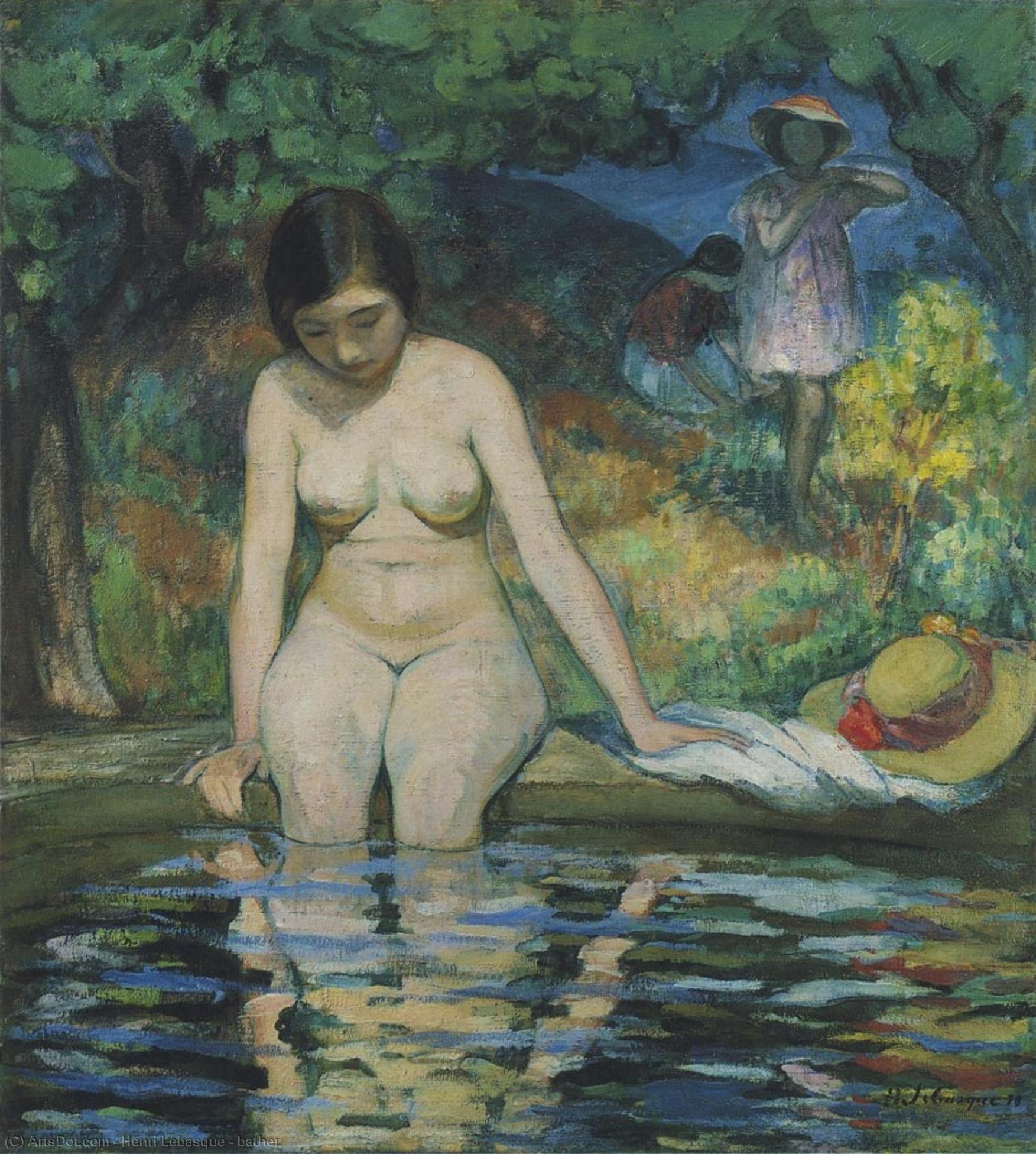
    bather (1910) čiji je Хенри Лебаске
    Rang 6 od 100

    bather

    Godine 45 – 54
  5. 1920s
    Street by the Port at Collioure (1921) čiji je Хенри Лебаске
    #1 od 100

    Street by the Port at Collioure

    Godine 55 – 64

    In this 1921 work, we find ourselves standing at the edge of a quiet harbor, looking out toward the water. The scene captures a narrow street leading down…

Slike umetnika Хенри Лебаске: često postavljana pitanja

Koja je najpoznatija slika umetnika Хенри Лебаске?Prikaži odgovor

Street by the Port at Collioure (1921). Sledeći su Young woman on a hammock (1923) i On the Beach (1921).

U kojoj je godini Хенри Лебаске naslikao Street by the Port at Collioure?Prikaži odgovor

56 godina: Street by the Port at Collioure datira iz 1921, a Хенри Лебаске je rođen/a 1865.

Koja su 10 najpoznatijih slika umetnika Хенри Лебаске?Prikaži odgovor

Street by the Port at Collioure, Young woman on a hammock, On the Beach, Girls in the Garden, In the Flowers, bather, Summer Afternoon at Frejus, Bathers at a fountain in Saint Tropez, Woman in a Boat with an Umbrella i Blue Reflection in the Fountain at Pradet. Gornji rang prikazuje godinu i muzej za svako od njih.

Koliko ima slika umetnika Хенри Лебаске?Prikaži odgovor

Naš katalog sadrži 539 dela umetnika Хенри Лебаске, datiranih od 1886 do 1926.

Gde mogu da vidim najpoznatija dela umetnika Хенри Лебаске?Prikaži odgovor

Većina njih se nalazi u Валраф-Рихарц Музеј (Köln) i Museo de Arte de Ponce (Ponce). U tabeli iznad su muzeji navedeni jedan po jedan.

U kom periodu je Хенри Лебаске naslikao/la svoje najpoznatije radove?Prikaži odgovor

U periodima 1900s: 41 od ukupno 100 dela na ovoj stranici datiraju iz tog vremena, od čega je Girls in the Garden.

Ko je najranije i najnovije poznato delo umetnika Хенри Лебаске?Prikaži odgovor

Najstarije delo na ovoj stranici je iz Reading in the Garden (1886), a najnovije iz Blue Mountains in Cannes (1926).

Koje je motive Хенри Лебаске slikao?Prikaži odgovor

Rivers (13), Women (12) i Girls (9), od ukupno 100 dela na ovoj stranici.

Na čemu je Хенри Лебаске slikao i kojim sredstvima?Prikaži odgovor

Oil On Canvas: 13 od ukupno 100 dela na ovoj stranici.

Kojem umetničkom pravcu pripada umetnost autora Хенри Лебаске?Prikaži odgovor

Post-impressionism i Impressionism, kao što pokazuju slike na ovoj stranici.

Gde mogu da kupim reprodukciju Хенри Лебаске?Prikaži odgovor

Da. Svaku sliku sa ove stranice možete naručiti kao ručno oslikano ulje na platnu muzejskog kvaliteta ili kao umetnički print, u veličini koju odaberete, direktno sa stranice te slike.

Хенри Лебаске: biografija

A Painter of Joy and Light: The Life and Art of Henri Lebasque

Henri Lebasque, a name perhaps less immediately recognized than some of his Post-Impressionist contemporaries, nevertheless occupies a significant place in the artistic landscape of early 20th-century France. Born in Champigné, Maine-et-Loire, in 1865, Lebasque’s journey toward becoming a celebrated painter was one marked by diligent study, evolving influences, and an unwavering commitment to capturing beauty in everyday life. His early education at the École régionale des beaux-arts d'Angers provided a foundational grounding, but it was his move to Paris in 1886 that truly ignited his artistic development. There, under the tutelage of Léon Bonnat and through assisting Ferdinand Humbert with decorative murals at the Panthéon, he honed his technical skills while immersing himself in the vibrant Parisian art scene. This period proved crucial, bringing him into contact with pivotal figures like Camille Pissarro and Auguste Renoir, whose emphasis on light and color would profoundly shape his aesthetic sensibilities.

Early Life and Artistic Beginnings

Lebasque’s formative years were characterized by a quiet determination to pursue artistic excellence. Born to modest parents—his father was a carpenter—he demonstrated an early aptitude for drawing and painting, nurturing this talent through self-directed study and experimentation. Recognizing the importance of formal training, he enrolled at the École régionale des beaux-arts d'Angers, where he honed his technical skills and developed a foundational understanding of artistic principles. However, it was his relocation to Paris in 1886 that irrevocably altered the trajectory of his artistic career. Drawn to the burgeoning artistic community of Montmartre, Lebasque sought guidance from luminaries like Léon Bonnat and Ferdinand Humbert, immersing himself in the atmosphere of innovation and creativity that defined the era. His involvement with decorative murals at the Panthéon—a collaborative project with Auguste Renoir—provided invaluable experience and cemented his connection to the broader artistic movement.

Influences and Artistic Development

Lebasque’s artistic vision was profoundly shaped by the intellectual currents of his time, particularly the burgeoning theories of Georges Seurat and Paul Signac concerning Chromoluminarism – a revolutionary approach to painting that championed the use of complementary colors to achieve luminous effects. Embracing this scientific methodology alongside the stylistic explorations of Les Nabis—a group of artists who prioritized domestic scenes and intimate moments—Lebasque cultivated a distinctive aesthetic sensibility. The influence of Édouard Vuillard and Pierre Bonnard was particularly significant, fostering in him a fascination with flattened forms, decorative patterns, and subtle color harmonies. These artists championed the depiction of everyday life with remarkable sensitivity, encouraging Lebasque to focus on capturing the quiet poetry of ordinary experiences.

Notable Works and Artistic Style

Lebasque’s oeuvre is distinguished by its serene atmosphere and harmonious palette—a testament to his unwavering commitment to portraying beauty in its simplest form. He excelled at depicting domestic interiors bathed in soft light, capturing tender moments between family members with remarkable grace and empathy. His paintings resonate with a palpable sense of tranquility, inviting viewers into worlds imbued with warmth and affection. Among his most celebrated creations are La Cigarette—a masterful portrayal of a woman smoking—and Una joven en el bosque—a luminous depiction of a young girl amidst the verdant foliage of a woodland landscape. Lebasque’s technique involved building up layers of thin, translucent paint, allowing the underlying colors to shimmer through and creating an ethereal quality that is characteristic of his style. He skillfully employed complementary color pairings—blues and oranges, reds and greens—to generate visual excitement while maintaining an overall sense of balance and harmony.

Legacy and Recognition

Throughout his prolific career, Henri Lebasque garnered considerable acclaim for his artistic achievements, participating in prestigious exhibitions such as the Salon d’Automne—which he helped establish alongside Henri Matisse—and the Salon des Indépendants. His commissions included decorative projects for theaters and liners, demonstrating his versatility and securing his place within the annals of art history. Today, Lebasque’s paintings reside in prominent museum collections across France and internationally—a testament to their enduring artistic significance and captivating beauty. He remains a beloved figure among Impressionist enthusiasts, whose serene vision continues to inspire admiration and contemplation. His legacy endures as an emblem of artistic integrity and the pursuit of aesthetic excellence—a reminder that true artistry lies in capturing the essence of human experience with sensitivity and grace.

Sva 539 dela umetnika Хенри Лебаске →