

Saint Louis Forgiving Pierre de Bretagne (1817) je najpoznatije delo umetnika Georges Rouget, koje se nalazi u muzeju Musée des Beaux-Arts de Quimper u gradu Quimper. Sketch for the church Saint Gervais "Ecce Homo" (1819) i Jean-Nicolas Houchard (1835) su sledeća dva dela koja svet najbolje poznaje. Od 39 dela umetnika Georges Rouget u našem katalogu, izdvajamo ovih 39 koja kolekcionari i posetioci muzeja najčešće posmatraju, uz navođenje godine, muzeja i priče o svakom od njih.
Rangirano prema našem koeficijentu popularnosti, koji kombinuje pretrage, posete i porudžbine za svako delo. Ažurirano октобар 2026. Svako remek-delo na ovoj stranici može se naručiti kao ručno oslikana uljana reprodukcija muzejskog kvaliteta ili kao umetnička štampa, u dimenzijama koje odaberete.


A middle-aged man sits in a moment of profound stillness, his gaze drifting toward the upper right as if caught by a sudden, unspoken thought. He is draped in the heavy, dark navy blue of a jacket that absorbs the light, contrasting sharply against the crisp, creamy white of his cravat. The light strikes the left side of his face with a deliberate intensity, sculpting the sharp lines of his…


The canvas before you presents not merely a likeness, but an embodiment of the 19th century’s fascination with portraiture – a meticulously rendered study in dignity and quiet authority. Painted by Georges Rouget between 1803 and 1857, this depiction of Jean Pierre Thenot is more than just a representation; it's a window into a specific moment in French history, imbued with the formal elegance and restrained emotion characteristic of his…


Georges Rouget's "Mesdemoiselles Mollien," painted in 1811, is more than just a portrait; it’s a window into the refined world of early 19th-century French society and a testament…
Naručite reprodukciju →
This remarkable piece exemplifies the Neoclassical movement's preoccupation with idealized form and rational expression—a legacy that continues to inspire artists and collectors alike. Its serene dignity speaks volumes…
Naručite ručno oslikani primerak →
This striking portrait depicts Emmanuel de Grouchy, Colonel du 2e Dragon in 1792. Painted by Georges Rouget, a neoclassical French painter known for his historical scenes and association…
Naručite reprodukciju →Četiri teme koje se najčešće pojavljuju među ovim remek-delima, sa najboljim primerom za svaku od njih.
8 muzeja u kojima se nalazi najviše slika sa ove stranice.
| Muzej | Grad | Radovi umetnika Georges Rouget | Slike iz ovog spiska |
|---|---|---|---|
 Opera House |
Versailles | 6 | Achille Alexandre Alphonse, Viscount de Cailleux (1788-1876), Director of the Musées royaux, ALEXANDRE FRANCOIS MARIE, VICOMTE DE BEAUHARNAIS, GENERAL EN CHEF DE L'ARMEE DU RHIN (1760 1794), VICTOR GUY BARON DUPERRE, MATELOT EN 1792 (1775 1846) |
 Luvr |
Pariz | 2 | JEAN PIERRE THENOT (1803 1857), MESDEMOISELLES MOLLIEN |
 Musée des Beaux-Arts de Quimper |
Quimper | 1 | Saint Louis Forgiving Pierre de Bretagne |
 Petit Palais |
Pariz | 1 | Sketch for the church Saint Gervais "Ecce Homo" |
 Musée de l'Armée |
Pariz | 1 | Jean-Nicolas Houchard |
 Bavarske državne slikopisne kolekcije |
Minhen | 1 | Jacques-Louis David |
 Musée Fesch |
Eks-en-Provans | 1 | The King of Rome in the Tuileries Garden |
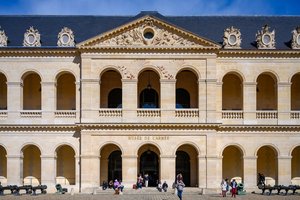 Ministère de la Défense Nationale |
Pariz | 1 | FRANCOIS CHASSELOUP LAUBAT, GENERAL DE DIVISION (1754 1833) - Жарко Руже |


Saint Louis Forgiving Pierre de Bretagne (1817), Musée des Beaux-Arts de Quimper, Quimper. Sledeći su Sketch for the church Saint Gervais "Ecce Homo" (1819) i Jean-Nicolas Houchard (1835).
34 godina: Saint Louis Forgiving Pierre de Bretagne datira iz 1817, a Georges Rouget je rođen/a 1783.
Saint Louis Forgiving Pierre de Bretagne, Sketch for the church Saint Gervais "Ecce Homo", Jean-Nicolas Houchard, Jacques-Louis David, Achille Alexandre Alphonse, Viscount de Cailleux (1788-1876), Director of the Musées royaux, The King of Rome in the Tuileries Garden, JEAN PIERRE THENOT (1803 1857), DEBARQUEMENT DE SAINT LOUIS EN EGYPTE.4 JUIN 1249, ALEXANDRE FRANCOIS MARIE, VICOMTE DE BEAUHARNAIS, GENERAL EN CHEF DE L'ARMEE DU RHIN (1760 1794) i FRANCOIS CHRISTOPHE KELLERMAN, GENERAL EN CHEF DE L'ARMEE DE LA MOSELLE EN 1792 (1735 1820). Gornji rang prikazuje godinu i muzej za svako od njih.
Naš katalog sadrži 39 dela umetnika Georges Rouget, datiranih od 1817 do 1850.
Većina njih se nalazi u Opera House (Versailles), Luvr (Pariz) i Musée des Beaux-Arts de Quimper (Quimper). U tabeli iznad su muzeji navedeni jedan po jedan.
U periodima 1810s: 2 od ukupno 39 dela na ovoj stranici datiraju iz tog vremena, od čega je Saint Louis Forgiving Pierre de Bretagne.
Najstarije delo na ovoj stranici je iz Saint Louis Forgiving Pierre de Bretagne (1817), a najnovije iz The King of Rome in the Tuileries Garden (1850).
Portrait (4), Dignified (3) i Formal (2), od ukupno 39 dela na ovoj stranici.
Oil On Canvas: 3 od ukupno 39 dela na ovoj stranici.
Neoclassicism, kao što pokazuju slike na ovoj stranici.
Achille Alexandre Alphonse, Viscount de Cailleux (1788-1876), Director of the Musées royaux, ALEXANDRE FRANCOIS MARIE, VICOMTE DE BEAUHARNAIS, GENERAL EN CHEF DE L'ARMEE DU RHIN (1760 1794) i VICTOR GUY BARON DUPERRE, MATELOT EN 1792 (1775 1846) su među 6 dela na ovoj stranici koja se nalaze u Opera House, Versailles.
Da. Svaku sliku sa ove stranice možete naručiti kao ručno oslikano ulje na platnu muzejskog kvaliteta ili kao umetnički print, u veličini koju odaberete, direktno sa stranice te slike.

