Жорж Брак, 1882 – 1963

Жорж Брак: 100 najpoznatijih slika

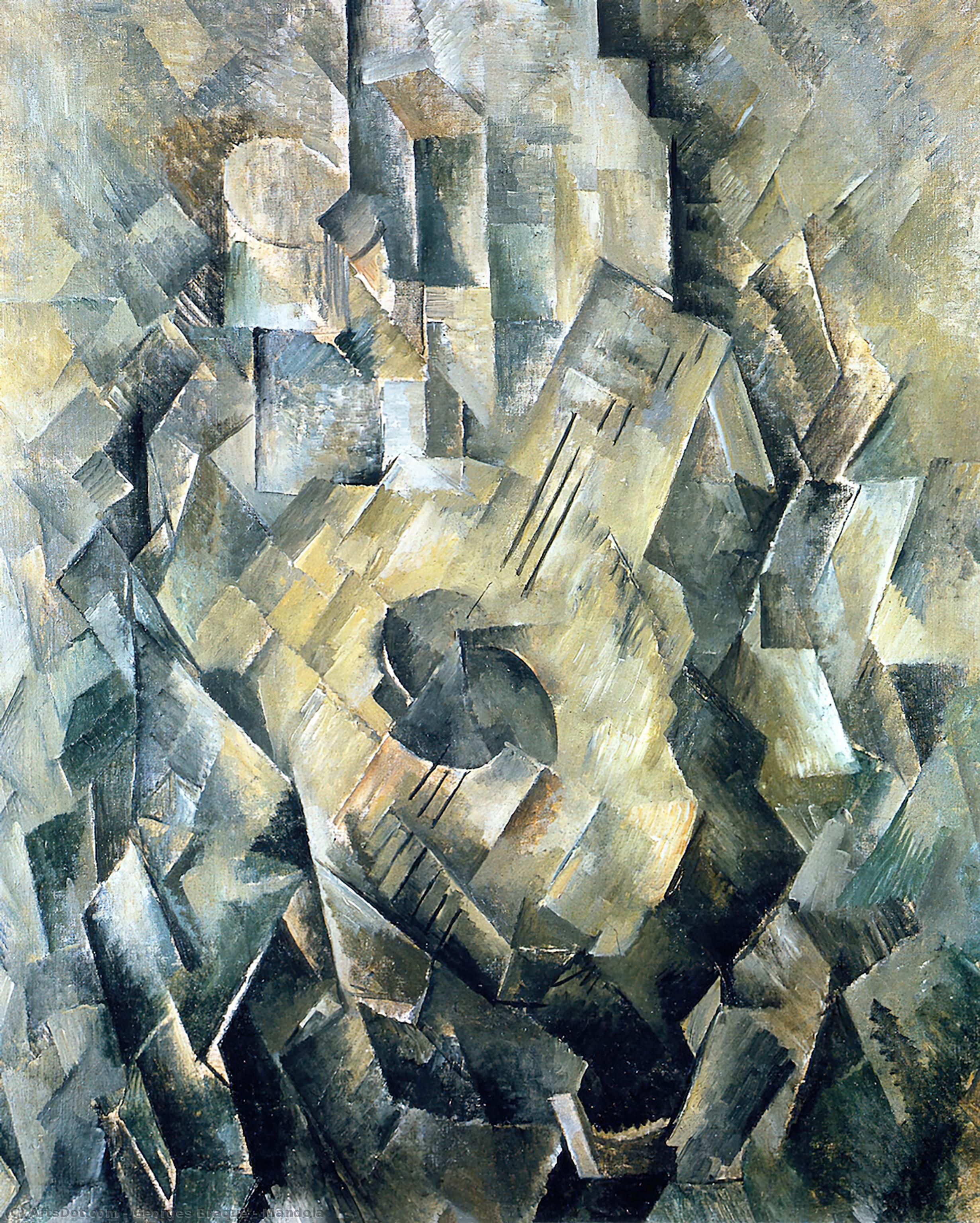
Мандола (1910) je najpoznatije delo umetnika Жорж Брак, koje se nalazi u muzeju Tate Gallery u gradu London. Čovek sa Gitarom (1914) i Куће у Л'Естаку su sledeća dva dela koja svet najbolje poznaje. Od 700 dela umetnika Жорж Брак u našem katalogu, izdvajamo ovih 100 koja kolekcionari i posetioci muzeja najčešće posmatraju, uz navođenje godine, muzeja i priče o svakom od njih.

Rangirano prema našem koeficijentu popularnosti, koji kombinuje pretrage, posete i porudžbine za svako delo. Ažurirano октобар 2026.

Portret Жорж Брак
Жорж Брак · 1882 – 1963
Rođen · umro
1882 – 1963, Аржантеј
Pokret
Kubizam
Radovi u našem katalogu
700
Najpoznatije
Мандола (1910)
Najviše dela u
The Phillips Collection

Top 10: najpoznatija dela umetnika Жорж Брак

Мандола (1910) čiji je Жорж Брак
1

Мандола

1910 · Ulje na platnu · Tate Gallery, London

“Mandola” Đorđa Braka, nastala 1910. godine, predstavlja kamen temeljac u razvoju analitičkog kubizma – revolucionarnog stila koji je slomio tradicionalne umetničke konvencije. Ova uljana slika na platnu (71 x 56 cm) nije samo prikaz muzičkog instrumenta; to je duboko istraživanje oblika, percepcije i samog čina gledanja. Umesto direktnog predstavljanja, Brak dekonstruiše mandolu (instrument nalik lutnji), razbijajući njen oblik u složenoj igri geometrijskih ravni. Ovo nije samo slika; to je intelektualna…

Čovek sa Gitarom (1914) čiji je Жорж Брак
2

Čovek sa Gitarom

1914 · Ulje na platnu

Đorže Braka i "Čovek sa Gitarom": Analitički Kubizam u Svečanom Izrazu "Čovek sa Gitarom" Đorža Braka, nastao 1914. godine, nije samo slika; to je kamen-temeljac revolucionarnog umetničkog pokreta – analitičkog kubizma. Ovo delo, koje se danas nalazi u kolekcijama najcenjenijih ljubitelja umetnosti i predstavlja izuzetan ukras svakog enterijera, predstavlja dubok istraživački pohod kroz formu, prostor i percepciju, sproveden sa intelektualnom preciznošću retkom u istoriji umetnosti. Braka nas ne prikazuje muzičara…

Куће у Л'Естаку čiji je Жорж Брак
3

Куће у Л'Естаку

Ulje na platnu

Kuće u L'Estaku: Predskupnički Kubizam i Vizija Mediterana Žorž Braka je svojim delom "Kuće u L'Estaku" stvorio remek-delo koje ne samo da obeležava ključni trenutak u razvoju umetnosti, već i poziva gledaoca na dublje razmišljanje o prirodi percepcije i predstavljanja sveta. Ova slika, nastala 1908. godine, nije samo prikaz malog primorskog sela L'Estaque blizu Marseja; ona je revolucionarna vizija koja ruši tradicionalne poglede na perspektivu i kompoziciju. Braka nas ovde…

Залив Нормандија (1909) čiji je Жорж Брак
4

Залив Нормандија

1909 · Ulje na platnu · Art Institute of Chicago, Čikago

Remek-delo kubističke inovacije Delo Žorža Braka „Zaliv Normandija” (1909) predstavlja očaravajući primer ranog kubizma, prikazujući revolucionarni pristup umetnika formi i perspektivi. Ovo vibrantno umetničko delo hvata samu suštinu užurbane scene u luci kroz fragmentisane oblike i smele linije, pozivajući posmatrače u svet gde se tradicija susreće sa inovacijom. Dinamična kompozicija i živopisne boje Kompozicija je simfonija preklapajućih geometrijskih oblika koji stvaraju dubinu i složenost. Jedrenjaci, prikazani sa angularnom preciznošću, kao…

Жена читајући (1911) čiji je Жорж Брак
5

Жена читајући

1911 · Ulje na platnu

Georges Braque’s “Woman Reading,” completed in 1911, stands as an emblem of Analytical Cubism—a movement that irrevocably altered the course of artistic history. More than just a depiction of a woman absorbed in her book, it represents a radical reimagining of perspective and form, reflecting Braque's profound engagement with Cézanne’s groundbreaking explorations of spatial illusion.

Violina i paleta (1910) čiji je Жорж Брак
6

Violina i paleta

1910 · Ulje na platnu · Solomon R. Gugenhajm Muzej, Njujork

Istraživanje teme i kompozicije Ovo očaravajuće umetničko delo predstavlja dinamičnu scenu mrtve prirode, koja verovatno prikazuje muzičke instrumente poput violine i palete, raspoređene na fragmentiran, apstraktiran način. Kompozicija poziva posmatrače da istraže složenu interakciju formi, gde su poznati predmeti dekonstruisani u geometrijske segmente. Sama tema slavi umetničko i muzičko stvaralaštvo, simbolizujući harmoniju, kreativnost i međusobnu povezanost umetničkih elemenata. Njena intrigantna postavka podstiče na kontemplativno posmatranje, otkrivajući lepotu svakodnevnih predmeta kroz…

The Musician (1918) čiji je Жорж Брак
7

The Musician

1918 · Ulje na platnu

U srcima umjetnosti, Georges Braque je ostavio neizbrisiv trag, a njegova slika "The Musician" iz 1918. godine predstavlja ključni trenutak u razvoju kubizma. Ova radost uzrokuje da se zamislite kako je Braque usudio da razbije tradicionalne načine gledanja na svijet, stvarajući vizualnu simfoniju fragmenta i geometrijskih oblika. "The Musician" nije samo slika; to je izraz duboke introspekcije i želje za razumijevanjem svijeta kroz višestruke perspektive – koncept koji će ubrzo…

Duet (Le Duo) (1937) čiji je Жорж Брак
8

Duet (Le Duo)

1937 · Ulje na platnu · Centre Pompidou, Pariz

Simfonija geometrije i gracioznosti U tišini 1937. godine, Žor Brake je uspeo da zabeleži mnogo više od običnog muzičkog trenutka; on je uhvatio samu suštinu harmoničnog dijaloga. Duo (Le Duo) poziva posmatrača u intimno utočište gde su dve figure isprepletene sa ritmičkim pulsom klavira. Na prvi pogled, scena deluje kao nežna vignetka prijateljstva, ali ispod te površine leži duboka intelektualna rigoroznost kubističkog pokreta. Brake pedantno dekonstruiše fizički svet, razbijajući subjekte…

Žena sa gitarom (1913) čiji je Жорж Брак
9

Žena sa gitarom

1913 · Akril na platnu

Revolucionarni spoj: Istraživanje Brakovog dela „Žena sa gitarom“ (1913) Brakovo delo „Žena sa gitarom“, nastalo 1913. godine, stoji kao ključno umetničko ostvarenje koje povezuje vibratnu energiju fauvizma sa revolucionarnim inovacijama kubizma. Ovo nije samo prikaz muzičarke; to je radikalna dekonstrukcija forme i percepcije koja je nepovratno promenila tok moderne umetnosti. Slika oliči Brakovu jedinstvenu sposobnost da sintetizuje umetničke uticaje, rezultirajući kompozicijom koja je istovremeno intelektualno stimulativna i emocionalno snažna. Dekonstrukcija…

Heracles čiji je Жорж Брак
10

Heracles

Lithograph

The Deconstruction of Heroism In the dawn of the twentieth century, Georges Braque embarked on a visual revolution that would forever alter the trajectory of modern art. His work, Heracles, stands as a profound testament to this era of radical reimagining. Executed around 1910, this monochrome lithograph does not merely recount the legendary exploits of the Greek hero; instead, it embodies the very essence of Cubism’s departure from traditional representation.…

Ostatak rang liste Жорж Брак, od 11 do 100

Kuće u L'Estaque, Muzej umetnosti u Bernu (1908) čiji je Жорж Брак
#11

Kuće u L'Estaque, Muzej umetnosti u Bernu

1908

U tihim brdima Provansa, gde se mediteranski povetarac susreće sa grubim terenom L'Estaque-a, Žor Brak je zabeležio nešto više od običnog pejzaža; zabeležio je trenutak kada se ogledalo…

Violin and candlestick (1910) čiji je Жорж Брак
#12

Violin and candlestick

1910

Georges Braque's "Violin and Candlestick," painted in 1910, isn’t merely a depiction of objects; it’s an architectural exploration of perception itself. This pivotal work, rendered in the heart…

Залив, Ле Лек (1906) čiji je Жорж Брак
#13

Залив, Ле Лек

1906 · Centre Pompidou

U annalsima moderne umetnosti, malo koji trenutak tako surovu, neobuzdanu energiju stilske revolucije dočarava delo Žorža Braka Zaliv, Le Lek. Naslikano 1906. godine, ovo remek-delo služi kao zadahnut…

Guitar and Sheet Music (1919) čiji je Жорж Брак
#14

Guitar and Sheet Music

1919

In the quiet revolution of early 20th-century modernism, few works capture the delicate tension between structure and soul as poignantly as Georges Braque’s “Guitar and Sheet Music.” Painted…

Viaduct at L_Estaque (1908) čiji je Жорж Брак
#15

Viaduct at L_Estaque

1908

In the sun-drenched landscapes of southern France, a revolution was quietly brewing, captured forever in the vibrant strokes of Georges Braque’s Viaduct at L’Estaque. Painted during a pivotal…

Čovek sa gitarom (1911) čiji je Жорж Брак
#16

Čovek sa gitarom

1911 · MoMA - Muzej moderne umetnosti

Delo „Čovek sa gitarom” Žorža Braka, završeno 1914. godine, stoji kao kamen temeljac analitičkog kubizma—pokreta koji je neopozivo izmenio tok umetničke istorije. Više od običnog prikaza pojedinačnog muzičara,…

Still-life with Guitar (Still-life with Mandolin) (1912) čiji je Жорж Брак
#17

Still-life with Guitar (Still-life with Mandolin)

1912 · Museo del Novecento

Georges Braque's "Still Life with Guitar (Still-life with Mandolin)," painted in 1912, is more than just a depiction of musical instruments; it’s a pivotal snapshot of the burgeoning…

Still life with harp and violin (1911) čiji je Жорж Брак
#18

Still life with harp and violin

1911

To gaze upon Georges Braque’s Still Life with Harp and Violin is to witness the very moment the mirror of traditional art was shattered and reassembled into something…

Fox čiji je Жорж Брак
#19

Fox

In the quiet, monochromatic depths of Georges Braque’s Fox, we encounter a profound moment in the evolution of modern vision. Created in 1911 and published the following year,…

Violin and pitcher, Kunstmuseum Basel (1910) čiji je Жорж Брак
#20

Violin and pitcher, Kunstmuseum Basel

1910

In the quiet halls of the Kunstmuseum Basel, a profound dialogue between light and shadow unfolds within Georges Braque’s 1910 masterpiece, Violin and Pitcher. To gaze upon this…

The Clarinet Valse (1912) čiji je Жорж Брак
#21

The Clarinet Valse

1912

To gaze upon Georges Braque’s 1912 masterpiece, The Clarinet Valse, is to step into a world where the boundaries between sound and sight begin to dissolve. This is…

Statička priroda sa harfom i violinom (1912) čiji je Жорж Брак
#22

Statička priroda sa harfom i violinom

1912

Stvorena tokom perioda intenzivnog umetničkog eksperimentisanja, Statička priroda sa harfom i violinom proizlazi iz zajedničkih istraživanja koja su vodili Braque i Pablo Picasso, a koja su rodila kubizam.…

Large nude (1908) čiji je Жорж Брак
#23

Large nude

1908

A Glimpse into Early Modern Sensuality: Georges Braque’s *Large Nude* (1908) This captivating painting by Georges Braque, created in 1908, offers a compelling window into the artistic ferment…

Still-Life Le Jour (1929) čiji je Жорж Брак
#24

Still-Life Le Jour

1929

Georges Braque’s “Still Life Le Jour,” painted in 1929, stands as a cornerstone of Fauvist art—a movement that irrevocably altered the course of twentieth-century painting. More than just…

Metronom (1909) čiji je Жорж Брак
#25

Metronom

1909 · Statens Museum For Kunst

Metronom se nalazi u gornjem levom uglu, kao piramidalna težina od oker i sena boje. Njegovo drveno kućište je razbijeno na trapezoidne fasetu koje se preklapaju sa ivicama…

Bottle, Glass, and Newspaper (1914) čiji je Жорж Брак
#26

Bottle, Glass, and Newspaper

1914

In Georges Braque’s 1914 masterpiece, Bottle, Glass, and Newspaper, the boundaries between reality and representation dissolve into a captivating visual conversation. This work is not merely a depiction…

Plums, Pears, Nuts and Knife (1926) čiji je Жорж Брак
#27

Plums, Pears, Nuts and Knife

1926 · The Phillips Collection

In this 1926 oil on canvas, we find a composition that feels remarkably intimate, as if we have just stepped into a private moment of stillness. The subject…

L'Estaque (1906) čiji je Жорж Брак
#28

L'Estaque

1906

In the sun-drenched landscape of 1906, Georges Braque captured something far more profound than a mere Mediterranean vista; he captured the very moment art began to break free…

Bottle and Fishes (1910) čiji je Жорж Брак
#29

Bottle and Fishes

1910

In the quiet revolution of early twentieth-century modernism, few works capture the intellectual tension between reality and perception as poignantly as Georges Braque’s “Bottle and Fishes.” Executed around…

Still Life with Guitar (1935) čiji je Жорж Брак
#30

Still Life with Guitar

1935

In the quietude of 1935, Georges Braque captured a moment of profound stillness that transcends the simple arrangement of domestic objects. Still Life with Guitar is not merely…

Still Life with Grapes (1918) čiji je Жорж Брак
#31

Still Life with Grapes

1918

A Fragmented Reflection of Modernity In 1918, as the world emerged from the profound shadows of the Great War, Georges Braque was busy redefining the very essence of…

Dve ptice (1955) čiji je Жорж Брак
#32

Dve ptice

1955 · Tel Aviv Museum of Art

Delo „Dve ptice” Žorža Braka, završeno 1985. godine, nije samo prikaz ptičjih formi; to je destilacija suštine umetničke revolucije koja se kuvala u Francuskoj od početka do sredine…

Fruitdish and Glass (1912) čiji je Жорж Брак
#33

Fruitdish and Glass

1912

Georges Braque’s Fruitdish and Glass stands as a pivotal work in the history of art, marking a significant milestone in the development of Cubism. Created in 1912, this…

Still Life: The Table (1928) čiji je Жорж Брак
#34

Still Life: The Table

1928

Georges Braque’s “Still Life: The Table,” painted in 1928, isn't merely a depiction of objects; it’s an invitation into a carefully constructed world of fragmented perception and deliberate…

Portrait of a Woman (1911) čiji je Жорж Брак
#35

Portrait of a Woman

1911

In the annals of modern art, few moments are as transformative as the birth of Cubism, and few works capture this seismic shift with such intimate grace as…

Still Life with a Guitar (1919) čiji je Жорж Брак
#36

Still Life with a Guitar

1919

Georges Braque's "Still Life with a Guitar," painted in 1919, isn’t merely a depiction of objects; it’s a profound exploration of perception and the very nature of representation.…

Fruit Dish, Ace of Clubs (1913) čiji je Жорж Брак
#37

Fruit Dish, Ace of Clubs

1913

A Cubist Still Life: Deconstructing Reality in Braque’s ‘Fruit Dish, Ace of Clubs’ Georges Braque's *Fruit Dish, Ace of Clubs*, painted in 1913, is a quintessential example of…

Leaves in color of light (1953) čiji je Жорж Брак
#38

Leaves in color of light

1953

A Symphony of Verdant Light To gaze upon Georges Braque’s Leaves, Color, Light is to step into a quiet sanctuary of color and form. Created during the artist's…

Portuguese (1911) čiji je Жорж Брак
#39

Portuguese

1911

In the quiet, fractured landscape of 1911, Georges Braque achieved something far more profound than a mere depiction of a musician; he captured the very vibration of sound…

Persephone čiji je Жорж Брак
#40

Persephone

The Fragmented Echo of Myth In the quiet, striking depths of Georges Braque’s Persephone, we encounter more than just a depiction of a Greek deity; we witness the…

Landscape čiji je Жорж Брак
#41

Landscape

A Pivotal Moment in Modernity In 1906, the tranquil hills of L’Estaque became the stage for a quiet revolution that would forever alter the trajectory of Western art.…

At Sunset, Bird XVI (1958) čiji je Жорж Брак
#42

At Sunset, Bird XVI

1958

In the quiet, evocative depths of Georges Braque’s "At Sunset, Bird XVI," we encounter a moment where the boundaries between the physical world and abstract emotion begin to…

Staklo ljiljana čiji je Жорж Брак
#43

Staklo ljiljana

Pored svojih formalnih inovacija, „Staklo ljiljana” je bogato simboličko delo. Sam cvet—verovatno ljiljan, iako njihova precizna identifikacija ostaje otvorena za interpretaciju—predstavlja lepotu, čistotu i sećanje. Njihov fragmentirani prikaz…

Nature Morte (1926) čiji je Жорж Брак
#44

Nature Morte

1926 · Art Gallery of Hamilton

Georges Braque’s “Nature Morte,” painted in 1926, stands as a cornerstone of Cubist exploration and a testament to the artist's profound engagement with visual perception. More than just…

Dead nature čiji je Жорж Брак
#45

Dead nature

To gaze upon Georges Braque’s “Dead Nature” is to witness a profound moment of stillness within the turbulent currents of modern art history. Created in 1930, this work…

Still Life on a Table Gillette (1914) čiji je Жорж Брак
#48

Still Life on a Table Gillette

1914

Georges Braque’s Still Life on a Table Gillette: A Fragmented Reflection of Modern Consciousness Still Life on a Table Gillette by Georges Braque stands as a cornerstone of…

Portrait of a woman 1 čiji je Жорж Брак
#49

Portrait of a woman 1

To stand before Georges Braque’s "Portrait of a Woman 1" is to witness the very moment the mirror of traditional art was shattered and reassembled into something far…

Big Nude (1908) čiji je Жорж Брак
#50

Big Nude

1908

In the annals of modern art, few moments are as transformative as the birth of Cubism, and few works capture this seismic shift as viscerally as Georges Braque’s…

Still Life with a Violin (1911) čiji je Жорж Брак
#51

Still Life with a Violin

1911

To gaze upon Georges Braque’s “Still Life with a Violin,” painted in the transformative year of 1911, is to witness the very moment the mirror of traditional art…

Factory of Rio Tinto in the L'estanque čiji je Жорж Брак
#52

Factory of Rio Tinto in the L'estanque

To gaze upon Georges Braque’s Factory of Rio Tinto in the L'estanque is to witness the very moment the mirror of traditional art was shattered and reassembled into…

Ceiling: The Birds (1953) čiji je Жорж Брак
#53

Ceiling: The Birds

1953

High above the floor of the Salle Henri II in the Louvre, a monumental vision unfolds within an oval frame. The air feels thick with the weight of…

Seated woman 1 čiji je Жорж Брак
#54

Seated woman 1

The studio overlooks the Normandy coast, yet the view is broken into shards. A woman sits at her easel, her form caught in a web of grey planes…

Guitar ''Program statue d'epouvante'' (1913) čiji je Жорж Брак
#55

Guitar ''Program statue d'epouvante''

1913

A Cubist Still Life: Deconstructing Form in Braque’s ‘Guitar ''Program statue d'epouvante''’ Georges Braque’s *Guitar ''Program statue d'epouvante''* (1913) is a pivotal example of Analytical Cubism, showcasing the…

Limunovi, breskve i činija za voće (1927) čiji je Жорж Брак
#56

Limunovi, breskve i činija za voće

1927 · The Phillips Collection

Svetlost hvata ivicu činije za voće, otkrivajući svet u kojem predmeti postoje u stanju tihe fragmentacije. U ovoj kompoziciji iz 1927. godine, limunovi, breskve i činija za voće…

Ceiling: The Birds (1953) čiji je Жорж Брак
#58

Ceiling: The Birds

1953

To stand beneath this oval expanse is to witness a moment where the heavy weight of architecture dissolves into something far more fluid. Created between 1952 and 1953,…

Studija za krov Luvra čiji je Жорж Брак
#59

Studija za krov Luvra

Georges Braque's "Studija za krov Luvra", očaravajući istraživački podsetnik na avijarske oblike i nebesnu čudesnost, prevazilazi puku reprezentaciju kako bi postao duboka meditacija o prostoru, svetlosti i inherentnoj…

Churth at Carrieres Saint-Denis (1909) čiji je Жорж Брак
#60

Churth at Carrieres Saint-Denis

1909

The painting is a depiction of a village with buildings and stairs. The scene features a muted palette dominated by earthy tones—greens, yellows, and browns—creating an atmosphere of…

The Round Table (1929) čiji je Жорж Брак
#61

The Round Table

1929

Georges Braque’s “The Round Table”: A Dialogue Between Tradition and Innovation Subject Matter and Composition: Cubist Style and Technique: Historical Context – The Birth of Cubism: Symbolic Resonance…

Glass, Pipe and Playing Cards (1918) čiji je Жорж Брак
#62

Glass, Pipe and Playing Cards

1918 · Des Moines Art Center

A Study in Fragmented Reality Glass, Pipe and Playing Cards presents us with a quiet, intellectual puzzle. At first glance, one might see only the remnants of a…

Landscape at L'Estaque (1907) čiji je Жорж Брак
#63

Landscape at L'Estaque

1907

In the annals of modern art, few moments capture the raw, unbridled energy of a revolution quite like Georges Braque’s Landscape at L'Estaque. Painted in 1907, this oil…

Yellow Seacoast čiji je Жорж Брак
#64

Yellow Seacoast

In the quiet evolution of modern art, few works capture the delicate balance between structural revolution and serene observation as masterfully as Georges Braque’s Yellow Seacoast. This evocative…

Pedestal Table (1913) čiji je Жорж Брак
#66

Pedestal Table

1913

The painting Pedestal Table is a collage that presents a seemingly chaotic arrangement of various objects. Within the composition, a vase is positioned in the middle of the…

Still Life with Grapes and Clarinet (1927) čiji je Жорж Брак
#67

Still Life with Grapes and Clarinet

1927 · The Phillips Collection

The eye wanders across a surface where wood grain and marble appear to ripple through layers of oil paint. A clarinet rests within this arrangement, its dark, slender…

Woman with a Mandolin (1910) čiji je Жорж Брак
#68

Woman with a Mandolin

1910

In the quiet revolution of early twentieth-century modernism, few works capture the seismic shift in human perception as profoundly as Georges Braque’s Woman with a Mandolin. Created in…

Karte i kocke (1914) čiji je Жорж Брак
#69

Karte i kocke

1914 · Museo Nacional Centro de Arte Reina Sofía

Slika ulje na platnu pod nazivom Karte i kocke predstavlja kompoziciju smještenu unutar ovalnog oblika, postavljenog na tamnu, pravougaonu pozadinu obilježenu vertikalnim stanjima. Površina je organizovana kroz niz…

White Bird čiji je Жорж Брак
#70

White Bird

In the vast landscape of early twentieth-century modernism, few works possess the quiet, arresting power of Georges Braque’s “White Bird.” To gaze upon this piece is to witness…

Port of La Ciotat (1907) čiji je Жорж Брак
#71

Port of La Ciotat

1907

A Harbor in Fragments The water at La Ciotat holds a heavy, fractured light. In this 1907 scene, sailboats and yachts drift through a landscape broken into geometric…

Tithonos čiji je Жорж Брак
#72

Tithonos

In the quiet evolution of modernism, few moments are as profound as the emergence of Analytical Cubism, and few works capture this seismic shift with such poetic restraint…

Bottle (1914) čiji je Жорж Брак
#73

Bottle

1914

In this 1914 work, we find ourselves looking at a scene that has been carefully dismantled and reassembled. The composition centers on a bowl and various bottles, yet…

Still Life with a Pair of Banderillas (1911) čiji je Жорж Брак
#74

Still Life with a Pair of Banderillas

1911

In this 1911 oil on canvas, the surface is occupied by a collection of everyday items arranged upon a dining table and near a chair. Two banderillas, used…

A Table Grise čiji je Жорж Брак
#75

A Table Grise

A Window Into Cubist Still Life: Georges Braque’s “A Table Grise” Georges Braque's "A Table Grise" (1930) isn’t merely a depiction of an arrangement; it’s a carefully constructed…

Violin and Glass (1913) čiji je Жорж Брак
#76

Violin and Glass

1913 · Kunstmuseum Basel

In this 1913 composition, we find ourselves observing a quiet arrangement of everyday objects that have been carefully deconstructed. A violin rests upon a wooden bow, positioned near…

Nature Morte a la Guitare (1938) čiji je Жорж Брак
#77

Nature Morte a la Guitare

1938

The scene unfolds through a fractured lens, where the boundaries between objects and space dissolve into a rhythmic dance of planes. A guitar neck and body emerge from…

Saint-Pol Roux čiji je Жорж Брак
#78

Saint-Pol Roux

The composition is defined by a stark, graphic tension between deep black silhouettes and a cream-colored ground. A profile face, rendered as a solid dark form, is integrated…

The Violin Valse (1913) čiji je Жорж Брак
#79

The Violin Valse

1913

Created in 1913, The Violin Valse is a still life painting that utilizes charcoal, oil, and canvas. The artwork features the contour of a violin, including its f-holes…

Viaduct At L'estaque. Le Viadue De L'estaque čiji je Жорж Брак
#80

Viaduct At L'estaque. Le Viadue De L'estaque

Georges Braque’s “Viaduct At L’Estaque,” painted in 1907, stands as a pivotal moment in the burgeoning Cubist movement—a bold assertion of artistic innovation that simultaneously honors and departs…

untitled čiji je Жорж Брак
#81

untitled

In the quiet revolution that redefined the boundaries of modern vision, Georges Braque’s “untitled (7718)” emerges as a profound meditation on the nature of sight itself. This seminal…

untitled (928) čiji je Жорж Брак
#83

untitled (928)

In the realm of modern art, few moments are as profoundly transformative as the birth of Cubism, and Georges Braque’s “untitled (928)” stands as a breathtaking testament to…

The Painter and His Model (1939) čiji je Жорж Брак
#84

The Painter and His Model

1939

In the quiet, contemplative atmosphere of 1939, Georges Braque captured more than just a moment in time; he captured the very essence of perception itself. The Painter and…

embattled head čiji je Жорж Брак
#85

embattled head

In the quiet intensity of Georges Braque’s embattled head, we encounter a profound meditation on the human condition, captured through the radical lens of Cubist innovation. Executed in…

Pitchet, Glass And Lemons čiji je Жорж Брак
#86

Pitchet, Glass And Lemons

Georges Braque’s 1942 painting, “Pitchet, Glass and Lemons,” isn’t merely a depiction of everyday objects; it’s a profound exploration of perception itself. Born in Argenteuil, France, in 1882,…

untitled (3508) čiji je Жорж Брак
#87

untitled (3508)

The painting features a guitarist playing an instrument set against a red background. The scene depicts a crowd, with several individuals visible throughout the composition.

L'Estaque (1906) čiji je Жорж Брак
#88

L'Estaque

1906

In the quiet landscape of 1906, a profound transformation was taking place within the confines of a canvas. Georges Braque’s L'Estaque is far more than a mere depiction…

Terrace Of Hotel Mistral čiji je Жорж Брак
#89

Terrace Of Hotel Mistral

The painting Terrace Of Hotel Mistral captures a sunlit scene featuring a group of trees positioned in front of the hotel. Some trees appear closer to the foreground,…

Still Life with Ace of Hearts (1914) čiji je Жорж Брак
#90

Still Life with Ace of Hearts

1914

To stand before Georges Braque’s Still Life with Ace of Hearts is to step directly into the crucible of early 20th-century modernism. This painting, executed in 1914, is…

The large trees čiji je Жорж Брак
#91

The large trees

In the quiet, sun-dappled groves of the French countryside, Georges Braque captured something far more profound than a mere landscape; he captured the very pulse of nature. “The…

The Chariot II čiji je Жорж Брак
#92

The Chariot II

In The Chariot II, we encounter a profound exploration of movement and structural deconstruction, a piece that serves as a window into the radical shifts of early twentieth-century…

Head Of A Woman čiji je Жорж Брак
#93

Head Of A Woman

A Fragmented Gaze: Exploring Braque’s “Head of a Woman” Georges Braque’s “Head of a Woman” is a compelling example of Analytical Cubism, a revolutionary style he pioneered alongside…

The Studio (III) (1949) čiji je Жорж Брак
#94

The Studio (III)

1949

The painting The Studio (III), executed by Georges Braque in 1949, presents a room viewed through a fractured lens. The composition is built from geometric planes, primarily rectangular…

Landscape at L'Estaque (1906) čiji je Жорж Брак
#95

Landscape at L'Estaque

1906

In the quiet coastal reaches of Provence, where the Mediterranean sun warms the earth, Georges Braque captured a moment that would forever alter the trajectory of Western art.…

The Bottle of Rum (1914) čiji je Жорж Брак
#96

The Bottle of Rum

1914

In the quiet, revolutionary atmosphere of 1914, Georges Braque captured more than just a still life; he captured the very fracturing of modern perception. The Bottle of Rum…

The Birds (1953) čiji je Жорж Брак
#97

The Birds

1953

Georges Braque’s “The Birds”: A Symphony of Geometric Abstraction “The Birds,” completed in 1953, stands as a testament to Georges Braque's unwavering commitment to Cubist principles even amidst…

untitled (9288) čiji je Жорж Брак
#98

untitled (9288)

Georges Braque’s “untitled (9288)” stands as a testament to the transformative power of artistic experimentation during the early years of the 20th century. Executed in 1974, this photolithograph…

Girl with a Cross (1911) čiji je Жорж Брак
#99

Girl with a Cross

1911 · Kimbell Art Museum

In the quiet, fractured landscape of Georges Braque’s 1911 masterpiece, Girl with a Cross, the viewer is invited into a world where reality is not merely observed, but…

Guitar and Still Life on a Guéridon (1922) čiji je Жорж Брак
#100

Guitar and Still Life on a Guéridon

1922

A Moment Frozen in Time: Georges Braque’s “Guitar and Still Life on a Guéridon” Georges Braque's "Guitar and Still Life on a Guéridon" isn’t merely a depiction of…

Slike umetnika Жорж Брак po periodima

Motivi koje je Жорж Брак najčešće slikao

Četiri teme koje se najčešće pojavljuju među ovim remek-delima, sa najboljim primerom za svaku od njih.

Gde videti slike umetnika Жорж Брак

8 muzeja u kojima se nalazi najviše slika sa ove stranice.

Muzej Grad Radovi umetnika Жорж Брак Slike iz ovog spiska
The Phillips Collection, Vašington, D.C.The Phillips Collection Vašington, D.C. 11 Plums, Pears, Nuts and Knife, Limunovi, breskve i činija za voće, Still Life with Grapes and Clarinet
Centre Pompidou, ParizCentre Pompidou Pariz 4 Duet (Le Duo), Залив, Ле Лек, Little Bay at La Ciotat (also known as Cove at La Ciotat)
Art Institute of Chicago, ČikagoArt Institute of Chicago Čikago 5 Залив Нормандија, Still Life with Glass, Dice, Newspaper and Playing Card
Statens Museum For Kunst, KopenhagenStatens Museum For Kunst Kopenhagen 8 Metronom
Kunstmuseum Basel, BaselKunstmuseum Basel Basel 5 Violin and Glass
Kunstsammlung Nordrhein-Westfalen, DiseldorfKunstsammlung Nordrhein-Westfalen Diseldorf 2 Still life with fruit bowl, bottle and mandolin (Nature morte au compotier, bouteille et mandoline)
Tate Gallery, LondonTate Gallery London 1 Мандола
Solomon R. Gugenhajm Muzej, NjujorkSolomon R. Gugenhajm Muzej Njujork 1 Violina i paleta

Жорж Брак kroz decenije: jedno remek-delo za svaku

  1. 1900s
    Залив Нормандија (1909) čiji je Жорж Брак
    Rang 4 od 100

    Залив Нормандија

    Godine 18 – 27 · Art Institute of Chicago

    Remek-delo kubističke inovacije Delo Žorža Braka „Zaliv Normandija” (1909) predstavlja očaravajući primer ranog kubizma, prikazujući revolucionarni pristup umetnika formi i perspektivi. Ovo vibrantno umetničko delo hvata samu suštinu…

  2. 1910s
    Мандола (1910) čiji je Жорж Брак
    1 od 100

    Мандола

    Godine 28 – 37 · Tate Gallery

    “Mandola” Đorđa Braka, nastala 1910. godine, predstavlja kamen temeljac u razvoju analitičkog kubizma – revolucionarnog stila koji je slomio tradicionalne umetničke konvencije. Ova uljana slika na platnu (71…

  3. 1920s
    Still-Life Le Jour (1929) čiji je Жорж Брак
    24 od 100

    Still-Life Le Jour

    Godine 38 – 47

    Georges Braque’s “Still Life Le Jour,” painted in 1929, stands as a cornerstone of Fauvist art—a movement that irrevocably altered the course of twentieth-century painting. More than just…

  4. 1930s
    Duet (Le Duo) (1937) čiji je Жорж Брак
    8 od 100

    Duet (Le Duo)

    Godine 48 – 57 · Centre Pompidou

    Simfonija geometrije i gracioznosti U tišini 1937. godine, Žor Brake je uspeo da zabeleži mnogo više od običnog muzičkog trenutka; on je uhvatio samu suštinu harmoničnog dijaloga. Duo…

  5. 1940s
    The Studio (III) (1949) čiji je Жорж Брак
    #94 od 100

    The Studio (III)

    Godine 58 – 67

    The painting The Studio (III), executed by Georges Braque in 1949, presents a room viewed through a fractured lens. The composition is built from geometric planes, primarily rectangular…

  6. 1950s
    Dve ptice (1955) čiji je Жорж Брак
    Rang 32 od 100

    Dve ptice

    Godine 68 – 77 · Tel Aviv Museum of Art

    Delo „Dve ptice” Žorža Braka, završeno 1985. godine, nije samo prikaz ptičjih formi; to je destilacija suštine umetničke revolucije koja se kuvala u Francuskoj od početka do sredine…

Slike umetnika Жорж Брак: često postavljana pitanja

Koja je najpoznatija slika umetnika Жорж Брак?Prikaži odgovor

Мандола (1910), Tate Gallery, London. Sledeći su Čovek sa Gitarom (1914) i Куће у Л'Естаку.

U kojoj je godini Жорж Брак naslikao Мандола?Prikaži odgovor

28 godina: Мандола datira iz 1910, a Жорж Брак je rođen/a 1882.

Koja su 10 najpoznatijih slika umetnika Жорж Брак?Prikaži odgovor

Мандола, Čovek sa Gitarom, Куће у Л'Естаку, Залив Нормандија, Жена читајући, Violina i paleta, The Musician, Duet (Le Duo), Žena sa gitarom i Heracles. Gornji rang prikazuje godinu i muzej za svako od njih.

Koliko ima slika umetnika Жорж Брак?Prikaži odgovor

Naš katalog sadrži 700 dela umetnika Жорж Брак, datiranih od 1906 do 1958.

Gde mogu da vidim najpoznatija dela umetnika Жорж Брак?Prikaži odgovor

Većina njih se nalazi u The Phillips Collection (Vašington, D.C.), Centre Pompidou (Pariz) i Art Institute of Chicago (Čikago). U tabeli iznad su muzeji navedeni jedan po jedan.

U kom periodu je Жорж Брак naslikao/la svoje najpoznatije radove?Prikaži odgovor

U periodima 1910s: 37 od ukupno 100 dela na ovoj stranici datiraju iz tog vremena, od čega je Мандола.

Ko je najranije i najnovije poznato delo umetnika Жорж Брак?Prikaži odgovor

Najstarije delo na ovoj stranici je iz Залив, Ле Лек (1906), a najnovije iz At Sunset, Bird XVI (1958).

Koje je motive Жорж Брак slikao?Prikaži odgovor

Geometric forms (21), Geometric (12) i Geometric shapes (12), od ukupno 100 dela na ovoj stranici.

Na čemu je Жорж Брак slikao i kojim sredstvima?Prikaži odgovor

Oil On Canvas: 49 od ukupno 100 dela na ovoj stranici.

Kojem umetničkom pravcu pripada umetnost autora Жорж Брак?Prikaži odgovor

Kubizam, kao što pokazuju slike na ovoj stranici.

Koje slike umetnika Жорж Брак se nalaze u kolekciji The Phillips Collection?Prikaži odgovor

Plums, Pears, Nuts and Knife, Limunovi, breskve i činija za voće i Still Life with Grapes and Clarinet su među 3 dela na ovoj stranici koja se nalaze u The Phillips Collection, Vašington, D.C..

Жорж Брак: biografija

Early Life and Artistic Foundations

Georges Braque, geboren in Argenteuil, Frankreich, im Jahr 1882, begann eine Lebensbahn tief verwurzelt in der sich entwickelnden Landschaft der modernen Kunst. Seine Kindheit innerhalb einer Familie von Hausmalern und Dekorateuren vermittelte ihm nicht nur technische Meisterschaft über Materialien, sondern auch eine frühe Wertschätzung für Form und Struktur. Obwohl er zunächst seinem Vater folgte und dessen Beruf ausübte, führten seine natürlichen künstlerischen Neigungen ihn bald zu einer Ausbildung am École des Beaux-Arts in Le Havre hinweg, wodurch sein Weg zum Erreichen eines der einflussreichsten Maler des 20. Jahrhunderts begann. Diese Grundlage – eine Mischung aus praktischem Handwerk und akademischem Studium – würde sich als entscheidend herausstellen, als er später traditionelle künstlerische Konventionen aufbrach und neu imaginierte.

Er zog im Jahr 1902 nach Paris um und setzte seine Ausbildung an der Académie Humbert fort, indem er sich in der lebhaften künstlerischen Umgebung der Stadt eintauchte. Dort lernte er Künstler wie Marie Laurencin und Francis Picabia kennen und schuf Verbindungen, die seinen frühen Entwicklungsprozess prägten. Seine ersten Arbeiten reflektierten die vorherrschenden Einflüsse von Impressionismus und Post-Impressionismus, aber ein entscheidender Begegnung mit der lebhaften Farbe und dem expressiven Freiheitsgefühl des Fauvismus im Jahr 1905 entzündete eine neue Richtung in seiner künstlerischen Erkundung.

The Embrace of Fauvism and the Dawn of Cubism

Braques Übernahme von Fauvist Prinzipien – gekennzeichnet durch intensive, nicht natürliche Farbe und emotionale Ausdruckskraft – wird eindrucksvoll dargestellt in Gemälden wie Die Geduld. Diese Periode sah ihn bei der Arbeit mit Künstlern wie Henri Matisse und André Derain, die mit lebhaften Farbpaletten und vereinfachten Formen experimentierten. Braques Engagement mit Fauvismus war jedoch nicht nur imitativ; er infundierte es mit einer einzigartigen Sensibilität und ließ damit die ungezügelte Ekstase der Bewegung mit einem ausgeglicheneren und analytischeren Ansatz maßstabieren.

Ein Wendepunkt gelang ihm im Jahr 1907 durch seine Begegnung mit der Retrospektive Ausstellung von Paul Cézannes Werk. Cézannes Betonung geometrischer Formen und mehrfacher Perspektiven hatte tiefgreifenden Einfluss auf Braque und bereitete den Weg für seine bahnbrechende Zusammenarbeit mit Pablo Picasso vor. Seit 1908 begannen diese beiden künstlerischen Titanen eine intensive intellektuelle Begegnung, die zur Geburt von Kubismus führte – einer revolutionären Bewegung, die traditionelle Vorstellungen von Darstellung zerstörte.

Gemeinsam entwickelten Braque und Picasso Analytical Cubism, indem sie Objekte in fragmentierte geometrische Formen zerteilten und mehrere Perspektiven gleichzeitig präsentierten. Werke wie Haus Nr. L'Estaque demonstrieren diese frühe Phase und zeigen damit einen radikalen Bruch mit konventioneller Perspektive und eine Fokussierung auf die zugrunde liegende Struktur von Formen.

Innovation Through Fragmentation and Collage

Die Zusammenarbeit zwischen Braque und Picasso setzte sich fort und drängte die Grenzen künstlerischen Ausdrucks hinaus, was zur Entwicklung von Synthetischem Kubismus um 1912 führte. Diese Phase brachte die Einführung von Collage ein – die Aufnahme echter Weltmaterialien wie Zeitungsartikel, Tapeten und Stoff in Gemälde. Diese Innovation stellte die hierarchische Beziehung zwischen Malerei und Bildhauerei in Frage und verschwärte die Grenzen zwischen Kunst und Leben.

Braques Pionierarbeit mit *papier collé* (pasted paper) markierte einen bedeutenden Wendepunkt in seiner künstlerischen Entwicklung. Indem er Fragmente alltäglicher Objekte in seine Kompositionen integrierte, störte er den illusionistischen Raum traditioneller Malerei und brachte damit eine neue Ebene der Materialität und Textur hervor. Diese Technik erweiterte nicht nur die formalen Möglichkeiten von Kunst, sondern spiegelte auch ein wachsendes Interesse an der Beziehung zwischen Darstellung und Realität wider.

Die Ausbruch des Ersten Weltkriegs im Jahr 1914 unterbrach diese intensive Zusammenarbeit, als Braque zum Militärdienst verpflichtet wurde. Seine Kriegserfahrungen prägten seine künstlerische Vision tiefgreifend und führten ihn dazu, persönlichere und lyrische Themen in seinen Nachkriegsarbeiten zu erkunden.

Later Years and Enduring Legacy

Nach dem Krieg entwickelte sich Braques Stil über die engen Grenzen von Kubismus hinaus und integrierte Elemente klassischer Komposition und ein erneutes Interesse an Landschaftsgemälden. Während er die geometrischen Einflüsse bewahrte, die seine frühere Arbeit definiert hatten, entwickelte er einen nuancierteren und kontemplativeren Ansatz zum Malen. Seine späteren Landschaften und Innenräume zeichnen sich durch ihre ruhige Atmosphäre und subtile Harmonie von Farbe aus.

Er blieb seinen gesamten Karriere über seinem Ziel verpflichtet, die grundlegenden Prinzipien von Form, Raum und Darstellung zu erforschen. Er experimentierte weiterhin mit verschiedenen Materialien und Techniken und drängte damit die Grenzen künstlerischen Ausdrucks bis zu seinem Tod im Jahr 1963.

Braques Vermächtnis geht über seine einzelnen Gemälde hinaus; er veränderte grundlegend unser Verständnis davon, wie wir die Welt um uns herum wahrnehmen und darstellen. Seine Zusammenarbeit mit Picasso, geprägt von seinem einzigartigen künstlerischen Blickwinkel sowie seinem eigenen Mut zur Herausforderung von Konventionen und zum Neuwirken der Möglichkeiten von Malerei festigte seinen Platz als echter Pionier moderner Kunst – ein Meister, der sich nicht scheute, Traditionen aufzubrüchen und die Entwicklung der modernen Kunst zu prägen.

Influences and Notable Works

  • Influenced By: Henri Matisse, André Derain, Paul Cézanne
  • Key Works: Houses at L'Estaque, The Patience, Violin and Palette, Mandola
  • Impact on Art History: Revolutionized 20th-century art through Cubism; challenged traditional notions of perspective and representation.

Sva 700 dela umetnika Жорж Брак →