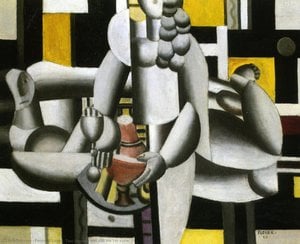
Fernan Leže, 1881 – 1955

The 100 Most Famous Paintings by Fernan Leže

The painting that made Fernan Leže famous is Град (1919). Механичар (1920) and Три жене (1921) follow it in the hearts of collectors and museum visitors. Of the 834 works by Fernan Leže in our catalogue, these 100 are the most admired, each presented with its date, its museum and what sets it apart.

Ranked by our popularity score, which combines the searches, visits and orders for each work. Updated октобар 2026. Every masterpiece on this page can be ordered as a museum-quality, hand-painted oil reproduction or a fine art print, at the size you choose.

Portrait of Fernan Leže
Fernan Leže · 1881 – 1955
Born · died
1881 – 1955, Аржантан
Movement
Kubizam
Works in our catalogue
834
Most famous
Град (1919)
Most works at
MoMA - Muzej moderne umetnosti

Fernan Leže: the ten masterpieces

Град (1919) by Fernan Leže
1

Град

1919 · Ulje na platnu

Grad – Monumentalno Vizioniranje Modernosti Fernana Legrea "Grad," monumentalno platno iz 1919. godine, predstavlja kulminaciju umetničkog puta Fernana Legrea i snažnu deklaraciju o usponu industrijskog doba. Više od pukog prikaza urbanog pejzaža, ovo delo je dinamično istraživanje oblika, boja i same suštine modernog života. Léger nas ne poziva na doslovno tumačenje; on razotvara ritam i strukturu savremenog sveta kroz dekonstrukciju i ponovnu kompoziciju. Platno odiše energijom, kao da pulsira u…

Механичар (1920) by Fernan Leže
2

Механичар

1920 · Ulje na platnu · Nacionalna galerija Kanade, Otava

Фернан Лежеов "Механичар" (1920) није само слика, већ визуелна поема посвећена новом добу – ери индустријализације и механизације. Ово дело, које се налази у збиркама Монтреалског музеја лепих уметности, представља мост између кубизма и новог реализма, одражавајући Лежеову жељу да угради динамику модерног живота у своје слике. Уместо да бежи од репрезентације, како су то чинили неки његови савременици, Лежео је желео да прихвати и прослави механичке облике и моћи…

Три жене (1921) by Fernan Leže
3

Три жене

1921 · Ulje na platnu · MoMA - Muzej moderne umetnosti, New York City

Uvod Delo „Tri žene“ (1921) umetnika Fernanda Légera predstavlja remek-delo moderne umetnosti koje neprimetno spaja uticaje kubizma i Art Deco stila. Ova vibrantna i dinamična kompozicija uspešno hvata samu suštinu modernizma početka 2eks dvadesetog veka, čineći je očaravajućim dodatkom svakoj savremenoj kolekciji umetnosti ili sofisticiranom unutrašnjem prostoru. Tema i kompozicija Umetničko delo prikazuje tri ženske figure u trenucima opuštanja, raspoređene u trouglastoj formaciji koja stvara osećaj ravnoteže i harmonije. Jedna…

Нудес у Лесу (1910) by Fernan Leže
4

Нудес у Лесу

1910 · Ulje na platnu · Kröller-Müller Museum, Otterlo

Delo Fernana Ležea, Aktovi u šumi (1909-1910), predstavlja ključnu prekretnicu koja označava presudnu fazu u razvoju kubizma. Više od običnog prikaza figura među drvećem, ovo je smeo dekonstruktivni čin forme i perspektive koji i nakon više od jednog veka neprestano očarava posmatrače. Ova slika se ne bavi time *šta* je predstavljeno, već *kako* – što je radikalan pristup koji je redefinisao modernu umetnost.

Велика Паранада (1954) by Fernan Leže
5

Велика Паранада

1954 · Ulje na platnu

Фернан Лежеов "Велики Препад" је динамична и хаотична прослава модерног живота, која са енергијом и узбуђењем ухвата атмосферу жучне циркуске или позоришне представе. Дело је испуњено људским фигурама које учествују у разним активностима, између којих се налазе механички елементи попут зупчаника и точкова. Овај спој органских облика и индустријских мотива ствара осећај хармоније и дискорда, одражавајући брзу технолошку еволуцију и социјалне промене средином двадесетог века. Леже је успео да ухвати…

Venčanje by Fernan Leže
6

Venčanje

Ulje na platnu

Subjekat i kompozicija Ovo očaravajuće umetničko delo predstavlja fragmentiran, apstraktni prikaz ljudske figure, verovatno žene, uronjene u složenu interakciju geometrijskih oblika i apstraktnih formi. Kompozicija poziva posmatrače da istovremeno istražuju više perspektiva, što je zaštitni znak kubističkog uticaja. Figura deluje kao da je u intimnom ili kontemplativnom trenutku, okružena haotičnim, ali harmoničnim skupom ugularnih oblika koji evociraju osećaj unutrašnjeg promišljanja i emocionalne dubine. Slojeviti raspored formi sugeriše narativ bogat psihološkim…

Doručak (1921) by Fernan Leže
7

Doručak

1921 · Ulje na platnu · MoMA - Muzej moderne umetnosti, New York City

U živopisnom pejzažu početka 20. veka modernizma, malo je dela koje tako upečatljivo hvata ritmični puls promene ere kao što je Doručak Fernanda Légera. Naslikano 1921. godine, ovo remek-delo služi kao prozor u svet u kojem su domace i industrijsko počeli da se stapaju u jednu, dinamičnu viziju. Scena prikazuje grupu od tri žene okupljenih oko trpezarijskog stola, ali one su daleko od tradicionalnih figura u tihom portretu. Umesto toga,…

Žena sa buketom cveća (1920) by Fernan Leže
8

Žena sa buketom cveća

1920 · Ulje na platnu · Staatsgalerie Stuttgart, Štutgart

Žena izranja iz mreže teških crnih linija, čiji je oblik izgrađen od cilindara i sfera. Ona drži buket, ali ti cvetovi nisu meki latovi, već fragmenti crvene, žute i plave boje. Svaki oblik deluje teško, kao da je izrezan od čelika ili izliven od gvožđa. Debeli konturi definišu telo koje se kreće sa ritmičkom preciznošću mašine. Ovde nema senki koje bi ublažile ivice, već samo ravne pljoste boja koje se…

Composition in Blue by Fernan Leže
9

Composition in Blue

Ulje na platnu · Art Institute of Chicago, Čikago

Fernand Léger’s "Composition in Blue" is a quintessential example of modernist art, showcasing his unique blend of Cubism and Futurism. The painting features a striking composition dominated by shades of blue, with a central figure – seemingly a woman or humanoid form – rendered in various hues of the color. This figure is partially obscured by a large blue headpiece, creating an enigmatic and somewhat mechanical appearance. The artwork incorporates…

Most (1923) by Fernan Leže
10

Most

1923 · Ulje na platnu · Музеј Тисен-Борнемиза, Madrid

Približite se i posmatrajte kako je prostor podeljen. U delu Most, nastalom 1923. godine, ne postoji jedinstvena perspektiva na kojoj bi oko moglo da se odmari. Umesto toga, nalazimo kompoziciju podeljenu na jasne horizontalne i vertikalne zone koje sugerišu praskovitu, fragmente arhitektonske stvarnosti. Dva debela, smaragdno zelena kolona usidravaju gornji srednji plan, delujući kao strukturni stubovi unutar cele postavke. Iza njih, pozadina se razvija kroz plosne ravni crvene, crne i…

More Fernan Leže masterpieces, 11 to 100

smokers - - ) (1912) by Fernan Leže
#11

smokers - - )

1912

Fernand Léger's "Smokers," painted in 1912, isn’t merely a depiction of men enjoying a cigarette; it’s a vibrant manifesto of early Cubism and a bold assertion of modernity.…

Bring it home →
Mural (1951) by Fernan Leže
#12

Mural

1951

Fernand Léger’s "Mural," completed in 1951, stands as an arresting embodiment of Cubist principles interwoven with a palpable fascination for the burgeoning machine age. This masterpiece does not…

Commission a hand-painted copy →
Grad (Fragment, Treće stanje) (1919) by Fernan Leže
#14

Grad (Fragment, Treće stanje)

1919 · Philadelphia Museum of Art

Pulsujuća čelična boja i primarni tonovi Slikarsko platno vibrira uz ritmični, metalni žamor urbanog pejzaža u pokretu. Geometrijski oblici—cilindri, pravougaonici i oštri lukovi—preklapaju se u gustoj, fragmentiranoj kompoziciji…

Commission a hand-painted copy →
Reading (1924) by Fernan Leže
#15

Reading

1924

In the quietude of an ambiguous interior, two figures sit side-by-side, lost in the profound intimacy of shared silence and individual discovery. Fernand Léger’s 1924 masterpiece, Reading, is…

Order a reproduction →
Pleas (1942) by Fernan Leže
#16

Pleas

1942

Ritam koji slavi formu i boju Fernand Légerov Pleas je mnogo više od običnog prikaza pokreta; to je vibrantna, pulsirajuća simfonija boja i geometrije koja hvata samu esenciju…

Commission a hand-painted copy →
Diskusi (1910) by Fernan Leže
#17

Diskusi

1910 · Los Angeles County Museum of Art

Niz preklapajućih krugova lebdi preko platna poput teških, naslikanih signala. Ovi diskovi, izraženi u debelim slojevima ulja, seku se sa oštrim pravougaonicima i dijagonalnim trakama boja. Duboke plave…

Commission a hand-painted copy →
The Bather (1932) by Fernan Leže
#18

The Bather

1932

In the quiet intersection of Surrealist dreamscapes and the rigid precision of Cubism lies Fernand Léger’s 1932 masterpiece, The Bather. This is not merely a painting of a…

Bring it home →
Three musicians (1930) by Fernan Leže
#19

Three musicians

1930

In the pantheon of twentieth-century modernism, few works capture the pulse of the machine age with as much vibrant vitality as Fernand Léger’s "Three Musicians." Completed in 1930,…

Commission a hand-painted copy →
The Man with the Pipe (1920) by Fernan Leže
#20

The Man with the Pipe

1920 · Musée d’Art Moderne de la Ville de Paris

The man sits within a grid of sharp edges and heavy lines. His body is not composed of soft skin, but of cylinders and metallic volumes that suggest…

Bring it home →
Contrast of Forms (1918) by Fernan Leže
#21

Contrast of Forms

1918

The canvas breathes with an energy that transcends mere pigment; it pulsates with the rhythm of industrial progress, captured in the bold strokes and vibrant hues of Fernand…

Order a reproduction →
Dance (1929) by Fernan Leže
#22

Dance

1929

Two nude female figures move through a landscape of interlocking shapes, their bodies caught in a moment of dynamic instability. The scene unfolds with a flattened perspective, where…

Order a reproduction →
Žena sa vazom (1924) by Fernan Leže
#23

Žena sa vazom

1924 · Statens Museum For Kunst

U ovom uljanom platnu iz 1924. godine, susrećemo figuru koja deluje izuzetno čvrsto, gotovo skulpturalno u svojoj konstrukciji. Žena je postavljena frontalno, a njen oblik definišu teške, neprekidne…

Commission a hand-painted copy →
The Builders (1920) by Fernan Leže
#24

The Builders

1920 · Metropoliten музеј у Њујорку

Fernand Léger’s “The Builders,” completed in 1920, stands as a cornerstone of Cubist aesthetics and embodies the fervent optimism surrounding technological advancement during the tumultuous years of World…

Commission a hand-painted copy →
Prohodni cvet (La fleur qui marche) (1952) by Fernan Leže
#25

Prohodni cvet (La fleur qui marche)

1952 · Kimbell Art Museum

Légerov „Prohodni cvet”: Simfonija boje i forme na industrijskoj pozadini Keramička skulptura „Prohodni cvet (La fleur qui marche)” Fernana Legea, dovršena 1952. godine, stoji kao izuzetan svedočanstvo o…

Plungers II (1942) by Fernan Leže
#26

Plungers II

1942

Simfonija forme i fragmentiranog identiteta U samom srcu 1942. godine, usred dubokih senki koje je bacao Drugi svetski rat, Fernand Leže je predstavio Plungers II, delo koje služi…

Commission a hand-painted copy →
Woman with Mirror (1920) by Fernan Leže
#27

Woman with Mirror

1920 · Musée d’Art Moderne de la Ville de Paris

The painting Woman with Mirror, created in 1920, presents a configuration of geometric shapes that deconstruct the human figure and its surroundings. The composition relies on an arrangement…

Order a reproduction →
The man with the pipe (1918) by Fernan Leže
#29

The man with the pipe

1918

In the transformative landscape of early twentieth-century modernism, few works capture the rhythmic pulse of a changing world as vibrantly as Fernand Léger’s “The Man with the Pipe.”…

Order a reproduction →
Project for a mural (1952) by Fernan Leže
#30

Project for a mural

1952 · Cincinnati Art Museum

In the vast landscape of twentieth-century modernism, few works capture the rhythmic pulse of the machine age as vibrantly as Fernand Léger’s "Project for a mural." Completed in…

Order a reproduction →
Mechanical Elements by Fernan Leže
#31

Mechanical Elements

Metropoliten музеј у Њујорку

Fernand Léger’s “Mechanical Elements,” painted in 1924, stands as a striking testament to the burgeoning fascination with technology during the interwar period. More than just a depiction of…

Commission a hand-painted copy →
The City (1919) by Fernan Leže
#32

The City

1919 · MoMA - Muzej moderne umetnosti

Step closer and observe how the canvas seems to move even when you remain still. In 1919, Fernand Léger captured something far more visceral than a mere urban…

Bring it home →
Le Petit Djeuner (1919) by Fernan Leže
#33

Le Petit Djeuner

1919 · Minneapolis Institute of Art

In the 1919 painting Le Petit Djeuner, Fernand Léger presents a breakfast scene through a fragmented, Cubist lens. Two stylized human figures occupy a space that merges with…

Bring it home →
The Dance - 1st Stage (1929) by Fernan Leže
#34

The Dance - 1st Stage

1929 · Hiroshima Museum of Art

The oil painting titled The Dance - 1st Stage presents two stylized female figures positioned in an intertwined pose. These figures are rendered with thick, continuous lines that…

Bring it home →
Contrast of Forms (1910) by Fernan Leže
#35

Contrast of Forms

1910 · Philadelphia Museum of Art

Step closer to observe how the canvas begins to pulse with a rhythmic, mechanical energy. In Contrast of Forms, we find ourselves looking at a fragmented landscape where…

Commission a hand-painted copy →
Komposition (1920) by Fernan Leže
#36

Komposition

1920

A heavy red rectangle anchors the center, pressed against thick black lines that slice through white and yellow planes. Circles overlap like the interlocking teeth of a gear,…

Commission a hand-painted copy →
Sunflowers (1953) by Fernan Leže
#37

Sunflowers

1953

This striking black and white drawing of sunflowers by Fernand Léger, created in 1953, offers a compelling glimpse into the artist's unique vision – a synthesis of observed…

Commission a hand-painted copy →
The Big Breakfast (1921) by Fernan Leže
#38

The Big Breakfast

1921

In the painting The Big Breakfast, created in 1921, a woman sits at a table with a bowl positioned in front of her. She appears to be engaged…

Bring it home →
Reclining Woman by Fernan Leže
#39

Reclining Woman

Art Institute of Chicago

The painting is a Cubist artwork by Fernand Léger featuring a woman lying on her side with a yellow snake wrapped around her body. The snake appears to…

Bring it home →
Reading (1948) by Fernan Leže
#41

Reading

1948

Created in 1948, Reading is a portrait that captures a moment within an interior space. The painting features a woman sitting on the floor with her legs crossed,…

Commission a hand-painted copy →
Ronioci (1943) by Fernan Leže
#42

Ronioci

1943 · Harvard Art Museums

Približite se i posmatrajte kako se figure izranjaju iz belog prostora. U delu Ronioci, susrećemo grupu pojedinaca uhvaćenih u vazduhu, dok izvode akrobatske pokrete koji sugerišu stilizovano vodeno…

Commission a hand-painted copy →
Two Profiles (1928) by Fernan Leže
#43

Two Profiles

1928 · Albertina

Two profiles occupy the center of this 1928 composition. These two faces are rendered in stark black and white shapes, positioned so they face one another across the…

Order a reproduction →
Dancer Blue (1930) by Fernan Leže
#45

Dancer Blue

1930

To encounter Fernand Léger's "Dancer Blue" is to step directly into the rhythmic, metallic heartbeat of the twentieth century. Created in 1930, this masterpiece serves as a crystallized…

Commission a hand-painted copy →
Adam and Eve (1937) by Fernan Leže
#46

Adam and Eve

1937 · Kunstsammlung Nordrhein-Westfalen

To stand before this work is to witness a moment of profound, unformed energy. Completed in 1939, Adam and Eve presents a landscape that feels less like a…

Commission a hand-painted copy →
Žena sa mačkom (1921) by Fernan Leže
#48

Žena sa mačkom

1921 · Hamburger Kunsthalle

Sedela je žena, čiji je oblik izgrađen od sfera i tubusa. U krilu drži crnu mačku, tamni teg koji odziva protiv jarkožute i duboko plave ravnini njenog tela.…

Bring it home →
Skela (Prvo stanje) (1919) by Fernan Leže
#49

Skela (Prvo stanje)

1919 · Philadelphia Museum of Art

Metalni cilindar se prodire kroz ravnu plavu površinu boje. Godine 1919, Pariz je bio grad rekonstrukcije, a Place de Clichy bio je prekriven skeletnim strukturama industrije. Ova slika…

Commission a hand-painted copy →
Umbrella and Bowler (1926) by Fernan Leže
#50

Umbrella and Bowler

1926 · MoMA - Muzej moderne umetnosti

A deconstructed arrangement of everyday objects defines this 1926 composition. An open umbrella and parts of a chair are integrated into a complex grid of shapes, utilizing strong…

Commission a hand-painted copy →
Two Women and still life 1st state (1920) by Fernan Leže
#51

Two Women and still life 1st state

1920 · Building of the Winterthur Museum of Art

Fernand Léger's “Two Women & Still Life” stands as a cornerstone of Cubist aesthetics and a testament to the artist’s unwavering commitment to capturing the dynamism of the…

Order a reproduction →
Composition (Definitive State) (1925) by Fernan Leže
#52

Composition (Definitive State)

1925

A large, dark reddish-brown oval anchors the center of the canvas, acting as a heavy weight amidst a sea of shifting planes. Around this central anchor, thick black…

Bicikl (1930) by Fernan Leže
#53

Bicikl

1930 · Art Gallery of New South Wales

U središtu kompozicije, beli poligon drži duboku plavu, fluidnu formu koja podseća na površinu ulja. Unutar tog plavog prostora, tanke bele linije ocrtavaju skeletne, točkovite strukture koje sugerišu…

Order a reproduction →
Mrtva priroda (1928) by Fernan Leže
#54

Mrtva priroda

1928 · Art Institute of Chicago

Približite se i posmatrajte kako se poznati elementi kompozicije na stolu transformišu kroz prizmu strukturne preciznosti. U ovom delu iz 1928. godine, umetnik se udaljava od tradicionalnog predstavljanja…

Order a reproduction →
Still Life (1927) by Fernan Leže
#59

Still Life

1927 · National Museum of Art, Architecture and Design

Step closer to observe how the familiar objects on this table have been transformed. In this 1927 composition, we find a quiet arrangement that rejects the soft edges…

Order a reproduction →
The Mechanic (1918) by Fernan Leže
#60

The Mechanic

1918 · Munson-Williams-Proctor Arts Institute

A rhythmic energy surges through the canvas as geometric shapes collide and overlap in a dense, industrial dance. Cylinders, cones, and flat planes interlock, creating a landscape where…

Commission a hand-painted copy →
Head constructor (1950) by Fernan Leže
#62

Head constructor

1950

Fernand Léger’s “Head Constructor,” painted in 1950, isn't merely a portrait; it’s a distilled essence of the burgeoning modernity that gripped Europe after World War I. This striking…

Commission a hand-painted copy →
Machine elements (1920) by Fernan Leže
#63

Machine elements

1920

A Symphony of Steel and Geometry The year 1920 marked a profound shift in the visual language of modernity, and few works capture this seismic transition as vibrantly…

Order a reproduction →
Three Characters (1924) by Fernan Leže
#64

Three Characters

1924

A Symphony of Form and Feeling: Exploring Fernand Léger’s “Three Characters” Fernand Léger's 1924 painting, *“Three Characters,”* is a pivotal work exemplifying his distinctive contribution to Cubism –…

Bring it home →
Contrast of Forms (1913) by Fernan Leže
#67

Contrast of Forms

1913

A fragmented landscape emerges through a complex vocabulary of cones, cylinders, cubes, and planes. The composition deconstructs reality into overlapping geometric shapes that intersect across a shallow, flattened…

Bring it home →
Pečatna slika (1922) by Fernan Leže
#68

Pečatna slika

1922

Simfonija forme i industrijske gracioznosti Godina 1922. označila je transformativnu eru u parizkom avangardi, a Fernand Léger’s Pečatna slika stoji kao duboki dokaz ovog perioda radikalnog preoblikovanja. Odrsučivši…

Order a reproduction →
Mural Painting (1920) by Fernan Leže
#69

Mural Painting

1920 · Solomon R. Guggenheim Museum

To stand before this 1924 canvas is to encounter the very pulse of a changing era. There is a certain structural honesty in how the composition unfolds, utilizing…

Bring it home →
Smoke (1912) by Fernan Leže
#70

Smoke

1912

Created in 1912 by Fernand Léger, Smoke is an oil on canvas painting that belongs to the Cubism style. This cityscape features various buildings and structures characterized by…

Order a reproduction →
Smoke on the Roofs (1911) by Fernan Leže
#73

Smoke on the Roofs

1911

The composition deconstructs an urban landscape into a rhythmic arrangement of overlapping planes and intersecting lines. Through a Cubist lens, the city is stripped of its traditional perspective,…

Bring it home →
Contrast of form (1914) by Fernan Leže
#74

Contrast of form

1914

In the heart of the early twentieth century, as the gears of industry began to turn with an unstoppable rhythm, Fernand Léger captured the very pulse of modernity…

Order a reproduction →
Untitled by Fernan Leže
#75

Untitled

A Life Forged in Form: The World of Fernand Léger Fernand Léger, born Joseph Fernand Henri Léger in 1881 amidst the rural landscapes of Argentan, Normandy, stands as…

Commission a hand-painted copy →
Woman with a Book (1923) by Fernan Leže
#77

Woman with a Book

1923 · MoMA - Muzej moderne umetnosti

Fernand Léger: A Pioneer of Mechanistic Cubism Fernand Léger stands as one of the most distinctive figures in twentieth-century art, a painter who relentlessly pursued his own vision…

Bring it home →
Sacred Heart of Audincourt (1951) by Fernan Leže
#78

Sacred Heart of Audincourt

1951

In the quiet, hallowed atmosphere of the Saint-Joseph Chapel in Audincourt, France, lies a masterpiece that defies the traditional boundaries between the sacred and the industrial. Fernand Léger’s…

Transport forces (1937) by Fernan Leže
#79

Transport forces

1937

Fernand Léger's "Transport Forces," completed in 1937, stands as a cornerstone of Purism – an artistic movement that vehemently rejected Impressionism’s fleeting effects and embraced instead the bold…

Order a reproduction →
The King of Cards (1927) by Fernan Leže
#80

The King of Cards

1927

A Glimpse into Modernity’s Rhythm: Deconstructing Léger's “The King of Cards” Fernand Léger’s 1927 painting, “The King of Cards,” is not merely a depiction of an interior scene;…

Order a reproduction →
'The album ''Circus''' (17) (1950) by Fernan Leže
#81

'The album ''Circus''' (17)

1950

In the landscape of twentieth-century modernism, few works capture the rhythmic pulse of life with as much structural integrity and vibrant energy as Fernand Léger's 1950 masterpiece, 'The…

Bring it home →
Still Life with Arm by Fernan Leže
#82

Still Life with Arm

Geometric Fragments and Industrial Logic A vase brimming with apples occupies the center of this 1916 composition, though the fruit has been stripped of its organic softness. In…

Bring it home →
Study for the (1954) by Fernan Leže
#83

Study for the

1954 · Museu do Caramulo

A Symphony of Form and Feeling: Exploring Fernand Léger’s “Study for Breakfast” Fernand Léger's "Study for Breakfast," completed in 1954, transcends mere representation; it embodies the very spirit…

Commission a hand-painted copy →
The three companions (1920) by Fernan Leže
#85

The three companions

1920

A Geometric Echo of Modernity: Delving into Léger’s “The Three Companions” Fernand Léger's 1920 painting, *The Three Companions*, isn’t merely a depiction of figures; it is a bold…

Order a reproduction →
The Sacred Heart of audincourt (1950) by Fernan Leže
#86

The Sacred Heart of audincourt

1950

In the quiet, hallowed spaces of Audincourt, France, there exists a window that does not merely permit light to pass through, but rather transforms it into a rhythmic…

The Sacred Heart of audincourt (1950) by Fernan Leže
#87

The Sacred Heart of audincourt

1950

In the quiet, hallowed atmosphere of Audincourt, France, light does not merely illuminate; it transforms. Fernand Léger’s The Sacred Heart of Audincourt, completed around 1950-1951, stands as a…

Sacred Heart of Audincourt (1951) by Fernan Leže
#88

Sacred Heart of Audincourt

1951

In the quiet, hallowed atmosphere of post-war Europe, Fernand Léger’s "Sacred Heart of Audincourt" emerged not merely as a religious ornament, but as a profound philosophical manifesto. Completed…

Opera by Fernan Leže
#89

Opera

The painting is a colorful depiction of people in various positions. There are three main figures in the scene, with one person standing on top of another figure…

Bring it home →
Factories (1918) by Fernan Leže
#90

Factories

1918

In the wake of the First World War, as Europe grappled with the profound tremors of a changing era, Fernand Léger captured something far more enduring than mere…

Order a reproduction →
Abstract Composition (1952) by Fernan Leže
#91

Abstract Composition

1952

In the vast landscape of twentieth-century modernism, few artists captured the rhythmic heartbeat of the industrial age as vibrantly as Fernand Léger. His 1952 masterpiece, Composition, serves as…

Order a reproduction →
untitled (8601) by Fernan Leže
#92

untitled (8601)

The Geometry of Sustenance A monochrome human face occupies the center of this composition, captured in the act of consuming an apple, a banana, and grapes. These organic…

Bring it home →
The Sacred Heart of audincourt (1950) by Fernan Leže
#95

The Sacred Heart of audincourt

1950

In the quiet aftermath of a world reshaped by conflict, Fernand Léger’s "The Sacred Heart of Audincourt" emerges as a luminous testament to resilience and renewal. Completed around…

Three Musicians (1930) by Fernan Leže
#96

Three Musicians

1930

In the pantheon of modernist masterpieces, few works capture the rhythmic pulse of the machine age as vibrantly as Fernand Léger’s “Three Musicians.” Created in 1930, this iconic…

Bring it home →
The wedding (1910) by Fernan Leže
#97

The wedding

1910

Fernand Léger's "The Wedding," painted in 1911, isn’t merely a depiction of a social event; it’s a vibrant manifesto of the burgeoning modern age. Born amidst the rural…

Order a reproduction →
The staircase (1913) by Fernan Leže
#98

The staircase

1913

In the vibrant landscape of early twentieth-century modernism, few works capture the pulse of a changing world as electrifyingly as Fernand Léger’s “The Staircase.” Painted in 1913, this…

Bring it home →
Red Pot (1926) by Fernan Leže
#99

Red Pot

1926

In the vibrant landscape of early twentieth-century modernism, few works capture the rhythmic pulse of the machine age as elegantly as Fernand Léger’s Red Pot. Created in 1926,…

Bring it home →

Fernan Leže's paintings by period

The subjects Fernan Leže painted most

The four subjects that return most often among these masterpieces, with the finest example of each.

Where to see Fernan Leže's paintings

The 8 museums that hold the most of the paintings on this page.

Museum City Works by Fernan Leže Paintings from this list
MoMA - Muzej moderne umetnosti, New York CityMoMA - Muzej moderne umetnosti New York City 14 Три жене, Doručak, The City
Philadelphia Museum of Art, FiladelfijaPhiladelphia Museum of Art Filadelfija 8 Grad (Fragment, Treće stanje), Contrast of Forms, Skela (Prvo stanje)
Art Institute of Chicago, ČikagoArt Institute of Chicago Čikago 6 Composition in Blue, Reclining Woman, Mrtva priroda
Metropoliten музеј у Њујорку, ЊујоркMetropoliten музеј у Њујорку Њујорк 6 The Builders, Mechanical Elements
Musée d’Art Moderne de la Ville de Paris, ParizMusée d’Art Moderne de la Ville de Paris Pariz 5 The Man with the Pipe, Woman with Mirror
Kröller-Müller Museum, OtterloKröller-Müller Museum Otterlo 4 Нудес у Лесу, Mechanical Element
Solomon R. Guggenheim Museum, New YorkSolomon R. Guggenheim Museum New York 4 Characters in the City, Mural Painting
Музеј Тисен-Борнемиза, MadridМузеј Тисен-Борнемиза Madrid 3 Most

Fernan Leže, decade by decade: the defining painting of each

  1. 1910s
    Град (1919) by Fernan Leže
    No. 1 of 100

    Град

    Age 29 – 38

    Grad – Monumentalno Vizioniranje Modernosti Fernana Legrea "Grad," monumentalno platno iz 1919. godine, predstavlja kulminaciju umetničkog puta Fernana Legrea i snažnu deklaraciju o usponu industrijskog doba. Više od…

  2. 1920s
    Механичар (1920) by Fernan Leže
    No. 2 of 100

    Механичар

    Age 39 – 48 · Nacionalna galerija Kanade

    Фернан Лежеов "Механичар" (1920) није само слика, већ визуелна поема посвећена новом добу – ери индустријализације и механизације. Ово дело, које се налази у збиркама Монтреалског музеја лепих…

  3. 1930s
    The Bather (1932) by Fernan Leže
    Rank 18 / 100

    The Bather

    Age 49 – 58

    In the quiet intersection of Surrealist dreamscapes and the rigid precision of Cubism lies Fernand Léger’s 1932 masterpiece, The Bather. This is not merely a painting of a…

  4. 1940s
    Pleas (1942) by Fernan Leže
    No. 16 of 100

    Pleas

    Age 59 – 68

    Ritam koji slavi formu i boju Fernand Légerov Pleas je mnogo više od običnog prikaza pokreta; to je vibrantna, pulsirajuća simfonija boja i geometrije koja hvata samu esenciju…

  5. 1950s
    Велика Паранада (1954) by Fernan Leže
    No. 5 of 100

    Велика Паранада

    Age 69 – 74

    Фернан Лежеов "Велики Препад" је динамична и хаотична прослава модерног живота, која са енергијом и узбуђењем ухвата атмосферу жучне циркуске или позоришне представе. Дело је испуњено људским фигурама…

Fernan Leže's masterpieces: questions and answers

Which painting is Fernan Leže best known for?Show the answer

Град (1919). Next come Механичар (1920) and Три жене (1921).

How old was Fernan Leže when painting Град?Show the answer

38 years old: Град dates from 1919 and Fernan Leže was born in 1881.

What are Fernan Leže's ten greatest paintings?Show the answer

Град, Механичар, Три жене, Нудес у Лесу, Велика Паранада, Venčanje, Doručak, Žena sa buketom cveća, Composition in Blue and Most. The ranking above gives the year and the museum of each.

How many works did Fernan Leže paint?Show the answer

Our catalogue lists 834 works by Fernan Leže, dated from 1910 to 1954.

In which museums can I see Fernan Leže's masterpieces?Show the answer

Most of them are in MoMA - Muzej moderne umetnosti (New York City), Philadelphia Museum of Art (Filadelfija) and Art Institute of Chicago (Čikago). The table above lists the museums one by one.

When did Fernan Leže paint the masterpieces?Show the answer

In 1920s: 36 of the 100 works on this page date from then, among them Механичар.

What are the first and last famous paintings of Fernan Leže?Show the answer

The earliest on this page is Нудес у Лесу (1910), the latest Велика Паранада (1954).

What were Fernan Leže's favourite subjects?Show the answer

Geometric shapes (29), Geometric forms (16) and Modernity (12), among the 100 works on this page.

Which technique did Fernan Leže favour?Show the answer

Oil On Canvas: 45 of the 100 works on this page.

What art movement is Fernan Leže part of?Show the answer

Kubizam, as the paintings on this page show.

Which masterpieces by Fernan Leže hang at the MoMA - Muzej moderne umetnosti?Show the answer

Три жене, Doručak and The City are among the 5 works on this page held by the MoMA - Muzej moderne umetnosti, New York City.

Can I own a reproduction of a Fernan Leže masterpiece?Show the answer

Yes. Every painting on this page can be ordered as a museum-quality, hand-painted oil reproduction or a fine art print, in the size you choose, from the painting's own page.

The life of Fernan Leže

Život Fermana Ležea

Priča o umetniku pod imenom Фернан Леже počinje u selu Argentan, smeštenom u regiji Orn u Donjoj Normandiji. Na svet je došao 4. februara 1881. godine, kao jedini sin. Njegove rane godine oblikovao je mir francuske ruralne sredine i prisustvo njegove majke, Marie-Adèle Daunou. Njegov otac, čovek koji se izdržavao trgovinom stočnom, preminuo je dok je Fernand još bio mali dečak, ostavljajući dete majci koja će ga podizati u domaćinstvu obeleženom njenom pobožljivošću i određenom skromnošću.

Ovo odrastanje u ruralnim pejzažima Normandije pružilo je snažan kontrast životu koji će on kasnije voditi u užurbanim centrima francuske kulture. Dok su njegovi koreni bili vezani za zemlju i fizičku težinu poljoprivrednog života, njegov duh je bio privlačen složenostima modernog doba. Vremenom će on proširiti svoj uticaj daleko izvan granica Argentana, postajući čovek mnogih disciplina. Nije se ograničio samo na platno, već je težio da svoju viziju izrazi kroz skulpturu i pokretne slike filma.

Njegov život bio je neprestano kretanje između organskih tekstura njegovog mladalačkog doba i strukturiranih, mehaničkih ritmova gradova. Ta dualnost je definisala njegovo samo postojanje dok se kretao kroz promene jednog transformativnog veka. Njegov put nikada nije bio jednostavan, obeležen tenzijom između tradicionalnog sveta njegovog detinjstva i brzog, industrijskog pulsa budućnosti koju će, na kraju, pomoći da definiše kroz svoju umetnost.

Rani život, porodica i obrazovanje

Koreni njegove vizije zakorenjeni su u ruralnim pejzažima Argentana, u regiji Orn u Donjoj Normandiji u Francuskoj. Rođen u svetu stočarstva, njegove rane godine oblikovao je fizički napor rada na zemlji i postojani ritmovi poljoprivrednog života. Ovo ukorenjivanje u opipljivom, radničkom svetu ostalo bi tiho prisustvo ispod površine njegovih kasnijih, složenijih istraživanja. Bio je jedini sin, odgajan od strane majke koja je bila i pobožna i skromna, a njegov put je prvobitno bio usmeren ka strukturiranoj disciplini arhitekture. Od 1897. do 1899. godine posvetio je se ovom tehničkom zanatu, učeći logiku prostora i neophodnost preciznog crtanja.

Do 1900. godine, privlačnost grada postala je previše jaka da bi se ignorisala, te se on preselio u Pariz. Izdržavao se radeći kao arhitektonski crtač, u ulozi koja je zahtevalo oštro oko za liniju i proporciju. Dok je njegovo formalno obrazovanje arhitekture pružilo temelj strukturnog razumevanja, njegovo srce je počelo da teži ka platnu. Težio je upisu u prestižnu školu École des Beaux-Arts, ali mu institucija nije priznala zvanični status studenta. Neustrašivo, posećivao je školu kao neupisani učenik, upijajući lekcije majstora dok je koračao po marginama akademskog establishmenta. Ovaj period studija, iako se ponekad opisuje kao vreme traženja, bio je od suštinskog značaja za usavršavanje tehničke veštine koju će na kraju koristiti da dekonstruiše i ponovo izgradi svet u sopstvenoj slici.

Uticaj Sezana i kubizma

Duboka transformacija dogodila se 1907. godine, kada se umetnik susreo sa retrospektivom Sezana na Salonu d'Automne. Taj susret delovao je kao katalizator, izvodeći ga iz mekih impresija mladosti ka strukturalnijem načinu posmatranja. Počeo je da gleda izvan površine stvari, tražeći samu osnovnu geometriju koja definiše svet. Do 1909. godine, njegovo prisustvo u kreativnim krugovima Pariza postalo je značajno, dok je upoznavao figure kao što su Aleksander Arhipenko, Žak Lipšic, Mark Šagal i Robert Delonaj. Ti susreti nisu bili samo društveni događaji; bili su to sudari novih ideja koji su pomogli da se oblikuje pravac njegove razvojne vizije.

Kako su godine prolazile, našao se u orbiti Puteo grupe, kruga umetnika poznatog i kao Section d'Or. Uporedo sa Žanom Metingerom i Henrijem Le Fokonjeom, istraživao je matematičke i strukturalne mogućnosti ovog novog jezika. Nije bio zadovoljan time da samo prati puteve koje su drugi postavili, već je težio da pronađe sopstveni put kroz frakturirane ravni i preklapajuće oblike koji su definisali tu eru. Ovaj period intenzivnog eksperimentisanja doveo je do njegove prve velike izložbe na Salonu nezavisnih u 1911. godini, gde je predstavio Nude u šumi.

  • Nude u šumi (1911)

Rat i mehanička perioda

Haos Velikog rata izbacio je umetnika iz parisih studija pravo u surovu stvarnost fronta. Od 1914. do 1917. godine, Фернан Леже је служио u francuskoj vojsci, proživljavajući dve iscrpljujuće godine u Argonu. Taj sukob nije bio samo puki scenski okvir njegovog života, već transformativna sila koja je iz temelja promenila njegovu percepciju forme. Godine 1916, napad gorčičavim gasom gotovo mu je oduzeo život, ostavljajući ga u procesu oporavka dok je svet oko njega bio preoblikovan sirovom moći industrijskog uništenja. Čak i tokom kratkog odsustva iste te godine, osetio je neodoljivu potrebu da slika, što je rezultiralo delom Soldat sa pišćom. Ovo delo je uhvratilo esenciju nove stvarnosti, u kojoj ljudska figura počinje da poprimi osobine mašina koje su dominirale bojilištem.

Do 1917. godine, u njegovom kreativnom duhu dogodila se jasna prekretnica, označavajući početak onoga što će kasnije postati poznato kao njegova mehanička perioda. Pronašao je neobičnu, ritmičnu lepotu u alatima i tehnologiji modernog ratovanja i industrije. Glatki, tubularni oblici i preciznost mehaničkih delova postali su njegov novi vizuelni jezik. On te objekte nije posmatrao kao hladne ili impersonalne; naprotiv, prihvatio je njihovu snagu i sposobnost da organizuju haos modernog postojanja. Rat je skinuo mekoću sa ivica njegovih ranijih radova, zamenjujući ih oštrim, strukturnim jasnim linijama koje su odjekivale u čeliku i klipovima jednog doba u tranziciji.

Tehnika i stil

Njegov četkica kretala se sa ritmičnom, gotovo industrijskom preciznošću, nastojeći da uhvati puls promenljivog doba. Odmaknuo se od mekih, izmešanih senki prošlosti, birajući umesto toga da svoje kompozicije gradi kroz jezik snažne, geometrijske čvrstine. To je dovelo do razvoja ličnog oblika kubizma koji su kritičari prepoznali kao „tubizam“. U ovom stilu, svet je bio ponovo osmišljen kroz cevčaste, konične i kubične oblike, stvarajući osećaj volumena koji je delovao istovremeno čvrsto i dinamično. On nije samo slikao predmete; on je težio da pronađe njihovu suštinsku, strukturnu logiku.

Boje koje je birao bile su odnosežne kao i oblici koje su ispunjavale. Favorizovao je paletu dominiranu primarnim bojama, često naglašenom oštrim crnim i belim kontrastima, što je pomagalo u definisanju oštrih granica njegovih motiva. Umesto oslanjanja na tradicionalni iluzionizam, on je nanosio boju u odvažnim, spljoštenim ravninama. Često je koristio gust impasto, tehniku koja naglašava fizičko prisustvo medijuma na platnu. Ovakav teksturalni pristup osigurao je da njegov rad deluje utemeljeno i materijalno, odražavajući upravo one mašine i urbane strukture kojima se toliko divio. Njegove figure su često poprimale glatke, mehaničke oblike, brišući granicu između organske ljudske forme i inženjerske preciznosti modernog doba.

  • Nude u šumi (1910)
  • Žena u plavom (1912)
  • Vojnik sa pišuljom (1916)
  • Mehaničar (1920)

Kasnije godine i smrt

Promenljive plime globalnih sukoba na kraju su odvučle umetnika iz njegovih pariskih krugova preko Atlantika. Između 1940. i 1945. godine, on je boravio u Sjedinjenim Amerikama, u periodu koji mu je ponudio potpuno drugačiju perspektivu na moderni svet koji je toliko dugo pokušavao da prenese na platno. Ovo vreme provedeno u tuđini pružilo je pauzu njegovoj dugoj evoluciji, trenutak tranzicije pre njegovog konačnog povratka zemlji majki, Francuskoj.

Nakon povratka u domovinu, njegov privatni život je doživeo značajnu promenu. U februaru 1952. godine, oženio se Nadijom Hodasevič. Ova unija označila je poslednje poglavlje njegovog života, vreme ispunjeno neprestanim stvaranjem raznolikih dela, od monumentalnih zidnih slika do delikatnih vitraja. Čak i kako je stario, njegov ugled na međunarodnoj sceni ostao je neupitno i stabilan. Godine 1955. godine, osvojio je Veliku nagradu na Bijenalu u Sao Paulu, visoku čast koja je stigla u istoj godini kada je i preminuo. Umro je 17. avgusta 1955. godine u Gif-sur-Jivetu, u Francuskoj.

Nasleđe i uticaj

Фернан Леже je ostavio trag koji se protezao daleko izvan avangardnih krugova njegovog vremena. Premošćujući jaz između apstraktne umetnosti i figurativne reprezentacije, ponudio je umetnicima način da se suoče sa modernim svetom, a da pritom potpuno ne napuste ljudski subjekt. Njegov pristup omogućio je dijalog između strukturne logike geometrije i prepoznatljivog prisustva ljudi i predmeta. Ova sposobnost pronalaženja sredine između čisto konceptualnog i opipljivog pomogla je da se oblikuje pravac velikog dela umetnosti koja je usledila.

Njegovo hrabro pojednostavljivanje forme i fascinacija estetikom masovne proizvodnje delovale su kao predteča pop art pokreta. U repetitivnoj, funkcionalnoj prirodi mašinskog doba video je određenu lepotu, perspektivu koja će kasnije odjeknuti kod nove generacije stvaralaca. Umetnici kao što su Roy Lichtenstein i Andy Warhol povukli su jasnu liniju od njegovih eksperimenata sa odobrenim konturama i mehaničkom vizuelnošću ka sopstvenim istraživanjima popularne kulture. On je pomogao u pripremi vizuelnog jezika za eru koja će na kraju slaviti upravo one industrijske i komercijalne elemente koje je on nekada pokušavao da prenese na platno.

Gde danas posetiti njegova dela

Da biste se lično susreli sa fizičkom prisutnošću njegove vizije, put vam vodi na jug Francuske, tačnije u Biot u departmanu Alpi-Maritim. Tu se nalazi Nacionalni muzej Фернан Леже, mesto posvećeno isključivo proučavanju i očuvanju njegovog kreativnog nasleđa. Muzej je smešten u Mas Sen-Andre, vili koja je nekada pripadala samom umetniku. Unutar ovih zidova i u pratećim vrtovima, njegove polihromne keramičke skulpture pronalaze svoj prirodni ambijent, omogućavajući posmatraču da vidi kako njegove forme komuniciraju sa svetlošću i prostorom mediteranskog pejzaža.

Pored ovog specijalizovanog utočišta, njegova platna i skulpture čuvaju se u brojnim značajnim institucijama. Muzej umetnosti i istorije u Francuskoj održava kolekciju njegovih dela, osiguravajući njegovo prisustvo u širem narativu francuske umetnosti. Ova zbirka omogućava kontinuirano istraživanje načina na koji je on preveo energiju mašinskog doba u statične, ali ipak pulsirajuće, vizuelne oblike. Putnici koji traže njegov specifični estetski izraz mogu pronaći njegove tragove u nekoliko velikih kolekcija, uključujući:

Njegov uticaj se ogleda i u delima drugih umetnika, ali primarni način da se svedoči njegovom direktnom umeću jeste kroz ove etablirane repozitorijume. Bilo da posmatrate odvažne, cilindrične oblike u muzejskom okruženju ili njegove skulpture u tišini vrta, posmatrač se suočava sa istom onom strukturalnom jasnoćom koja je definisala njegov životni rad. Njegovo nasleđe ostaje usidreno u ovim specifičnim lokacijama, gde su teški, mašinski ritmovi njegovih slika sačuvani za sve one koji traže istinu u njegovoj geometriji.

All 834 works by Fernan Leže →