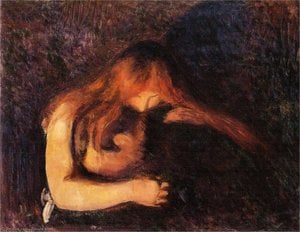
Едвард Мунк, 1863 – 1944

Едвард Мунк Paintings: The 100 Most Famous Works, Ranked

Едвард Мунк's most famous painting is Врисок (1893), in the Nasjonalgalleriet, Oslo. With Vampir Nacionalna galerija Oslo and Pubertet (1914), it completes the three works everyone recognises. Our catalogue lists 2,121 works by Едвард Мунк; the 100 below are the ones the world looks at most, each with its year, the museum that holds it and why it matters.

Ranked by our popularity score, which combines the searches, visits and orders for each work. Updated октобар 2026. Every masterpiece on this page can be ordered as a museum-quality, hand-painted oil reproduction or a fine art print, at the size you choose.

Portrait of Едвард Мунк
Едвард Мунк · 1863 – 1944
Born · died
1863 – 1944, Аделсбрук
Movement
Ekspresionizam
Works in our catalogue
2.121
Most famous
Врисок (1893)
Most works at
Munch Museum

The 10 most famous Едвард Мунк paintings

Врисок (1893) by Едвард Мунк
1

Врисок

1893 · Ulje na platnu · Nasjonalgalleriet, Oslo

Edvard Munch’s “The Scream,” painted in 1893, isn't merely an artwork; it is a visceral cry echoing through the corridors of modern consciousness. More than just a depiction of a scene, it embodies a profound sense of existential dread, alienation, and anxiety—emotions that continue to resonate deeply with audiences across generations. This iconic image stands as a cornerstone of Expressionism, rejecting traditional representational art in favor of conveying raw, internal…

Vampir Nacionalna galerija Oslo by Едвард Мунк
2

Vampir Nacionalna galerija Oslo

Ulje na platnu · Munch Museum, Oslo

Ovo umetničko delo predstavlja krupni plan dve osobe upletene u strastni, ali uznemirujući zagrljaj. Kompoziciju dominiraju njihova isprepletena tela, što stvara neposredan osećaj bliskosti i ranjivosti. Munch namerno zamagljuje jasne crte lica, fokusirajući se umesto toga na konture njihovih oblika i sugestivnu moć njihove poze. Ova namerna ambiguitet poziva posmatrače da na scenu projektuju sopstvene emocije i interpretacije. Figure su postavljene ispred tamne, neodređene pozadine koja služi da ih izoluje…

Pubertet (1914) by Едвард Мунк
3

Pubertet

1914 · Ulje na platnu · Munch Museum, Oslo

Mlada devojčica sedi na ivici kreveta, a njeno telo je postavljeno frontalno u odnosu na horizontalnu ravan madraca. Njene su udice ukrštene, a rukama pokušava da zaštiti svoj intimni deo, što predstavlja instinktivan gest modesty i ranjivosti. Figura je izvedena u mekim, bledo-svetlim tonovima koji su u snažnom kontrastu sa fragmentiranim, mozaikskim pozadinom. Levo od nje, blizu se nalazi jastuk, dok se desno, na svetlijem zidu, razvija velika, tamna senka.…

Anksioznost 2 (1894) by Едвард Мунк
4

Anksioznost 2

1894 · Ulje na platnu · Munch Museum, Oslo

Uvod u umetnika i delo Edvard Munch bio je norveški slikar čije je delo Anksioznost 2, nastalo 1894. godine, suštinski primer ekspresionizma. Ovaj umetnički stil naglašava subjektivno emocionalno iskustvo umetnika, često koristeći izobličene ili preuveličane forme kako bi se prenela intenzivna osećanja. Anksioznost 2 predstavlja deo Munchovog opusa koji istražuje teme anksioznosti, straha i ljudske egzistencije. Informacije o slici i stil Slika prikazuje grupu ljudi koji stoje ispred vodenog stuba,…

the kiss (1897) by Едвард Мунк
5

the kiss

1897 · Acrylic On Canvas · Munch Museum, Oslo

Edvard Munch’s “The Kiss” (1897) isn't merely a depiction of romantic embrace; it’s a profound exploration of isolation, vulnerability, and the unsettling undercurrents of human connection. Painted during a period of intense personal turmoil for the artist – marked by illness, loss, and a pervasive sense of dread – the work transcends simple representation to become a visceral embodiment of Munch's psychological landscape. The scene unfolds within a deliberately ambiguous…

Танец Жизни (1899) by Едвард Мунк
6

Танец Жизни

1899 · Ulje na platnu · Nasjonalgalleriet, Oslo

Munkovo delo „Tač o životu” (1899) predstavlja očaravajuće ekspresionističko remek-delo koje posmatrače uvodi u svet živopisnih boja, dinamičnog pokreta i duboke emocionalne složenosti. Ova kultna slika, deo Munkovog slavnog serijala Friz na životu, istražuje zamršenost ljudskih odnosa i prolaznost vremena kroz prizor živopisnog društvenog okupljanja.

Night street Karl Johan 03 (1892) by Едвард Мунк
7

Night street Karl Johan 03

1892 · Acrylic On Canvas · Bergen Kunstmuseum, Bergen

Introduction Explore the depths of human emotion and urban life in Edvard Munch's captivating work, 'Night Street Karl Johan 03'. This masterpiece is a testament to Munch's unique style and his ability to evoke powerful feelings through art. Artist: Edvard Munch Edvard Munch (1863-1944) was a Norwegian painter and printmaker, known for his Expressionist style. His work often depicted intense emotions and personal experiences, reflecting the inner turmoil of modern…

Melancholy (1894) by Едвард Мунк
8

Melancholy

1894 · Ulje na platnu · Nasjonalgalleriet, Oslo

Едвард Мунк и Душевна Туманица: Разглед Модерне Ангестије У основи своје творбе стоји Едвард Мунк, рођен 1863. године у Норвешкој средишта суровог пейзажа и утицаја који је био неизбежан за све уметнике тог времена – душевна туманица и стрење модерне ангестије. Живот Мунке био је дубоко обелељен губитком и преовлађујућим осећајем туге, што је служило као извор за његов изузетно изразно уметностство. Одрастање под сенком раног смрти мајке и сестре…

Мадона (1894) by Едвард Мунк
9

Мадона

1894 · Akril na platnu · Munch Museum, Oslo

Edvard Munch's *Madonna*, created in 1895, stands as an emblem of Expressionism’s preoccupation with psychological depth and emotional intensity—a testament to Munch’s profound engagement with themes of love, loss, and the inescapable shadow of mortality. Unlike idealized depictions prevalent during his time, this artwork confronts viewers with a raw vulnerability rarely encountered in art history.

Julaften i bordell (1905) by Едвард Мунк
10

Julaften i bordell

1905 · Ulje na platnu · Munch Museum, Oslo

Delo „Božić u bordelu” (1905) Edvarda Munkа poziva posmatrače u živopisnu i emocionalno nabijenu unutrašnju scenu. Ovo očaravajuće umetničko delo prikazuje Munchov prepoznatljiv ekspresivni stil, spajajući smele boje i dinamične poteze četkicom kako bi stvorio osećaj intimnosti i kontemplacije.

Едвард Мунк, paintings 11 to 100

Мадона (1894) by Едвард Мунк
#11

Мадона

1894 · Munch Museum

Едвард Мунк и „Мадонна“ – Символ Меланхолии и Експресионизма Едвард Мунк, роден през 1863 г. сред студените пейзажи на Норвегия, беше художник чиито творби станаха синоним на тревогите…

Bring it home →
Пепео (1894) by Едвард Мунк
#12

Пепео

1894 · National Museum of Art, Architecture and Design

Pejzaž duše: "Pepel" Edvarda Muncha – Pogled u mrak ljudske emocije "Pepel," Edvard Munchovo delo iz 1894. godine, nije samo slika; to je vizija, duboki pogled u najintimnije…

Commission a hand-painted copy →
Последневије (1895) by Едвард Мунк
#13

Последневије

1895 · Nasjonalgalleriet

Евред Мунк, рођен 1863. године у Аделсбруку, Шведској, био је сликар чије дело постало је синоним стрепоти и емоционалног узбуђења модерне ере. Један од најзначајнијих представника експресионистичке школе…

Order a reproduction →
Pored kreveta smrti (groznica) (1915) by Едвард Мунк
#14

Pored kreveta smrti (groznica)

1915 · Munch Museum

Edvard Munch, norveški slikar rođen 1863. godine, ostavio je neizbrisiv trag na istoriji umjetnosti svojim ekspresionističkim djelima. Njegova djela su duboko lična istraživanja ljudske duše, ispunjena tjeskobom, melanholijom…

Order a reproduction →
Cree (kazein na kartonu) 2 (1893) by Едвард Мунк
#15

Cree (kazein na kartonu) 2

1893 · National Museum of Art, Architecture and Design

Cree (kazein na kartonu) 2 je moćno i evokativno delo koje je 1893. godine stvorio norveški umetnik Edvard Munch. Ova slika, izvedena kazeinom na kartonu, predstavlja vrhunac umetnikovog…

Commission a hand-painted copy →
Razdvojenje (1896) by Едвард Мунк
#16

Razdvojenje

1896 · Bergen Kunstmuseum

U jezivo prelepoj litografiji "Razdvajanje", nastaloj 1896. godine, Edvard Munk prevazilazi granice obične vizuelne reprezentacije kako bi dotakao samu suštinu ljudske ranjivosti. Ovo remek-delo nije samo prikaz dve…

Commission a hand-painted copy →
Dete i smrt (1899) by Едвард Мунк
#17

Dete i smrt

1899 · Kunsthalle Bremen

Kompozicija se fokusira na mladu devojčicu, istaknutu u prvom planu, čije su ruke čvrsto pritisnute uz uši. Njen pogled je usmeren ka spoljašnosti, kao da se suočava sa…

Bring it home →
Kupidon i Psihija (1907) by Едвард Мунк
#18

Kupidon i Psihija

1907

Slika Kupidon i Psihija predstavlja umetničko ostvarenje koje je norveški umetnik Edvard Munch stvorio 1907. godine. Ovo delo, izvedeno uljanim bojama na platnu, pripada pokretu ekspresionizma, koji se…

Commission a hand-painted copy →
The Kiss (1895) by Едвард Мунк
#19

The Kiss

1895

An Intimate Encounter Amidst the Shadows Edvard Munch’s The Kiss is far more than a mere depiction of romantic closeness; it is a profound, visceral exploration of the…

Commission a hand-painted copy →
The Murderer (1910) by Едвард Мунк
#20

The Murderer

1910 · Munch Museum

A Shadowed Journey: Unveiling Edvard Munch’s ‘The Murderer’ Edvard Munch's *The Murderer*, painted in 1910, is a profoundly unsettling work that embodies the core tenets of Expressionism. Measuring…

Bring it home →
Devojke na molu (1904) by Едвард Мунк
#21

Devojke na molu

1904 · Kimbell Art Museum

„Devojke na molu“ Edvarda Munha, naslikano 1904. godine, nisu samo prikaz primorske scene; to je duboko istraživanje izolacije, anksioznosti i uznemirujuće lepote ljudskih emocija. Stvoreno tokom perioda intenzivne…

Bring it home →
Man and Woman I (1905) by Едвард Мунк
#22

Man and Woman I

1905 · Мунх музеј

"Man and Woman I": Udubljenje u Čovečju Emociju Edvard Munchova *Man and Woman I*, nastala 1905. godine, nije samo slika dva čoveka; to je surovo i iskreno potonuće…

Commission a hand-painted copy →
Vampir (1893) by Едвард Мунк
#23

Vampir

1893 · Gothenburg Museum of Art

Munkov "Vampir", naslikan između 1893. i 1894. godine, stoji kao moćan i uznemirujući primer simbolističkog slikarstva. Više od običnog prikaza figura, ovo delo predstavlja duboko istraživanje ljudskih emocija,…

Order a reproduction →
Poljubac (1897) by Едвард Мунк
#24

Poljubac

1897 · Мунх музеј

"Poljubac": Pogled u Samoću i Dubinu Čovekovih Emocija Edvard Munchovo delo "Poljubac" nije samo slika; to je dubok, introspektivan portret ljudske duše, zarobljen na platnu. Ova remek-delo iz…

Bring it home →
Očaj (1892) by Едвард Мунк
#25

Očaj

1892

Edvard Munch's "Despair" is a profoundly moving oil on canvas painting created in 1892, serving as a quintessential representation of the artist’s unique style blending Expressionism and Symbolism.…

Order a reproduction →
Eye in Eye (1894) by Едвард Мунк
#26

Eye in Eye

1894

Edvard Munch’s *Eye in Eye*, painted in 1894, isn’t merely a depiction of two figures; it’s a visceral plunge into the depths of human emotion. This arresting canvas,…

Commission a hand-painted copy →
Susret u svemiru (1899) by Едвард Мунк
#28

Susret u svemiru

1899 · Tel Aviv Museum of Art

Munkovo delo Susret u prostoru, nastalo 1899. godine, predstavlja temelj ekspresionizma — pokreta koji je subjektivno iskustvo i emocionalni intenzitet stavio ispred objektivnog predstavljanja. Više od običnog prikaza…

Order a reproduction →
Bolesno dete (1925) by Едвард Мунк
#29

Bolesno dete

1925 · Munch Museum

Približite se i posmatrajte tihu intenzivnost koja ispunjava ovu sobu. Scena je fokusirana na mladu osobu, prepoznatljivu po svojoj rđasto-narandžastoj kosi, koja sedi uspravno u krevetu. Pored nje,…

Commission a hand-painted copy →
Mlada žena na obali (1896) by Едвард Мунк
#30

Mlada žena na obali

1896 · Munch Museum

A Solitary Vision: Exploring Edvard Munch’s “Young Woman on the Shore” “Young Woman on the Shore,” painted in 1896, is a powerful and evocative work by Norwegian artist…

Order a reproduction →
Bolesno dete (1885) by Едвард Мунк
#31

Bolesno dete

1885

Bolesno dete vas poziva na dublje istraživanje umetnikovog univerzuma. Možete istražiti i Munchova druga ikonografska dela, kao što su Krik (1893) i Madonna (1894-1895), koji dele slične teme…

Bring it home →
Луна (1895) by Едвард Мунк
#32

Луна

1895 · Nasjonalgalleriet

Edvard Munch’s ‘Moonlight’: A Symphony of Sorrow and Serenity Edvard Munch's "Moonlight," completed in 1895, isn't merely a depiction of a Norwegian coastal landscape; it’s an embodiment of…

Order a reproduction →
Krik (1893) by Едвард Мунк
#33

Krik

1893 · Munch Museum

Kompozicija se fokusira na bezdlaku, skeletnu figuru smeštenu duž povučene dijagonalne drvene staze. Ova figura, sa dlanovima pritisnutim uz glavu, gleda u pejzaž koji je u stalnom pokretu.…

Order a reproduction →
Kiss IV (1902) by Едвард Мунк
#34

Kiss IV

1902

A Whisper of Intimacy: Decoding Edvard Munch’s *Kiss IV* Edvard Munch's 1902 woodcut, *Kiss IV*, is a profoundly moving exploration of human connection, rendered with the raw emotionality…

Commission a hand-painted copy →
Ubica (1907) by Едвард Мунк
#35

Ubica

1907 · Munch Museum

Približite se platnu i osetićete kako vas težina prostorije pritiska. U ovom uljanom platnu iz 1907. godine, vertikalna figura stoji blizu leve ivice, njeno prisustvo je teško i…

Order a reproduction →
Autoportret (1895) by Едвард Мунк
#36

Autoportret

1895 · Kunsthaus Zürich

Edvard Munchov „Autoportret”, naslikan 1895. godine, nije samo puka sličica; to je sirovo, neustrašivo uranjanje u umetnikov sopstveni mučenički psihizam. Stvoren tokom perioda intenzivne lične borbe i bujanja…

Bring it home →
Melancholy, Laura (1899) by Едвард Мунк
#37

Melancholy, Laura

1899 · Munch Museum

Edvard Munch’s “Melancholy, Laura,” painted in 1899, is not merely a portrait; it's an intimate and profoundly moving exploration of the human psyche. This work, housed within the…

Commission a hand-painted copy →
Тешка деца (1896) by Едвард Мунк
#39

Тешка деца

1896 · Gothenburg Museum of Art

Edvard Munch's 1896 painting, ‘The Sick Child,’ is not merely a depiction of illness; it is a visceral embodiment of grief, memory, and the inescapable specter of mortality.…

Order a reproduction →
Dva srca (1899) by Едвард Мунк
#40

Dva srca

1899 · Tel Aviv Museum of Art

U prostranim pejzažima ekspresionističkih remek-delа, malo koji komad tako dirljivo ne hvata sirovu, nezaštićenu suštinu ljudske psihe kao Munkovo „Dva srca”. Stvorelo se 1899. godine, ovo evokativno delo…

Order a reproduction →
Death at the helm (1893) by Едвард Мунк
#41

Death at the helm

1893 · Munch Museum

Edvard Munch’s Death at the Helm stands as a haunting testament to existential anxieties and the inescapable grip of mortality—themes central to Munch’s artistic vision and profoundly influential…

Bring it home →
Storm (1893) by Едвард Мунк
#42

Storm

1893

Edvard Munch's "The Storm," painted in 1893, isn’t merely a depiction of a raging tempest; it’s a visceral embodiment of inner turmoil—a profound exploration of anxiety and the…

Bring it home →
Smrt i devojčica (1893) by Едвард Мунк
#43

Smrt i devojčica

1893 · Munch Museum

Delo Edvarda Munka „Smrt i devojčica”, završeno 1893. godine, predstavlja kamen temeljac ekspresionističke umetnosti — jezivo svedočanstvo Munchovog dubokog bavljenja temama smrtnosti, bolesti i psihološke ranjivosti. Više od…

Bring it home →
Madona (1902) by Едвард Мунк
#44

Madona

1902 · Ohara Museum of Art

Susret sa Munkovom Madonom predstavlja direktan ulazak u turbulentnu psihu ekspresionističkog pokreta. Ovo remek-delo, duboko istraživanje ljudske ranjivosti, prevazilazi puki portret i postaje visceralni susret sa dualitetima postojanja:…

Order a reproduction →
Četiri doba života (1902) by Едвард Мунк
#46

Četiri doba života

1902 · Bergen Kunstmuseum

Delo Edvarda Munka „Četiri doba života”, nastalo 1902. godine, nije samo prikaz četiri pojedinca; to je duboka meditacija o ljudskom stanju, izvedena sa umetnikovim prepoznatljivim spojem psihološke intenzivnosti…

Commission a hand-painted copy →
Месечина (1893) by Едвард Мунк
#47

Месечина

1893 · National Museum of Art, Architecture and Design

Едвард Мунк, кључна фигура у модерном уметности, створио је запажено сајање "Луна" 1893. године. Ова маст на платну је типичан представник Символистичког покрета, карактерисан акцентом на емоционално искуство…

Order a reproduction →
Zvezdane Noći (1893) by Едвард Мунк
#49

Zvezdane Noći

1893

Uvod u Umelca i Stil Edvard Munch, ključna figura moderne umetnosti, rođen je 12. decembra 1863. godine u Norveškoj. Svetski je poznat po svom ikoničnom remekdelu "Skena", a…

Bring it home →
Zimska noć (1900) by Едвард Мунк
#50

Zimska noć

1900 · Kunsthaus Zürich

U tihoj, oštroj hladnoći 1900. godine, Edvard Munk je uspeo da uhvati mnogo više od običnog norveškog pejzaža; on je u delo Zimska noć destilovao samu suštinu psihološke…

Order a reproduction →
The Kiss (1892) by Едвард Мунк
#51

The Kiss

1892

Edvard Munch's 1892 painting, *The Kiss*, is not a depiction of blissful union, but rather a profound exploration of the complexities inherent in human connection – desire, longing,…

Order a reproduction →
Mother and Daughter (1897) by Едвард Мунк
#52

Mother and Daughter

1897 · Nasjonalgalleriet

Mother and Daughter: A Portrait of Anxiety and Connection Edvard Munch’s “Mother and Daughter,” created in 1897, stands as a cornerstone of Expressionist art—a haunting depiction that transcends…

Bring it home →
Devojke na mostu (1901) by Едвард Мунк
#53

Devojke na mostu

1901 · Nasjonalgalleriet

Očaravajući eho emocije: Edvard Munchovo „Devojke na mostu” Edvard Munchovo delo „Devojke na mostu”, naslikano 1901. godine, nije samo prikaz dve žene koje šetaju preko konstrukcije; to je…

Commission a hand-painted copy →
Devojka pored prozora (1893) by Едвард Мунк
#54

Devojka pored prozora

1893 · Art Institute of Chicago

„Devojčica pored prozora” Edvarda Munha, naslikana 1893. godine, nije samo običan portret; ona je istisnuta suština anksioznosti i introspekcije – prozor koji vodi direktno u olujnu psihu samog…

Bring it home →
Nude I (1913) by Едвард Мунк
#55

Nude I

1913 · Munch Museum

A Vision of Sensuality and Modernity: Exploring Munch’s *Nude I* Edvard Munch's *Nude I*, painted in 1913, is a powerful testament to the burgeoning Expressionist movement. This oil…

Order a reproduction →
Noć (1890) by Едвард Мунк
#57

Noć

1890

The Painting "Noć" od Edvarda Munha, nastala 1890. godine, je snažna i misteriozna uljna slika na platnu koja izražava suštinu Ekspresionizma. Dimenzije slike su 64 x 54 cm,…

Bring it home →
Anksioznost (1894) by Едвард Мунк
#58

Anksioznost

1894

Edvard Munch’s “Anxiety,” painted in 1894, nije samo prikaz scene; to je iskopavanje ljudske psihike. Više od samo pejzaža, to je vizuelno telošenje nesigurnosti, surovi i uznemirujuće portretovanje…

Order a reproduction →
Madonna (1894) by Едвард Мунк
#59

Madonna

1894 · Hamburger Kunsthalle

A nude woman is centered from the waist up, her head tilted back in an almost trance-like pose. The skin is rendered in pale, sickly tones of white,…

Commission a hand-painted copy →
untitled (7660) by Едвард Мунк
#60

untitled (7660)

Introduction to Expressionism Expressionism is a modernist movement that emerged in the early 20th century, characterized by its emotional intensity and bold use of color. This movement was…

Order a reproduction →
Vampire II (1902) by Едвард Мунк
#61

Vampire II

1902

In the quiet, unsettling depths of Edvard Munch’s 1902 masterpiece, Vampire II, we encounter more than a mere depiction of figures; we step into a visceral landscape of…

Order a reproduction →
Завист (1895) by Едвард Мунк
#62

Завист

1895 · Bergen Kunstmuseum

Munchova "Завист" (1895) predstavlja očaravajuće delo koje u potpunosti otelovljuje samu esenciju ekspresionizma. Ova slika, prožeta jezivom i snažnom atmosferom, uvodi posmatrača u svet emocionalne dubine i simboličke…

Commission a hand-painted copy →
Portret Herbert Eschea (1905) by Едвард Мунк
#63

Portret Herbert Eschea

1905 · Kunsthaus Zürich

„Portret Herberta Ešea“ Edvarda Munkа, naslikan 1905. godine, nije samo puka sličica; to je duboko istraživanje ljudske psihe, prikazano sa sirovom intenzitetom koji karakteriše ekspresionistički pokret. Ovo očaravajuće…

Order a reproduction →
Dance on the Beach (1904) by Едвард Мунк
#64

Dance on the Beach

1904 · Narodna galerija Prag

Edvard Munch's Dance on the Beach is a captivating oil painting that embodies the essence of expressionism. Created in 1904, this artwork is a beautiful representation of people…

Order a reproduction →
The Sick Child (1907) by Едвард Мунк
#65

The Sick Child

1907 · Thiel Gallery

The air in the room feels heavy, thick with the scent of sickness and the weight of unspoken words. A young girl lies propped up against a large,…

Order a reproduction →
Woman Combing Her Hair (1892) by Едвард Мунк
#66

Woman Combing Her Hair

1892

Edvard Munch's "Woman Combing Her Hair," painted in 1892, is more than a simple depiction of domesticity; it’s a profound exploration of the human psyche—a window into the…

Bring it home →
The Assassin (1910) by Едвард Мунк
#67

The Assassin

1910

A Portrait of Inner Turmoil: Decoding Edvard Munch’s ‘The Assassin’ Edvard Munch's 1910 painting, *The Assassin*, is a potent distillation of Expressionist anxieties. More than a depiction of…

Order a reproduction →
The killer (1906) by Едвард Мунк
#68

The killer

1906

The Killer Edvard Munch, a Norwegian artist renowned for his contributions to Expressionism, created "The Killer" in 1906. This painting is a testament to Munch’s ability to evoke…

Order a reproduction →
Ispod kestena (1937) by Едвард Мунк
#69

Ispod kestena

1937 · Munch Museum

Usamljena figura počiva unutar teške, prigušene težine zelenila. Veliki, preklapajući se listovi pritiskaju odozgo, gradeći plafon od dubokih šumskih tonova i bledo-ment boje. Osoba je mala, utopljena u…

Order a reproduction →
Starry Night (1923) by Едвард Мунк
#70

Starry Night

1923

Introduction to Edvard Munch and Expressionism Edvard Munch (1863-1944) was a Norwegian painter who is best known for his contribution to the art movement of Expressionism. This movement…

Commission a hand-painted copy →
Starry Night (1901) by Едвард Мунк
#71

Starry Night

1901 · Museum Folkwang

The Composition and Visual Elements The painting presents a night landscape at the coastline of Åsgårdstrand, Norway. In the foreground, a white fence runs diagonally across the scene.…

Commission a hand-painted copy →
Gostionica u Sent Kludu (1890) by Едвард Мунк
#72

Gostionica u Sent Kludu

1890

WahooArt.com predstavlja pedantno ručno oslikanu reprodukciju seminalnog dela Edvarda Munka, „Gostionica u Sent Kludu“ (1890), dela koje prevazilazi svoju temu i postaje snažan simbol anksioznosti i neizvesnosti koje…

Order a reproduction →
Melancholy (1894) by Едвард Мунк
#73

Melancholy

1894

A heavy, dark figure sits slumped on the edge of a rocky beach, their weight pressing into the very foreground of the scene. The person rests their chin…

Bring it home →
Three Girls in Åsgårdstrand (1905) by Едвард Мунк
#75

Three Girls in Åsgårdstrand

1905 · Thiel Gallery

A Somber Gathering Three young female figures occupy a shallow foreground plane, arranged in a triangular formation that directs the eye toward a central, taller figure flanked by…

Order a reproduction →
Zavist (1907) by Едвард Мунк
#76

Zavist

1907 · Munch Museum

Koža čoveka nosi bolesnu nijansu izgnječene limete. On nas gleda iz donjeg levog ugla, oči su mu široke i prestravljene, fiksirane na posmatrača teškim, nepomičnim pogledom. Iza njega,…

Bring it home →
Friederich Nietzsche (1906) by Едвард Мунк
#77

Friederich Nietzsche

1906 · Munch Museum

Friedrich Nietzsche stoji na mostu, njegova figura uhvaćena u tri četvrtine pogleda naspram pejzaža nestajih planina. Nebo iznad njega je pruženi pojas narandžaste, žute i bele boje, koji…

Order a reproduction →
The girl and death (1894) by Едвард Мунк
#78

The girl and death

1894

In the hauntingly beautiful lithograph "The Girl and Death," Edvard Munch invites us into a private, somber theater of the human soul. Created in 1894, this work is…

Order a reproduction →
Irmgard Steinbart (1913) by Едвард Мунк
#81

Irmgard Steinbart

1913 · Mildred Lane Kemper Art Museum

A Moment of Quietude Irmgard Steinbart presents us with a scene of profound stillness. A single woman stands centered within a lush, natural setting, her presence anchored by…

Commission a hand-painted copy →
Smrtonosna odaja (1915) by Едвард Мунк
#82

Smrtonosna odaja

1915 · Munch Museum

Približite se platnu i možda ćete osetiti kako vazduh postaje težak. U delu Smrtonosna odaja, susrećemo prostor koji deluje manje kao soba, a više kao psihološko stanje. Kompozicija…

Order a reproduction →
Snow shovelers (1911) by Едвард Мунк
#83

Snow shovelers

1911

Introduction to Edvard Munch and Expressionism Edvard Munch, a Norwegian painter, is best known for his contribution to the Expressionist movement. Expressionism is an art movement that emerged…

Bring it home →
Svadba boema (1927) by Едвард Мунк
#84

Svadba boema

1927 · Munch Museum

Teška bela platnena krpa usidrava prvi plan, čija je površina prepuna zelenih staklenih boca i duboke činije. Oko ovog stola, figure lebde poput dima. Neke imaju jasne ivice,…

Order a reproduction →
The Dead Mother and Child (1901) by Едвард Мунк
#86

The Dead Mother and Child

1901 · Kunsthalle Bremen

In the quiet, somber depths of Edvard Munch’s 1901 masterpiece, The Dead Mother and Child, viewers are not merely observers of a scene, but witnesses to an intimate…

Order a reproduction →
Pored ruleta (1892) by Едвард Мунк
#87

Pored ruleta

1892

Delo "Pored ruleta" autora Edvard Munch, nastalo 1892. godine, predstavlja značajno umetničko ostvarenje koje u sebi sažima samu suštinu ekspresionizma. Ovo platno dimenzija 74 x 115 cm, izvedeno…

Order a reproduction →
Summer (1889) by Едвард Мунк
#88

Summer

1889

The sun hangs heavy over a landscape of rolling hills and lush meadows. From the shade of an interior space, a woman leans against a wooden balustrade, her…

Order a reproduction →
Vampire (1894) by Едвард Мунк
#89

Vampire

1894

The composition centers on two figures locked in an intimate, unsettling embrace. A woman leans over a man, her long reddish-brown hair flowing toward him and partially obscuring…

Commission a hand-painted copy →
Helge Bäckström (1893) by Едвард Мунк
#90

Helge Bäckström

1893 · Thiel Gallery

A Study in Shadow and Thought The man leans forward, his weight pressing into the quiet space between himself and the viewer. His hands are clasped, fingers interlaced…

Order a reproduction →
friedrich nietzsche by Едвард Мунк
#91

friedrich nietzsche

Munch’s masterful use of color is immediately striking. Bold shades of crimson dominate the background, mirroring the inner turmoil simmering beneath Nietzsche's surface—a visual representation of existential dread.…

Commission a hand-painted copy →
Self-Portrait I (1896) by Едвард Мунк
#92

Self-Portrait I

1896

Edvard Munch's "Self-Portrait I," painted in 1895-1896, isn’t merely a depiction of an artist; it’s a raw, visceral embodiment of the anxieties and psychological turmoil that defined his…

Bring it home →
fortvivlan (1892) by Едвард Мунк
#93

fortvivlan

1892

Edvard Munch’s Fortvivlan, created in 1892, stands as a cornerstone of Expressionism—a movement that prioritized subjective emotional experience above objective representation. More than just a painting; it's a…

Order a reproduction →
Akter (1896) by Едвард Мунк
#94

Akter

1896 · Rasmus Meyer Collection

Edvard Munch's "Nude," painted in 1896 during his formative years in Paris, isn’t merely a depiction of a woman seated on a bench; it’s a profound exploration of…

Order a reproduction →
Ungdom (Youth) by Едвард Мунк
#95

Ungdom (Youth)

Museum Folkwang

A single male nude figure occupies the center of this vertical composition. He stands facing forward, his hands clasped together in front of his body. The skin of…

Order a reproduction →
Skriet oslo by Едвард Мунк
#96

Skriet oslo

Edvard Munch, a name synonymous with the anxieties and emotional turbulence of the modern age, gifted us with *Skriet Oslo*, more commonly known as *The Scream*. Born in…

Commission a hand-painted copy →
Red vine (1898) by Едвард Мунк
#97

Red vine

1898

“Red Vine” (1898) by Edvard Munch is a seminal work within the Expressionist movement, offering a profound exploration of human emotion and psychological distress. This painting isn't merely…

Bring it home →
The House is Burning! (1927) by Едвард Мунк
#100

The House is Burning!

1927 · Munch Museum

Step closer and observe the movement within the frame. There is a profound sense of instability here, as if the canvas itself might succumb to the heat. The…

Bring it home →

Едвард Мунк's paintings by period

The subjects Едвард Мунк painted most

The four subjects that return most often among these masterpieces, with the finest example of each.

Where to see Едвард Мунк's paintings

The 8 museums that hold the most of the paintings on this page.

Museum City Works by Едвард Мунк Paintings from this list
Munch Museum, OsloMunch Museum Oslo 1.030 Vampir Nacionalna galerija Oslo, Pubertet, Anksioznost 2
Nasjonalgalleriet, OsloNasjonalgalleriet Oslo 10 Врисок, Танец Жизни, Melancholy
Bergen Kunstmuseum, BergenBergen Kunstmuseum Bergen 42 Night street Karl Johan 03, Razdvojenje, Četiri doba života
National Museum of Art, Architecture and Design, OsloNational Museum of Art, Architecture and Design Oslo 51 Пепео, Cree (kazein na kartonu) 2, Месечина
Kunsthaus Zürich, ZrichKunsthaus Zürich Zrich 25 Autoportret, Zimska noć, Portret Herbert Eschea
Thiel Gallery, StockholmThiel Gallery Stockholm 13 The Sick Child, Three Girls in Åsgårdstrand, Helge Bäckström
Gothenburg Museum of Art, GothenburgGothenburg Museum of Art Gothenburg 5 Vampir, Тешка деца
Museum Folkwang, EsenMuseum Folkwang Esen 5 Starry Night, Ungdom (Youth)

Едвард Мунк's most famous painting of each decade

  1. 1880s
    Bolesno dete (1885) by Едвард Мунк
    Rank 31 / 100

    Bolesno dete

    Age 17 – 26

    Bolesno dete vas poziva na dublje istraživanje umetnikovog univerzuma. Možete istražiti i Munchova druga ikonografska dela, kao što su Krik (1893) i Madonna (1894-1895), koji dele slične teme…

  2. 1890s
    Врисок (1893) by Едвард Мунк
    No. 1 of 100

    Врисок

    Age 27 – 36 · Nasjonalgalleriet

    Edvard Munch’s “The Scream,” painted in 1893, isn't merely an artwork; it is a visceral cry echoing through the corridors of modern consciousness. More than just a depiction…

  3. 1900s
    Julaften i bordell (1905) by Едвард Мунк
    Rank 10 / 100

    Julaften i bordell

    Age 37 – 46 · Munch Museum

    Delo „Božić u bordelu” (1905) Edvarda Munkа poziva posmatrače u živopisnu i emocionalno nabijenu unutrašnju scenu. Ovo očaravajuće umetničko delo prikazuje Munchov prepoznatljiv ekspresivni stil, spajajući smele boje…

  4. 1910s
    Pubertet (1914) by Едвард Мунк
    Rank 3 / 100

    Pubertet

    Age 47 – 56 · Munch Museum

    Mlada devojčica sedi na ivici kreveta, a njeno telo je postavljeno frontalno u odnosu na horizontalnu ravan madraca. Njene su udice ukrštene, a rukama pokušava da zaštiti svoj…

  5. 1920s
    Bolesno dete (1925) by Едвард Мунк
    No. 29 of 100

    Bolesno dete

    Age 57 – 66 · Munch Museum

    Približite se i posmatrajte tihu intenzivnost koja ispunjava ovu sobu. Scena je fokusirana na mladu osobu, prepoznatljivu po svojoj rđasto-narandžastoj kosi, koja sedi uspravno u krevetu. Pored nje,…

  6. 1930s
    Ispod kestena (1937) by Едвард Мунк
    #69 of 100

    Ispod kestena

    Age 67 – 76 · Munch Museum

    Usamljena figura počiva unutar teške, prigušene težine zelenila. Veliki, preklapajući se listovi pritiskaju odozgo, gradeći plafon od dubokih šumskih tonova i bledo-ment boje. Osoba je mala, utopljena u…

Questions about Едвард Мунк's paintings

What is Едвард Мунк's most famous painting?Show the answer

Врисок (1893), Nasjonalgalleriet, Oslo. Next come Vampir Nacionalna galerija Oslo and Pubertet (1914).

How old was Едвард Мунк when Врисок was painted?Show the answer

30 years old: Врисок dates from 1893 and Едвард Мунк was born in 1863.

What are the top 10 paintings by Едвард Мунк?Show the answer

Врисок, Vampir Nacionalna galerija Oslo, Pubertet, Anksioznost 2, the kiss, Танец Жизни, Night street Karl Johan 03, Melancholy, Мадона and Julaften i bordell. The ranking above gives the year and the museum of each.

How many paintings did Едвард Мунк make?Show the answer

Our catalogue lists 2,121 works by Едвард Мунк, dated from 1882 to 1937.

Where are Едвард Мунк's most famous paintings?Show the answer

Most of them are in Munch Museum (Oslo), Nasjonalgalleriet (Oslo) and Bergen Kunstmuseum (Bergen). The table above lists the museums one by one.

When did Едвард Мунк paint the most famous works?Show the answer

In 1890s: 52 of the 100 works on this page date from then, among them Врисок.

What are Едвард Мунк's earliest and latest famous paintings?Show the answer

The earliest on this page is Garden with Red House (1882), the latest Ispod kestena (1937).

What did Едвард Мунк paint most often?Show the answer

Emocija (14), Simbolizam (13) and Anksioznost (12), among the 100 works on this page.

What medium did Едвард Мунк use most?Show the answer

Ulje na platnu: 34 of the 100 works on this page.

Which art movement does Едвард Мунк belong to?Show the answer

Ekspresionizam, as the paintings on this page show.

Which Едвард Мунк paintings can I see at the Munch Museum?Show the answer

Vampir Nacionalna galerija Oslo, Pubertet and Anksioznost 2 are among the 27 works on this page held by the Munch Museum, Oslo.

Can I buy a reproduction of a Едвард Мунк painting?Show the answer

Yes. Every painting on this page can be ordered as a museum-quality, hand-painted oil reproduction or a fine art print, in the size you choose, from the painting's own page.

About Едвард Мунк

The Life and Identity of Edvard Munch

Edvard Munch was a Norwegian painter whose life was deeply tied to the landscapes and the heavy atmosphere of his homeland. Born on 12 December 1863, he spent much of his existence navigating the complexities of the human psyche through his brush and printmaking tools. His work often felt like a direct extension of his own internal struggles, turning private emotions into something visible and shared. He remained an active presence in the art world until his death on 23 January 1944.

His ability to capture the tremors of human existence reached a peak in 1893 with the creation of The Scream. This specific work has become one of the most acclaimed images in Western art, recognized globally for its depiction of existential dread. While many artists sought to replicate the physical world, Munch was interested in the things that cannot be seen, such as anxiety and the weight of loneliness. He used color and form to give a shape to the invisible forces that pull at the human spirit.

Throughout his long career, he produced a vast body of work that spanned many different mediums. His output included:

Early Life, Family and Training

Edvard Munch was born in 1863 amidst the stark landscapes of Norway. His childhood was shaped by a household where the presence of sickness was a constant companion. In 1868, his mother died from tuberculosis, a loss that left a heavy mark on the young boy. This sense of fragility deepened in 1877 when his sister, Johanne Sophie, also succumbed to tuberculosis at the age of 15. These early bereavements meant that the shadows of mortality were woven into the fabric of his daily life.

His father, Christian Munch, worked as a physician and medical officer. Christian was a man of intense religious devotion, but he also struggled with a temperament that was nervous and obsessively religious. The atmosphere of the home was often heavy with this sense of dread. Growing up in such a setting, Edvard often found himself drawing to keep occupied during the long winters when illness kept him from school. These early experiences of grief and fear would eventually find their way onto his canvases.

For his formal education, he attended the Royal School of Art and Design in Kristiania. It was here that he began to develop the technical skills that would support his later explorations of the human psyche. His training provided the foundation for a career spent translating internal distress into visual form.

The Bohemian Circles of Kristiania

In the streets of Kristiania, the former name of Oslo, Munch found a community that challenged everything he had been taught. He moved within the bohemian circles of the city, a group of people who lived outside the strict rules of the era. Among them was the naturalistic painter Christian Krohg, who was a part of this progressive circle. These gatherings were not just social; they were spaces where new ways of seeing the world were debated and lived.

It was through the influence of the nihilist Hans Jæger that Munch’s own path began to shift. Jæger urged him to move away from the polite, academic traditions of the time. He encouraged the artist to look inward and paint his own emotional and psychological state. This was a radical idea. Instead of trying to capture the world as it appeared to others, Munch began to use his canvas to express the internal storms of his own mind.

Travels and Influences in Paris and Berlin

Moving through the centers of European art allowed Munch to see his own impulses reflected in the work of others. In Paris, he encountered the techniques of artists like Paul Gauguin and Vincent van Gogh. He learned much from them, absorbing how they used color and form to move beyond simple representation. His time in the city also brought him into contact with Henri de Toulouse-Lautrec. These encounters helped him refine a way of seeing that prioritized the internal over the external.

His time in Berlin shifted his focus toward the deeper, more unsettling layers of the human mind. It was there that he met the Swedish dramatist August Strindberg. These connections with figures such as Strindberg pushed his investigations into psychological themes. He began to use his art to explore the tremors of human existence, moving away from naturalistic depictions toward a style that could communicate the heavy weight of fear and anxiety.

Technique and Style of Soul Painting

Munch did not aim to replicate the physical world as it appeared to the eye. Instead, he sought to externalize his internal state, a method he called soul painting. He used distorted forms and rhythmic lines to communicate the tremors of human existence, turning psychological distress into a visible, tangible form. His brushwork often reflected the turbulence of his own mind, using color and shape to translate what he felt rather than what he saw.

This focus on the internal led him to experiment extensively with various mediums. He was a highly active printmaker, working through lithography, woodcut, and etching to expand his reach. His technical range was broad, involving intaglio processes such as aquatint, drypoint, and engraving on copper. These methods allowed him to layer textures and lines that mirrored the complexity of human emotion.

The Frieze of Life and Key Works

Munch sought to capture the recurring cycles of human existence through a series of works he called The Frieze of Life. This collection focused on the heavy, inescapable themes of love, fear, death, and anxiety. He did not aim for a simple depiction of life, but rather an exploration of the internal storms that define it. His paintings often functioned as a way to process the grief and the psychological tremors that stayed with him from his youth.

Many of his most recognized images emerged from these personal struggles. He conceived The Scream while in Kristiania, using swirling, fiery landscapes to represent a sense of existential dread. In other works, he turned his gaze toward the complexities of human connection and the fragility of life. Madonna explores the intersection of sexuality and mortality, while The Sick Child remains a poignant reminder of the loss of his sister, Sophie. These pieces reflect a man trying to make sense of the shadows that followed him.

Later Years and Death

The later years of Munch's life were marked by a significant shift in his personal habits and his creative environment. Following a mental breakdown in 1908, he made the decision to give up heavy drinking. This period of change led him away from the turbulent social scenes of his youth. Instead, he spent his remaining years working in peace and privacy, finding a quiet space to continue his practice.

His output remained steady until the end of his life. By the time he passed away in 1944, he had amassed a collection of 1006 paintings. While the world around him faced the immense upheaval of World War II, the majority of his works survived the conflict, ensuring that his visual language would remain available for future generations to study and experience.

The Lasting Legacy and Influence

Munch's ability to confront the darker aspects of the human condition helped pave the way for German Expressionism. He was a pioneer of Expressionism, moving away from the polite rules of academic art to find a way to show the internal storms of the mind. By translating psychological distress into visual form, he changed how artists approached the canvas. His work became a cornerstone of the modernism movement, shifting the focus from what the eye sees to what the soul endures.

His presence is felt deeply within the history of Norwegian art. He helped define a national identity through his exploration of universal human experiences. The way he used color and distorted lines to communicate the tremors of existence left a mark that many artists followed. His influence reached far beyond the borders of Norway, affecting how the modern world perceives anxiety and isolation.

Where to See the Works Today

To experience the breadth of his life's work, one must travel to Oslo, Norway. The Munch Museum is the primary guardian of his legacy, housing a vast collection that spans the full range of his artistic output. It is a place where the sheer scale of his production becomes clear, offering a deep look into the themes he explored throughout his years of painting and printmaking.

Other significant pieces are held in the city's other major institutions. The National Gallery in Oslo holds the 1893 tempera and crayon on cardboard version of The Scream. This specific piece offers a different texture and feeling compared to other versions. Additionally, the National Museum of Norway is home to a version of Madonna, allowing visitors to see how he approached the same subject through different lenses.

All 2121 works by Едвард Мунк →