Едгар Дега, 1834 – 1917

Едгар Дега: 100 najpoznatijih slika

Упитник абсента (1876) je najpoznatije delo umetnika Едгар Дега, koje se nalazi u muzeju Musée d'Orsay u gradu Pariz. Žena koja se suši i Baletna proba (1873) su sledeća dva dela koja svet najbolje poznaje. Od 1,074 dela umetnika Едгар Дега u našem katalogu, izdvajamo ovih 100 koja kolekcionari i posetioci muzeja najčešće posmatraju, uz navođenje godine, muzeja i priče o svakom od njih.

Rangirano prema našem koeficijentu popularnosti, koji kombinuje pretrage, posete i porudžbine za svako delo. Ažurirano октобар 2026. Svako remek-delo na ovoj stranici može se naručiti kao ručno oslikana uljana reprodukcija muzejskog kvaliteta ili kao umetnička štampa, u dimenzijama koje odaberete.

Portret Едгар Дега
Едгар Дега · 1834 – 1917
Rođen · umro
1834 – 1917, Париз
Pokret
Impresionizam
Radovi u našem katalogu
1.074
Najpoznatije
Упитник абсента (1876)
Najviše dela u
Metropoliten музеј у Њујорку

Top 10: najpoznatija dela umetnika Едгар Дега

Упитник абсента (1876) čiji je Едгар Дега
1

Упитник абсента

1876 · Ulje na platnu · Musée d'Orsay, Pariz

Edgar Degas stands apart from his Impressionist contemporaries, not merely in stylistic preference but in a fundamental commitment to portraying the world with unflinching honesty. His gaze was fixed on the urban landscape—the bustling cafes and theaters of Paris—and he sought to capture its essence not through idealized beauty but through meticulous observation and nuanced technique.

Žena koja se suši čiji je Едгар Дега
2

Žena koja se suši

Akril na platnu · National Gallery, London

Počevši iz Francuske u drugoj polovini 19. veka, impresionizam je prkratio tradicionalnim umetničkim konvencijama. Umetnici poput Degaa odmakli su se od istorijskih i mitoloških tema, okrenuvši se umesto toga scenama modernog života. *Intimizam*, podtok unutar impresionizma, fokusirao se specifično na domaće enterijere i privatne trenutke. „Žena koja se suši” savršeno exemplifikuje ovaj trend. Iako se Degas protivio tome da bude etiketiran kao „impresionista”, njegovo delo je delilo posvećenost ovom pokretu…

Baletna proba (1873) čiji je Едгар Дега
3

Baletna proba

1873 · Ulje na platnu · Musée d'Orsay, Pariz

Zakoračiti u delo Edgara Degasa pod nazivom „Baletna proba” znači prevazići granice vremena i ući u utočište discipliniranog otmenosti. Naslikano oko 1873. godine, ovo remek-delo ne predstavlja samo scenu baletske probe; ono nudi intiman, gotovo voyeuristički prozor u tihi intenzitet plesnog studija. Za razliku od grandioznih, režiranih spektakla koji se često povezuju sa operom, Degas usmerava naš pogled ka neobrađenoj stvarnosti vežbanja. Ovde svedočimo suptilnoj napetosti istezanja mišića, fokusiranom iscrpljenosti…

Porodica Bellelli čiji je Едгар Дега
4

Porodica Bellelli

Ulje na platnu · Musée d'Orsay, Pariz

U tihim, zasenjenim uglovima pariskog prostora, Edgar Degas beleži nešto mnogo dublje od običnog porodičnog okupljanja. Porodica Bellelli, naslikana između 1858. i 1867. godine, stoji kao izvrsno remek-delo koje prevazilazi granice tradicionalnog portretizma. To nije samo zapis lica, već psihološki pejzaž u kojem svaki pogled i poza šapuću o neizrečenim tenzijama i duboko ukorenjenim emocijama. Dok posmatrač gleda u ovo monumentalno platno, pozvan je u privatni svet, svedok trenutka porodične…

Interior (also known as The Rape) (1868) čiji je Едгар Дега
5

Interior (also known as The Rape)

1868 · Ulje na platnu · Philadelphia Museum of Art, Filadelfija

Edgar Degas’s “Interior,” often referred to as “The Rape,” is not merely a painting; it's an experience—a carefully constructed tableau of psychological tension and unspoken drama. Completed in 1868, this grisaille masterpiece resides within the Philadelphia Museum of Art, yet its power transcends its physical location, resonating with viewers long after they’ve turned away. It’s a work that invites speculation, prompting us to confront uncomfortable truths about human relationships and…

Portraits in a New Orleans Cotton Office čiji je Едгар Дега
6

Portraits in a New Orleans Cotton Office

Portraits in a New Orleans Cotton Office Edgar Degas, one of the most celebrated artists of the Impressionist movement, gifted us Portraits in a New Orleans Cotton Office, an oil painting that encapsulates the very essence of his uncle’s cotton brokerage business during its calamitous bankruptcy. Completed in 1873, this masterpiece transcends mere visual representation; it stands as a testament to Degas' unparalleled skill and occupies a significant place within…

Балерине у розовом (1885) čiji je Едгар Дега
7

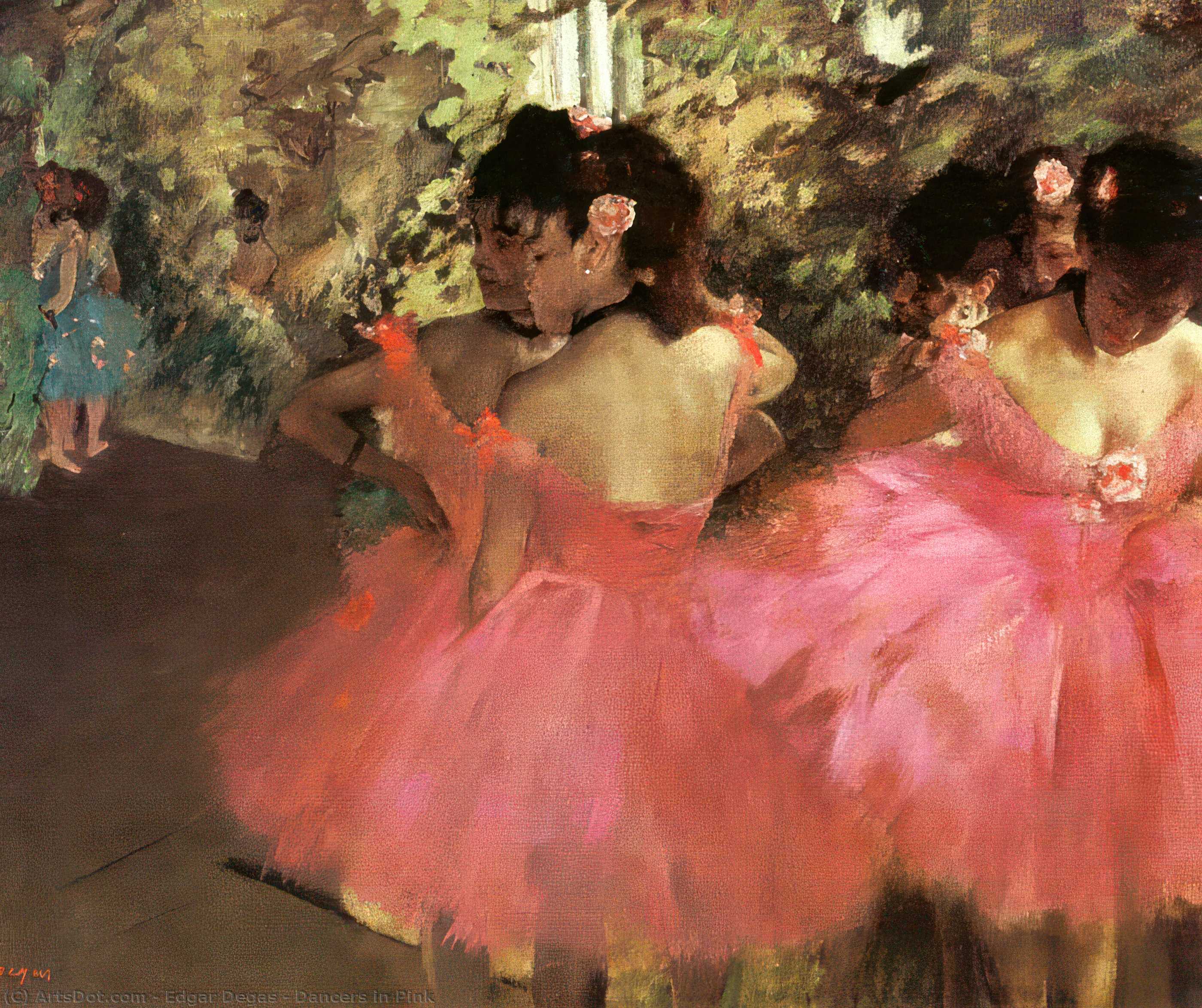
Балерине у розовом

1885 · Ulje na platnu · Hill-Stead Museum, Farmington

Gracija i pokret baleta uhvaćeni u impresionističkom sjaju „Igračice u roze boji“ Edgara Degasa majstorska je predstavljanje sveta baleta, izvedeno prepoznatljivim impresionističkim stilom ovog umetnika. Ovo očaravajuće delo poziva posmatrače u dinamični svet plesa, gde se prepliću gracioznost, pokret i elegancija. Živopisna plesna scena Slika prikazuje živopisnu scenu balerina u pokretu, dok njihove roze tutuje kruže na pozadini toplih nijansi. Degasova sposobnost da uhvati prolazne trenutke nastupa očigledna je u…

Танцирка са букетом цвећа (1878) čiji je Едгар Дега
8

Танцирка са букетом цвећа

1878 · Akril na platnu

Trenutak zaustavljen u vremenu: Očaravost Degasove „Igračice sa buketom cveća (Zvezda baleta)” Edgar Degasovo remdelo iz 1878. godine, „Igračica sa buketom cveća (Zvezda baleta)”, nije samo prikaz balerine; to je sažetak prolaznog trenutka—dah zadržan između napora i gracioznosti. Slika nas uvodi u živopisni svet pariskog baleta, ne kroz grandiozan spektakl, već kroz intimno posmatrananje. Mlada plesačica, u pokretu usred izvođenja, steže buket, a njeno telo zrači istovremeno snagom i ranjivosti.…

Мис Лола, у Цирку Фернандо, НГ Л (1879) čiji je Едгар Дега
9

Мис Лола, у Цирку Фернандо, НГ Л

1879 · Ulje na platnu

"Misis Lola u cirkusu Fernando": Pogled u Pariskom sjaju i umetničkoj briljantnosti Edgar Degas, jedan od najznačajnijih impresionista, stvorio je delo "Misis Lola u cirkusu Fernando" 1879. godine, a ovo nije samo portret akrobatice, već prozor u živopisnu kulturu Pariza 19. veka. Slika prikazuje Misis Lolu, cirkusku izvođačicu, u sred performansa, zarobljenu u trenutku graciozne snage i odvažnosti. Kompozicija je dinamična, privlači gledaoca u srž scene, naglašavajući veštinu i hrabrost…

Пљасачи на коњу 1 (1888) čiji je Едгар Дега
10

Пљасачи на коњу 1

1888 · Ulje na platnu · The Phillips Collection, Vašington, D.C.

Graciozni Pokreti i Disciplinovana Eleganicija: "Plesačice na Šipki 1" Edgar Degasa "Plesačice na Šipki 1" Edgara Degasa, nastao 1888. godine, nije samo slika; to je trenutak zaleđen u vremenu, intimni pogled u svet baletske discipline i gracioznosti. Ova pastelna kompozicija prikazuje dve plesačice angažovane u svakodnevnim vežbama, a njihova posvećenost i elegancija isijavaju sa platna, pozivajući gledaoca da se uroni u tajni svet baletske umetnosti. Degasov majstorstvo u korišćenju pastela…

Ostatak rang liste Едгар Дега, od 11 do 100

Клубска сцена (Песма пса) (1877) čiji je Едгар Дега
#11

Клубска сцена (Песма пса)

1877

Едгар Дегас, мајстор покрета и света модерног живота, представио нам је "Кафе концерт (Песму пса)" 1877. године – дело које нас преноси у срце париског ноћног живота касног…

Naručite reprodukciju →
Sestra (1873) čiji je Едгар Дега
#13

Sestra

1873

Predstavljanje Delovanja: "Sestra" od Edgara Degasa Ovo izvanredno delo, "Sestra", nastalo 1873. godine, predstavlja ključni trenutak u karijeri Edgara Degasa i jedan od najdubljih izrazitljivih primera njegovog umetničkog…

Naručite reprodukciju →
U kafiću, takođe nazivan čiji je Едгар Дега
#14

U kafiću, takođe nazivan

Grand Palais

„U kafiću“ (In a Café) Hilare-Germena Edgara Degasa, naslikano oko 1876. godine, nije samo prikaz dve figure koje uživaju u pariškom večeru; to je pažljivo posmatran studij ljudske…

Unesite ga u svoj dom →
Двојка балерина (1898) čiji je Едгар Дега
#15

Двојка балерина

1898

Едгар Дегас је био уметник чији живот био је одликован контрастима. Заједно са Монемом, Реноаром и другим револуционаристима који су преобразили слику касних 1890-их година, он је активно…

Naručite ručno oslikani primerak →
Данска Класа (1874) čiji je Едгар Дега
#16

Данска Класа

1874 · Metropoliten музеј у Њујорку

"Дански час": Дегасов генијални поглед у свет балета Едгар Дегаов "Дански час" (1874) није само слика, већ је прозор у динамичан и ефимеран свет балета. Ово дело импресионистичке…

Naručite reprodukciju →
Trkački konji u Lonšampu (1874) čiji je Едгар Дега
#17

Trkački konji u Lonšampu

1874 · Muzej finih umetnosti u Bostonu

Pogled u parisko razonodošnost: Dekodiranje Degasovog dela *Trkačeki na Longchampu* Edgar Degasovo delo *Trkački konji na Longchampu* (1874) nije samo slika sportskog događaja; to je živopisni trenutak uhvaćen…

Naručite reprodukciju →
Igračica na sceni (1880) čiji je Едгар Дега
#18

Igračica na sceni

1880 · Hamburger Kunsthalle

Prolični trenutak gracioznosti: Istraživanje Degasovog „Igrača na sceni” Ovo očaravajuće pastelno delo Edgara Degasa prenosi nas u samo srce pariskog sveta baleta 1880. godine. Smeštena u Hamburger Kunsthalle,…

Naručite reprodukciju →
The Star čiji je Едгар Дега
#20

The Star

Edgar Degas, a name synonymous with Impressionism, possessed a singular fascination that transcended mere artistic pursuit; he was utterly captivated by the world of ballet. Within his extensive…

Unesite ga u svoj dom →
Two harlequins (1886) čiji je Едгар Дега
#25

Two harlequins

1886

Edgar Degas, a titan of French Impressionism, stands apart from his peers not merely for stylistic innovation but also for an unyielding dedication to capturing the quiet dramas…

Unesite ga u svoj dom →
Fan Mount: Ballet Girls (1879) čiji je Едгар Дега
#26

Fan Mount: Ballet Girls

1879 · Metropoliten музеј у Њујорку

The edges of the fan curve softly, framing a world that feels as though it might dissolve if one breathes too heavily. Three figures rest along the lower…

Naručite reprodukciju →
Sedeća žena koja češlja kosu (1890) čiji je Едгар Дега
#27

Sedeća žena koja češlja kosu

1890 · Musée d'Orsay

Edgar Degasovova „Žena koja češlja kosu“, završena oko 1890. godine, nije samo prikaz kućne aktivnosti; to je duboko istraživanje ženstvenosti, ranjivosti i prolazne lepote svakodnevnog života—temelj impresionizma koji…

Naručite reprodukciju →
Yellow Dancers (In the Wings) (1875) čiji je Едгар Дега
#28

Yellow Dancers (In the Wings)

1875 · Art Institute of Chicago

Three female figures occupy the foreground, positioned in a diagonal arrangement that leads the eye from the upper middle toward the lower right. The composition focuses on a…

Unesite ga u svoj dom →
Café Singer (1879) čiji je Едгар Дега
#29

Café Singer

1879 · Art Institute of Chicago

A female singer occupies the center of this oil on canvas composition, her upper torso and head captured in a tight crop. The figure is positioned against a…

Naručite reprodukciju →
Women Combing Their Hair (1876) čiji je Едгар Дега
#31

Women Combing Their Hair

1876 · The Phillips Collection

Hilaire-Germain-Edgar Degas’s “Women Combing Their Hair,” painted circa 1876, is more than a simple depiction of domestic activity; it’s a profound meditation on movement, observation, and the fleeting…

Unesite ga u svoj dom →
A Roman Beggar Woman (1857) čiji je Едгар Дега
#33

A Roman Beggar Woman

1857 · Birmingham Museum and Art Gallery

A Glimpse of Roman Life: Edgar Degas’s “A Roman Beggar Woman” Edgar Degas’s “A Roman Beggar Woman,” painted in 1857, transcends mere portraiture; it embodies a profound exploration…

Unesite ga u svoj dom →
At the Ballet (1881) čiji je Едгар Дега
#34

At the Ballet

1881

A Glimpse Behind the Curtain: Decoding Degas’s “At the Ballet” Edgar Degas's 1881 pastel work, *At the Ballet*, offers a captivating and unusually intimate view into the world…

Unesite ga u svoj dom →
The Blue Dancers čiji je Едгар Дега
#36

The Blue Dancers

A Glimpse Behind the Curtain: Degas’s “The Blue Dancers” Edgar Degas's “The Blue Dancers,” painted in 1897, is more than just a depiction of ballerinas; it’s an intimate…

Naručite reprodukciju →
Dancer in her dressing room (1879) čiji je Едгар Дега
#38

Dancer in her dressing room

1879 · Norton Simon Museum

Edgar Degas's "Dancer in her Dressing Room," painted in 1879, isn’t merely a depiction of a ballerina; it’s a profound meditation on fleeting beauty, the solitude of artistic…

Naručite reprodukciju →
Orchestra of the Opera (1869) čiji je Едгар Дега
#40

Orchestra of the Opera

1869

Edgar Degas' "Orchestra of the Opera," painted in 1869, isn’t merely a depiction of musicians; it’s a meticulously observed slice of Parisian life, a backstage tableau brimming with…

Unesite ga u svoj dom →
The Bather (La Baigneuse) (1895) čiji je Едгар Дега
#41

The Bather (La Baigneuse)

1895 · Reading Public Museum

The painting depicts a woman reclining on her side in a bathtub filled with water. She is positioned centrally within the frame, bathed in diffused natural light filtering…

Naručite reprodukciju →
Russian Dancers (1899) čiji je Едгар Дега
#42

Russian Dancers

1899

A Glimpse into Movement and Modernity: Degas’s “Russian Dancers” Edgar Degas, a master of capturing fleeting moments and modern life, presents us with a captivating scene in “Russian…

Unesite ga u svoj dom →
Singer in Green (1884) čiji je Едгар Дега
#46

Singer in Green

1884 · Metropoliten музеј у Њујорку

In the heart of 1884 Paris, amidst the gaslit glow of cabarets and the rhythmic pulse of urban nightlife, Edgar Degas captured a moment that transcends time. Singer…

Unesite ga u svoj dom →
Žena Česanje kose (1894) čiji je Едгар Дега
#48

Žena Česanje kose

1894 · Metropoliten музеј у Њујорку

A Moment of Intimate Reflection: Degas’s *Woman Combing Her Hair* Edgar Degas's 1894 pastel, *Woman Combing Her Hair*, is a captivating study in quiet intimacy and the beauty…

Unesite ga u svoj dom →
Woman at a Window (1872) čiji je Едгар Дега
#51

Woman at a Window

1872 · Courtauld Gallery

Edgar Degas's “Woman at a Window,” painted in 1872, is more than just a depiction of a figure observing the world outside; it’s a masterful exploration of light,…

Unesite ga u svoj dom →
Ballet Scene (1880) čiji je Едгар Дега
#52

Ballet Scene

1880 · Dixon Gallery and Gardens

Ballet Scene is a painting by Edgar Degas. The composition focuses on a single female dancer positioned toward the front right of the stage. This figure is rendered…

Naručite ručno oslikani primerak →
A Carriage at the Races (1872) čiji je Едгар Дега
#54

A Carriage at the Races

1872 · Muzej finih umetnosti u Bostonu

The painting depicts a horse-drawn carriage situated on a grassy field. Several horses are visible within the scene; some are positioned in the foreground while others are further…

Unesite ga u svoj dom →
Lady with a Parasol (1871) čiji je Едгар Дега
#55

Lady with a Parasol

1871 · Courtauld Gallery

The scene unfolds through Lady with a Parasol, a work painted by Edgar Degas in 1871. This piece captures a fleeting moment of existence, frozen in time through…

Naručite reprodukciju →
Singer with a glove (1878) čiji je Едгар Дега
#57

Singer with a glove

1878

To gaze upon Degas's depiction of "Singer with a glove" is to be instantly transported into the vibrant, yet fleeting, atmosphere of a Parisian cabaret in the late…

Unesite ga u svoj dom →
Field of Flax (1892) čiji je Едгар Дега
#59

Field of Flax

1892

The artwork is a pastel depiction of a landscape featuring a field of flax. In the foreground, there are bright yellow flowers scattered throughout the scene. A diamond-shaped…

Naručite reprodukciju →
The Return of the Herd (1896) čiji je Едгар Дега
#60

The Return of the Herd

1896 · New Walk Museum - Art Gallery

The painting depicts a rural scene featuring two horses positioned on a road in front of a house. One horse is situated toward the left side of the…

Naručite reprodukciju →
Group of Dancers (1905) čiji je Едгар Дега
#64

Group of Dancers

1905

The painting Group of Dancers is an oil on canvas that captures three women dancing together within a room. The scene is characterized by a sense of energy…

Naručite reprodukciju →
Conversation (1895) čiji je Едгар Дега
#67

Conversation

1895 · Yale University Art Gallery

Edgar Degas's "Conversation," housed within the hallowed halls of the Yale University Art Gallery, isn’t merely a painting; it’s a meticulously crafted snapshot of Parisian social life at…

Unesite ga u svoj dom →
Two Dancers (1898) čiji je Едгар Дега
#69

Two Dancers

1898 · Staatliche Kunstsammlungen Dresden

The scene unfolds through the delicate, layered application of pastel and charcoal, capturing a fleeting moment of grace. In this work, titled Two Dancers, the artist Edgar Degas…

Unesite ga u svoj dom →
Spanish dance (2018) čiji je Едгар Дега
#70

Spanish dance

2018 · Asociación Española de Pintores y Escultores

In this sculpture, titled Spanish dance, we encounter the quiet intensity of Edgar Degas. Created in France during the 1880s, the work captures a specific, fleeting moment of…

On the Stage (1880) čiji je Едгар Дега
#71

On the Stage

1880

The stage lights seem to flicker even now as the eye wanders across the cream laid paper. A young woman holds the center of the frame, her body…

Naručite reprodukciju →
Horses and Jockeys (1886) čiji je Едгар Дега
#72

Horses and Jockeys

1886

To gaze upon this depiction of horses and jockeys is to witness time itself captured in a fleeting, exhilarating instant. It is more than just a sporting scene;…

Naručite reprodukciju →
The Dancers (1885) čiji je Едгар Дега
#73

The Dancers

1885 · Metropoliten музеј у Њујорку

The air in the rehearsal space feels heavy with the scent of dust and tulle. In this 1885 pastel work, several ballerinas occupy a crowded, asymmetrical stage, caught…

Naručite reprodukciju →
Ballet Scene čiji je Едгар Дега
#76

Ballet Scene

Dixon Gallery and Gardens

In the quiet, focused moments before the curtain rises, there exists a unique tension—a blend of exhaustion and anticipation that Hilaire-Germain-Edgar Degas captured with unparalleled intimacy. Ballet Scene…

Naručite reprodukciju →
Melancholy (1874) čiji je Едгар Дега
#77

Melancholy

1874

Edgar Degas, a name synonymous with Impressionism yet profoundly resistant to easy categorization, offers us in "Melancholy" (1874) a work that transcends simple portraiture. Housed within the esteemed…

Naručite ručno oslikani primerak →
M. and Mme Edouard Manet (1869) čiji je Едгар Дега
#80

M. and Mme Edouard Manet

1869

The composition centers on Edouard Manet and his wife reclining together on a bed. Although dressed in impeccable formal attire—with Edouard sporting a tie indicative of recent social…

Naručite reprodukciju →
Dancers Practicing at the Barre (1877) čiji je Едгар Дега
#81

Dancers Practicing at the Barre

1877 · Metropoliten музеј у Њујорку

In the quiet, sun-drenched corners of a Parisian rehearsal studio, Edgar Degas captured something far more profound than a mere ballet rehearsal. “Dancers Practicing at the Barre,” painted…

Unesite ga u svoj dom →
Dancers (1895) čiji je Едгар Дега
#83

Dancers

1895

Edgar Degas, a figure perpetually shadowed by the brilliance of Monet and Renoir yet undeniably pivotal to the Impressionist movement, possessed an artistic vision that defied easy categorization.…

Naručite ručno oslikani primerak →
Dancer Looking at the Sole of Her Right Foot (1921) čiji je Едгар Дега
#84

Dancer Looking at the Sole of Her Right Foot

1921 · Tel Aviv Museum of Art

The quietude of a private moment settles over the bronze figure known as Dancer Looking at the Sole of Her Right Foot. Created by Edgar Degas, this work…

Četiri Plesača (1900) čiji je Едгар Дега
#87

Četiri Plesača

1900 · National Gallery of Art

Edgar Degas's *Four Dancers*, painted in 1900, transcends mere representation; it embodies a profound understanding of motion and the evolving perception of femininity within Parisian society at the…

Naručite ručno oslikani primerak →
The Tub (1889) čiji je Едгар Дега
#88

The Tub

1889

Edgar Degas’ “The Ballet Class,” completed around 1874-1876, stands as a cornerstone of Impressionist art and a poignant glimpse into the world of ballet during its formative years.…

Unesite ga u svoj dom →
Dancers (8) (1900) čiji je Едгар Дега
#92

Dancers (8)

1900

To stand before this depiction of Dancers (8) is to step directly into the vibrant, breathless atmosphere backstage—a moment suspended between performance and memory. Hilaire-Germain-Edgar Degas captured not…

Naručite reprodukciju →
The Rehearsal (1878) čiji je Едгар Дега
#94

The Rehearsal

1878 · Dumbarton Oaks

To gaze upon The Rehearsal is to step directly into a moment suspended in time—a breath held just before the curtain rises, or perhaps, just after the applause…

Unesite ga u svoj dom →
Russian Dancer (1895) čiji je Едгар Дега
#96

Russian Dancer

1895

In the delicate dance between light and shadow, Edgar Degas captures a moment of pure, unadulterated vitality in Russian Dancer. Created in 1895, this masterpiece serves as a…

Naručite reprodukciju →
View of Saint-Valery-sur-Somme (1898) čiji je Едгар Дега
#98

View of Saint-Valery-sur-Somme

1898 · Metropoliten музеј у Њујорку

Edgar Degas, a renowned French Impressionist painter, captivated audiences with his evocative landscape View of Saint-Valéry-sur-Somme in 1898. Now residing within the esteemed collection at the Metropolitan Museum…

Unesite ga u svoj dom →
Leon Bonnat (1863) čiji je Едгар Дега
#99

Leon Bonnat

1863

In 1863, Edgar Degas turns his gaze toward a man who shares his devotion to the craft of seeing. This half-length portrait captures Léon-Joseph-Florentin Bonnat, not as a…

Naručite reprodukciju →

Slike umetnika Едгар Дега po periodima

Motivi koje je Едгар Дега najčešće slikao

Četiri teme koje se najčešće pojavljuju među ovim remek-delima, sa najboljim primerom za svaku od njih.

Gde videti slike umetnika Едгар Дега

8 muzeja u kojima se nalazi najviše slika sa ove stranice.

Muzej Grad Radovi umetnika Едгар Дега Slike iz ovog spiska
Metropoliten музеј у Њујорку, ЊујоркMetropoliten музеј у Њујорку Њујорк 52 Данска Класа, Fan Mount: Ballet Girls, Three Dancers Preparing for Class
Musée d'Orsay, ParizMusée d'Orsay Pariz 55 Упитник абсента, Baletna proba, Porodica Bellelli
National Gallery, LondonNational Gallery London 18 Žena koja se suši, Two Dancers in Their Dressing Room, Head of a Woman
Norton Simon Museum, PasadenaNorton Simon Museum Pasadena 5 Dancer in her dressing room, Репетиција танца у студију Опере, Žena Česanje Kosa Pred Zrkalom
National Gallery of Art, WashingtonNational Gallery of Art Washington 28 Four dancers, ca National Galler, Četiri Plesača
Muzej finih umetnosti u Bostonu, BostonMuzej finih umetnosti u Bostonu Boston 10 Trkački konji u Lonšampu, A Carriage at the Races
Art Institute of Chicago, ČikagoArt Institute of Chicago Čikago 8 Yellow Dancers (In the Wings), Café Singer
Courtauld Gallery, LondonCourtauld Gallery London 7 Woman at a Window, Lady with a Parasol

Едгар Дега kroz decenije: jedno remek-delo za svaku

  1. 1850s
    A Roman Beggar Woman (1857) čiji je Едгар Дега
    Rang 33 od 100

    A Roman Beggar Woman

    Godine 16 – 25 · Birmingham Museum and Art Gallery

    A Glimpse of Roman Life: Edgar Degas’s “A Roman Beggar Woman” Edgar Degas’s “A Roman Beggar Woman,” painted in 1857, transcends mere portraiture; it embodies a profound exploration…

  2. 1860s
    Interior (also known as The Rape) (1868) čiji je Едгар Дега
    5 od 100

    Interior (also known as The Rape)

    Godine 26 – 35 · Philadelphia Museum of Art

    Edgar Degas’s “Interior,” often referred to as “The Rape,” is not merely a painting; it's an experience—a carefully constructed tableau of psychological tension and unspoken drama. Completed in…

  3. 1870s
    Упитник абсента (1876) čiji je Едгар Дега
    #1 od 100

    Упитник абсента

    Godine 36 – 45 · Musée d'Orsay

    Edgar Degas stands apart from his Impressionist contemporaries, not merely in stylistic preference but in a fundamental commitment to portraying the world with unflinching honesty. His gaze was…

  4. 1880s
    Балерине у розовом (1885) čiji je Едгар Дега
    #7 od 100

    Балерине у розовом

    Godine 46 – 55 · Hill-Stead Museum

    Gracija i pokret baleta uhvaćeni u impresionističkom sjaju „Igračice u roze boji“ Edgara Degasa majstorska je predstavljanje sveta baleta, izvedeno prepoznatljivim impresionističkim stilom ovog umetnika. Ovo očaravajuće delo…

  5. 1890s
    Žena koja se opere u kupelji (1892) čiji je Едгар Дега
    12 od 100

    Žena koja se opere u kupelji

    Godine 56 – 65

    Intimna Predstavka O svakodnevnim Rutinama Ove izuzetno vredne slike sačinjena su da predstavljaju miran i lični trenutak žene u procesu čišćenja, što je naglašeno delikatnim linijama i subtilnim…

  6. 1900s
    Tri Plesalce, Plave Suknje, Crvene Majice (1903) čiji je Едгар Дега
    47 od 100

    Tri Plesalce, Plave Suknje, Crvene Majice

    Godine 66 – 75

    Tri Danca, Plave Širom, Crvene Haljine Svet umetnosti prepun je remekdelja koji nas i dalje inspiriše i zadivljuje. Jedno takvo remekdelo je "Tri Danca, Plave Širom, Crvene Haljine"…

Slike umetnika Едгар Дега: često postavljana pitanja

Koja je najpoznatija slika umetnika Едгар Дега?Prikaži odgovor

Упитник абсента (1876), Musée d'Orsay, Pariz. Sledeći su Žena koja se suši i Baletna proba (1873).

U kojoj je godini Едгар Дега naslikao Упитник абсента?Prikaži odgovor

42 godina: Упитник абсента datira iz 1876, a Едгар Дега je rođen/a 1834.

Koja su 10 najpoznatijih slika umetnika Едгар Дега?Prikaži odgovor

Упитник абсента, Žena koja se suši, Baletna proba, Porodica Bellelli, Interior (also known as The Rape), Portraits in a New Orleans Cotton Office, Балерине у розовом, Танцирка са букетом цвећа, Мис Лола, у Цирку Фернандо, НГ Л i Пљасачи на коњу 1. Gornji rang prikazuje godinu i muzej za svako od njih.

Koliko ima slika umetnika Едгар Дега?Prikaži odgovor

Naš katalog sadrži 1,074 dela umetnika Едгар Дега, datiranih od 1857 do 1905.

Gde mogu da vidim najpoznatija dela umetnika Едгар Дега?Prikaži odgovor

Većina njih se nalazi u Metropoliten музеј у Њујорку (Њујорк), Musée d'Orsay (Pariz) i National Gallery (London). U tabeli iznad su muzeji navedeni jedan po jedan.

U kom periodu je Едгар Дега naslikao/la svoje najpoznatije radove?Prikaži odgovor

U periodima 1870s: 40 od ukupno 100 dela na ovoj stranici datiraju iz tog vremena, od čega je Упитник абсента.

Ko je najranije i najnovije poznato delo umetnika Едгар Дега?Prikaži odgovor

Najstarije delo na ovoj stranici je iz A Roman Beggar Woman (1857), a najnovije iz Group of Dancers (1905).

Koje je motive Едгар Дега slikao?Prikaži odgovor

Ballet (17), Dance (13) i Dancers (12), od ukupno 100 dela na ovoj stranici.

Na čemu je Едгар Дега slikao i kojim sredstvima?Prikaži odgovor

Oil On Canvas: 25 od ukupno 100 dela na ovoj stranici.

Kojem umetničkom pravcu pripada umetnost autora Едгар Дега?Prikaži odgovor

Impresionizam, kao što pokazuju slike na ovoj stranici.

Koje slike umetnika Едгар Дега se nalaze u kolekciji Metropoliten музеј у Њујорку?Prikaži odgovor

Данска Класа, Fan Mount: Ballet Girls i Three Dancers Preparing for Class su među 9 dela na ovoj stranici koja se nalaze u Metropoliten музеј у Њујорку, Њујорк.

Gde mogu da kupim reprodukciju Едгар Дега?Prikaži odgovor

Da. Svaku sliku sa ove stranice možete naručiti kao ručno oslikano ulje na platnu muzejskog kvaliteta ili kao umetnički print, u veličini koju odaberete, direktno sa stranice te slike.

Едгар Дега: biografija

The Life of Edgar Degas

Paris, 1834. A child is born into a moderately wealthy family to Hilaire-Germain-Edgar De Gas. The name he would eventually simplify to Edgar Degas marks the beginning of a life defined by the tension between social expectation and artistic obsession. He grows up within the sophisticated atmosphere of the French capital, a setting that will later serve as the backdrop for his observations of modern life.

The years pass in a blur of study and shifting interests. He moves from the structured environment of his upbringing toward the grit of the city's working spaces. He does not seek the sunlight of the outdoors, preferring the controlled, artificial light of the studio and the theater. His gaze settles on the dancers, the laundresses, and the racehorses of Paris, capturing the physical toll of labor and the fleeting movements of the stage. He remains a man of contradictions, often resisting the labels his contemporaries apply to him, insisting instead on his identity as a realist.

The end comes in Paris on 27 September 1917. He leaves behind a vast body of work that spans many decades, including:

Early Life, Family and Training

Paris, 1834. The son of a banker and Célestine Musson De Gas, a Creole from New Orleans, Louisiana, Hilaire-Germain-Edgar De Gas enters a world of bourgeois stability. At eleven, he is enrolled at the Lycée Louis-le-Grand. The academic path is set, yet the boy’s focus drifts toward the halls of the Louvre. By 1853, having graduated from the Lycée with a baccalauréat in literature, he bypasses his father's expectations of a legal career. Instead, he registers as a copyist in the Louvre Museum, spending his hours tracing the lines of the masters.

The training intensifies at the École des Beaux-Arts in Paris. He moves through the rigors of classical instruction, honing a precision that would define his later work. In 1855, a meeting occurs that leaves a permanent mark on his development: he meets Jean-Auguste-Dominique Ingres. The encounter cements a respect for draftsmanship and the importance of the line, even as he begins to move toward the modern subjects that would eventually define his career.

Technique and Artistic Style

Degas rejects the label of Impressionist. He prefers the term "Realist," a choice that dictates his entire approach to the canvas. He avoids the outdoor landscape and the loose, flickering brushstrokes favored by his contemporaries. Instead, he retreats into the controlled environment of the studio. Here, he masters the human form through rigorous draftsmanship. He is a superb draftsman, possessing a specific, technical command over the depiction of movement. He does not wait for the sun to hit a subject; he constructs his scenes through careful study in pencil or pastel. This preparation allows him to freeze a fleeting moment of motion with anatomical precision.

Light in a Degas composition is rarely natural. He utilizes artificial light to emphasize the figures, creating a sense of theatricality and depth. One notable method is contre-jour, where he places his subject in shadow while the background remains brightly lit. This technique isolates the figure, pulling it forward from the environment. The result is a tension between the subject and the space they inhabit, often revealing the physical strain or the quiet, unposed reality of modern life.

Key Works and Subjects

The stage and the stable dominate his visual world. More than half of his output focuses on dancers, capturing them in moments of rehearsal and performance. He moves between the grace of a pirouette and the physical strain of the dance class. Beyond the theater, he turns his gaze toward the speed of the racetrack, documenting racehorses and the jockeys who ride them. These subjects are not merely decorative; they are studies in tension and movement.

His reach extends into the private and the psychological. He produces portraits that reveal a complex inner life, often using unconventional angles to isolate his subjects. This focus on the human form is not limited to oil on canvas. He works through a variety of media, including prints, drawings, and wax sculptures. His ability to render the human figure is evident in his many studies of women, often focusing on the body in private, unobserved moments.

Legacy and Lasting Impact

The shift in late 19th-century art finds a central figure in Degas. Though he resisted the label, his presence helped establish the foundations of Impressionism. He moved away from the rigid, historical subjects of the academy, choosing instead to document the grit and grace of modern Parisian life. This departure from tradition paved the way for future generations of artists to explore the unvarnished reality of the human condition.

His influence reaches far beyond the initial Impressionist circle. The structural innovations and unconventional compositions he developed left a mark on the trajectory of modern art. Specifically, his approach to form and movement can be seen in the later works of Pablo Picasso and Henri Matisse. He taught the art world to look at the world through asymmetrical angles and unexpected crops, turning the private, fleeting moments of a dancer or a laundress into permanent studies of motion.

Where to See the Works Today

The traces of Degas's observation remain scattered across major institutions, preserved in the quiet halls of Paris and beyond. In France, the Musée d'Orsay holds significant collections of his work, capturing the movement he spent a lifetime studying. The Louvre Museum also houses his art, while the Bibliothèque Nationale de France in Paris maintains his works within its archives. These collections offer a direct look at the technical precision and the study of form that defined his career.

Across the Atlantic, the reach of his vision extends into the United States. The Metropolitan Museum of Art in New York holds his paintings, providing a window into the modern life he depicted with such scrutiny. In Philadelphia, the Philadelphia Museum of Art contains his works, ensuring his influence remains accessible to international audiences. These sites act as physical anchors for his legacy, where the lines and light he mastered are still visible to the modern eye.

Sva 1074 dela umetnika Едгар Дега →