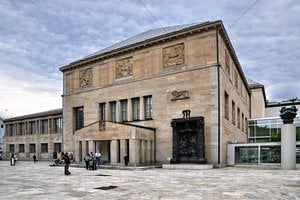
Огист Роден, 1840 – 1917

The 100 Most Famous Paintings by Огист Роден

The painting that made Огист Роден famous is The Temptation of Saint Anthony (back) (1900); it hangs in the Museum of Fine Arts, Ljun. The three shades (1973) and The Thinker (1910) follow it in the hearts of collectors and museum visitors. Of the 205 works by Огист Роден in our catalogue, these 100 are the most admired, each presented with its date, its museum and what sets it apart.

Ranked by our popularity score, which combines the searches, visits and orders for each work. Updated октобар 2026. Every masterpiece on this page can be ordered as a museum-quality, hand-painted oil reproduction or a fine art print, at the size you choose.

Portrait of Огист Роден
Огист Роден · 1840 – 1917
Born · died
1840 – 1917, Београд
Works in our catalogue
205
Most famous
The Temptation of Saint Anthony (back) (1900)
Most works at
Legion of Honor

Огист Роден: the ten masterpieces

The Temptation of Saint Anthony (back) (1900) by Огист Роден
1

The Temptation of Saint Anthony (back)

1900 · Marble · Museum of Fine Arts, Ljun

François Auguste René Rodin’s “The Temptation of Saint Anthony (back)” is not merely a sculpture; it's an immersive experience, a visceral portrayal of the internal struggle between faith and desire. Completed around 1900, this powerful marble work transcends its religious subject matter to become a universal meditation on human vulnerability and the seductive pull of temptation. Rodin, already a revolutionary figure in sculpting the emotional landscape of his time, masterfully…

The three shades (1973) by Огист Роден
2

The three shades

1973 · Oil On Canvas · Art Gallery of South Australia, Adelaide

WahooArt presents a meticulously crafted hand-painted reproduction of François Auguste René Rodin's iconic sculpture, "The Three Shades," a work that transcends mere representation to embody profound human emotion and connection. Executed in 1973, this piece captures the essence of Rodin’s genius – his ability to translate psychological depth into enduring sculptural form. The photograph itself reveals three nude male figures intertwined in a poignant tableau, their postures suggesting both vulnerability…

Man and his Thought (1900) by Огист Роден
4

Man and his Thought

1900 · Marble · Alte Nationalgalerie, Berlin

François Auguste Rodin's "Man and His Thought," completed in 1900, is not merely a sculpture; it’s a profound meditation on the very act of artistic creation. This arresting work, housed within the Musée Rodin in Paris, captures a pivotal moment – the genesis of an idea struggling to manifest into physical form. The scene depicts a bearded artist, rendered with remarkable anatomical detail and a palpable sense of intensity, kneeling…

Man with the Broken Nose (1864) by Огист Роден
5

Man with the Broken Nose

1864 · Sculpture Bronze · Legion of Honor, San Francisco

Man with the Broken Nose: A Study in Grief and Resilience The sculpture “Man with the Broken Nose,” created by Auguste Rodin in 1864, stands as a haunting testament to human vulnerability and an enduring symbol of contemplation. More than just a depiction of physical injury—a fractured nose—the piece delves into profound psychological themes, capturing the essence of sorrow and striving for inner peace within a meticulously crafted bronze form.…

The Fallen Angel (1890) by Огист Роден
6

The Fallen Angel

1890 · Bronze · Legion of Honor, San Francisco

A Portrait of Sorrow: Examining Rodin’s “The Fallen Angel” François Auguste René Rodin's "The Fallen Angel," completed in 1890, stands as a cornerstone of Romantic sculpture and an enduring testament to the artist’s ability to convey profound emotion through form. More than just a depiction of a biblical figure—the angel Gabriel wrestling with despair—it embodies a complex tapestry of themes exploring grief, compassion, and the confrontation with mortality. The sculpture…

Victor Hugo (1917) by Огист Роден
7

Victor Hugo

1917 · Marble · Legion of Honor, San Francisco

In the quiet, hallowed halls of sculptural history, few encounters are as visceral as witnessing Auguste Rodin’s “Victor Hugo.” Completed in 1917, during the twilight of the master sculptor's life, this marble masterpiece is far more than a mere anatomical likeness of France’s most luminous literary titan. It is an arresting testament to Rodin’s profound ability to translate the intangible weight of human thought into the permanence of stone. As…

Danaide (1885) by Огист Роден
8

Danaide

1885 · Sculpture Bronze · Cantor Arts Center at Stanford University, Stanford

To stand before this sculpture is to encounter a moment suspended in time—a profound meditation on repose, perhaps even oblivion. The piece, titled Danaide, presents a breathtakingly intimate close-up study of the human head and shoulders. Rendered in a deeply textured, dark material suggestive of aged bronze, the surface whispers tales of oxidation and the passage of years. It is not merely a likeness; it is an emotional echo captured…

The Prodigal Son (1970) by Огист Роден
9

The Prodigal Son

1970 · Sculpture Bronze · Art Gallery of New South Wales, Sidnej

To stand before The Prodigal Son is not merely to observe bronze; it is to encounter a raw, visceral outpouring of the human spirit. François Auguste René Rodin captured in this magnificent sculpture something far more ephemeral than metal—he has rendered the very moment of profound reckoning. The figure seems caught mid-exhalation, arms flung upward as if reaching for an impossible grace or perhaps embracing the weight of years of…

Minotaur (1886) by Огист Роден
10

Minotaur

1886 · Sculpture · Cantor Arts Center at Stanford University, Stanford

To stand before Rodin’s Minotaur is not merely to observe stone; it is to confront a raw, visceral moment wrested from the depths of myth and human emotion. This monumental sculpture, born in 1886, captures an entanglement so charged with unspoken narrative that it seems to breathe its own history into the cool, dark material. Rodin, ever the master of the psychological portrait rendered in durable stone, has gifted us…

More Огист Роден masterpieces, 11 to 100

Seated Female Nude (1887) by Огист Роден
#11

Seated Female Nude

1887 · Cantor Arts Center at Stanford University

To stand before a representation of Seated Female Nude by François Auguste René Rodin is to encounter not merely a sculpture, but a profound meditation on the human…

La femme accroupie (The Crouching Woman) by Огист Роден
#12

La femme accroupie (The Crouching Woman)

Museum Folkwang

La Femme Accroupie: A Study in Quiet Contemplation The sculpture “La Femme Accroupie,” created by Auguste Rodin between 1882 and 1906, stands as a testament to the artist’s…

Monumental Head of Jean d (1971) by Огист Роден
#13

Monumental Head of Jean d

1971 · Los Angeles County Museum of Art

François Auguste René Rodin, a name synonymous with the revolutionary spirit of modern sculpture, gifted us with works that continue to resonate deeply. Among his most poignant creations…

Torso of a man (Study for (1979) by Огист Роден
#14

Torso of a man (Study for

1979 · Art Gallery of South Australia

François Auguste René Rodin, a name synonymous with revolutionary sculpture, possessed an unparalleled ability to distill the essence of human experience into stone and bronze. His “Torso of…

The Thinker by Огист Роден
#15

The Thinker

The Baltimore Museum of Art

Auguste Rodin's "The Thinker," often referred to as "Le Penseur" in French, isn’t merely a sculpture; it’s an embodiment of introspection, a visceral representation of the human condition…

The Gates of Hell by Огист Роден
#16

The Gates of Hell

Shizuoka Prefectural Museum of Art

François Auguste René Rodin’s “The Gates of Hell,” conceived in 1888 and perpetually unfinished until his death in 1917, stands as arguably the sculptor's most ambitious undertaking—a monumental…

The Hand of God by Огист Роден
#17

The Hand of God

Maryhill Museum of Art

François Auguste René Rodin's "The Hand of God," sculpted between 1889 and 1891, isn’t merely a depiction of a hand; it’s an encapsulation of raw emotion, a visceral…

Balzac Nude with his Arms Crossed (1892) by Огист Роден
#18

Balzac Nude with his Arms Crossed

1892

The Weight of Thought A man stands on a pedestal, his limbs folded tightly against his chest. This figure, stripped of clothing, occupies the center of the frame…

The Age of Bronze (1876) by Огист Роден
#19

The Age of Bronze

1876 · Museu Nacional d'Art de Catalunya

Auguste Rodin's *Age of Bronze*, often referred to as *The Conquered Man*, isn’t merely a sculpture; it’s a visceral embodiment of nascent consciousness, a pivotal moment in the…

Torso of a Young Woman (1886) by Огист Роден
#20

Torso of a Young Woman

1886 · Cantor Arts Center at Stanford University

To stand before, or even to contemplate in reproduction, Torso of a Young Woman by François Auguste René Rodin is to encounter not merely carved stone or cast…

The Call to Arms (1879) by Огист Роден
#21

The Call to Arms

1879 · Legion of Honor

François Auguste René Rodin's *The Call to Arms*, often referred to as *La Défense*, is not merely a sculpture; it’s a visceral embodiment of the anxieties and aspirations…

The Age of Bronze (1876) by Огист Роден
#22

The Age of Bronze

1876 · Kunsthaus Zürich

François Auguste René Rodin: The Dawn of Naturalism The sculptor François Auguste René Rodin (1840–1917) stands as an undeniable titan in the history of modern art, forever altering…

Small head of Jean de Fiennes with hand (1985) by Огист Роден
#23

Small head of Jean de Fiennes with hand

1985 · Art Gallery of South Australia

François Auguste René Rodin's “Small Head of Jean de Fiennes with Hand,” a remarkably intimate bronze sculpture, isn’t merely a portrait; it’s a distilled essence of human contemplation.…

Danaid (The spring) (1800) by Огист Роден
#24

Danaid (The spring)

1800 · Nacionalni muzej stare umetnosti

To stand before a sculpture like Rodin’s Danaid (The spring) is to confront not merely marble or bronze, but the very weight of myth and unending sorrow. This…

Eternal Springtime (L’Eternel Printemps) (1898) by Огист Роден
#25

Eternal Springtime (L’Eternel Printemps)

1898 · Calouste Gulbenkian Foundation

In the realm of modern sculpture, few works capture the ephemeral essence of human connection as profoundly as Auguste Rodin’s Eternal Springtime (L’Eternel Printemps). Created during a period…

The age of bronze (1876) by Огист Роден
#26

The age of bronze

1876 · Kunstmuseum

The Sculptor of Souls: A Life Forged in Clay – François Auguste René Rodin François Auguste René Rodin, a name synonymous with modern sculpture, emerged from 19th-century France…

Pens (1895) by Огист Роден
#27

Pens

1895 · Musée d'Orsay

Auguste Rodin's "Pens," created in 1895, is not merely a sculpture; it’s a profound meditation on introspection and the quiet dignity of human experience. This remarkable work, rendered…

Eternal Springtime (1901) by Огист Роден
#28

Eternal Springtime

1901 · Szépművészeti Múzeum

Auguste Rodin's "Eternal Springtime," a monumental marble sculpture completed in 1901, isn’t merely a depiction of lovers; it’s an embodiment of yearning, vulnerability, and the profound beauty found…

Saint John the Baptist (1880) by Огист Роден
#29

Saint John the Baptist

1880 · Kunsthalle Bremen

Saint John the Baptist: A Testament to Awakening The sculpture “Saint John the Baptist,” created by Auguste Rodin in 1880, stands as an emblem of artistic innovation and…

Head of Jean de Fiennes (1984) by Огист Роден
#30

Head of Jean de Fiennes

1984 · Art Gallery of South Australia

Head of Jean de Fiennes: A Study in Emotion and Texture François Auguste René Rodin’s “Head of Jean de Fiennes,” created in 1984, stands as a testament to…

Bring it home →
The Thinker by Огист Роден
#31

The Thinker

Maryhill Museum of Art

We are looking at The Thinker, a significant work by Auguste Rodin. Created in 1888, this sculpture presents a human form in a moment of profound philosophical contemplation.…

The Thinker (1888) by Огист Роден
#32

The Thinker

1888 · Legion of Honor

François Auguste René Rodin's “The Thinker” is more than just a sculpture; it’s an embodiment of the human condition, a visceral representation of introspection and the weight of…

Order a reproduction →
St. John the Baptist - Sant Jean - Babtiste préchant (1878) by Огист Роден
#33

St. John the Baptist - Sant Jean - Babtiste préchant

1878 · Narodna galerija Prag

Auguste Rodin's "St. John the Baptist" is a powerful bronze sculpture that embodies both profound faith and raw vulnerability. Created in 1878, this work stands as a testament…

Iris, Messenger of the Gods (1891) by Огист Роден
#34

Iris, Messenger of the Gods

1891 · Kunsthaus Zürich

The Messenger’s Weight: Decoding Rodin's "Iris" François Auguste René Rodin’s “Iris, Messenger of the Gods” isn’t merely a sculpture; it’s an embodiment of dynamism, a whispered secret of…

Pierre de Wiessant (1895) by Огист Роден
#35

Pierre de Wiessant

1895 · Gradski muzej umetnosti u Kitakjušiju

In the quiet, evocative presence of Auguste Rodin’s “Pierre de Wiessant,” one encounters more than just a bronze figure; one meets a profound meditation on human vulnerability. Completed…

Christ and the Magdalene (1894) by Огист Роден
#36

Christ and the Magdalene

1894 · Legion of Honor

Completed in 1894, Christ and the Magdalene by Auguste Rodin presents a religious scene drawn from Christian tradition. The sculpture focuses on the interaction between Christ and Mary…

Head of Balzac (1897) by Огист Роден
#37

Head of Balzac

1897 · Nasher Sculpture Center

In the late nineteenth century, Auguste Rodin embarked on a profound creative struggle to capture the essence of the French novelist Honoré de Balzac. The Head of Balzac,…

Striding Man (1900) by Огист Роден
#38

Striding Man

1900 · Staatliche Kunsthalle Karlsruhe

In this work from about 1900, Auguste Rodin presents a study of the human body in a state of profound transition. Striding Man captures a male figure caught…

The Thinker (1888) by Огист Роден
#39

The Thinker

1888 · Legion of Honor

François Auguste René Rodin's *The Thinker*, more formally known as *Le Penseur*, is not merely a sculpture; it’s an embodiment of the human condition itself. Created between 1880…

Hanako (1908) by Огист Роден
#40

Hanako

1908 · Nasher Sculpture Center

Hanako: A Portrait of Melancholy and Transformation François Auguste René Rodin’s “Mask of Hanako,” completed in 1911, transcends mere sculptural representation; it embodies a profound exploration of aging,…

Balzac (1898) by Огист Роден
#41

Balzac

1898

To encounter Auguste Rodin’s Balzac is to witness a moment of profound artistic rebellion captured in metal. This is not merely a portrait of the legendary French novelist…

Portrait bust of Victor Hugo (1886) by Огист Роден
#42

Portrait bust of Victor Hugo

1886 · Calouste Gulbenkian Foundation

A Monument to Literary Greatness In the annals of sculptural history, few pieces capture the intersection of literary legend and artistic revolution as profoundly as Auguste Rodin’s Portrait…

Pierre de Wissant nude (1985) by Огист Роден
#43

Pierre de Wissant nude

1985 · Art Gallery of South Australia

Auguste Rodin’s “Pierre de Wissant Nude,” a powerful bronze sculpture born from the crucible of 14th-century siege and sacrifice, transcends mere historical representation to become a profound meditation…

The Sculptor and His Muse by Огист Роден
#44

The Sculptor and His Muse

Legion of Honor

The sculpture titled The Sculptor and His Muse is a bronze work that captures a moment of profound intensity. The composition focuses on the upper body and head…

The Bronze Age (1875) by Огист Роден
#45

The Bronze Age

1875 · Kunsthalle Bremen

Auguste Rodin modeled The Bronze Age in 1876. This life-size nude male figure reaches a height of 72 in. (182.9cm). The work emerged during a period when the…

Squatting woman (1882) by Огист Роден
#46

Squatting woman

1882 · Kröller-Müller Museum

The Sculptor's Vision: Auguste Rodin’s ‘Squatting Woman’ Auguste Rodin (1840-1917), a name synonymous with modern sculpture, emerged from 19th-century France as a revolutionary force. Born in Paris on…

Order a reproduction →
Ève by Огист Роден
#47

Ève

Museum Folkwang

François Auguste René Rodin, a name synonymous with modern sculpture, didn’t simply carve stone; he wrestled with the very essence of human emotion. His legacy rests not just…

The Kiss by Огист Роден
#48

The Kiss

Legion of Honor

Auguste Rodin's "The Kiss," sculpted between 1889 and 1890, isn’t merely a depiction of lovers entwined; it’s an embodiment of raw emotion, a testament to the primal power…

Nude by Огист Роден
#49

Nude

Colección de Arte Amalia Lacroze de Fortabat

François Auguste René Rodin's "Nude," rendered in charcoal on paper, isn't merely a depiction of the human form; it’s a profound exploration of posture, emotion, and the delicate…

Order a reproduction →
Pierre de Wiessant (1912) by Огист Роден
#50

Pierre de Wiessant

1912 · Metropoliten музеј у Њујорку

In the quiet corridors of art history, few figures command as much emotional gravity as Auguste Rodin’s Pierre de Wiessant. This bronze masterpiece is far more than a…

The Age of Bronze (1876) by Огист Роден
#51

The Age of Bronze

1876 · Nasher Sculpture Center

Auguste Rodin's "The Age of Bronze," conceived in 1876 and forever etched into the annals of modern sculpture, is more than just a bronze figure; it’s a profound…

Monument to Victor Hugo by Огист Роден
#52

Monument to Victor Hugo

Shimane Art Museum

Monument to Victor Hugo by RODIN, Auguste François Auguste René Rodin’s ‘Monument to Victor Hugo,’ completed in 1908, stands as a testament to the sculptor's profound understanding of…

The Walking Man (1900) by Огист Роден
#53

The Walking Man

1900 · Aichi Prefectural Museum of Art

The Walking Man: A Fragmented Vision of Movement The Walking Man stands as one of Auguste Rodin’s most iconic sculptures—a testament to his revolutionary approach to artistic representation…

L by Огист Роден
#54

L

Museum Folkwang

François Auguste René Rodin's "L," a seemingly simple depiction of a male nude, holds within its sculpted form a profound and enduring mystery that continues to captivate art…

Jean de Fiennes by Огист Роден
#55

Jean de Fiennes

Maryhill Museum of Art

François Auguste René Rodin’s “Jean de Fiennes,” a pivotal figure within his monumental series "The Burghers of Calais," transcends mere historical representation; it is a profound meditation on…

Head of Eustache de Saint-Pierre by Огист Роден
#57

Head of Eustache de Saint-Pierre

The Head of Eustache de Saint-Pierre by Auguste Rodin is a bronze study for the head of the figure of the same name. This portrait captures the likeness…

The Thinker by Огист Роден
#58

The Thinker

Ca' Pesaro - International Gallery of Modern Art

Auguste Rodin's "The Thinker," often referred to as "Le Penseur" in French, isn’t merely a sculpture; it’s an embodiment of the human condition—a profound meditation on intellect, introspection,…

Bust of Victor Hugo (1883) by Огист Роден
#59

Bust of Victor Hugo

1883 · Cleveland Museum of Art

Auguste Rodin's 1883 plaster bust of Victor Hugo is more than just a portrait; it’s a profound meditation on the weight of ideas, the burden of genius, and…

The Gates of Hell (1917) by Огист Роден
#60

The Gates of Hell

1917 · Kunsthaus Zürich

Auguste Rodin's “The Gates of Hell,” a monumental bronze sculpture completed in 1917, isn’t merely a depiction of Dante Alighieri’s Inferno; it’s an unflinching exploration of the human…

Toilet of Venus and Andromeda (1987) by Огист Роден
#62

Toilet of Venus and Andromeda

1987 · Art Gallery of South Australia

In the quiet, evocative realm of Auguste Rodin’s "Toilet of Venus and Andromeda," we find more than a mere retelling of ancient myth; we encounter a profound study…

Eve by Огист Роден
#63

Eve

Detroit Institute of Arts

The Embrace: A Study in Grief and Vulnerability François Auguste René Rodin, a sculptor whose name resonates with the very soul of modern art, irrevocably altered the landscape…

L by Огист Роден
#64

L

Museum Folkwang

François Auguste René Rodin's “L” stands as a deceptively simple yet profoundly complex sculpture, born from the turbulent artistic landscape of late 19th-century Paris. Initially met with skepticism…

Commission a hand-painted copy →
The Age of Bronze (L by Огист Роден
#65

The Age of Bronze (L

Legion of Honor

François Auguste René Rodin's "The Age of Bronze" isn’t merely a sculpture; it’s a visceral embodiment of awakening, a silent drama etched in the cool, enduring surface of…

First Maquette for the Monument to the Burghers of Calais (1884) by Огист Роден
#66

First Maquette for the Monument to the Burghers of Calais

1884 · Cantor Arts Center at Stanford University

Auguste Rodin's "The Burghers of Calais" isn’t merely a sculpture; it’s a visceral embodiment of courage, despair, and the profound weight of collective sacrifice. Completed in 1889 after…

Iris, messenger of the gods (with head) (1970) by Огист Роден
#67

Iris, messenger of the gods (with head)

1970 · Art Gallery of South Australia

Auguste Rodin's *Iris, Messenger of the Gods*, a bronze sculpture born from a complex interplay of mythology, personal experience, and artistic rebellion, remains one of the most arresting…

Minotaur by Огист Роден
#68

Minotaur

Maryhill Museum of Art

A Moment Frozen in Stone: Exploring Rodin’s ‘Le Minotaure’ François Auguste René Rodin's “Le Minotaure” (Faune et nymphe), completed in 1886, stands as a testament to the sculptor’s…

The Kiss by Огист Роден
#69

The Kiss

Narodni muzej u Varšavi

Auguste Rodin's "The Kiss," sculpted in gleaming bronze between 1889 and 1893, isn’t merely a depiction of romantic love; it’s an embodiment of raw emotion, a testament to…

Bust of Victor Hugo by Огист Роден
#70

Bust of Victor Hugo

The Bust of Victor Hugo is a sculpture by the artist Auguste Rodin. The subject of this work is the French writer Victor Hugo. Rodin, who was born…

Le Minotaure (Faune et nymphe) by Огист Роден
#71

Le Minotaure (Faune et nymphe)

Museum Folkwang

François Auguste René Rodin (1840–1917) stands as an unparalleled figure in the history of sculpture, fundamentally reshaping artistic conventions and establishing a new paradigm for expressive art. Born…

The Burghers of Calais by Огист Роден
#72

The Burghers of Calais

Ca' Pesaro - International Gallery of Modern Art

Auguste Rodin's "The Burghers of Calais," completed in 1889, isn’t merely a sculpture; it’s a visceral embodiment of sacrifice, despair, and the quiet heroism found within ordinary men.…

One of the Danaides (1889) by Огист Роден
#78

One of the Danaides

1889 · Ateneum Art Museum

One of the Danaides: A Testament to Rodin’s Vision François Auguste René Rodin (1840 – 1917), a sculptor whose name resonates with the very soul of modern art,…

Order a reproduction →
Fugitive Love by Огист Роден
#80

Fugitive Love

Shizuoka Prefectural Museum of Art

Auguste Rodin’s “Fugitive Love”: A Symphony of Emotion in Marble “Fugitive Love,” sculpted by Auguste Rodin between 1886 and 1887, stands as a cornerstone of Romantic sculpture—a testament…

Commission a hand-painted copy →
Man with Broken Nose (1863) by Огист Роден
#98

Man with Broken Nose

1863 · Kunsthalle Bremen

Rodin's *Man with Broken Nose*, created in 1863, is more than just a sculpture; it’s a visceral embodiment of struggle and nascent consciousness. This intimate portrayal, initially met…

Bathing Woman (1902) by Огист Роден
#100

Bathing Woman

1902 · Narodna galerija Prag

To gaze upon this depiction of a bathing woman is to be suspended in a moment stolen from time—a breath held just above the lapping tide. The scene…

Order a reproduction →

Огист Роден's paintings by period

The subjects Огист Роден painted most

The four subjects that return most often among these masterpieces, with the finest example of each.

Where to see Огист Роден's paintings

The 8 museums that hold the most of the paintings on this page.

Museum City Works by Огист Роден Paintings from this list
Legion of Honor, San FranciscoLegion of Honor San Francisco 10 Man with the Broken Nose, The Fallen Angel, Victor Hugo
Art Gallery of South Australia, AdelaideArt Gallery of South Australia Adelaide 11 The three shades, Torso of a man (Study for, Small head of Jean de Fiennes with hand
Cantor Arts Center at Stanford University, StanfordCantor Arts Center at Stanford University Stanford 6 Danaide, Minotaur, Seated Female Nude
Museum Folkwang, EsenMuseum Folkwang Esen 6 La femme accroupie (The Crouching Woman), Ève, L
Maryhill Museum of Art, GoldendaleMaryhill Museum of Art Goldendale 5 The Hand of God, The Thinker, Jean de Fiennes
Nasher Sculpture Center, DallasNasher Sculpture Center Dallas 4 Head of Balzac, Hanako, The Age of Bronze
Kunsthaus Zürich, ZrichKunsthaus Zürich Zrich 3 The Age of Bronze, Iris, Messenger of the Gods, The Gates of Hell
Kunsthalle Bremen, BremenKunsthalle Bremen Bremen 3 Saint John the Baptist, The Bronze Age, Man with Broken Nose

Огист Роден, decade by decade: the defining painting of each

  1. 1860s
    Man with the Broken Nose (1864) by Огист Роден
    #5 of 100

    Man with the Broken Nose

    Age 20 – 29 · Legion of Honor

    Man with the Broken Nose: A Study in Grief and Resilience The sculpture “Man with the Broken Nose,” created by Auguste Rodin in 1864, stands as a haunting…

  2. 1870s
    The Age of Bronze (1876) by Огист Роден
    Rank 19 / 100

    The Age of Bronze

    Age 30 – 39 · Museu Nacional d'Art de Catalunya

    Auguste Rodin's *Age of Bronze*, often referred to as *The Conquered Man*, isn’t merely a sculpture; it’s a visceral embodiment of nascent consciousness, a pivotal moment in the…

  3. 1880s
    Danaide (1885) by Огист Роден
    #8 of 100

    Danaide

    Age 40 – 49 · Cantor Arts Center at Stanford University

    To stand before this sculpture is to encounter a moment suspended in time—a profound meditation on repose, perhaps even oblivion. The piece, titled Danaide, presents a breathtakingly intimate…

  4. 1890s
    The Fallen Angel (1890) by Огист Роден
    Rank 6 / 100

    The Fallen Angel

    Age 50 – 59 · Legion of Honor

    A Portrait of Sorrow: Examining Rodin’s “The Fallen Angel” François Auguste René Rodin's "The Fallen Angel," completed in 1890, stands as a cornerstone of Romantic sculpture and an…

  5. 1900s
    The Temptation of Saint Anthony (back) (1900) by Огист Роден
    Rank 1 / 100

    The Temptation of Saint Anthony (back)

    Age 60 – 69 · Museum of Fine Arts

    François Auguste René Rodin’s “The Temptation of Saint Anthony (back)” is not merely a sculpture; it's an immersive experience, a visceral portrayal of the internal struggle between faith…

  6. 1910s
    The Thinker (1910) by Огист Роден
    No. 3 of 100

    The Thinker

    Age 70 – 77 · Metropoliten музеј у Њујорку

Огист Роден's masterpieces: questions and answers

Which painting is Огист Роден best known for?Show the answer

The Temptation of Saint Anthony (back) (1900), Museum of Fine Arts, Ljun. Next come The three shades (1973) and The Thinker (1910).

How old was Огист Роден when painting The Temptation of Saint Anthony (back)?Show the answer

60 years old: The Temptation of Saint Anthony (back) dates from 1900 and Огист Роден was born in 1840.

What are Огист Роден's ten greatest paintings?Show the answer

The Temptation of Saint Anthony (back), The three shades, The Thinker, Man and his Thought, Man with the Broken Nose, The Fallen Angel, Victor Hugo, Danaide, The Prodigal Son and Minotaur. The ranking above gives the year and the museum of each.

How many works did Огист Роден paint?Show the answer

Our catalogue lists 205 works by Огист Роден, dated from 1863 to 1917.

In which museums can I see Огист Роден's masterpieces?Show the answer

Most of them are in Legion of Honor (San Francisco), Art Gallery of South Australia (Adelaide) and Cantor Arts Center at Stanford University (Stanford). The table above lists the museums one by one.

When did Огист Роден paint the masterpieces?Show the answer

In 1880s: 19 of the 100 works on this page date from then, among them Danaide.

What are the first and last famous paintings of Огист Роден?Show the answer

The earliest on this page is Man with Broken Nose (1863), the latest Victor Hugo (1917).

What were Огист Роден's favourite subjects?Show the answer

Sculpture (44), Rodin (39) and Bronze (28), among the 100 works on this page.

Which technique did Огист Роден favour?Show the answer

Bronze: 39 of the 100 works on this page.

Which masterpieces by Огист Роден hang at the Legion of Honor?Show the answer

Man with the Broken Nose, The Fallen Angel and Victor Hugo are among the 10 works on this page held by the Legion of Honor, San Francisco.

Can I own a reproduction of a Огист Роден masterpiece?Show the answer

Yes. Every painting on this page can be ordered as a museum-quality, hand-painted oil reproduction or a fine art print, in the size you choose, from the painting's own page.

The life of Огист Роден

Вајари Душа: Живот Кован у Глини

Франсоа Огист Рене Роден, име синоним са модерном скулптуром, изникнуо је из Француске деветнаестог века као револуционарна сила. Рођен у Паризу 12. новембра 1840. године, по скромним приликама, младост Родена није била одмах предодређена за велику уметност. Почетком је имао проблема да буде примљен у престижну École des Beaux-Arts, три пута се суочавао са одбијањем пре него што је коначно пронашао свој пут кроз практичну обуку као декоративни каменорезац. Ово раскошно искуство се испоставило као непроцењиво, усавршавајући његове техничке вештине и негујући интимно разумевање форме и материјала. Био је то период тихог учеништва, неопходног прелиминарног корака за сеизмичке промене које ће касније увести у свет скулптуре. Семена његове будуће иновације посејана су не у академским салама већ у опипљивој стварности камена и глине. Дубоки лични губитак – смрт сестре Марије – дубоко га је погодио, што га је довело до кратког размишљања о религиозном животу пре него што се у потпуности посветио уметности. Ова емоционална дубина постала је дефинишућа карактеристика његовог рада, пропирујући га сировом, људском квалитетом који се ретко виђао раније.

Прекид са Традицијом: Нови Језик у Камену

Уметнички пут Родена обележен је намерним одступањем од преовлађућих академских стандарда његовог времена. Иако су га обучавали класичним техникама, он је одбацио идеализоване облике и круту наративну структуру која је доминирала скулптуром. Уместо тога, тражио је да заухвати пролазне нијансе људских емоција, тежину мисли и сложеност унутрашњег живота. Његови рани радови, као што је *Старац* (1877), су првобитно изазвали контроверзу због свог реализма и недостатка митолошке или алегоријске садржине. Критичари су његове фигуре пронашли превише натуралистичким, премало лишеним сјајне савршености коју се очекивало од скулптуре. Међутим, Роден је истрајао, вођен непоколебљивом вером у своју уметничку визију. Почео је да истражује фрагментиране облике, грубе површине и динамичне композиције које су преносиле осећај покрета и психолошке интензивности. Овај иновативни приступ оспорио је конвенционалне увиде у лепоту и отворио пут новој ери у скулптуралној експресији. Његова способност да обликује сложене, турбулентне површине у глини била је неупоредива, омогућавајући му да заухвати игру светлости и сенке са изузетном осетљивошћу.

Иконични Облици: Мислилац, Пољубац и Даље

Роденово наслеђе је учвршћено серијом иконичних скулптура које настављају да одјекују код публике широм света. *Мислилац* (1880-1882), првобитно замишљен као део *Врата пакла*, постао је симбол филозофског размишљања, његов моћан облик отелотворује тежину људске мисли и егзистенцијалног питања. *Пољубац* (1886-1898), прослава страсне љубави, познат је по својој сензуалној лепоти и емоционалној интимности. И *Грађани Калеа* (1884-1895), монументална почаст храбрости и жртви, стоји као сведочанство Роденове способности да пренесе дубоку људску драму кроз скулптурални облик. Ова дела нису била само представљања физичких тела; били су то истраживања људског стања, прожети психолошком дубином и емоционалним резонансом. Он се није плашио да приказује несавршеност или патњу, препознајући да су ове квалитете саставни део људског искуства. Његове скулптуре су често садржале незавршене површине, намерно остављајући трагове руке уметника као сведочанство самог креативног процеса.

Трајан Утицај: Роденово Место у Историји Уметности

Почетком двадесетог века, Роден је постигао међународно признање, постајући вероватно најславнији вајар свог времена. Његов рад је дубоко утицао на генерације уметника, инспиришући их да се ослободе традиционалних ограничења и истраже нове путеве уметничке експресије. Широко се сматра кључном фигуром у прелазу са реализма деветнаестог века на модерну скулптуру. Његов акцент на емоционалном интензитету, психолошкој дубини и иновативној употреби форме поставио је основу за покрете као што су експресионизам и кубизам. Данас се Роденове скулптуре могу пронаћи у музејима и збиркама широм света, посебно у Музеју Роден у Паризу, специјализованом простору који приказује његов животни рад. Његов утицај се протеже даље од скулптуре, утичући на сликарство, литературу и чак филм.

Даља Истраживања: Музеји и Кључна Дела

  • Музеј Роден, Париз: Обавезно место за све заинтересоване за искуство пуног обима Роденове уметничке визије.
  • Национална галерија уметности, Вашингтон Д.Ц.: Садржи значајну збирку Роденових радова, нудећи увиде у његов креативни процес.
  • Кенторов центар за уметност на Универзитету Стенфорд: Представља позната дела као што је биста Албера-Ернеста Каријера-Белеза.
  • Кључне скулптуре за истраживање:
    • *Мислилац* – Универзални симбол размишљања и интелекта.
    • *Пољубац* – Иконична репрезентација љубави и страсти.
    • *Грађани Калеа* – Моћан приказ жртве и храбрости.
    • *Свети Јован Крститељ* - Деманструје Роденову способност да пренесе интензивне емоције кроз облик.
    • Мала глава Жана де Фиенса са руком- Интимна студија у портрету, која показује његову мајсторство детаља.
Роденово наслеђе није само једно од уметничке иновације; то је сведочанство моћи уметности да нас повеже са нашом заједничком човечношћу. Усудио се да истражи дубине људских емоција и искуства, оставивши тело рада

All 205 works by Огист Роден →