Аугуст Маке, 1887 – 1914

Аугуст Маке: The 100 Most Famous Paintings

Dame u zelenoj jakni (1913) is the most famous painting by Аугуст Маке, held by the Museum Ludwig in Kelnu. Бањећи девојке са задњем планом (1913) and The Hat Shop (1913) are the next two works the world knows best. From the 283 works of Аугуст Маке in our catalogue, here are the 100 that collectors and museum visitors look at most, with the year, the museum and the story of each.

Ranked by our popularity score, which combines the searches, visits and orders for each work. Updated октобар 2026. Every masterpiece on this page can be ordered as a museum-quality, hand-painted oil reproduction or a fine art print, at the size you choose.

Portrait of Аугуст Маке
Аугуст Маке · 1887 – 1914
Born · died
1887 – 1914, Мешеде
Movement
German expressionism
Works in our catalogue
283
Most famous
Dame u zelenoj jakni (1913)
Most works at
Westfälisches Landesmuseum

Top 10: Аугуст Маке's best-known paintings

Dame u zelenoj jakni (1913) by Аугуст Маке
1

Dame u zelenoj jakni

1913 · Ulje na platnu · Museum Ludwig, Kelnu

August Mackeova „Dame u zelenoj jakni“ iz godine 1913. predstavlja jedan od najvažnijih dela ekspresionizma, umetničkog pokreta koji je promenio način razmišljanja o umetnosti početkom XX veka. Ova slika, veličine 44 x 43,5 cm, koju čuva Muzej Лудвиг у Кельну, Italija, nije samo prikaz ljudi u parku; ona je duboko emocionalna izjava koja oslikava svet kroz oči umetnika koji je bio fascinovan novim stilovima i želio da uhvati esenciju moderne…

Бањећи девојке са задњем планом (1913) by Аугуст Маке
2

Бањећи девојке са задњем планом

1913 · Akril na platnu · Staatsgalerie Moderner Kunst, Minhen

Delo Augusta Makea „Devojke koje se kupaju sa gradom u pozadini“ predstavlja očaravajuće remek-delo koje utelovljuje duh ekspresionizma početka 20. veka. Nastalo 1913. godine, ovo slikarstvo je svedočanstvo Makevog jedinstvenog sposobnosti da stopi smelu upotrebu boja i dinamične forme, stvarajući scenu koja je istovremeno vizuelno upečatljiva i emocionalno rezonantna.

The Hat Shop (1913) by Аугуст Маке
3

The Hat Shop

1913 · Ulje na platnu

Umesetak u Sveu Zlatnih Kapa Mackeova "Umesetak u Sveu Zlatnih Kapa" iz 1913. godine nije samo slika; ona je zapanjujući trenutak, zamršen u boji i dinamici, koji nam otkriva srž modernog života u početku stoljeća. Predstavljamo vam ovu radost uzbuđenja, ova iskra individualnosti, ova vizualna priča koju je August Macke stvorio s takvim strastvenim intenzitetom da se osjećate kao da ste sami stali pred tom prekrasnom trgovinom kapa. U srcu…

Portrait of the Artist's Wife with Hat (1909) by Аугуст Маке
4

Portrait of the Artist's Wife with Hat

1909 · Oil On Canvas · Westfälisches Landesmuseum, Münster

August Macke’s “Portrait of the Artist’s Wife with Hat,” painted in 1909, isn't merely a depiction of a woman; it’s a carefully constructed window into the heart of early German Expressionism and the burgeoning artistic spirit of the time. This captivating work, housed within the Westphalian State Museum of Art and Cultural History, immediately draws the viewer in with its warm palette, intimate setting, and the direct gaze of the…

People by the Lake (1913) by Аугуст Маке
5

People by the Lake

1913 · Acrylic On Canvas · Staatliche Kunsthalle, Karlsrue

People by the Lake – An Expressionist Echo of Summer’s Embrace The painting “People by the Lake,” created in 1913 by August Macke, isn't merely a depiction of a tranquil lakeside scene; it’s a visceral embodiment of Expressionism’s core tenets—a fervent distillation of emotion and experience rendered with audacious color and fractured form. Situated at the Staatliche Kunsthalle Karlsruhe, this oil on canvas masterpiece captures a moment suspended in time,…

Woman Playing the Lute (1910) by Аугуст Маке
6

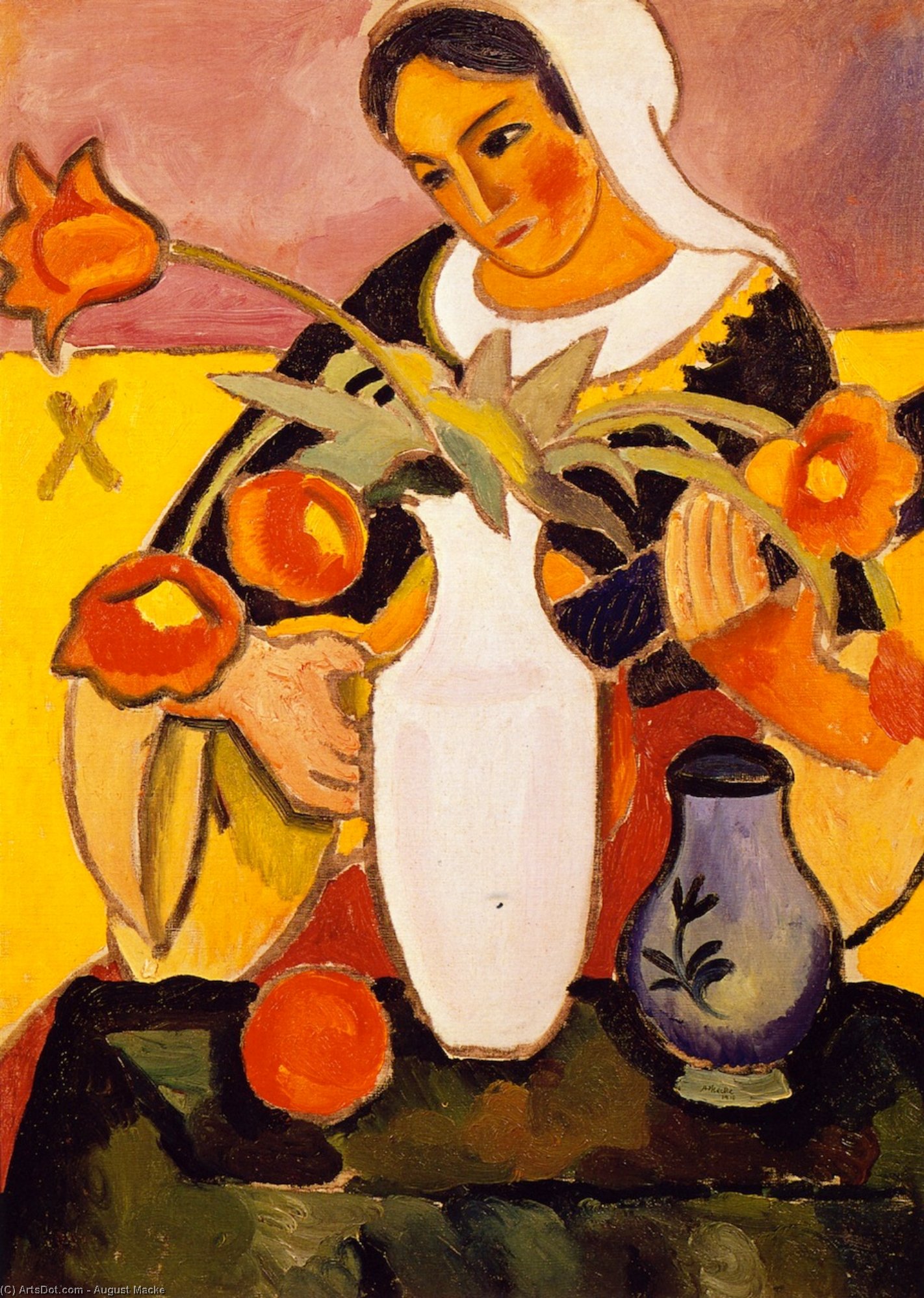
Woman Playing the Lute

1910 · Acrylic On Canvas · Musée d’Art Moderne de la Ville de Paris, Pariz

August Macke’s Woman Playing the Lute: A Portrait of Fragility Amidst Expressionist Boldness The painting “Woman Playing the Lute,” executed by August Macke in 1910, stands as a poignant emblem of German Expressionism's aesthetic sensibilities – a captivating blend of delicate beauty and unsettling psychological depth. More than just a depiction of an instrument and its performer, it’s a meticulously crafted meditation on vulnerability and artistic contemplation within the turbulent…

Reclining female nude by Аугуст Маке
7

Reclining female nude

Oil

In this intimate composition, a woman rests upon a bed, her body partially draped in a sheet that softens the contours of her form. She is positioned on her side, her gaze turned away from us toward something unseen beyond the frame. There is a profound sense of stillness here, a moment of private repose captured in a way that feels both fleeting and permanent. The background is a deep,…

Ballet Russes I (1912) by Аугуст Маке
8

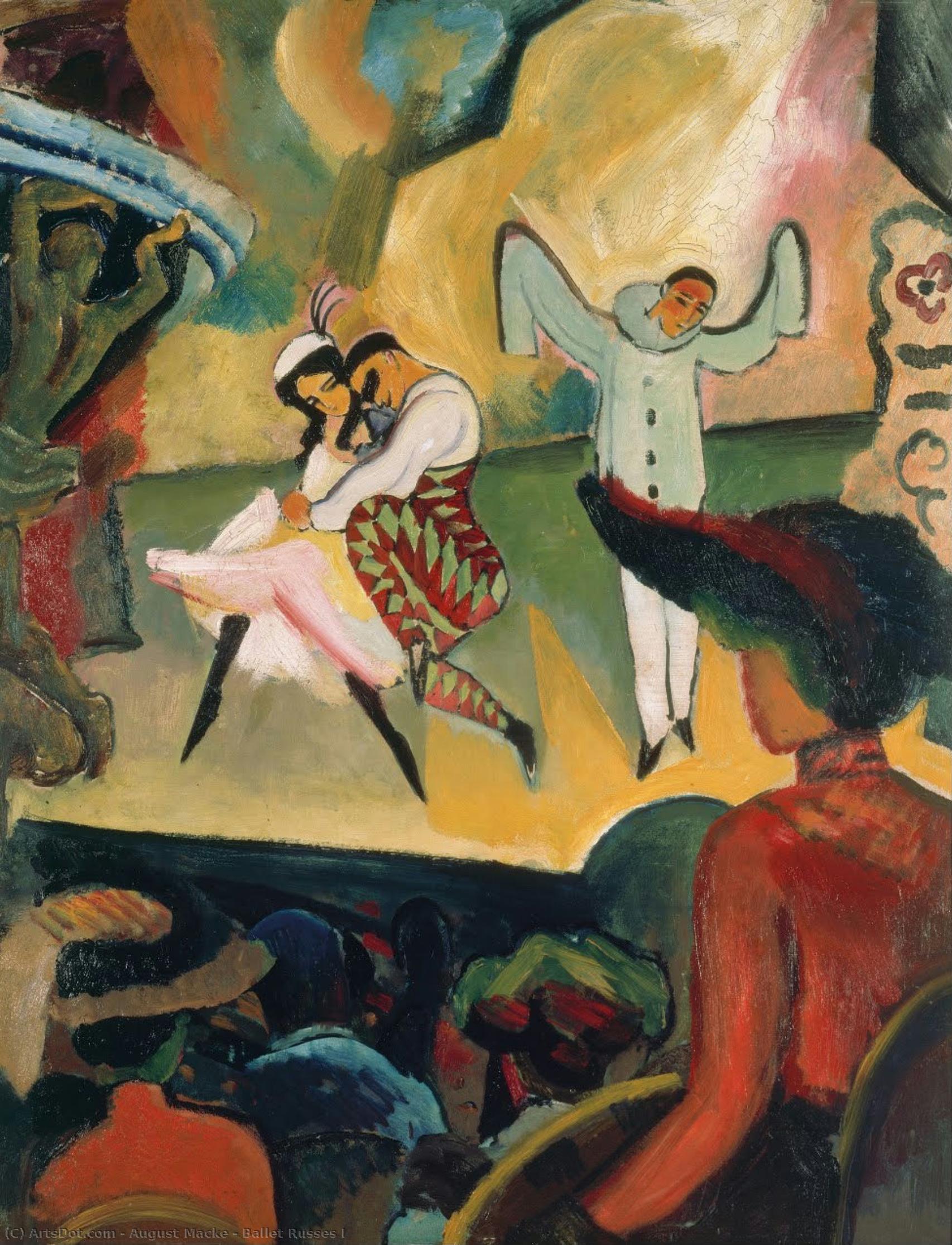
Ballet Russes I

1912 · Oil On Canvas · Kunsthalle Bremen, Bremen

Ballet Russes I is an oil painting on canvas that depicts a dramatic scene from a ballet performance. The composition centers on two principal dancers in a close embrace, illuminated by a warm light source. The figure of Harlequin is shown in the act of abducting the coquettish Columbine. Nearby, the figure of Pierrot is depicted with arms raised in a plaintive gesture of abandonment, a movement echoed by a…

Couple in the woods (1912) by Аугуст Маке
9

Couple in the woods

1912 · Acrylic On Canvas

August Macke's "Couple in the Woods," painted in 1912, is more than just a depiction of two figures amidst a woodland setting; it’s a vibrant distillation of the burgeoning Orphism movement and a poignant reflection on the anxieties and aspirations of early 20th-century Germany. Created during a pivotal moment in Macke's artistic development, this work showcases his increasingly bold experimentation with color and form, anticipating the radical shifts that would…

The rest of the Аугуст Маке ranking, 11 to 100

Naked Girl with Headscarf (1910) by Аугуст Маке
#35

Naked Girl with Headscarf

1910 · Städel Museum

The oil painting titled Naked Girl with Headscarf was created by the German artist August Macke in 1910. This work belongs to the Expressionist movement, utilizing a medium…

Order a reproduction →
Couple on the Forest Track (1913) by Аугуст Маке
#36

Couple on the Forest Track

1913 · Lehmbruck Museum

“Couple on the Forest Track,” painted in 1913 by August Macke, is more than just a depiction of two women amidst a woodland scene; it's a poignant encapsulation…

Bring it home →
Leave-taking (1914) by Аугуст Маке
#37

Leave-taking

1914

A Bustling Street in Motion Leave-taking unfolds as a lively urban scene where the rhythm of daily life pulses through a crowded thoroughfare. People move in a synchronized…

Order a reproduction →
Landscape near Hammamet (1914) by Аугуст Маке
#38

Landscape near Hammamet

1914 · Westfälisches Landesmuseum

This watercolor depicts a serene coastal landscape overlooking the Mediterranean Sea, situated close to Hammamet, Tunisia. The composition features a small boat gliding across calm waters, framed by…

Commission a hand-painted copy →
House in a Landscape by Аугуст Маке
#40

House in a Landscape

To gaze upon August Macke’s "House in a Landscape" is to step through a portal into a sun-drenched, almost dreamlike corner of early 20th-century life. The scene unfolds…

Bring it home →
St. Germain near Tunis (1914) by Аугуст Маке
#41

St. Germain near Tunis

1914

is a watercolor painting created in 1914. The artwork depicts a cityscape featuring a variety of buildings and structures, including houses with different colors and styles. A woman…

Bring it home →
Hat Shop (1914) by Аугуст Маке
#44

Hat Shop

1914 · Museum Folkwang

August Macke's "Hat Shop" (1914) isn’t merely a depiction of a street scene; it’s a carefully constructed distillation of modern experience, rendered with the vibrant energy and emotional…

Commission a hand-painted copy →
Self-Portrait with Hat (1909) by Аугуст Маке
#49

Self-Portrait with Hat

1909

August Macke’s Self-Portrait with Hat, painted in 1909, captures more than just a likeness; it arrests a moment of vibrant, almost theatrical engagement. The central figure dominates the…

Order a reproduction →
Tegernsee Landscape (1910) by Аугуст Маке
#53

Tegernsee Landscape

1910 · Germanisches Nationalmuseum

August Macke captured the essence of the Bavarian scenery in his 1910 work, Tegernsee Landscape. This oil on canvas presents a specific moment of light and color through…

Bring it home →
Afternoon in the Garden (1913) by Аугуст Маке
#54

Afternoon in the Garden

1913

August Macke’s Afternoon in the Garden transports us into a scene steeped in the gentle warmth of early 20th-century leisure. This watercolor captures more than just a gathering;…

Order a reproduction →
Native Sea Fight (1912) by Аугуст Маке
#55

Native Sea Fight

1912

August Macke’s Native Sea Fight is not merely a depiction of naval combat; it is a visceral plunge into the heart of human drama played out against the…

Bring it home →
Landscape by the Sea (1914) by Аугуст Маке
#56

Landscape by the Sea

1914 · Bavarske državne slikopisne kolekcije

The scene unfolds in Landscape by the Sea, an expressive work by August Macke. Created in 1914, this painting captures a coastal moment through a lens of intense…

Commission a hand-painted copy →
Woman in park (1914) by Аугуст Маке
#57

Woman in park

1914 · MoMA - Muzej moderne umetnosti

In the fleeting moments before the shadows of the Great War descended upon Europe, August Macke captured a vision of serenity that remains as vibrant today as it…

Commission a hand-painted copy →
Girls under Trees (1914) by Аугуст Маке
#62

Girls under Trees

1914 · Staatsgalerie Moderner Kunst

August Macke's “Girls Under Trees” (1914) isn't merely a depiction of children playing in the woods; it’s a vibrant distillation of early 20th-century optimism and a powerful expression…

Order a reproduction →
Parkway (1914) by Аугуст Маке
#67

Parkway

1914

To stand before August Macke’s Parkway is to be enveloped by a joyous, almost breathless current of modern existence. This oil on canvas, dating from the pivotal year…

Order a reproduction →
People by the Blue Lake (1913) by Аугуст Маке
#69

People by the Blue Lake

1913

The scene unfolds in 1913, a moment frozen in time as August Macke captures a quiet afternoon by the water. In this genre art piece, titled People by…

Bring it home →
Sunny way (1913) by Аугуст Маке
#70

Sunny way

1913 · Westfälisches Landesmuseum

In the fleeting moments captured within "Sunny Way," we are transported to a world where the boundaries between nature and humanity dissolve into a vibrant dance of color.…

Bring it home →

Аугуст Маке's paintings by period

The subjects Аугуст Маке painted most

The four subjects that return most often among these masterpieces, with the finest example of each.

Where to see Аугуст Маке's paintings

The 8 museums that hold the most of the paintings on this page.

Museum City Works by Аугуст Маке Paintings from this list
Westfälisches Landesmuseum, MünsterWestfälisches Landesmuseum Münster 19 Portrait of the Artist's Wife with Hat, Knight Georg and Dragon, Circus Scene I: Equestrian with Clowns
Lenbachhaus, MinhenLenbachhaus Minhen 17 Portrait Elisabeth Macke, Study for a self-portrait, The Spirit in the House Furniture: Still Life with Cat
Kunstmuseum Bonn, BonKunstmuseum Bonn Bon 11 Courtyard of a Villa at St. Germain, Red House in a Park, St. Mary's with Houses and Chimney (Bonn)
Städel Museum, FrankfurtStädel Museum Frankfurt 4 Two Girls, Naked Girl with Headscarf
Музеј Тисен-Борнемиза, MadridМузеј Тисен-Борнемиза Madrid 3 Circus, Woman on a Divan
Staatsgalerie Moderner Kunst, MinhenStaatsgalerie Moderner Kunst Minhen 2 Бањећи девојке са задњем планом, Girls under Trees
Bavarske državne slikopisne kolekcije, MinhenBavarske državne slikopisne kolekcije Minhen 5 Landscape by the Sea
Albertina, BečAlbertina Beč 4 Sailing boat on the Tegernsee

Аугуст Маке through the years: the masterpieces of each year

12 years of Аугуст Маке's painting, 1903 to 1914, told year by year through its best-known works.

  1. 1903
  2. 1906
    Self Portrait (1906) by Аугуст Маке
    No. 20 of 100

    Self Portrait

    Age 19 · Westfälisches Landesmuseum
  3. 1906
    Self-portrait (1906) by Аугуст Маке
    No. 59 of 100

    Self-portrait

    Age 19

    In the quiet, focused gaze of Self-portrait (1906), we encounter a rare moment of stillness from an artist whose life would soon be swept up in the turbulent…

  4. 1907
  5. 1907
  6. 1907
  7. 1908
  8. 1908
  9. 1909
    Portrait of the Artist's Wife with Hat (1909) by Аугуст Маке
    #4 of 100

    Portrait of the Artist's Wife with Hat

    Age 22 · Westfälisches Landesmuseum

    August Macke’s “Portrait of the Artist’s Wife with Hat,” painted in 1909, isn't merely a depiction of a woman; it’s a carefully constructed window into the heart of…

  10. 1909
  11. 1909
    Self-Portrait with Hat (1909) by Аугуст Маке
    #49 of 100

    Self-Portrait with Hat

    Age 22

    August Macke’s Self-Portrait with Hat, painted in 1909, captures more than just a likeness; it arrests a moment of vibrant, almost theatrical engagement. The central figure dominates the…

  12. 1910
    Woman Playing the Lute (1910) by Аугуст Маке
    No. 6 of 100

    Woman Playing the Lute

    Age 23 · Musée d’Art Moderne de la Ville de Paris

    August Macke’s Woman Playing the Lute: A Portrait of Fragility Amidst Expressionist Boldness The painting “Woman Playing the Lute,” executed by August Macke in 1910, stands as a…

  13. 1910
    Portrait Elisabeth Macke (1910) by Аугуст Маке
    No. 13 of 100

    Portrait Elisabeth Macke

    Age 23 · Lenbachhaus

    The gaze of Elisabeth Macke meets the viewer in this intimate 1910 portrait, a work titled Portrait Elisabeth Macke. Painted by the artist August Macke, the piece captures…

  14. 1910
  15. 1911
  16. 1911
  17. 1912
    Ballet Russes I (1912) by Аугуст Маке
    #8 of 100

    Ballet Russes I

    Age 25 · Kunsthalle Bremen

    Ballet Russes I is an oil painting on canvas that depicts a dramatic scene from a ballet performance. The composition centers on two principal dancers in a close…

  18. 1912
    Couple in the woods (1912) by Аугуст Маке
    #9 of 100

    Couple in the woods

    Age 25

    August Macke's "Couple in the Woods," painted in 1912, is more than just a depiction of two figures amidst a woodland setting; it’s a vibrant distillation of the…

  19. 1912
  20. 1913
    Dame u zelenoj jakni (1913) by Аугуст Маке
    No. 1 of 100

    Dame u zelenoj jakni

    Age 26 · Museum Ludwig

    August Mackeova „Dame u zelenoj jakni“ iz godine 1913. predstavlja jedan od najvažnijih dela ekspresionizma, umetničkog pokreta koji je promenio način razmišljanja o umetnosti početkom XX veka. Ova…

  21. 1913
    Бањећи девојке са задњем планом (1913) by Аугуст Маке
    Rank 2 / 100

    Бањећи девојке са задњем планом

    Age 26 · Staatsgalerie Moderner Kunst

    Delo Augusta Makea „Devojke koje se kupaju sa gradom u pozadini“ predstavlja očaravajuće remek-delo koje utelovljuje duh ekspresionizma početka 20. veka. Nastalo 1913. godine, ovo slikarstvo je svedočanstvo…

  22. 1913
    The Hat Shop (1913) by Аугуст Маке
    #3 of 100

    The Hat Shop

    Age 26

    Umesetak u Sveu Zlatnih Kapa Mackeova "Umesetak u Sveu Zlatnih Kapa" iz 1913. godine nije samo slika; ona je zapanjujući trenutak, zamršen u boji i dinamici, koji nam…

  23. 1914
  24. 1914
    Woman on a Divan (1914) by Аугуст Маке
    Rank 26 / 100

    Woman on a Divan

    Age 27 · Музеј Тисен-Борнемиза
  25. 1914

Аугуст Маке's paintings: frequently asked questions

What is the most famous Аугуст Маке painting?Show the answer

Dame u zelenoj jakni (1913), Museum Ludwig, Kelnu. Next come Бањећи девојке са задњем планом (1913) and The Hat Shop (1913).

At what age did Аугуст Маке paint Dame u zelenoj jakni?Show the answer

26 years old: Dame u zelenoj jakni dates from 1913 and Аугуст Маке was born in 1887.

Which are the 10 most famous Аугуст Маке paintings?Show the answer

Dame u zelenoj jakni, Бањећи девојке са задњем планом, The Hat Shop, Portrait of the Artist's Wife with Hat, People by the Lake, Woman Playing the Lute, Reclining female nude, Ballet Russes I, Couple in the woods and Circus. The ranking above gives the year and the museum of each.

How many paintings by Аугуст Маке are there?Show the answer

Our catalogue lists 283 works by Аугуст Маке, dated from 1903 to 1914.

Where can I see the most famous Аугуст Маке paintings?Show the answer

Most of them are in Westfälisches Landesmuseum (Münster), Lenbachhaus (Minhen) and Kunstmuseum Bonn (Bon). The table above lists the museums one by one.

In which period did Аугуст Маке paint the best-known works?Show the answer

In 1914: 25 of the 100 works on this page date from then, among them Woman with Parrot.

What is the earliest famous Аугуст Маке painting, and the latest?Show the answer

The earliest on this page is Portrait of Dr. Ludwig Deubner, writing (1903), the latest Woman with Parrot (1914).

What subjects did Аугуст Маке paint?Show the answer

Landscape (16), Trees (9) and People (8), among the 100 works on this page.

What did Аугуст Маке paint on, and with what?Show the answer

Oil On Canvas: 26 of the 100 works on this page.

Which movement does Аугуст Маке's art belong to?Show the answer

German expressionism, as the paintings on this page show.

What Аугуст Маке paintings does the Westfälisches Landesmuseum hold?Show the answer

Portrait of the Artist's Wife with Hat, Knight Georg and Dragon and Circus Scene I: Equestrian with Clowns are among the 12 works on this page held by the Westfälisches Landesmuseum, Münster.

Where can I buy a Аугуст Маке reproduction?Show the answer

Yes. Every painting on this page can be ordered as a museum-quality, hand-painted oil reproduction or a fine art print, in the size you choose, from the painting's own page.

Аугуст Маке: biography

Prekinut život: Živopisni svet Augusta Mackea

August Robert Ludwig Macke, ime koje je postalo sinonim za kratko, ali blistavo cvetanje nemačkog ekspresionizma, živeo je život koji je tragično prekinuo izboj Prvog svetskog rata. Rođen 1887. godine u Mešedeu, u Vestfaliji, njegov umetnički put bio je proces brze evolucije i strastvenog istraživanja, obeležen nezasitom radoznalošću za novim stilovima i dubokom žudnjom da dočara suštinu modernog iskustva. Mackein rani život obeležilo je preseljenje porodice u Bon, gde je stekao svoje početno obrazovanje i počeo da neguje svoj bujni talenat. Iako je formalno školovan u Düseldorfskoj akademiji umetnosti od 1904. do 1906. godine pod mentorstvom Adolfa Maennchena, upravo su samostalno proučavanje i putovanja omogućili njegovom umetničkom glasu da istinski prokruli. Ove formativne godine karakterisale su asimilacija impresionističkih i postimpresionističkih tehnika, što je postavilo temelj za hrabrije izraze koji će uslediti. Svoje prihode je dopunjavao radom na scenografiji, usavršavajući veštine kompozicije i razvijajući oštro čulo za boju.

Uticaji i umetnički razvoj

Mackein umetnički put duboko su oblikovali susreti sa ključnim figurama i pokretima početka 20. veka. Presudan trenutak dogodio se u Parizu 1912. godine, gde je upoznao Roberta Delaunaya, vodećeg predstavnika orfizma – grane kubizma fokusirane na čistu apstrakciju i vibrantne harmonije boja. Ovaj susret se pokazao transformativnim, uvodeći Mackea u koncept simultanog kontrasta i usmeravajući njegov rad ka dinamičnijem i nenapravljenom pristupu. Počeo je da eksperimentiše sa razbijenim pločama boja i apstraktnim oblicima, nastojeći da prenese ne samo ono što je video, već i ono kako je *osećao* u vezi sa onim što vidi. Istovremeno, njegovo blisko prijateljstvo sa Franzom Marcom, umetnikom i članom uticajne grupe Der Blaue Reiter (Plavi jahač), privuklo ga je u orbitu Wassilyja Kandinskog i drugih avangardnih mislilaca. Iako je Mackein stil ostao odvojen od Kandinskih čisto apstraktnih istraživanja, on je prihvatio duh umetničke slobode i duhovnog istraživanja ove grupe. Njegove slike su počele da odražavaju rastuće interesovanje za prikazivanje emocionalne rezonance pejzaža i svakodnevnog života, prožetih osećajem radosti i optimizma.

Plavi jahač i širi vidici: Jedinstvena ekspresionistička vizija

Kao integralni član grupe Der Blaue Reiter, Macke je značajno doprineo izložbama i publikacijama grupe, pomažući u širenju njenih radikalnih ideja o umetnosti i duhovnosti. Međutim, on nije bio samo sledbenik; on je gradio sopstveni, jedinstveni put unutar pokreta. Za razliku od nekih svojih kolega koji su težili mračnijim temama prožetim teskobom, Macke je dosledno nastojao da prikaže lepotu i harmoniju sveta koji ga okružuje. Njegova dela, poput slike Devojke koje se kupaju sa gradom u pozadini, oličavaju ovaj pristup – vibrantne boje, pojednostavljeni oblici i osećaj idiličnog mira karakterišu njegov rad. Majstorstvo mu je omogućilo da elemente fauvizma, kubizma i futurizma stopi u izrazito lični stil, stvarajući kompozicije koje su istovremeno vizuelno upečatljive i emocionalno snažne. Žena u zelenom mantilu, naslikana 1913. godine, još je jedan vrhunski primer – portret koji zrači toplinom i vitalnošću kroz svoju hrabru paletu boja i samouverene poteze četkicom. Njegova kasnija dela, poput Turski kafić, pokazuju njegov luministički pristup, hvatajući igru svetlosti i senke sa izuzetnom osetljivošću.

Tragičan kraj i trajno nasleđe

Izboj Prvog svetskog rata doneo je iznenadan i razoran kraj Mackeovoj obećavajućoj karijeri. Vođen patriotskim žarom, prijavio se na vojnu službu 1914. godine. Tragično, poginuo je u borbi samo nekoliko nedelja kasnije, 26. septembra, na frontu blizu Šampanje u Francuskoj, u mladosti od svega 27 godina. Njegova poslednja slika, Oproštaj, dirljivo beleži sumornu atmosferu koja je zavladala Evropom dok je rat obuzimao kontinent. Iako je njegov život bio tragično kratak, August Macke je za sobom ostavio opus koji nastavlja da očarava i inspiriše. On ostaje značajna figura u istoriji ekspresionizma, slavljen zbog svojih živopisnih boja, dinamičnih komotacija i optimistične vizije. Njegove slike nude pogled u svet na pragu velike promene, prožet osećajem lepote i nade usred rastuće neizvesnosti.

Istraživanje Mackevog sveta danas

Danas se dela Augusta Mackea čuvaju u istaknutim kolekcijama širom sveta, uključujući Staatsgalerie Moderner Kunst u Minhenu, Museum Ludwig u Kelnu i Kunsthaus Zürich. Više muzeja posvećenih ekspresionizmu ističe njegove slike, pružajući posetiocima priliku da iz prve ruke iskušaju moć njegove umetnosti. Westfälisches Landesmuseum Münster i Kunstmuseum Bonn su posebno značajni po svojim zbirkama Mackevih radova. Njegov uticaj se može videti u kontinuiranom istraživanju boje i emocije kod savremenih umetnika. Za one koji žele dublje da zaronite u njegov svet, resursi poput Artnet-a i Wikipedije pružaju dragocenu biografsku informaciju i uvid u njegov umetnički razvoj. Istraživanje njegovih slika putem onlajn baza podataka kao što je WahooArt omogućava bliže ispitivanje njegove tehnike i tematike, otkrivajući neprolaznu privlačnost ovog izuzetnog umetnika čiji je život tragično prekinut, ali čije nasleđe nastavlja da sija jarkom svetlošću.

All 283 works by Аугуст Маке →