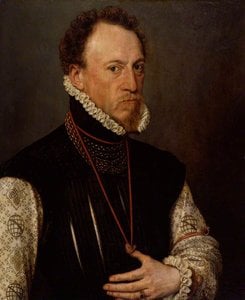
Antonis Mor, 1519 – 1575

Antonis Mor: The 75 Most Famous Paintings

Cardinal Granvelle's Dwarf (1560) is the most famous painting by Antonis Mor, held by the Luvr in Pariz. Portrait of Mary, Queen of England (1554) and Queen Mary Tudor of England (1554) are the next two works the world knows best. From the 75 works of Antonis Mor in our catalogue, here are the 75 that collectors and museum visitors look at most, with the year, the museum and the story of each.

Ranked by our popularity score, which combines the searches, visits and orders for each work. Updated октобар 2026. Every masterpiece on this page can be ordered as a museum-quality, hand-painted oil reproduction or a fine art print, at the size you choose.

Portrait of Antonis Mor
Antonis Mor · 1519 – 1575
Born · died
1519 – 1575, Utreht
Movement
Northern renaissance
Works in our catalogue
75
Most famous
Cardinal Granvelle's Dwarf (1560)
Most works at
Музеј Прадо

Top 10: Antonis Mor's best-known paintings

Cardinal Granvelle's Dwarf (1560) by Antonis Mor
1

Cardinal Granvelle's Dwarf

1560 · Oil On Panel · Luvr, Pariz

To stand before Anthonis Mor Van Dashorst’s Cardinal Granvelle's Dwarf is to step directly into the opulent, richly textured world of the sixteenth-century Dutch aristocracy. This oil on panel painting, executed in 1560, transcends a mere portrait; it is a meticulously crafted tableau vivant, whispering tales of power, lineage, and social standing. The subject—a young boy with dwarfism, adorned in clothing of breathtaking extravagance—is presented not just as an individual,…

Portrait of Mary, Queen of England (1554) by Antonis Mor
2

Portrait of Mary, Queen of England

1554 · Oil On Panel · Szépművészeti Múzeum, Budimpešta

Anthonis Mor van Dashorst captured the likeness of Mary Tudor in 1554, a period defined by the shifting religious and political tides of the Northern Renaissance. The subject sits with a stern, direct gaze that meets the viewer without hesitation. Her red hair is framed by a structured, ruffled collar, a detail rendered with meticulous precision. Through the use of chiaroscuro, Mor employs a controlled interplay of light and shadow…

Queen Mary Tudor of England (1554) by Antonis Mor
3

Queen Mary Tudor of England

1554 · Oil On Panel · Музеј Прадо, Мадрид

The portrait of Queen Mary Tudor of England, executed by Antonis Mor in 1554, captures a sovereign at a threshold of history. She sits as the sole surviving child of Henry VIII and Catherine of Aragon, a figure of singular lineage. The oil on panel preserves her likeness during a season of profound political and religious shifts. Her presence is fixed, a quiet anchor amidst the changing tides of the…

Portrait of William of Orange (1555) by Antonis Mor
4

Portrait of William of Orange

1555 · Oil On Panel · Staatliche Museen Kassel, Kasel

To stand before this portrait of William of Orange is to encounter not merely a likeness, but an embodiment of nascent authority. Rendered in the meticulous vein of the Northern Renaissance, the work captures the sitter in a moment of profound stillness, yet one charged with palpable resolve. The composition immediately draws the eye into the three-quarter view, presenting a figure encased in elaborate armor against a background so deep…

Joanna of Austria (1560) by Antonis Mor
5

Joanna of Austria

1560 · Oil On Canvas · Музеј Прадо, Мадрид

Antonis Mor's Joanna of Austria presents a formal likeness of the princess, who was the daughter of Emperor Charles V and sister to King Philip II of Spain. The subject commissioned this portrait personally, seeking a representation that reflected her specific station and history. In 1552, she married the Portuguese Prince John Manuel, a union that defined her political and personal landscape during the mid-sixteenth century.

Portrait of a lady (1557) by Antonis Mor
7

Portrait of a lady

1557 · Oil On Canvas · Nacionalna galerija Viktorije, Melburn

A single light source from the upper left carves the subject out of a dark, indeterminate void. She is a presence of quietude, a three-quarter length figure caught in a moment of poised introspection. The darkness behind her pushes her forward, making the pale skin of her forehead and cheek feel immediate, almost tactile. Her expression is calm, a mask of high social status that hides the pulse of the…

Catherine of Hapsburg, the Wife of King John III of Portugal (1552) by Antonis Mor
8

Catherine of Hapsburg, the Wife of King John III of Portugal

1552 · Oil On Panel · Музеј Прадо, Мадрид

The gaze of Catherine of Hapsburg, the Wife of King John III of Portugal, meets the viewer from within this formal portrait. Painted by Antonis Mor, the work captures the presence of Catherine of Austria in a moment of quiet, regal composure. She occupies the space with a heavy, dignified stillness that speaks to her high station and the weight of her lineage.

Margaret Duchess of Parma / Mary of Portugal Wife of Alessandro Farnesse (1565) by Antonis Mor
10

Margaret Duchess of Parma / Mary of Portugal Wife of Alessandro Farnesse

1565 · Oil On Panel · Музеј Прадо, Мадрид

Two women exist in a state of perpetual prayer, suspended within the dark, velvet silence of a Renaissance interior. Margaret, Duchess of Parma, and Mary of Portugal appear as twin pillars of piety, their profiles or three-quarter views turned toward an unseen divine presence. The air around them feels heavy, thick with the solemnity of their task. They do not look at the viewer; instead, their gazes drift downward or…

The rest of the Antonis Mor ranking, 11 to 75

Portrait of a man (1550) by Antonis Mor
#11

Portrait of a man

1550 · Kunsthistorisches Museum

The gaze of the sitter in Portrait of a man meets us from across the centuries, a silent encounter captured by the hand of Antonis Mor. This work,…

Bring it home →
Philip II (1555) by Antonis Mor
#12

Philip II

1555 · Музеј Прадо

The air in the room seems to thicken around the figure of Philip II. He sits in a three-quarter view, his gaze meeting the viewer with a steady,…

Order a reproduction →
Portrait of a Seated Woman (1565) by Antonis Mor
#13

Portrait of a Seated Woman

1565 · Art Institute of Chicago

The artwork titled Portrait of a Seated Woman was executed by the Netherlandish painter Antonis Mor. This oil on panel work dates to about 1565. The subject is…

Order a reproduction →
Margaret, Duchess of Parma (1562) by Antonis Mor
#14

Margaret, Duchess of Parma

1562 · Staatliche Museen zu Berlin

In this portrait, we encounter Margaret, Duchess of Parma, captured in a moment of quiet, aristocratic composure. The subject is presented in a close-up view, her face and…

Order a reproduction →
Lady with the Jewel (1552) by Antonis Mor
#17

Lady with the Jewel

1552 · Музеј Прадо

A single woman occupies the center of this 1552 portrait, her presence defined by a quiet, aristocratic poise. She is positioned in a three-quarter length pose, her body…

Order a reproduction →
Emperor Maximilian II (1550) by Antonis Mor
#18

Emperor Maximilian II

1550 · Музеј Прадо

In this vertical, three-quarter length portrait from 1550, Emperor Maximilian II is presented against a dark, near-black background. The subject stands slightly off-center, positioned with a calm and…

Order a reproduction →
Lady with Gold Chains (1560) by Antonis Mor
#22

Lady with Gold Chains

1560 · Музеј Прадо

In this three-quarter length portrait from circa 1560, we encounter a woman who commands the space through a profound, self-possessed stillness. She is positioned slightly off-center, emerging from…

Commission a hand-painted copy →
Portrait of a Lady (1538) by Antonis Mor
#23

Portrait of a Lady

1538 · Музеј Прадо

The artwork titled Portrait of a Lady is an oil on canvas painting by the artist Antonis Mor. This portrait depicts a noblewoman, presented in a three-quarter length…

Order a reproduction →
Portrait of a Man (1561) by Antonis Mor
#65

Portrait of a Man

1561 · Mauritshuis

Anthonis Mor van Dashorst came from Utrecht and specialised in portraits. He received commissions from various members of the Habsburg court, for which he travelled extensively in Europe.…

Bring it home →
Portrait of a Gentleman (1569) by Antonis Mor
#66

Portrait of a Gentleman

1569 · National Gallery of Art

Shown from the thighs up against a dark background, a man with light skin, wearing a black satin jerkin with puffed breeches, stands with his hand on the…

Order a reproduction →

The subjects Antonis Mor painted most

The four subjects that return most often among these masterpieces, with the finest example of each.

Where to see Antonis Mor's paintings

The 8 museums that hold the most of the paintings on this page.

Museum City Works by Antonis Mor Paintings from this list
Музеј Прадо, МадридМузеј Прадо Мадрид 13 Queen Mary Tudor of England, Joanna of Austria, Jane Dormer, Duchess of Feria (?)
Rijksmuseum, AmsterdamRijksmuseum Amsterdam 5 Portrait of Philippe de Montmorency, Count of Horne, Admiral of the Netherlands, Member of the Council of State, Anthonis Mor (copy after), 1540 - 1650, Sir Thomas Gresham, Anne Fernel, the Wife of Sir Thomas Gresham
Szépművészeti Múzeum, BudimpeštaSzépművészeti Múzeum Budimpešta 3 Portrait of Mary, Queen of England, Knight of the Spanish St James Order, Portrait of the Philip II, King of Spain
Kunsthistorisches Museum, BečKunsthistorisches Museum Beč 3 Portrait of Anton Perrenot de Granvelle, Portrait of a man, Anne of Austria, Queen of Spain
Mauritshuis, ХагаMauritshuis Хага 3 Steven van Herwijck, Portrait of a Goldsmith, Portrait of a Man
Gemäldegalerie Alte Meister im Schloss Wilhelmshöhe, KasselGemäldegalerie Alte Meister im Schloss Wilhelmshöhe Kassel 2 Portrait of a young prince, Portrait of Jean Lecocq (1559)
Gemäldegalerie, BerlinGemäldegalerie Berlin 2 The Utrecht canons Cornelius van Horn and Anthonis Taets van Ameronghen, The Corpse of Christ
Hispanic Society Museum - Library, New YorkHispanic Society Museum - Library New York 2 Fernando Álvarez de Toledo, Third Duke of Alba, Portrait of a Man

Antonis Mor through the decades: one masterpiece for each

  1. 1530s
    Portrait of a Lady (1538) by Antonis Mor
    #23 of 75

    Portrait of a Lady

    Age 11 – 20 · Музеј Прадо

    The artwork titled Portrait of a Lady is an oil on canvas painting by the artist Antonis Mor. This portrait depicts a noblewoman, presented in a three-quarter length…

  2. 1540s
    Portrait of Anton Perrenot de Granvelle (1549) by Antonis Mor
    Rank 9 / 75

    Portrait of Anton Perrenot de Granvelle

    Age 21 – 30 · Kunsthistorisches Museum

    This portrait of Anton Perrenot de Granvelle, also known as Antoine Perrenot, called Granvelle, was executed by the Dutch Renaissance painter Antonis Mor. Painted in 1549, the work…

  3. 1550s
    Portrait of Mary, Queen of England (1554) by Antonis Mor
    Rank 2 / 75

    Portrait of Mary, Queen of England

    Age 31 – 40 · Szépművészeti Múzeum

    Anthonis Mor van Dashorst captured the likeness of Mary Tudor in 1554, a period defined by the shifting religious and political tides of the Northern Renaissance. The subject…

  4. 1560s
    Cardinal Granvelle's Dwarf (1560) by Antonis Mor
    No. 1 of 75

    Cardinal Granvelle's Dwarf

    Age 41 – 50 · Luvr

    To stand before Anthonis Mor Van Dashorst’s Cardinal Granvelle's Dwarf is to step directly into the opulent, richly textured world of the sixteenth-century Dutch aristocracy. This oil on…

  5. 1570s

Antonis Mor's paintings: frequently asked questions

What is the most famous Antonis Mor painting?Show the answer

Cardinal Granvelle's Dwarf (1560), Luvr, Pariz. Next come Portrait of Mary, Queen of England (1554) and Queen Mary Tudor of England (1554).

At what age did Antonis Mor paint Cardinal Granvelle's Dwarf?Show the answer

41 years old: Cardinal Granvelle's Dwarf dates from 1560 and Antonis Mor was born in 1519.

Which are the 10 most famous Antonis Mor paintings?Show the answer

Cardinal Granvelle's Dwarf, Portrait of Mary, Queen of England, Queen Mary Tudor of England, Portrait of William of Orange, Joanna of Austria, Jane Dormer, Duchess of Feria (?), Portrait of a lady, Catherine of Hapsburg, the Wife of King John III of Portugal, Portrait of Anton Perrenot de Granvelle and Margaret Duchess of Parma / Mary of Portugal Wife of Alessandro Farnesse. The ranking above gives the year and the museum of each.

How many paintings by Antonis Mor are there?Show the answer

Our catalogue lists 75 works by Antonis Mor, dated from 1538 to 1574.

Where can I see the most famous Antonis Mor paintings?Show the answer

Most of them are in Музеј Прадо (Мадрид), Rijksmuseum (Amsterdam) and Szépművészeti Múzeum (Budimpešta). The table above lists the museums one by one.

In which period did Antonis Mor paint the best-known works?Show the answer

In 1550s: 30 of the 75 works on this page date from then, among them Portrait of Mary, Queen of England.

What is the earliest famous Antonis Mor painting, and the latest?Show the answer

The earliest on this page is Portrait of a Lady (1538), the latest Portrait of Hubert Goltzius (1574).

What subjects did Antonis Mor paint?Show the answer

Woman (14), Black dress (10) and Portrait (8), among the 75 works on this page.

What did Antonis Mor paint on, and with what?Show the answer

Oil On Canvas: 14 of the 75 works on this page.

Which movement does Antonis Mor's art belong to?Show the answer

Northern renaissance and Renaissance, as the paintings on this page show.

What Antonis Mor paintings does the Музеј Прадо hold?Show the answer

Queen Mary Tudor of England, Joanna of Austria and Jane Dormer, Duchess of Feria (?) are among the 13 works on this page held by the Музеј Прадо, Мадрид.

Where can I buy a Antonis Mor reproduction?Show the answer

Yes. Every painting on this page can be ordered as a museum-quality, hand-painted oil reproduction or a fine art print, in the size you choose, from the painting's own page.

Antonis Mor: biography

Antonis Mor van Dashorst: Slikar kraljevske dostojanstvenosti

Antonis Mor van Dashorst (1517–1577) predstavlja temelj holandskog renesansnog portretizma, oličajujući pedantni realizam i simboličku dubinu koja je karakterisala njegovo doba. Rođen u Utrehtu, u Holandiji, on je potao iz porodice duboko ukorenjene u umetničkoj tradiciji – njegov otac bio je vajar, čime je uspostavljena loza posvećena vizuelnoj reprezentaciji. Iako su biografski detalji prilično oskudni, Morov plodni rad govori mnogo o njegovom talentu i nepokolebljivoj posvećenosti hvatanju suštine njegovih subjekata. Brzo je stekao slavu zahvaljujući sposobnosti da prikaže plemićanstvo sa neprevaziđenom preciznošću, osiguravajući nove porudžbine od najuticajnijih figura širom Evrope. Njegove formativne godine ostale su prilično nepoznate, osim činjenice da je odrastao u Utrehtu. Međutim, studije koje je obavljao pod vođstvom Pietersa Bruegela Starog u Antverpenu omogućile su mu da upije Bruegelovo majstorsko posmatranje ljudske prirode i pejzaža – uticaje koji će prožeti i Morovu sopstvenu umetničku viziju. Boravak u Antverpenu bio je ključan za njegovo umetničko sazrevanje. Usavršavajući svoje veštine uz kolege kao što su Kventin Massys i Hendrik Golse, on se potpuno urastao u vibrantno umetničko okruženje Flandrije. Ovo iskustvo podstaklo je njegovo sofisticirano razumevanje perspektive i chiaroscuro tehnike – metoda koje je vešto koristio kako bi svoje portrete osvetlio dramatičnom igrom svetlosti i senke.

Vladavina Marije Tudor: Remek-delo severnorenesanskog portretizma

Morova slava dramatično je porasla nakon što je završio portret Marije Tudor, kraljice Engleske (1554). Ovo monumentalno platno predstavlja vrhunac Morovog umetničkog umeća. Izvedeno sa izuzetnom pažnjom prema detaljima, ono hvata kraljevsko držanje i unutrašnji mir Marije – što je svedočanstvo Morove sposobnosti da prenese psihološku nijansu uporedo sa fizičkom sličicom. Kompozicija je pedantno uravnotežena, koristeći piramidalnu strukturu i suptilne nabore draperije kako bi se naglasio Marijin status i dostojanstvenost. Štaviše, upotreba chiaroscuro efekta stvara očaravajući preplit svetlosti i tame, ističući kraljicino lice i prenoseći auru solemnog veličanstva. Ovaj portret je učvrstio Morovu reputaciju kao jednog od najznačajnijih portretiista svog vremena i ostaje slavni primer umetnosti severne renesanse.
  • Kraljevski patronat i umetničko priznanje: Mor je imao veliku korist od kraljevskog patronata, dobijajući porudžbine od monarha širom Evrope – uključujući Filipa II Španskog. Ovi angažmani omogućili su mu da istražuje ambiciozne projekte i usavrši svoj umetnički stil, čime je dodatno učvrstio svoj nasleđe kao dvorski umetnik.
  • Značajne porudžbine i umetnički stil: Pored portreta Marije Tudor, Mor je preduzeo brojne poslove prikazujući istaknute državnike, diplomate i aristokrate. Njegov prepoznatljiv stil – koji karakteriše pedantni realizam, majstorska perspektiva i ekspresivni chiaroscuro – postao je trenutno prepoznatljiv. On je dosledno davao prioritet prenošenju ne samo fizičkog izgleda, već i karaktera i emocija, podižući svoje portrete iznad običnih sličica u duboke izjave o ljudskom dostojanstvu.

Uticaj i nasleđe

Morov uticaj protegao se daleko izvan njegovih savremenika. Njegov pedantni pristup portretstvu postavio je presedan za buduće generacije umetnika, inspirišući ih da teže većoj tačnosti i psihološkom uvidu. On je zastupao humanističke ideale prevaziđene tokom renesanse, odražavajući nepokolebljivu veru u moć umetnosti da osvetli ljudsko iskustvo. Danas, Morova dela nastavljaju da očaravaju publiku širom sveta, služeći kao večni podsetnici na umetničku briljantnost postignutu tokom zlatnog doba Holandije – perioda koji definišu inovacija, ambicija i duboko apreciiranje lepote.

All 75 works by Antonis Mor →