Antônio Francisco Soares: A Pioneer of Brazilian Carnival
Early Life and Background
- Born: Rio de Janeiro, Brazil in 1754.
- Little is known about Antônio Francisco Soares’ early life or formal artistic training. He emerged as a significant figure through his practical contributions to public celebrations rather than established academic circles.
- He was not only an artist but also held a position as a military officer, demonstrating a diverse skillset and involvement in the societal structures of colonial Brazil.
Artistic Contributions & The 1786 Festivities
- Key Role: Soares is primarily recognized for his pivotal role in organizing the festivities hosted by Vice-Roy Luís de Vasconcelos e Sousa in Rio de Janeiro in 1786.
- His responsibilities encompassed the design and construction of elaborate carriages, scenography, and overall visual spectacle for these events. These weren’t merely decorative elements; they were integral to creating a vibrant public experience.
- The designs included intricate floats, allegorical representations, and theatrical performances that captivated audiences.
A Precursor to Modern Carnival
- Innovation: Soares is considered a precursor to the modern-day Carnival celebrations in Brazil. He introduced innovations across several aspects of street festivities.
- These included advancements in scenography, creating immersive and visually stunning environments; theatrical design, incorporating dramatic performances; architectural elements, constructing temporary structures for the celebrations; and symbolic representations, using imagery to convey meaning and engage participants.
- His work moved beyond simple parades, establishing a foundation for the complex and multifaceted Carnival traditions that evolved over time.
Artistic Style & Notable Works
- Style: Soares’ artistic style is rooted in the Baroque tradition, characterized by ornate detail, dramatic flair, and a sense of grandeur. This aesthetic was prevalent during the 18th century and suited the lavish nature of the celebrations he designed.
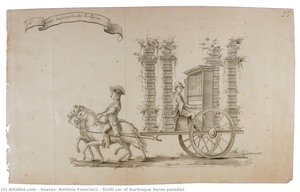
- His known works primarily consist of engravings depicting the carriages and floats created for the 1786 festivities.
- Notable Works Include: “Sixth car of burlesque horse parades”, “Fifth car of the horse riding parade”, “Second car and Jupiter monte”, “Third car and Bacco monte”, “First mount and volcano car”, and “Fourth car of the moors”. These engravings provide valuable insight into his creative vision.
Historical Significance & Legacy
- Underrecognized Pioneer: Despite his significant contributions, Antônio Francisco Soares remained largely overlooked in Brazilian art history for many years. His biography is sparsely documented, and he was often absent from major historical accounts.
- However, recent scholarship has begun to recognize his importance as a foundational figure in the development of Brazilian cultural identity and Carnival traditions.
- His innovative approach to public spectacle laid the groundwork for one of Brazil’s most iconic celebrations, solidifying his place as a key figure in the nation's artistic and cultural heritage.