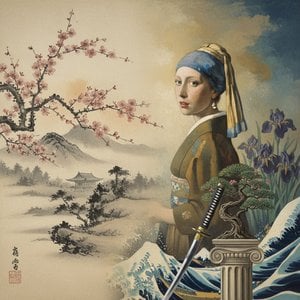
Nishiyama Suisho: A Master of Nihonga Painting
- Born: Kyoto, Japan (1879)
- Died: 1958
Nishiyama Suisho (also known as Suisho Nishiyama), born in Kyoto in 1879 and passing away in 1958, stands as a significant figure within the landscape of Japanese art. His career spanned several decades, leaving an enduring legacy rooted in the Nihonga movement—a conscious effort to revitalize traditional Japanese painting styles while incorporating modern sensibilities.
Early Life, Education, and Influences
- Formal Training: Suisho's artistic journey began under the tutelage of Takeuchi Seihō, a renowned Kyoto painter. This mentorship proved crucial in shaping his early style and understanding of traditional techniques.
- Kyoto City School of Arts and Crafts: He graduated from this institution in 1899, demonstrating an aptitude for classical Japanese art forms.
- Family Connection: In 1915, Suisho married Takeuchi Tei, the daughter of his master, Takeuchi Seihō, further cementing his ties to a prominent artistic lineage.
- Later Career: He later served as the head of Kyoto City Specialist School of Painting, contributing to the education and development of future generations of artists.
Artistic Development and Style
- Nihonga Movement: Suisho was a key participant in the Nihonga movement, which sought to define a distinctly Japanese artistic identity in response to Western art's growing influence. This involved re-examining traditional materials (silk, ink, pigments) and subject matter (landscapes, flowers, birds).
- Exhibition Success: His works were frequently exhibited at prestigious government-sponsored shows like Teiten, Bunten, and Inten, signifying his recognition within the Japanese art establishment. He was also affiliated with the Imperial Art Academy and the Imperial Household Art Committee.
- Signature Style: While he produced relatively few prints, Suisho's paintings are celebrated for their beauty, intricacy, and serene atmosphere. His compositions often feature delicate depictions of flora, particularly peonies (as exemplified by his notable work "Peoney" housed in the Nagoya City Art Museum).
- Mastery of Materials: He demonstrated exceptional skill in using silk as a canvas, achieving luminous effects through careful layering of color and precise brushwork. His use of traditional Japanese pigments contributed to the characteristic aesthetic of his paintings.
Major Achievements and Recognition
- Order of Cultural Merit (1957): This prestigious award recognized Suisho's significant contributions to Japanese art and culture, solidifying his position as a respected master.
- "Peoney" at Nagoya City Art Museum: The presence of "Peoney" in the collection of this esteemed museum highlights the enduring value and artistic merit of his work.
- Influence on Nihonga: Suisho's consistent dedication to and refinement of Nihonga techniques helped shape the movement’s aesthetic direction and inspire subsequent generations of artists.
Historical Significance
Nishiyama Suisho played a vital role in preserving and evolving traditional Japanese painting during a period of significant cultural change. His work embodies the spirit of the Nihonga movement, demonstrating a commitment to uniquely Japanese artistic expression while engaging with contemporary trends. His paintings offer a window into the beauty and tranquility of traditional Japanese aesthetics, ensuring his lasting legacy as a master of Nihonga.