
1
Heimdal Returns Brisingamen to Freya
Rukom oslikana uljana reprodukcija od $224 28 × 35 cm
Isti veličine kao original $379 67 × 84 cm Naručite u originalnim dimenzijama →

Slika koja je proslavila Nils Andersson je Heimdal Returns Brisingamen to Freya (1846); nalazi se u muzeju Nationalmuseum, Стокхолм. Marcus Larson (1825-1864), artist, married to Adelaide Roos (1849) i Driving Cattle in Småland (1863) slede nakon njih u srcima kolekcionara i posetilaca muzeja. Od 6 dela umetnika Nils Andersson u našem katalogu, ovih 6 su najcenjenija, a svako je predstavljeno sa datumom nastanka, muzejom i onim što ga izdvaja.
Rangirano prema našem koeficijentu popularnosti, koji kombinuje pretrage, posete i porudžbine za svako delo. Ažurirano новембар 2026. Svako remek-delo na ovoj stranici može se naručiti kao ručno oslikana uljana reprodukcija muzejskog kvaliteta ili kao umetnička štampa, u dimenzijama koje odaberete.


2 muzeja u kojima se nalazi najviše slika sa ove stranice.
| Muzeji | Grad | Radovi umetnika Nils Andersson | Slike iz ovog spiska |
|---|---|---|---|
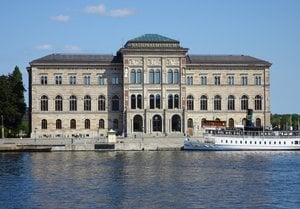 Nationalmuseum |
Стокхолм | 5 | Heimdal Returns Brisingamen to Freya, Driving Cattle in Småland, Forest Landscape with a Shepherd Boy and Cattle |
 National Portrait Gallery of Sweden |
Strängnäs | 1 | Marcus Larson (1825-1864), artist, married to Adelaide Roos |


Heimdal Returns Brisingamen to Freya (1846), Nationalmuseum, Стокхолм. Sledeći su Marcus Larson (1825-1864), artist, married to Adelaide Roos (1849) i Driving Cattle in Småland (1863).
29 godina: Heimdal Returns Brisingamen to Freya datira iz 1846, a Nils Andersson je rođen/a 1817.
Naš katalog sadrži 6 dela umetnika Nils Andersson, datiranih od 1846 do 1863.
Većina njih se nalazi u Nationalmuseum (Стокхолм) i National Portrait Gallery of Sweden (Strängnäs). U tabeli iznad su muzeji navedeni jedan po jedan.
U periodima 1840s: 2 od ukupno 6 dela na ovoj stranici datiraju iz tog vremena, od čega je Heimdal Returns Brisingamen to Freya.
Najstarije delo na ovoj stranici je iz Heimdal Returns Brisingamen to Freya (1846), a najnovije iz Driving Cattle in Småland (1863).
Heimdal Returns Brisingamen to Freya, Driving Cattle in Småland i Forest Landscape with a Shepherd Boy and Cattle su među 5 dela na ovoj stranici koja se nalaze u Nationalmuseum, Стокхолм.
Da. Svaku sliku sa ove stranice možete naručiti kao ručno oslikano ulje na platnu muzejskog kvaliteta ili kao umetnički print, u veličini koju odaberete, direktno sa stranice te slike.
Born into the humble surroundings of Kattilstads parish in East Gothland, Nils Andersson began his life as the son of a peasant. This early connection to the land and the rhythms of rural life would later find its way onto his canvases. His path took him far from the fields of Östergötland, leading him first to the studios of Stockholm where he received his initial instruction. The young painter possessed an ambition that could not be contained by his provincial beginnings, prompting him to seek the great artistic centers of Europe.
In 1851, he joined a group of Swedish pioneers traveling toward Düsseldorf. This movement was part of a larger tide of Nordic talent seeking refinement abroad. His travels eventually brought him to Paris in 1854, where he spent two years immersed in the French capital's intense creative atmosphere. It was here that he studied under Couture, an experience that refined his hand and deepened his understanding of form and light.
Upon returning to Stockholm, Andersson’s talent earned him a place within the Academy and, by 1858, the prestigious title of professor. His work reflected a commitment to classical realism, often focusing on the quiet dignity of everyday existence. He found beauty in the mundane, turning his attention to landscapes that featured animals, farm scene genre paintings, and figures captured in natural settings. There was a certain honesty in how he approached historical pieces and portraits, seeking to document life with clarity.
His repertoire included various subjects that spoke to the era's interests:
Though his life was cut short in Vaxholm near Stockholm, the traces of his career remain visible in the halls of the National Museum at Stockholm. His presence in the art world was marked by both academic achievement and a technical skill that allowed him to navigate the transition between different European styles. While some works from the period have faced scrutiny regarding their authenticity, the true essence of his contribution lies in his role as a bridge between the Swedish countryside and the formal traditions of the continent.