10 najpoznatijih slika umetnika Monogrammist IS

Slika koja je proslavila Monogrammist IS je Portrait of an old woman (1651); nalazi se u muzeju Kunsthistorisches Museum, Beč. Portrait of a Man (1621) i A young scholar (1633) slede nakon njih u srcima kolekcionara i posetilaca muzeja. Od 10 dela umetnika Monogrammist IS u našem katalogu, ovih 10 su najcenjenija, a svako je predstavljeno sa datumom nastanka, muzejom i onim što ga izdvaja.

Rangirano prema našem koeficijentu popularnosti, koji kombinuje pretrage, posete i porudžbine za svako delo. Ažurirano новембар 2026. Svako remek-delo na ovoj stranici može se naručiti kao ručno oslikana uljana reprodukcija muzejskog kvaliteta ili kao umetnička štampa, u dimenzijama koje odaberete.

Portret Monogrammist IS
Monogrammist IS
Radovi u našem katalogu
10
Najpoznatije dela
Portrait of an old woman (1651)
Najviše dela u
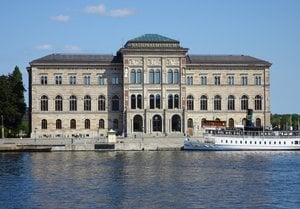
Nationalmuseum

Monogrammist IS: deset remek-delo

Portrait of an old woman (1651) čiji je autor Monogrammist IS
1

Portrait of an old woman

1651 · Oil On Panel · Kunsthistorisches Museum, Beč

The portrait presents a bust-length view of an elderly woman, positioned in a three-quarter profile facing toward the left. Her head is wrapped in a coarse, light-colored headscarf that contrasts with the dark, indeterminate background. A fur collar rests against her shoulders, its texture rendered with soft, organic strokes. The subject's skin is marked by a network of fine lines and deep creases, particularly around the eyes and mouth, documenting…

Rukom oslikana uljana reprodukcija od $199 28 × 36 cm Isti veličine kao original $211 33 × 41 cm Naručite u originalnim dimenzijama →

Gde videti slike umetnika Monogrammist IS

8 muzeja u kojima se nalazi najviše slika sa ove stranice.

Muzeji Grad Radovi umetnika Monogrammist IS Slike iz ovog spiska
Nationalmuseum, СтокхолмNationalmuseum Стокхолм 3 Portrait of an Old Lady, Old Man with a Growth on his Nose, Old Woman, possibly an Abbess, Reading a Letter
Kunsthistorisches Museum, BečKunsthistorisches Museum Beč 1 Portrait of an old woman
Metropoliten музеј у Њујорку, ЊујоркMetropoliten музеј у Њујорку Њујорк 1 Portrait of a Man
Bavarske državne slikopisne kolekcije, MinhenBavarske državne slikopisne kolekcije Minhen 1 A young scholar
National Gallery of Ireland, DublinNational Gallery of Ireland Dublin 1 A Dutch Kitchen Interior
Museum Catharijneconvent, UtrehtMuseum Catharijneconvent Utreht 1 Baptism of the Eunuch
Herzog Anton Ulrich Museum, BrunsvikHerzog Anton Ulrich Museum Brunsvik 1 Old Man Beside a Table with Books
Museum Kunstpalast, DuseeldorfMuseum Kunstpalast Duseeldorf 1 Portrait of a scholar in oriental dress

Monogrammist IS, deceniju po deceniju: kultno delo svake od njih

  1. 1620s
  2. 1630s
  3. 1640s
  4. 1650s
    Portrait of an old woman (1651) čiji je autor Monogrammist IS
    #1 od 10

    Portrait of an old woman

    Kunsthistorisches Museum

    The portrait presents a bust-length view of an elderly woman, positioned in a three-quarter profile facing toward the left. Her head is wrapped in a coarse, light-colored headscarf…

Remedela Monogrammist IS: pitanja i odgovori

Po kojoj je slici Monogrammist IS najpoznatiji/a?Prikaži odgovor

Portrait of an old woman (1651), Kunsthistorisches Museum, Beč. Sledeći su Portrait of a Man (1621) i A young scholar (1633).

Koja su deset najznačajnijih dela umetnika Monogrammist IS?Prikaži odgovor

Portrait of an old woman, Portrait of a Man, A young scholar, A Dutch Kitchen Interior, Baptism of the Eunuch, Portrait of an Old Lady, Old Man with a Growth on his Nose, Old Man Beside a Table with Books, Portrait of a scholar in oriental dress i Old Woman, possibly an Abbess, Reading a Letter. Gornji rang prikazuje godinu i muzej za svako od njih.

Koliko je dela naslikao Monogrammist IS?Prikaži odgovor

Naš katalog sadrži 10 dela umetnika Monogrammist IS, datiranih od 1621 do 1658.

U kojim muzejima mogu videti remek-dela umetnika Monogrammist IS?Prikaži odgovor

Većina njih se nalazi u Nationalmuseum (Стокхолм), Kunsthistorisches Museum (Beč) i Metropoliten музеј у Њујорку (Њујорк). U tabeli iznad su muzeji navedeni jedan po jedan.

Kada je Monogrammist IS naslikao svoja remek-dela?Prikaži odgovor

U periodima 1640s: 6 od ukupno 10 dela na ovoj stranici datiraju iz tog vremena, od čega je A Dutch Kitchen Interior.

Koja su prva i poslednja poznata dela Monogrammist IS?Prikaži odgovor

Najstarije delo na ovoj stranici je iz Portrait of a Man (1621), a najnovije iz Old Woman, possibly an Abbess, Reading a Letter (1658).

Koja remek-dela Monogrammist IS se nalaze u Nationalmuseum?Prikaži odgovor

Portrait of an Old Lady, Old Man with a Growth on his Nose i Old Woman, possibly an Abbess, Reading a Letter su među 3 dela na ovoj stranici koja se nalaze u Nationalmuseum, Стокхолм.

Mogu li da posedujem reprodukciju remek-dela umetnika Monogrammist IS?Prikaži odgovor

Da. Svaku sliku sa ove stranice možete naručiti kao ručno oslikano ulje na platnu muzejskog kvaliteta ili kao umetnički print, u veličini koju odaberete, direktno sa stranice te slike.

Život umetnika Monogrammist IS

The Shadow of the Monogram

In the quiet corners of the seventeenth century, a hand moved across canvas with such precision that it left behind only two letters: I.S. This elusive painter, known to history only by this small mark, lived through an era of profound change in the Netherlands. While the name of the person behind the brush remains lost to time, their presence is felt in every stroke of oil and every carefully rendered face. Some scholars suggest a Dutch origin, while others whisper of German or Baltic roots, yet there is no doubt that this artist found a home in Leiden during the 1630s.

The identity of this creator was first brought to light in 1904, when a collection of works bearing the same monogram were recognized as the output of a single, skilled hand. It is a curious thing to study an artist whose very existence is a puzzle. We see their work, we feel the weight of their subjects, but we cannot look them in the eye. They worked within the orbit of great names, perhaps even walking the same streets as Rembrandt, yet they chose—or were destined—to remain a mystery.

A Study of Human Truth

The work of Monogrammist IS does not seek the grand or the theatrical. Instead, it finds its strength in the quiet observation of a single soul. The artist specialized in tronies—those expressive head studies that capture a specific character or emotion—and honest portraits. There is a scientific realism in these paintings, a way of looking at a wrinkle, a growth on a nose, or the weathered skin of an elderly woman with an unblinking eye. Each figure is presented with a refined and articulated brushwork that suggests a deep respect for the physical world.

In these compositions, one finds a fascination with the textures of life. The paint often appears liquid and rich, flowing over the features of the subjects to create a sense of tangible reality. Whether depicting a man with a peculiar ailment or the solemn face of an aged woman, the artist avoids any attempt to beautify the subject beyond its natural state. This commitment to truth brings a certain gravity to the work. The figures do not perform for us; they simply exist within the frame.

Legacy in the Shadows

Though the artist's personal life remains obscured, their influence traveled far beyond the borders of Leiden. There are traces of a wider path, with suggestions that they may have moved through Scandinavia or even Eastern Europe. This movement is reflected in the way their works found their way into the hands of great collectors, from the Swedish nobility to the Hapsburg governors in Flanders. The provenance of these paintings tells a story of prestige and enduring interest that the artist's own biography cannot.

Today, the pieces attributed to this monogrammed hand reside in significant collections, such as the Kunsthistorisches Museum in Vienna and the Nationalmuseum in Stockholm. These works continue to invite scrutiny and wonder. Even as historians debate whether the painter was a contemporary of Rembrandt or a student of the Leiden Fijnschilder tradition, the art itself remains the primary voice. The mystery of the person only serves to focus our attention on the remarkable skill found within those two simple letters.