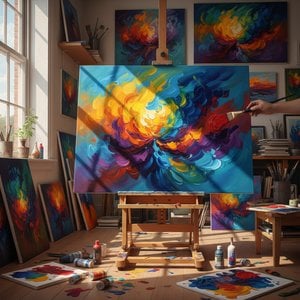
A Life Woven in Color: The Textile Art of Martha Mood
Martha Mood, born in Buenos Aires, Argentina in 1941, is a textile artist whose work embodies a vibrant fusion of tradition and innovation. While biographical details remain somewhat elusive, the power and originality of her art speak volumes. Mood emerged from a rich artistic landscape, developing a unique voice that quickly distinguished her within the Argentine art scene and beyond. Her pieces are not merely decorative; they are complex narratives rendered in thread, color, and texture—a testament to her mastery of technique and profound understanding of design principles. The most celebrated example of her artistry is ‘The Sunbather’, a work that encapsulates the core elements of Mood’s style: bold patterns, intricate detailing, and an evocative use of color.
Early Influences and Artistic Development
Mood's artistic journey began in the dynamic cultural environment of post-war Argentina. Though specific details about her formal training are scarce, it is evident that she possessed a deep appreciation for traditional textile techniques. She didn’t simply replicate these methods; instead, she deconstructed them, experimenting with form and color to create something entirely new. Her early work likely involved explorations in weaving, embroidery, and appliqué—skills passed down through generations of artisans. However, Mood quickly moved beyond conventional boundaries, embracing contemporary design aesthetics and incorporating abstract elements into her compositions. This willingness to challenge established norms became a defining characteristic of her artistic practice. The influence of modern art movements, particularly those emphasizing abstraction and bold color palettes, is palpable in her work.
The Rise of Stitchery as Fine Art
Mood’s most significant contribution lies in elevating textile art—specifically stitchery—to the status of fine art. In a period when textiles were often relegated to the realm of craft, she demonstrated their potential for profound artistic expression. Her approach was revolutionary: she rejected realistic depictions and precise embroidery in favor of abstraction, experimentation with materials, and an emphasis on process. She detailed her creative methodology in publications like *House Beautiful*, offering insights into composition, color arrangement, and the importance of a “seeing eye” and “open mind.” This commitment to sharing her knowledge helped to legitimize stitchery as a serious artistic medium, inspiring countless artists to explore its possibilities.
‘The Sunbather’ and Beyond: A Signature Style
‘The Sunbather’, Mood's most famous work, serves as a quintessential example of her signature style. The piece is characterized by its dynamic interplay of colors, intricate patterns, and bold textures. It evokes a sense of warmth, energy, and the sheer joy of life. While the exact date of its creation remains unknown, ‘The Sunbather’ has become an iconic representation of Mood's artistic vision. Beyond this celebrated artwork, her broader body of work demonstrates a consistent commitment to innovation and experimentation. She explored various styles—abstract, primitive, semi-realistic, Cubist—each reflecting her unique perspective and technical skill.
Legacy and Historical Significance
Martha Mood’s impact on the art world extends far beyond her individual creations. She played a pivotal role in challenging traditional hierarchies within the arts, demonstrating that textiles could be just as expressive and meaningful as painting or sculpture. Her work paved the way for subsequent generations of textile artists to explore new techniques and push creative boundaries. While information about her personal life remains limited, her artistic legacy is undeniable. Mood’s vibrant compositions continue to captivate audiences, reminding us of the power of color, texture, and imagination. She stands as a testament to the enduring beauty and expressive potential of textile art—a true pioneer who transformed a craft into a fine art form.