Juste Aurèle Meissonnier: The Architect of Rococo Splendor
Juste Aurèle Meissonier (1695 – 1750) stands as a monumental figure in the decorative arts of the Enlightenment, recognized primarily for his transformative role in establishing and perfecting the Rococo style. Born in Turin, Italy, he embarked on an artistic journey that ultimately led him to Paris, where he achieved unparalleled renown as a goldsmith, sculptor, painter, architect, and furniture designer—a veritable polymath who embodied the spirit of his era. His influence extended far beyond mere craftsmanship; Meissonier fundamentally reshaped interior design and elevated decorative arts to new heights of extravagance and sophistication.
Early Life & Training: Meissonier’s formative years were spent honing his skills in Turin, absorbing the traditions of Italian Baroque art while simultaneously cultivating an appreciation for emerging stylistic trends. His training encompassed goldsmithing, sculpture, and drawing—disciplines that would prove crucial to his later artistic endeavors.
Migration to Paris & Recognition: Recognizing the burgeoning artistic dynamism of Paris, Meissonier relocated in 1724, securing a royal warrant as master goldsmith from Louis XV. This appointment catapulted him into the epicenter of Parisian artistic life and cemented his reputation as a leading innovator.
The Rococo Visionary: Meissonier’s contribution to art history lies principally in his unwavering devotion to the Rococo style—a movement characterized by delicate ornamentation, pastel hues, asymmetrical compositions, and an obsession with playful motifs like shells, scrolls, and floral garlands. He championed this aesthetic with uncompromising zeal, pushing its boundaries into realms of opulent grandeur.
A Multi-Disciplinary Artist: Beyond Goldsmithing
Meissonier’s artistic genius transcended the confines of his profession as a goldsmith; he approached design and decoration with an unparalleled breadth of vision. He didn't merely craft exquisite objects—he conceived entire environments, orchestrating harmonious ensembles that encompassed furniture, textiles, chandeliers, and wall coverings. This holistic approach distinguished him from many of his contemporaries and solidified his position as one of the foremost practitioners of integrated artistic expression.
Architectural Projects: Meissonier’s architectural commissions included notable residences for prominent figures—demonstrating his ability to translate aesthetic ideals into tangible structures. His designs prioritized elegance, fluidity, and a masterful integration of decorative elements with functional considerations.
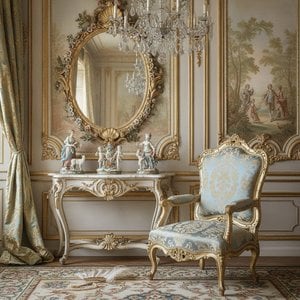
Furniture Design: He meticulously crafted furniture pieces that epitomized Rococo style’s curvilinear forms and lavish embellishments—employing techniques like marquetry, inlay, and gilded accents to achieve breathtaking visual impact.
Decorative Arts Patronage: Meissonier actively collaborated with other artisans—such as Adam Brothers—to create immersive artistic experiences for aristocratic clients. His involvement spanned a diverse range of mediums—from silver tableware to candlesticks to embroidered fabrics—reflecting his mastery across multiple disciplines.
Notable Achievements & Legacy
Juste Aurèle Meissonier’s influence on 18th-century art and design is undeniable. His prolific output—including numerous architectural projects, furniture designs, and decorative artworks—established him as the undisputed champion of Rococo style. Furthermore, his meticulously documented sketchbook, “Livres d'ornements en trente pièces,” served as a seminal reference for subsequent generations of artists and craftsmen.
Royal Patronage: Louis XV recognized Meissonier’s artistic prowess and entrusted him with prestigious roles—serving as Designer for Funerals and Galante Events and Royal Goldsmith—underscoring the esteem in which he was held by the monarchy.
Influence on Artistic Style: Meissonier's aesthetic principles profoundly impacted the stylistic trajectory of Rococo art, shaping its visual vocabulary and elevating its standards of craftsmanship. His legacy continues to inspire artists today.
Rediscovery & Recognition Today
Meissonier’s works are preserved in collections worldwide—most notably at the Cooper Hewitt Smithsonian National Design Museum—where they stand as testament to his unparalleled artistic achievement. Ongoing scholarly research illuminates new facets of his life and oeuvre, ensuring that Juste Aurèle Meissonier's contribution to art history remains vibrant and relevant for centuries to come.
Autor: Uredništvo WahooArt.com
Kviz o umetnosti
Svako pitanje ima samo jedan tačan odgovor.
Pitanje 1:
What was Juste Aurèle Meissonnier primarily known for?
Pitanje 2:
In which artistic style did Meissonier excel?
Pitanje 3:
What role did Louis XV appoint Meissonier to?
Pitanje 4:
Meissonier’s designs encompassed various crafts, including furniture and silver plating. True or False?
Discover the breathtaking elegance of Rococo portraiture. Explore an expert guide to 18th-century mastery, from pastel palettes to aristocratic grandeur, and learn how to bring this era of opulence into your home through museum-quality oil reproductions.
Discover the exquisite allure of Rococo art. Explore a curated guide to 18th-century French masterpieces, from Watteau to Fragonard, and learn how hand-painted oil reproductions can bring timeless elegance and luxury to your sophisticated interior design collection.
Immerse yourself in the splendor of Rococo art. Discover the era of elegance through masterworks by Watteau and Fragonard. Explore themes of romance, aristocratic leisure, and gilded ornamentation in this definitive guide to 18th-century French opulence.





![Differents Desseins De Sallieres [various Designs For Salt Dishes], Pl. 63 In Oeuvre De Juste-aurele Meissonnier — Juste Aurèle Meissonnier](/media/artworks/images-thumb/8a/e1/8ae148c035d61f27e168432932ac5377.jpg)


