A Life Shrouded in Shadow: The Enigmatic Josef Jünger
The name Josef Jünger resonates with a quiet mystery within the annals of 20th-century German art. Born in Germany in 1895 and passing away in 1998, his life remains largely undocumented, a spectral presence overshadowed by the more prominent figure of his cousin, the celebrated author Ernst Jünger. While biographical details are scarce, Josef Jünger’s artistic output—primarily oil and watercolor paintings—offers glimpses into a sensibility shaped by the tumultuous era he inhabited. He existed during a period of profound societal upheaval, marked by the rise and fall of empires, the horrors of war, and the burgeoning anxieties of modernity. It is within this context that we must attempt to understand his work, recognizing it not as isolated creations but as reflections of a deeply fractured world.
Early Influences and Artistic Formation
The early years of Josef Jünger’s life are veiled in obscurity. While concrete details regarding his formal artistic training remain elusive, it is plausible to suggest that he was influenced by the prevailing currents of German Expressionism. This movement, characterized by its raw emotional intensity, distorted forms, and often bleak subject matter, captured the psychological distress of a generation grappling with rapid industrialization and impending conflict. The vibrant brushwork and subjective perspectives of artists like Ernst Ludwig Kirchner and Emil Nolde may have resonated with Jünger’s developing aesthetic sensibilities. However, his work also hints at an affinity for Impressionism, particularly in its exploration of light and color to convey atmosphere and mood. This suggests a complex artistic lineage, one that blended the emotional fervor of Expressionism with the more nuanced observational qualities of Impressionism. The lack of extensive documentation regarding his early career underscores a deliberate distance from the established art world—a choice perhaps reflective of a personality inclined towards introspection rather than public acclaim.
Themes and Techniques in Jünger’s Paintings
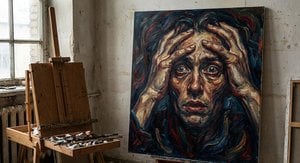
Josef Jünger's paintings, though not widely exhibited during his lifetime, reveal a compelling preoccupation with landscape and the human figure. His canvases often depict scenes imbued with a sense of melancholy and isolation. Stark trees silhouetted against brooding skies, desolate fields stretching towards distant horizons—these motifs evoke a feeling of existential loneliness. The use of color is particularly striking; muted tones dominate, punctuated by occasional bursts of vibrant hue that serve to heighten the emotional impact of the scene. His oil paintings, in particular, showcase a masterful command of texture and form, creating surfaces that are both tactile and evocative. While not overtly political, his work can be interpreted as a subtle commentary on the alienation and fragmentation experienced during the interwar period. The human figures within his landscapes often appear small and vulnerable, dwarfed by the immensity of nature—a visual metaphor for the individual’s struggle against overwhelming forces.
Historical Context and Legacy
To understand Josef Jünger's place in art history, one must acknowledge the shadow cast by his cousin, Ernst Jünger. The elder Jünger’s seminal work, *Storm of Steel*, a visceral account of his experiences during World War I, became a defining text of the modernist era—a controversial exploration of war as a transformative and even exhilarating experience. While Josef Jünger did not share his cousin's literary fame, it is likely that he was deeply affected by the same historical forces that shaped Ernst’s worldview. The trauma of war, the disillusionment of the Weimar Republic, and the rise of Nazism all contributed to a climate of uncertainty and anxiety—a climate that undoubtedly permeated Josef Jünger’s artistic vision. Today, his work is gaining recognition as a poignant expression of this turbulent period. His paintings offer a unique perspective on the psychological landscape of early 20th-century Germany, reminding us of the human cost of conflict and the enduring power of art to capture the complexities of the modern condition. Museums like the Lehmbruck Museum in Duisburg, Germany, which houses significant collections of modern sculpture and works by artists such as Alberto Giacometti, provide a space for his work to be seen alongside other important figures of the era, solidifying his position within the broader narrative of German art history.
Rediscovering Josef Jünger
The relative obscurity surrounding Josef Jünger’s life and work presents both a challenge and an opportunity for contemporary scholars and art enthusiasts. While comprehensive biographical information remains elusive, the paintings themselves offer compelling insights into his artistic sensibility. Online platforms like WahooArt.com are playing a crucial role in bringing his work to a wider audience, allowing viewers to engage with his evocative canvases and appreciate their unique aesthetic qualities. As more of his paintings come to light, it is hoped that a fuller understanding of his life and artistic development will emerge—revealing the story of a German artist who quietly captured the spirit of a troubled age. His legacy lies not in grand pronouncements or revolutionary techniques, but in the subtle power of his images to evoke emotion, convey atmosphere, and remind us of the enduring human struggle for meaning in a fragmented world. The rediscovery of Josef Jünger is a testament to the importance of preserving and celebrating the work of lesser-known artists—those whose contributions may have been overshadowed by historical circumstances but who nonetheless offer valuable insights into the complexities of the past.