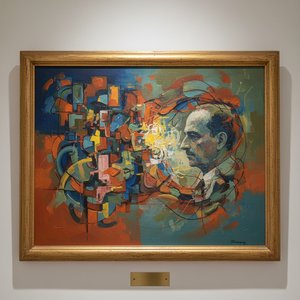
The Political Voice of Kata Nuñez: A Chilean Muralist’s Legacy
Jorge Nuñez, more commonly known as Kata Nuñez, is a compelling figure in contemporary Chilean art – an artist deeply rooted in the nation's turbulent history and committed to using his murals as powerful vehicles for social commentary. Born in Valdivia in 1954, Nuñez’s journey began within the Ramona Parra Brigade, a muralist collective affiliated with the Communist Party of Chile, a group dedicated to injecting political messaging into public spaces during a period of immense societal upheaval. This formative experience profoundly shaped his artistic vision and established a core principle: that art should be accessible, engaging, and actively contribute to social change. His work transcends mere decoration; it’s a deliberate act of resistance and remembrance.
Early Years and the Rise of Political Muralism
Nuñez's early career was inextricably linked with the 1970s in Chile – a decade defined by military dictatorship, political repression, and widespread social unrest. He joined forces with Roberto Matta, another iconic Chilean artist known for his surrealist landscapes, to create ‘The First Goal of the Chilean People’ in 1971. This monumental mural, painted in Amsterdam during a period when Nuñez was living abroad, stands as a testament to the spirit of resistance and national pride amidst adversity. The imagery – a stylized depiction of a soccer match symbolizing the collective struggle for freedom – quickly became emblematic of his artistic style: bold symbolism interwoven with accessible narratives. The influence of Matta is evident in the mural’s dreamlike quality and its ability to evoke powerful emotions through abstract forms, yet Nuñez's work retains a distinctly Chilean identity, reflecting the nation’s unique cultural heritage and political realities.
Iconic Symbols and Recurring Motifs
Nuñez’s murals are instantly recognizable for their distinctive iconography – a carefully curated vocabulary of symbols that carry profound meaning within the context of Chilean history and social struggles. The “spike,” representing the pain and oppression inflicted by authoritarian regimes, is perhaps his most enduring motif. Alongside it appear the "fist," symbolizing resistance and solidarity; the "star," embodying hope and aspiration; stylized "birds" often associated with freedom and migration; and the "workers," highlighting the importance of labor in Chilean society. These recurring elements aren’t merely decorative; they function as a visual language, allowing Nuñez to communicate complex ideas with clarity and impact. His murals are strategically placed – often in public squares and community centers – ensuring that these messages reach a wide audience.
Murals Across Chile and Beyond
Throughout his career, Nuñez has created murals across Chile and internationally, including significant works in Amsterdam during the 1980s. His work reflects both the specific challenges facing Chilean society and broader themes of social justice and human rights. The mural ‘El Trotamundos’ (The Wanderer), painted in 2019 in Valdivia, exemplifies this approach – a vibrant depiction of a worker embracing his identity and celebrating his heritage. These murals aren't static; they are living documents, constantly evolving alongside the social and political landscape. They serve as reminders of past struggles and inspire continued action towards a more equitable future.
Legacy and Continuing Relevance
Kata Nuñez’s contribution to Chilean art extends far beyond his individual works. He is a vital link to the country's muralist tradition, carrying on the legacy of Ramona Parra and other artists who used public space as a platform for social commentary. His murals continue to resonate with audiences today, serving as powerful reminders of Chile’s complex history and its ongoing struggle for democracy and social justice. Nuñez’s commitment to accessible art, combined with his potent symbolism and historical context, ensures that his work will remain relevant and impactful for generations to come. He is a true voice of the people, translated into vibrant color and enduring imagery.