The Architect of Ethereal Elegance
In the golden era of Parisian haute couture, few names whispered of as much romance and historical grandeur as Jean Dessès. Born Jean Dimitre Verginie in 1904 amidst the cosmopolitan splendor of Alexandria, Egypt, his very identity was a tapestry of cultural richness. Raised within the Greek Orthodox community, his early years were steeped in the intricate textures and decorative arts of his heritage. While he initially sought a path through the rigorous study of law, the siren call of the Parisian ateliers proved irresistible. By 1925, he had abandoned the courtroom for the atelier of Madame Jane, beginning a transformative apprenticeship that would eventually lead to the establishment of his own legendary house, Maison Dessès, in 1937.
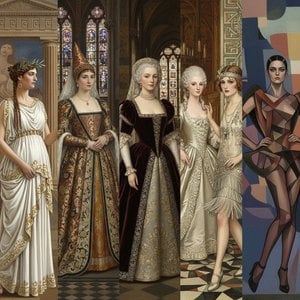
Dessès possessed a rare, visionary ability to bridge the gap between the ancient world and modern glamour. His designs were never merely garments; they were wearable echoes of antiquity. He drew profound inspiration from the majestic silhouettes of Egyptian mythology and the fluid, sculptural grace of Grecian drapery. This dual fascination allowed him to manipulate fabrics like chiffon, mousseline, and satin silk into breathtaking evening gowns that seemed to possess a life of their own. To wear a Dessès creation was to drape oneself in the dignity of a pharaoh or the ethereal beauty of a goddess, making him a pioneer of a style that felt both timeless and avant-garde.
A Legacy Woven in Silk and Royalty
The ascent of Maison Dessès marked a period where fashion became an art form of unparalleled sophistication. As a master of drape and texture, Dessès’ technical prowess was matched only by his eye for dramatic flair. His studio served as a crucible of talent; notably, the legendary Valentino once worked under his guidance, inheriting a shared passion for the dramatic, elegant ball gown. His craftsmanship was characterized by an almost sculptural precision, using fabric manipulation to create silhouettes that commanded attention in the most prestigious salons of Europe.
The true testament to his genius lay in his illustrious clientele, a roster of women who defined the elegance of the mid-20th century. His designs graced the shoulders of royalty and high society, including:
- The Queen and Royal Princesses of Greece, most notably designing the wedding gown for Princess Sophia.
- The Duchess Windsor, a symbol of international style and intrigue.
- Athina Livanos, the celebrated socialite and wife of Aristotle Onassis.
- Elsa Maxwell, the legendary hostess and tastemaker.
Beyond the runway, Dessès was an astute entrepreneur who understood the expanding reach of fashion. He launched a diffusion line in America during the 1950s and introduced a range of perfumes and silk scarf designs, ensuring that the essence of his aesthetic could be shared far beyond the exclusive confines of Avenue Matignon. Though his couture house eventually closed in 1960, his influence endured through his freelance work in Greece and the enduring revival of his vintage aesthetic in later decades. Jean Dessès remains a singular figure—a designer who did not just follow trends, but instead resurrected the splendor of the past to clothe the icons of the present.