Jane Hawkins: A Victorian Portraitist of Subtle Power
Jane Elizabeth Hawkins (1847–after 1911) remains a quietly significant figure in 19th-century British art, largely due to her prolific output of portraiture and her skillful adaptation of established artistic styles. Emerging from a modest background in Chelsea, Hawkins’s career unfolded through diligent observation, technical proficiency, and a keen eye for capturing the nuances of her subjects – often members of prominent political families. Her work offers a fascinating glimpse into Victorian society, revealing both its formal conventions and the subtle power dynamics at play within aristocratic circles.
Early Life and Artistic Training
Born in Chelsea, Hawkins’s early life remains somewhat shrouded in detail, though it's clear she received no formal artistic training in the conventional sense. She was part of a family involved in trade and commerce, with her father becoming a greengrocer. Despite this practical upbringing, Hawkins developed an interest in art from a young age, likely influenced by the vibrant artistic community that flourished in Chelsea during the mid-19th century. While she didn’t attend a dedicated art school, her apprenticeship involved working as a designer and illustrator for various clients – a crucial experience that honed her observational skills and understanding of visual communication. This early exposure to design principles undoubtedly informed her later portraiture work, particularly her ability to create balanced compositions and effectively convey character through gesture and expression.
A Style Shaped by Masters: Copies and Influences
Hawkins’s artistic style is characterized by a remarkable fidelity to the conventions of Victorian portraiture, yet it's also subtly infused with the influence of prominent artists like Francis Grant and James Rannie Swinton. Much of her work consists of copies – meticulously rendered reproductions of existing portraits, primarily of political figures such as members of the Earl of Derby’s family. This practice wasn’t merely a matter of imitation; Hawkins clearly studied these masters, absorbing their techniques and understanding of how to capture likeness and personality. The resulting portraits are not simply facsimiles, however. She brought her own sensibility to each piece, subtly adjusting details and incorporating her own artistic interpretations. Notably, she also produced original works, demonstrating a growing independence as an artist.
Notable Works and Subjects
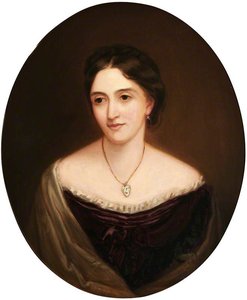
Hawkins’s subject matter largely revolved around the upper echelons of Victorian society – nobility, politicians, and members of prominent families. She is particularly well-known for her portraits of the Smith-Stanley family of Derby, several of which are now housed in Hughenden Manor. These works offer valuable insights into the social customs and expectations of the aristocracy during this period. Beyond these aristocratic subjects, Hawkins also painted Lady Laura Russell (c.1850–1910), a portrait that exemplifies her skill in capturing elegant detail and subtle emotion. Her work is not overtly dramatic; rather, it conveys a sense of quiet dignity and understated power – qualities that are characteristic of Victorian portraiture as a whole.
Legacy and Historical Significance
Jane Hawkins’s contribution to British art history may be somewhat overshadowed by more celebrated contemporaries, but her prolific output and stylistic consistency deserve recognition. She represents a significant example of a female artist working within the constraints – and opportunities – of Victorian society. Her ability to successfully emulate established artistic styles while simultaneously developing her own unique approach demonstrates both technical skill and an astute understanding of her subject matter. Furthermore, her portraits provide valuable documentation of Victorian social life, offering a window into the world of aristocratic families and the intricate power dynamics that shaped British society during this era. The continued presence of her works in public collections – including Tavistock Town Hall and Hughenden Manor – ensures that Jane Hawkins’s legacy as a skilled portraitist and a keen observer of Victorian society will endure.