Guilliam de Heusch: A Serene Vision of the Dutch Golden Age
Willem de Heusch (c. 1625 – 9 March 1692) remains a figure shrouded in relative obscurity compared to his contemporaries like Rembrandt and Vermeer, yet his landscapes hold a quiet beauty that speaks volumes about the artistic sensibilities of Utrecht during its zenith as a center for art and culture.
Little is definitively known about de Heusch’s formative years. Born in Utrecht, he likely received instruction from Jan Both, whose distinctive style—characterized by luminous color palettes and atmospheric perspective—served as a crucial influence on de Heusch's oeuvre. This connection to Both isn’t merely stylistic; it reflects the broader artistic milieu of Utrecht at the time, where artists sought to capture the sublime grandeur of nature alongside intellectual contemplation.
- Early Life & Training: While biographical details are scarce, evidence suggests de Heusch honed his skills under Jan Both's tutelage, absorbing both technique and aesthetic principles.
- Guild Membership & Patronage: De Heusch’s involvement with the Utrecht Gild of St Luke demonstrates his commitment to professional standards and underscores the importance of patronage in shaping artistic careers during the Dutch Golden Age.
The Style of Twilight
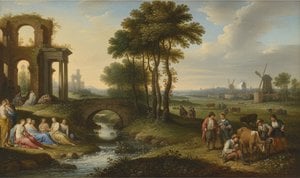
De Heusch's paintings are instantly recognizable by their masterful depiction of evening landscapes—a hallmark of Both’s style and, subsequently, a stylistic cornerstone of his own work. Unlike Rembrandt’s dramatic chiaroscuro, de Heusch favored softer tonal gradations, creating an ethereal atmosphere that evokes contemplation and serenity.
His compositions often feature expansive vistas dominated by rocky outcrops bathed in the fading light of dusk. These scenes are imbued with a palpable sense of stillness—a deliberate contrast to the turbulent emotions conveyed in many other paintings of the period. The influence of Claude Lorraine is evident in de Heusch’s meticulous attention to detail and his ability to convey the grandeur of mountainous terrains.
Notable Works
- Mountainous Landscape in Italy: This iconic piece exemplifies de Heusch's signature technique—the subtle blending of colors to simulate the effects of twilight, capturing a breathtaking panorama of Italian mountains.
- De Heusch’s Etchings: Thirteen etchings by de Heusch further solidify his reputation as a skilled engraver and demonstrate his mastery of tonal variation and textural detail.
His landscapes are housed in prestigious institutions worldwide, including the Mauritshuis in The Hague, the Louvre in Paris, and the Israel Museum in Jerusalem—testaments to their enduring artistic merit.
Legacy & Influence
Guilliam de Heusch’s contribution to Dutch landscape painting is significant not for its fame but for its unwavering adherence to a particular aesthetic ideal: quiet contemplation amidst the sublime beauty of nature. Like Jan Both and Claude Lorraine, he championed a vision of art that prioritized observation and emotional resonance over theatrical spectacle.
De Heusch’s work continues to inspire artists today, reminding us that true artistic achievement lies in capturing not just what is seen but also what is felt—a legacy etched into the serene canvases of Utrecht's Golden Age.