Guido Caprotti Pacchetti: A Life Painted in Italian Light
Born in Monza, Italy, in 1887, Guido Caprotti Pacchetti’s life and artistic journey were deeply intertwined with the vibrant cultural landscape of late 19th and early 20th-century Italy. Initially destined for a more conventional path, his passion for art led him to enroll at the prestigious Brera Academy in Milan, where he was mentored by Cesare Tallone, a renowned painter known for his masterful depictions of Bergamo’s landscapes and its people. This formative period instilled in Pacchetti a deep appreciation for observation, detail, and the ability to capture the essence of everyday life – qualities that would define his distinctive style.
Pacchetti's artistic development wasn't confined solely to Milan; he spent considerable time in Spain, particularly in Valmaseda, where he established himself as a prolific painter. This Spanish sojourn profoundly influenced his work, introducing him to new perspectives on light, color, and the dramatic beauty of the Iberian countryside. The warm, golden hues characteristic of his later paintings are often attributed to this extended period of immersion in the Spanish artistic tradition.
A Palette of Subjects: Portraits, Landscapes, and Scenes of Life
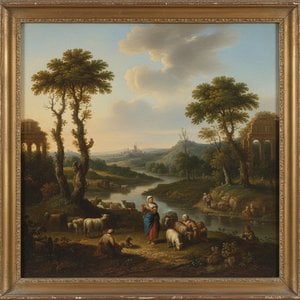
While he embraced a diverse range of subjects, Guido Caprotti Pacchetti is most celebrated for his portraits. He possessed a remarkable ability to capture not just physical likeness but also the personality and spirit of his sitters – be they prominent figures or ordinary individuals. His portraits are imbued with warmth, intelligence, and a subtle sense of intimacy. Beyond portraiture, Pacchetti excelled in landscape painting, skillfully rendering the rolling hills, sun-drenched vineyards, and dramatic coastlines of Italy and Spain. He also frequently depicted scenes of popular life – bustling marketplaces, village festivals, and moments of quiet contemplation – offering viewers glimpses into the rhythms and traditions of Italian society.
His work wasn’t limited to purely representational subjects; he demonstrated a keen interest in capturing the spiritual essence of his subjects. Religious themes occasionally appeared in his oeuvre, executed with a sensitivity that resonated deeply with his audience. Furthermore, Pacchetti's skill extended to still lifes and genre scenes, showcasing his versatility as an artist and his ability to find beauty in both grand and humble subjects.
Technique and Influences: Tallone’s Legacy
The influence of Cesare Tallone is undeniably central to understanding Guido Caprotti Pacchetti's artistic style. Tallone, a master of light and color, instilled in his student a meticulous approach to observation and a commitment to capturing the nuances of the natural world. Pacchetti inherited Tallone’s emphasis on atmospheric perspective and his ability to create a sense of depth and realism in his paintings.
However, Pacchetti wasn't merely a copyist of his mentor’s style; he developed his own unique voice through experimentation with color palettes and brushwork. He favored warm, earthy tones – ochres, siennas, and umbers – that evoked the sun-drenched landscapes of Italy and Spain. His brushstrokes were often loose and expressive, conveying a sense of movement and vitality. While rooted in academic tradition, his work possesses an undeniable freshness and spontaneity.
Legacy and Recognition
Guido Caprotti Pacchetti’s career spanned several decades, during which he produced a substantial body of work that continues to be appreciated for its beauty, technical skill, and evocative portrayal of Italian life. Although he may not be as widely recognized as some of his contemporaries, his paintings offer a valuable window into the cultural and artistic landscape of early 20th-century Italy. His works are held in private collections and occasionally appear at auction, demonstrating their enduring appeal to collectors and art enthusiasts alike. His legacy lies not only in the beauty of his individual paintings but also in his contribution to the rich tapestry of Italian art history.