
1
The Parrot Addresses Khujasta at the Beginning of the Sixth Night, from a Tuti-nama (Tales of a Parrot)
Rukom oslikana uljana reprodukcija od $181 26 × 39 cm

The Parrot Addresses Khujasta at the Beginning of the Sixth Night, from a Tuti-nama (Tales of a Parrot) (1560) je najpoznatije delo umetnika Daswanth, koje se nalazi u muzeju Cleveland Museum of Art u gradu Klivlend. The wounded monkey bites the hand of the prince, his chessmate, in the presence of guests, from a Tuti-nama (Tales of a Parrot): Fifth Night (1560) i The parrot mother cautions her young on the danger of playing with foxes, from a Tuti-nama (Tales of a Parrot): Fifth Night (1560) su sledeća dva dela koja svet najbolje poznaje. Od 4 dela umetnika Daswanth u našem katalogu, izdvajamo ovih 4 koja kolekcionari i posetioci muzeja najčešće posmatraju, uz navođenje godine, muzeja i priče o svakom od njih.
Rangirano prema našem koeficijentu popularnosti, koji kombinuje pretrage, posete i porudžbine za svako delo. Ažurirano новембар 2026. Svako remek-delo na ovoj stranici može se naručiti kao ručno oslikana uljana reprodukcija muzejskog kvaliteta ili kao umetnička štampa, u dimenzijama koje odaberete.


2 muzeja u kojima se nalazi najviše slika sa ove stranice.
| Muzeji | Grad | Radovi umetnika Daswanth | Slike iz ovog spiska |
|---|---|---|---|
 Cleveland Museum of Art |
Klivlend | 3 | The Parrot Addresses Khujasta at the Beginning of the Sixth Night, from a Tuti-nama (Tales of a Parrot), The wounded monkey bites the hand of the prince, his chessmate, in the presence of guests, from a Tuti-nama (Tales of a Parrot): Fifth Night, The parrot mother cautions her young on the danger of playing with foxes, from a Tuti-nama (Tales of a Parrot): Fifth Night |
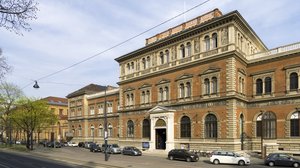 MAK – Muzej primenjenih umetnosti |
Beč | 1 | Umar Defeats a Dragon |
Daswanth je stvarao 18 godina, od 1560 do 1577: evo pregleda te dugog karijere godinu po godinu, kroz njegove najpoznatije slike.


The Parrot Addresses Khujasta at the Beginning of the Sixth Night, from a Tuti-nama (Tales of a Parrot) (1560), Cleveland Museum of Art, Klivlend. Sledeći su The wounded monkey bites the hand of the prince, his chessmate, in the presence of guests, from a Tuti-nama (Tales of a Parrot): Fifth Night (1560) i The parrot mother cautions her young on the danger of playing with foxes, from a Tuti-nama (Tales of a Parrot): Fifth Night (1560).
60 godina: The Parrot Addresses Khujasta at the Beginning of the Sixth Night, from a Tuti-nama (Tales of a Parrot) datira iz 1560, a Daswanth je rođen/a 1500.
Naš katalog sadrži 4 dela umetnika Daswanth, datiranih od 1560 do 1577.
Većina njih se nalazi u Cleveland Museum of Art (Klivlend) i MAK – Muzej primenjenih umetnosti (Beč). U tabeli iznad su muzeji navedeni jedan po jedan.
U periodima 1560: 3 od ukupno 4 dela na ovoj stranici datiraju iz tog vremena, od čega je The Parrot Addresses Khujasta at the Beginning of the Sixth Night, from a Tuti-nama (Tales of a Parrot).
Najstarije delo na ovoj stranici je iz The Parrot Addresses Khujasta at the Beginning of the Sixth Night, from a Tuti-nama (Tales of a Parrot) (1560), a najnovije iz Umar Defeats a Dragon (1577).
The Parrot Addresses Khujasta at the Beginning of the Sixth Night, from a Tuti-nama (Tales of a Parrot), The wounded monkey bites the hand of the prince, his chessmate, in the presence of guests, from a Tuti-nama (Tales of a Parrot): Fifth Night i The parrot mother cautions her young on the danger of playing with foxes, from a Tuti-nama (Tales of a Parrot): Fifth Night su među 3 dela na ovoj stranici koja se nalaze u Cleveland Museum of Art, Klivlend.
Da. Svaku sliku sa ove stranice možete naručiti kao ručno oslikano ulje na platnu muzejskog kvaliteta ili kao umetnički print, u veličini koju odaberete, direktno sa stranice te slike.
Daswanth was a Mughal-era painter serving under the emperor Akbar. Born the son of a palanquin-bearer, he was a Hindu who demonstrated a natural talent for painting and drawing on walls. This talent led him to be taught by the Persian master painter Khwāja 'Abd al-Samad. While 'Abd al-Samad's work was traditional and conservative, Daswanth's own works were noted for being imaginative and original. He was recognized in the Ain-i-Akbari as one of the three most important artists of his period, and the Akbarnama also credited him with great artistic talent.
His artistic style was characterized by a chaotic and creative energy that distinguished him from his contemporaries. His illustrations often appeared otherworldly, sometimes described as scary, with figures that were proportionally inconsistent and weightless. He possessed a unique technique involving the free application of wet pigment and a beautiful understanding of perspective through the use of character size, architectural details, and backgrounds. His work often focused on storytelling, depicting gods, demigods, courtly figures, and warriors, frequently portraying scenes of battle and gory violence.
Daswanth contributed significantly to several major works, including the Hamzanama and the Tarikh e Khandan e Timuriyah. He is also associated with the Razmnama, a Persian translation of the Hindu epic the Mahabharata, where he drew as many as 31 full-page miniatures. His work in this collection included diverse compositions, such as:
His repertoire also included illustrations for the Tūtīnāma, such as The Wounded Monkey Bites the Hand of the Prince. His style occasionally incorporated elements from other traditions, such as Chinese-style clouds or Western techniques and idioms. His life ended in 1584 after he wounded himself with a dagger.