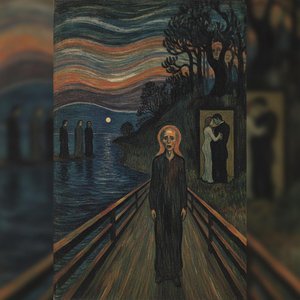
The Silent Guardian of Knowledge: The Life and Legacy of Angus McGill Mowat
In the grand, sweeping tapestry of art history, certain figures emerge through vibrant brushstrokes, while others linger in the soft, sepia tones of the periphery. Angus McGill Mowat, occasionally known by the name Angus Hutcheson, belongs to that evocative second category—a man whose true impact was felt not necessarily through a prolific gallery of canvases, but through his profound dedication to the preservation of human thought. Born in the quiet Irish enclave of Dromalogue around 1694, Mowat’s life journey was one of intellectual stewardship. While he may not have commanded the spotlight of the great European academies, his spirit was deeply intertwined with the cultural and scholarly currents of his era, acting as a bridge between the classical traditions of his Irish roots and the burgeoning frontiers of Canadian society.
To understand Mowat is to understand the Enlightenment—a period defined by an unquenchable thirst for reason, observation, and the systematic collection of knowledge. Though his primary vocation was that of a librarian, his life’s work mirrored the aesthetic and intellectual rigor of the great thinkers of the eighteenth century. His career trajectory took him across the Canadian landscape, leading him to pivotal roles in libraries within Trenton, Belleville, Windsor, and Saskatoon. In these roles, he was more than a mere custodian of books; he was a pioneer of literacy, championing advancements in library systems that prioritized accessibility for all. His work ensured that the seeds of intellectual curiosity could take root in developing communities, fostering an environment where art, science, and literature could eventually flourish.
An Intersection of Scholarship and Aesthetic Vision
While historical records lack a definitive catalog of Mowat’s artistic output, the essence of his contribution lies in the subtle intersection of scholarly pursuit and visual appreciation. It is widely speculated by historians that Mowat possessed a deep-seated reverence for the visual arts, an appreciation likely shaped by the cultural milieu of the 18th century. The era's emphasis on meticulous detail and the beauty of the natural world would have resonated with a man dedicated to the precision of archival work. There is a poetic symmetry in his life: as he organized the written word, he was simultaneously part of a movement that valued the observation of the world through both the eye and the intellect.
The traces of his influence are found in the following areas of cultural impact:
- Intellectual Infrastructure: By establishing robust library systems, he created the necessary foundations for future generations of Canadian artists and thinkers to access global knowledge.
- Cultural Preservation: His commitment to librarianship served as a vital safeguard for historical records during periods of significant societal transformation in North America.
- The Spirit of Craftsmanship: Anecdotal evidence suggests his personal connections with artisans and craftspeople, hinting at an intimate understanding of the skill and labor required to produce enduring works of beauty.
Ultimately, the legacy of Angus McGill Mowat is one of quiet, foundational strength. He represents the essential, often unseen support system of the arts—the curators, the librarians, and the scholars who ensure that when an artist creates a masterpiece, there is a culture prepared to receive, study, and cherish it. His life reminds us that the preservation of knowledge is, in itself, a profound act of creation.
Pitanja i odgovori
Pod kojim drugim imenima je Angus Mcgill Mowat poznat/a?
Angus Mcgill Mowat se pojavljuje i pod drugim imenima: Angus Hutcheson.
Koja raspoloženja izražavaju dela umetnika Angus Mcgill Mowat?
Na stranici Soba po raspoloženju umetnik Angus Mcgill Mowat prikazuje svoja dela poređana prema njihovoj atmosferi.
U kom gradu i državi je rođen/a Angus Mcgill Mowat?
Angus Mcgill Mowat je rođen/a u gradu Dromalogue, u državi Ireland.