The Silent Elegance of Anders Eklund
In the quiet corridors of Swedish art history, few names evoke the refined grace of the late eighteenth century quite like Anders Eklund. Born in 1737, a period marked by the shifting tides of European Enlightenment, Eklund emerged as a master of the portrait, capturing not just the likenesses of his subjects but the very essence of their social standing and inner composure. His life, spanning from the mid-century to his passing in May 1802, was dedicated to the meticulous pursuit of anatomical accuracy and the subtle play of light upon fabric, establishing him as a significant figure in the Swedish portraiture tradition.
Eklund’s artistry was deeply rooted in the classical traditions of his era, yet he possessed a unique ability to infuse his work with a sense of lived reality. As a painter, he navigated the complexities of texture—the heavy sheen of silk, the delicate lace of a collar, and the soft warmth of human skin—with an almost tactile precision. His technique allowed him to bridge the gap between formal representation and emotional resonance, making his portraits more than mere records of appearance; they became windows into the dignity of the Swedish people during a transformative epoch.
A Legacy Captured in Light and Shadow
The development of Eklund's style reflects a profound engagement with the aesthetic values of his time. While much of his work focused on the formal requirements of portraiture, there is an undeniable fluidity in his brushwork that suggests a deep understanding of movement and atmosphere. His ability to manipulate light—often casting it in a way that highlights the structural integrity of a face while allowing the background to recede into a soft, atmospheric mystery—demonstrates a sophisticated command over the chiaroscuro techniques prevalent in European academies.
Throughout his career, Eklund’s contributions can be seen through several key artistic pillars:
- Mastery of Portraiture: His primary focus remained the elevation of the individual through dignified and anatomically precise depictions.
- Textural Realism: An extraordinary talent for rendering the diverse materials of eighteenth-century attire, from velvet to fine linen.
- Historical Documentation: Through his canvases, he preserved the visual identity and social hierarchy of the Swedish landscape during the late 1700s.
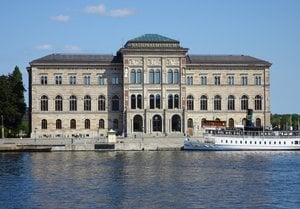
Today, the works attributed to Anders Eklund serve as vital historical artifacts. Held in esteemed collections such as the Nationalmuseum, his paintings continue to offer scholars and art enthusiasts alike a glimpse into the soul of a bygone era. His significance lies not only in his technical skill but in his role as a visual chronicler, ensuring that the elegance and gravity of his age remain vibrantly alive for future generations to contemplate.