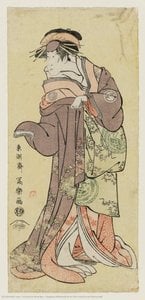
Sharaku: 100 najbolj znanih slik

Kabuki Actor Ōtani Oniji III as Yakko Edobei (1794) je najbolj znano sliko avtorja Sharaku, ki se nahaja v muzeju Metropolitanski muzej umetnosti v mestu New York. Bandō Hikosaburō III as Kudōzaemon Suketsune (1795) in Iwai Hanshirō IV as O-Han of the Shinanoya (1795) sta naslednji dve dela, ki jih svet najbolje pozna. Od 147 del umetnika Sharaku v našem katalogu so tu tista 100, ki jih zbiratelji in obiskovalci muzejev najpogosteje opazujejo, vključno z letnico, muzejom in zgodbojo vsakega dela.

Uvrščeno glede na naš skoraj priljubljenosti, ki združuje število iskanj, obiskov in naročil za vsako delo. Posodobljeno oktober 2026. Vsako podobno delo na tej strani je mogoče naročiti kot muzejsko kakovostno ročno slikano oljno reprodukcijo ali umetniški natisk v izbrani velikosti.

Portret Sharaku
Sharaku
Gibanje
Ukiyo-e
Delo v našem katalogu
147
Najbolj znana
Kabuki Actor Ōtani Oniji III as Yakko Edobei (1794)
Največ del v
Metropolitanski muzej umetnosti

Top 10: najbolj znana slika umetnika Sharaku

Kabuki Actor Ōtani Oniji III as Yakko Edobei (1794) avtorja Sharaku
1

Kabuki Actor Ōtani Oniji III as Yakko Edobei

1794 · Woodblock Print · Metropolitanski muzej umetnosti, New York

In the fleeting moments of the Edo period, few artists captured the raw, unbridled energy of human emotion as piercingly as Tōshūsai Sharaku. His masterpiece, Kabuki Actor Ōtani Oniji III as Yakko Edobei, serves as a breathtaking window into the heart of Kabuki theater, frozen in time since 1794. This woodblock print does not merely depict a performer; it captures a psychological crescendo. The actor, portrayed with startling realism, is…

Bandō Hikosaburō III as Kudōzaemon Suketsune (1795) avtorja Sharaku
2

Bandō Hikosaburō III as Kudōzaemon Suketsune

1795 · Woodblock Print

In the fleeting, vibrant world of the Edo period, few images capture the raw, theatrical intensity of the stage quite like Tōshūsai Sharaku’s 1795 masterpiece, Bandō Hikosaburō III as Kudōzaemon Suketsune. This monochrome woodblock print is not merely a portrait; it is a psychological study of a moment frozen in time. The subject, the celebrated Kabuki actor Bandō Hikosaburō III, is captured mid-performance, embodying the formidable character of Kudōzaemon Suketsune.…

Iwai Hanshirō IV as O-Han of the Shinanoya (1795) avtorja Sharaku
3

Iwai Hanshirō IV as O-Han of the Shinanoya

1795 · Woodblock Print

In the fleeting, vibrant world of Edo-period Japan, few artists captured the raw, theatrical essence of human emotion as piercingly as Tōshūsai Sharaku. His masterpiece, Iwai Hanshirō IV as O-Hano of the Shinanoya, serves as a breathtaking window into the Kabuki stage of 1795. This woodblock print does not merely depict an actor in costume; it captures a moment of profound character study. The subject, portrayed with a striking three-quarter…

Nakajima Wadaemon I as Tanbaya Hachiemon (1794) avtorja Sharaku
4

Nakajima Wadaemon I as Tanbaya Hachiemon

1794 · Woodblock Print

In the fleeting moments of the Edo period, few artists captured the raw, unvarnished essence of human emotion as strikingly as Tōshūsai Sharaku. His masterpiece, Nakajima Wadaemon I as Tanbaya Hachiemon, serves as a profound window into the theatrical soul of 1794 Japan. This woodblock print does not merely depict an actor; it captures a psychological state. The subject, portrayed with Sharaku’s signature intensity, sits in a moment of palpable…

Iwai Hanshirō IV as Kōtō no Naishi (1795) avtorja Sharaku
5

Iwai Hanshirō IV as Kōtō no Naishi

1795 · Woodblock Print

In the fleeting history of Japanese ukiyo-e, few names command as much intrigue and reverence as Tōshūsai Sharaku. His brief, explosive appearance on the art scene—lasting a mere ten months between 1794 and 1795—left behind a legacy that continues to haunt and fascinate the modern collector. This particular masterpiece, Iwai Hanshirō IV as Kōtō no Naishi, serves as a profound testament to Sharaku’s unparalleled ability to capture the raw, psychological…

Morita Kan'ya VIII as Genkaibō Ajari (1794) avtorja Sharaku
8

Morita Kan'ya VIII as Genkaibō Ajari

1794 · Woodblock Print

In the fleeting moments of the Edo period, few artists captured the raw, electric energy of the Kabuki stage as profoundly as Tōshūsai Sharaku. His masterpiece, Morita Kan'ya VIII as Genkaibō Ajari, serves as a breathtaking window into a vanished era of Japanese theatrical splendor. This woodblock print is not merely a portrait; it is a captured heartbeat, a frozen instant of high drama where the boundary between performer and…

Matsumoto Koshiro IV as the Fish Peddler Gorobei avtorja Sharaku
9

Matsumoto Koshiro IV as the Fish Peddler Gorobei

Woodblock Print · Metropolitanski muzej umetnosti, New York

To stand before a portrait in the style of Tōshūsai Sharaku is to confront not merely an image, but a moment suspended between life and memory. This depiction of Matsumoto Koshiro IV as the fish peddler Gorobei captures the very essence of the Edo period's vibrant, yet often melancholic, undercurrents. The print possesses an almost startling immediacy; it feels less like an artistic rendering and more like a captured breath…

Nakamura Nakazō II, also called Sakaiya Shūkaku (1794) avtorja Sharaku
10

Nakamura Nakazō II, also called Sakaiya Shūkaku

1794 · Woodblock Print

This woodblock print presents a portrait of Nakamura Nakazō II, also called Sakaiya Shūkaku. The subject was a prominent Japanese kabuki actor, captured during a period of significant theatrical activity in Edo. The work is attributed to the artist Toshusai Sharaku, a figure whose brief and intense presence in the ukiyo-e genre remains a subject of much interest. This specific piece dates to 1794.

Preostali del uvrstitve umetnika Sharaku, od 11 do 100

The Actor Sawamura Sojuro III (1795) avtorja Sharaku
#16

The Actor Sawamura Sojuro III

1795 · Metropolitanski muzej umetnosti

In the fleeting history of Japanese Ukiyo-e, few names evoke as much mystery and intense fascination as Tōshūsai Sharaku. His brief, explosive appearance on the art scene—lasting a…

Prinesite si domov →
Ebisu (1795) avtorja Sharaku
#21

Ebisu

1795

In the fleeting, brilliant ten-month career of Tōshūsai Sharaku, few works capture the vibrant pulse of Japanese folklore as effectively as his 1795 masterpiece, Ebisu. This woodblock print…

Prinesite si domov →

Slike umetnika Sharaku po obdobjih

Motivi, ki jih je Sharaku naslikal največ

Četiri teme, ki se najpogosteje pojavljajo med temi mojstrovinami, s najboljšim primerom za vsako izmed njih.

Kje si lahko ogledate slike avtorja Sharaku

5 muzejev, ki vsebujo največ slik na tej strani.

Muzej Mesto Sloga Sharaku Slike iz tega seznama
Metropolitanski muzej umetnosti, New YorkMetropolitanski muzej umetnosti New York 36 Kabuki Actor Ōtani Oniji III as Yakko Edobei, Matsumoto Koshiro IV as the Fish Peddler Gorobei, Bandō Mitsugorō II as Ishii Genzō in the Play "Hana Ayame Bunroku Soga"
Brooklyn Museum, BrooklynBrooklyn Museum Brooklyn 3 Segawa Kikujuro Iii as Oshizu, Wife of Tanabe Bunzo, Kubuki Actor Ichikawa Ebizō as Takemura Sadanoshin, Daizo the Substitute
Art Institute of Chicago, ChicagoArt Institute of Chicago Chicago 1 Otafuku Throwing Black Beans to Chase Away the Demons on New Year's Eve
Narodni muzej v Tokiu, TokioNarodni muzej v Tokiu Tokio 1 Kabuki Actor Ōtani Tokuji as Monogusa Tarō
Toledo Museum of Art, ToledoToledo Museum of Art Toledo 1 Onoe Matsusuke as Ashikaga TukaujiPublished by Tsutaya Juzaburo

Sharaku skozi leta: pripomočki vsakega leta

Med 1794 in 1795 letom je Sharaku naslikal vseh 2 datiranih del na tej strani: tukaj so, leto za letom.

  1. 1794
    Kabuki Actor Ōtani Oniji III as Yakko Edobei (1794) avtorja Sharaku
    #1 od 100

    Kabuki Actor Ōtani Oniji III as Yakko Edobei

    Metropolitanski muzej umetnosti

    In the fleeting moments of the Edo period, few artists captured the raw, unbridled energy of human emotion as piercingly as Tōshūsai Sharaku. His masterpiece, Kabuki Actor Ōtani…

  2. 1794
    Nakajima Wadaemon I as Tanbaya Hachiemon (1794) avtorja Sharaku
    4. od 100

    Nakajima Wadaemon I as Tanbaya Hachiemon

    In the fleeting moments of the Edo period, few artists captured the raw, unvarnished essence of human emotion as strikingly as Tōshūsai Sharaku. His masterpiece, Nakajima Wadaemon I…

  3. 1794
  4. 1794
    Morita Kan'ya VIII as Genkaibō Ajari (1794) avtorja Sharaku
    #8 od 100

    Morita Kan'ya VIII as Genkaibō Ajari

    In the fleeting moments of the Edo period, few artists captured the raw, electric energy of the Kabuki stage as profoundly as Tōshūsai Sharaku. His masterpiece, Morita Kan'ya…

  5. 1794
    Nakamura Nakazō II, also called Sakaiya Shūkaku (1794) avtorja Sharaku
    10. od 100

    Nakamura Nakazō II, also called Sakaiya Shūkaku

    This woodblock print presents a portrait of Nakamura Nakazō II, also called Sakaiya Shūkaku. The subject was a prominent Japanese kabuki actor, captured during a period of significant…

  6. 1794
  7. 1794
  8. 1794
    Nakajima Wadaemon I as Migawari no Jizō (1794) avtorja Sharaku
    20. od 100

    Nakajima Wadaemon I as Migawari no Jizō

    This striking woodblock print, created by the enigmatic artist Tōshūsai Sharaku in 1794, offers a captivating portrait of Nakajima Wadaemon I embodying the role of Migawari no Jizō.…

  9. 1794
  10. 1794
  11. 1794
  12. 1794
  13. 1795
    Bandō Hikosaburō III as Kudōzaemon Suketsune (1795) avtorja Sharaku
    #2 od 100

    Bandō Hikosaburō III as Kudōzaemon Suketsune

    In the fleeting, vibrant world of the Edo period, few images capture the raw, theatrical intensity of the stage quite like Tōshūsai Sharaku’s 1795 masterpiece, Bandō Hikosaburō III…

  14. 1795
    Iwai Hanshirō IV as O-Han of the Shinanoya (1795) avtorja Sharaku
    3. od 100

    Iwai Hanshirō IV as O-Han of the Shinanoya

    In the fleeting, vibrant world of Edo-period Japan, few artists captured the raw, theatrical essence of human emotion as piercingly as Tōshūsai Sharaku. His masterpiece, Iwai Hanshirō IV…

  15. 1795
    Iwai Hanshirō IV as Kōtō no Naishi (1795) avtorja Sharaku
    #5 od 100

    Iwai Hanshirō IV as Kōtō no Naishi

    In the fleeting history of Japanese ukiyo-e, few names command as much intrigue and reverence as Tōshūsai Sharaku. His brief, explosive appearance on the art scene—lasting a mere…

  16. 1795
  17. 1795
  18. 1795
    Morita Kanya VIII as Kawachi Kanja, Disguised as Genkaibo (1795) avtorja Sharaku
    14. od 100

    Morita Kanya VIII as Kawachi Kanja, Disguised as Genkaibo

    Metropolitanski muzej umetnosti

    In the fleeting, shadowy world of the Edo period, few artists captured the raw, psychological intensity of the stage as masterfully as Tōshūsai Sharaku. His 1795 woodblock print,…

  19. 1795
    The Actor Sawamura Sojuro III (1795) avtorja Sharaku
    Rang 16 / 100

    The Actor Sawamura Sojuro III

    Metropolitanski muzej umetnosti

    In the fleeting history of Japanese Ukiyo-e, few names evoke as much mystery and intense fascination as Tōshūsai Sharaku. His brief, explosive appearance on the art scene—lasting a…

  20. 1795
  21. 1795
    Segawa Kikunojo III in an Unidentified Role (1795) avtorja Sharaku
    18. od 100

    Segawa Kikunojo III in an Unidentified Role

    Metropolitanski muzej umetnosti

    In the fleeting moments of the Edo period, few names ignite as much curiosity as Tōshūsai Sharaku. His brief, explosive career—lasting a mere ten months between 1794 and…

  22. 1795
    Ebisu (1795) avtorja Sharaku
    Rang 21 / 100

    Ebisu

    In the fleeting, brilliant ten-month career of Tōshūsai Sharaku, few works capture the vibrant pulse of Japanese folklore as effectively as his 1795 masterpiece, Ebisu. This woodblock print…

  23. 1795
  24. 1795
  25. 1795

Slike umetnika Sharaku: pogosta vprašanja

Katero je najbolj znano sliko avtorja Sharaku?Prikaži odgovor

Kabuki Actor Ōtani Oniji III as Yakko Edobei (1794), Metropolitanski muzej umetnosti, New York. Nato sledeta Bandō Hikosaburō III as Kudōzaemon Suketsune (1795) in Iwai Hanshirō IV as O-Han of the Shinanoya (1795).

Katera je 10 najbolj znanih slik umetnika Sharaku?Prikaži odgovor

Kabuki Actor Ōtani Oniji III as Yakko Edobei, Bandō Hikosaburō III as Kudōzaemon Suketsune, Iwai Hanshirō IV as O-Han of the Shinanoya, Nakajima Wadaemon I as Tanbaya Hachiemon, Iwai Hanshirō IV as Kōtō no Naishi, Bandō Hikosaburō III as Godai Saburō Chikatada, Osagawa Tsuneyo II as Okinu, wife of Chōemon, Morita Kan'ya VIII as Genkaibō Ajari, Matsumoto Koshiro IV as the Fish Peddler Gorobei in Nakamura Nakazō II, also called Sakaiya Shūkaku. Zgornja lestica prikazuje leto in muzej za vsako od njih.

Koliko slik avtorja Sharaku je na voljo?Prikaži odgovor

V našem katalogu je navedenih 147 del avtorja Sharaku, datiranih od 1794 do 1795.

Kje lahko vidim najbolj znana dela umetnika Sharaku?Prikaži odgovor

Večina njih se nahaja v Metropolitanski muzej umetnosti (New York), Brooklyn Museum (Brooklyn) in Art Institute of Chicago (Chicago). Zgornja tabela navaja muzeje posamezno.

V katerem obdobju je Sharaku naslikal svoja najbolj znana dela?Prikaži odgovor

V obdobju 1794: 49 od 100 del na tej strani izvira iz tega obdobja, med katerimi je Kabuki Actor Ōtani Oniji III as Yakko Edobei.

Kaj je najstarejše in najstarejšo znano sliko avtorja Sharaku?Prikaži odgovor

Najstarejšo delo na tej strani je iz Kabuki Actor Ōtani Oniji III as Yakko Edobei (1794), najnovejše pa iz Bandō Hikosaburō III as Kudōzaemon Suketsune (1795).

Katere teme je slika Sharaku?Prikaži odgovor

Kabuki actor (17), Woodblock print (17) in Portrait (11), med 100 dela na tej strani.

Na čem in s čim je Sharaku sliko naslikal?Prikaži odgovor

Woodblock Print: 29 od 100 del na tej strani.

Kateri umetniški slog predstavlja umetnost avtorja Sharaku?Prikaži odgovor

Ukiyo-e, kot to pokažejo slike na tej strani.

Kakšna dela umetnika Sharaku ima v svoji zbirki Metropolitanski muzej umetnosti?Prikaži odgovor

Kabuki Actor Ōtani Oniji III as Yakko Edobei, Matsumoto Koshiro IV as the Fish Peddler Gorobei in Bandō Mitsugorō II as Ishii Genzō in the Play "Hana Ayame Bunroku Soga" so med 19 dela na tej strani, ki jih hrani Metropolitanski muzej umetnosti, New York.

Kje lahko kupim reprodukcijo Sharaku?Prikaži odgovor

Da. Vsako sliko na tej strani lahko naročite kot muzejsko kakovostno ročno naslikano oljno reprodukcijo ali umetniški natisk v izbrani velikosti neposredno s strani posamezne slike.

Sharaku: biografija

The Enigmatic Presence of Sharaku

Sharaku was a Japanese ukiyo-e print designer active between 1794 and 1795. His prolific output focused primarily on yakusha-e, which are portraits of kabuki actors. These works often emphasized the dynamism and energy of the subjects, frequently utilizing a realism that highlighted unflattering details such as wrinkles or large noses. His compositions often featured a focus on facial expressions, sometimes presenting a single figure or contrasting different types of faces.

The artist's career was brief, spanning approximately ten months. His work is categorized into four distinct periods:

Artistic Style and Legacy

Sharaku's technique involved the use of woodblock prints, sometimes employing extravagant methods such as the dusting of mica in the backgrounds to create a glittering effect. His portraits are noted for their ability to capture the psychology of a character through heightened theatrical gestures and expressive, almost caricature-like exaggerations.

Despite the mystery surrounding his true identity, his work has been recognized for its mastery of the medium. His reputation rests largely on his earlier prints, while his later output is often considered to have a declining artistry. His subjects included kabuki actors, sumo wrestlers, and warriors.

Vsa dela avtorja Sharaku: 147 →