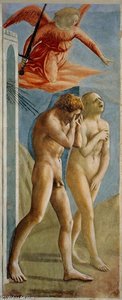
Masaccio, 1401 – 1428

Masaccio Paintings: The 97 Most Famous Works, Ranked

Masaccio's most famous painting is Sveta Trojica (1428). With Prisilnica (1425) and Izganjanje iz raja (1426), it completes the three works everyone recognises. Our catalogue lists 97 works by Masaccio; the 97 below are the ones the world looks at most, each with its year, the museum that holds it and why it matters.

Ranked by our popularity score, which combines the searches, visits and orders for each work. Updated oktober 2026. Every masterpiece on this page can be ordered as a museum-quality, hand-painted oil reproduction or a fine art print, at the size you choose.

Portrait of Masaccio
Masaccio · 1401 – 1428
Born · died
1401 – 1428, San Giovanni Valdarno
Movement
Zgodnja renesansa
Works in our catalogue
97
Most famous
Sveta Trojica (1428)
Most works at
Santa Maria del Carmine

The 10 most famous Masaccio paintings

Sveta Trojica (1428) by Masaccio
1

Sveta Trojica

1428 · Freska

Sveta Trojica Masaccio je s svojim delom freska, ki je označila začetek Renesanse v Italiji, postavil nove temelje umetnosti. To delo, ustvarjeno leta 1425, velja za eno najpomembnejših umetnostnih dosežkov obdobja zrečne renesanse. Srečati ga lahko v znameniti firentinškem cerkvi Santa Maria Novella, ki je prava temeljita postaja za vse ljubitelje umetnosti. Umetniške inovacije Masaccio je s svojim delom Sveta Trojica predstavil revolucionarno umetniško vizijo, ki je prinesla številne inovacije.…

Prisilnica (1425) by Masaccio
2

Prisilnica

1425 · Freska

Scena se odvija v kapeli Brancacci v bazilici Santa Maria del Carmine v Firentzi. Tu freska z naslovom Prisilnica avtorja Masaccia oživlja biblijsko pripovedovanje na stene kapele. To delo, ki ga je naročil Felice Brancacci, predstavlja pomemben del širšega cikla, posvečenega življenju svetega Petra. Zrak v kapeli se zdi prežet težavo te svete zgodovine, ko se figure premikajo skozi trenutek globokega pomena.

Izganjanje iz raja (1426) by Masaccio
3

Izganjanje iz raja

1426 · Freska

Težka tišina kapele Brancacci v cerkvi Santa Maria del Carmine v Firentah v Italiji nosi težo globoke tragedije. Tukaj stene dišejo z zgodovijo dela Izganjanje iz raja, ki je fresko naslikal Masaccio okoli leta 1425. Zvok zraka se zdi gost, ko se ob postavah vije okoli njih, ko se soočajo s svojim nenadnim, neprevršljivim odhodom iz raja. Ta scena označuje začetek širše pripovedi in deluje kot prva fresko v seriji…

Izdelavo 'Trezorja denarja' (podrobnost) by Masaccio
4

Izdelavo 'Trezorja denarja' (podrobnost)

Freska

‘Naklon’, originalni naslov je ‘Trpeza Kristusa’, je ena najpomembnejših fresk, ki jo je ustvaril italijanec Masaccio (1401-1428), eden prvih in najbolj vplivnih umetnikov renesanse. Ta delček iz znamenite freske v kapeli Brancacci v Firencah predstavlja ne le zgodovinski trenutek, ampak tudi prelomno točko v evropski umetnosti – začetek modernega načina razumevanja perspektive, svetlobe in človeške figure. Masaccio je s tem delom postavil novo standard za realistično slikanje, ki ga so…

Predella panel from the Pisa Altar (1426) by Masaccio
5

Predella panel from the Pisa Altar

1426 · Oil On Panel · Staatliche Museen zu Berlin, Berlin

To stand before this Predella panel from the Pisa Altar is to encounter a moment frozen in time, yet vibrating with raw, undeniable human drama. Dating to 1426, this work captures Masaccio at the zenith of his revolutionary power. It is not merely a depiction of the Crucifixion; it is a profound meditation on sacrifice, community, and the weight of divine narrative rendered with startling immediacy. The composition draws the…

The Madonna of Humility (1424) by Masaccio
6

The Madonna of Humility

1424 · Tempera On Panel

In the quiet, profound stillness of Masaccio’s The Madonna of Humility, we encounter one of the most moving snapshots of the Early Italian Renaissance. Created around 1424, this masterpiece transcends mere religious iconography to offer a window into a moment of raw, maternal intimacy. The scene is set not upon a celestial throne, but on the earth itself, where the Virgin Mary sits upon a blue patterned cushion. This choice…

Trinity (detail) (1425) by Masaccio
7

Trinity (detail)

1425 · Fresco · Santa Maria Novella, Firence

The image presents a detail from a fresco painting created in 1425 by Masaccio. Within this specific view, a figure is depicted that appears to be Mary Magdalene, identified by the traditional iconography of her long hair and a head covering. She possesses a contemplative expression, directing her gaze slightly downwards toward an object held in her right hand, which may be interpreted as a symbol of faith or devotion.

Two panels from the Pisa Altarpiece (1426) by Masaccio
8

Two panels from the Pisa Altarpiece

1426 · Tempera On Panel · Staatliche Museen zu Berlin, Berlin

In the quiet, hallowed halls of art history, few works capture the dawn of a new era as poignantly as Masaccio’s Two Panels from the Pisa Altarpiece. Completed in 1426, these panels are far more than mere fragments of a lost polyptych; they are windows into a transformative moment when the rigid conventions of the Gothic period began to dissolve, giving way to the profound humanism of the Early Italian…

Trinity (1425) by Masaccio
9

Trinity

1425 · Fresco · Santa Maria Novella, Firence

To step before Masaccio’s Holy Trinity is to witness the exact moment when the flattened, symbolic world of the Middle Ages dissolved into the profound, breathing reality of the Renaissance. Painted between 1425 and 1427 within the hallowed walls of Santa Maria Novella in Florence, this fresco does not merely depict a religious scene; it carves a hole in the very wall of the chapel, inviting the viewer to step…

Trinity (detail) (1425) by Masaccio
10

Trinity (detail)

1425 · Acrylic On Canvas · Santa Maria Novella, Firence

Masaccio’s “Trinity (detail),” housed within the magnificent Santa Maria Novella in Florence, isn't merely a fresco; it’s a pivotal moment in art history – a visual manifesto declaring the arrival of the High Renaissance. Painted between 1425 and 1427, this intimate section captures the essence of Masaccio’s revolutionary approach to depicting reality, a departure from the stylized elegance of the preceding Gothic era and a profound influence on generations of…

Masaccio, paintings 11 to 97

Frescoes in the Cappella Brancacci (left view) (1426) by Masaccio
#19

Frescoes in the Cappella Brancacci (left view)

1426 · Santa Maria del Carmine

Masaccio’s Frescoes in the Cappella Brancacci stand as a cornerstone of Renaissance art, representing an unprecedented leap forward in artistic innovation and profoundly influencing subsequent generations. Located within…

Bring it home →
Crucifixion (1426) by Masaccio
#22

Crucifixion

1426 · Museo di Capodimonte

Masaccio’s Crucifixion, painted in 1426 during his tragically brief career, isn’t merely a depiction of a pivotal biblical event; it’s a foundational moment in Western art. Born in…

Order a reproduction →
Distribution of Alms and Death of Ananias (1425) by Masaccio
#48

Distribution of Alms and Death of Ananias

1425

In the quiet, profound depths of Masaccio’s Distribution of Alms and Death of Ananias, we encounter a moment where the divine intersects with the earthly through the simple,…

Plate of Nativity (Berlin Tondo) (1427) by Masaccio
#77

Plate of Nativity (Berlin Tondo)

1427 · Staatliche Museen zu Berlin

In the quiet intimacy of the Plate of Nativity (Berlin Tondo), we witness one of the most profound transformations in the history of Western art. Painted in 1427…

Bring it home →
Adoration of the Magi (1426) by Masaccio
#85

Adoration of the Magi

1426 · Staatliche Museen zu Berlin

To stand before Masaccio’s Adoration of the Magi is not merely to observe a painting; it is to step directly into the revolutionary atmosphere of the early Italian…

Order a reproduction →
Predella panel from the Pisa Altar (1426) by Masaccio
#87

Predella panel from the Pisa Altar

1426 · Staatliche Museen zu Berlin

The world of 15th-century Florentine painting was undergoing a seismic shift, and at the heart of this transformation stood Masaccio – a name that resonates with an almost…

Bring it home →
St. Andrew (1426) by Masaccio
#93

St. Andrew

1426 · J. Paul Getty Museum

A Revolutionary Vision of Faith: Masaccio’s St. Andrew Masaccio's *St. Andrew*, painted in 1426, is a landmark work of the Early Renaissance, embodying the seismic shift towards naturalism…

Bring it home →
Crucifixion of St Peter (1426) by Masaccio
#97

Crucifixion of St Peter

1426 · Staatliche Museen zu Berlin

Masaccio's 1426 painting, *Crucifixion of St. Peter*, is not merely a depiction of a pivotal moment in Christian history; it’s a foundational cornerstone of the Early Italian Renaissance.…

Commission a hand-painted copy →

Masaccio's paintings by period

The subjects Masaccio painted most

The four subjects that return most often among these masterpieces, with the finest example of each.

Where to see Masaccio's paintings

The 8 museums that hold the most of the paintings on this page.

Museum City Works by Masaccio Paintings from this list
Santa Maria del Carmine, FirenceSanta Maria del Carmine Firence 7 View of the Cappella Brancacci (before restoration), Frescoes in the Cappella Brancacci (right view), Frescoes in the Cappella Brancacci (left view)
Staatliche Museen zu Berlin, BerlinStaatliche Museen zu Berlin Berlin 6 Predella panel from the Pisa Altar, Two panels from the Pisa Altarpiece, Plate of Nativity (Berlin Tondo)
Gemäldegalerie, BerlinGemäldegalerie Berlin 5 Martyrdom of San Giovanni Battista, A Bearded Carmelite Saint, San Agustín
Santa Maria Novella, FirenceSanta Maria Novella Firence 4 Trinity (detail), Trinity, Trinity (detail)
Lindenau-Museum, AltengauLindenau-Museum Altengau 3 Christ in the Garden of Gethsemane (detail), Christ in the Garden of Gethsemane (detail), Christ in the Garden of Gethsemane
National Gallery of Art, WashingtonNational Gallery of Art Washington 2 Profile Portrait of a Young Man, Madonna of Humility
National Gallery, LondonNational Gallery London 2 Madonna with Child and Angels, St.Girolamo end Giovanni Battista
Museo di Capodimonte, NapoliMuseo di Capodimonte Napoli 1 Crucifixion

Masaccio's most famous paintings, year by year

Masaccio painted for barely 9 years, from 1420 to 1428: follow that decade year by year, through the paintings that made the name.

  1. 1420
  2. 1422
  3. 1422
  4. 1422
    San Giovenale Triptych. Left panel (1422) by Masaccio
    No. 63 of 97

    San Giovenale Triptych. Left panel

    Age 21

    The San Giovenale Triptych, Left Panel by Masaccio is a seminal work of art that showcases the artist's innovative style and technique. Created in 1422, this painting is…

  5. 1422
  6. 1423
  7. 1423
  8. 1424
    The Madonna of Humility (1424) by Masaccio
    No. 6 of 97

    The Madonna of Humility

    Age 23

    In the quiet, profound stillness of Masaccio’s The Madonna of Humility, we encounter one of the most moving snapshots of the Early Italian Renaissance. Created around 1424, this…

  9. 1424
    Christ in the Garden of Gethsemane (detail) (1424) by Masaccio
    No. 21 of 97

    Christ in the Garden of Gethsemane (detail)

    Age 23 · Lindenau-Museum

    The garden holds a heavy stillness. In this detail from 1424, a single figure kneels upon the earth, hands clasped in a tight knot of devotion. The light…

  10. 1424
  11. 1424
    Christ in the Garden of Gethsemane (1424) by Masaccio
    Rank 62 / 97

    Christ in the Garden of Gethsemane

    Age 23 · Lindenau-Museum

    The painting Christ in the Garden of Gethsemane is a renowned work by the Italian artist Masaccio, created in 1424. This tempera painting, measuring 62 x 44 cm,…

  12. 1425
    Prisilnica (1425) by Masaccio
    No. 2 of 97

    Prisilnica

    Age 24

    Scena se odvija v kapeli Brancacci v bazilici Santa Maria del Carmine v Firentzi. Tu freska z naslovom Prisilnica avtorja Masaccia oživlja biblijsko pripovedovanje na stene kapele. To…

  13. 1425
    Trinity (detail) (1425) by Masaccio
    #7 of 97

    Trinity (detail)

    Age 24 · Santa Maria Novella

    The image presents a detail from a fresco painting created in 1425 by Masaccio. Within this specific view, a figure is depicted that appears to be Mary Magdalene,…

  14. 1425
    Trinity (1425) by Masaccio
    #9 of 97

    Trinity

    Age 24 · Santa Maria Novella

    To step before Masaccio’s Holy Trinity is to witness the exact moment when the flattened, symbolic world of the Middle Ages dissolved into the profound, breathing reality of…

  15. 1425
    Trinity (detail) (1425) by Masaccio
    No. 10 of 97

    Trinity (detail)

    Age 24 · Santa Maria Novella

    Masaccio’s “Trinity (detail),” housed within the magnificent Santa Maria Novella in Florence, isn't merely a fresco; it’s a pivotal moment in art history – a visual manifesto declaring…

  16. 1426
    Izganjanje iz raja (1426) by Masaccio
    Rank 3 / 97

    Izganjanje iz raja

    Age 25

    Težka tišina kapele Brancacci v cerkvi Santa Maria del Carmine v Firentah v Italiji nosi težo globoke tragedije. Tukaj stene dišejo z zgodovijo dela Izganjanje iz raja, ki…

  17. 1426
    Predella panel from the Pisa Altar (1426) by Masaccio
    Rank 5 / 97

    Predella panel from the Pisa Altar

    Age 25 · Staatliche Museen zu Berlin

    To stand before this Predella panel from the Pisa Altar is to encounter a moment frozen in time, yet vibrating with raw, undeniable human drama. Dating to 1426,…

  18. 1426
    Two panels from the Pisa Altarpiece (1426) by Masaccio
    #8 of 97

    Two panels from the Pisa Altarpiece

    Age 25 · Staatliche Museen zu Berlin

    In the quiet, hallowed halls of art history, few works capture the dawn of a new era as poignantly as Masaccio’s Two Panels from the Pisa Altarpiece. Completed…

  19. 1426
    View of the Cappella Brancacci (before restoration) (1426) by Masaccio
    Rank 11 / 97

    View of the Cappella Brancacci (before restoration)

    Age 25 · Santa Maria del Carmine

    Masaccio's View of the Cappella Brancacci (before restoration), painted in 1426, isn’t merely a depiction of a church interior; it’s a pivotal moment in art history – a…

  20. 1427
  21. 1427
    Baptism of the Neophytes (1427) by Masaccio
    No. 20 of 97

    Baptism of the Neophytes

    Age 26

    The Baptism of the Neophytes is a renowned fresco painted by Masaccio in the early 15th century. This iconic artwork is part of the decoration of the Brancacci…

  22. 1427
    Plate of Nativity (Berlin Tondo) (1427) by Masaccio
    Rank 77 / 97

    Plate of Nativity (Berlin Tondo)

    Age 26 · Staatliche Museen zu Berlin

    In the quiet intimacy of the Plate of Nativity (Berlin Tondo), we witness one of the most profound transformations in the history of Western art. Painted in 1427…

  23. 1428
    Sveta Trojica (1428) by Masaccio
    #1 of 97

    Sveta Trojica

    Age 27

    Sveta Trojica Masaccio je s svojim delom freska, ki je označila začetek Renesanse v Italiji, postavil nove temelje umetnosti. To delo, ustvarjeno leta 1425, velja za eno najpomembnejših…

  24. 1428
  25. 1428

Questions about Masaccio's paintings

What is Masaccio's most famous painting?Show the answer

Sveta Trojica (1428). Next come Prisilnica (1425) and Izganjanje iz raja (1426).

How old was Masaccio when Sveta Trojica was painted?Show the answer

27 years old: Sveta Trojica dates from 1428 and Masaccio was born in 1401.

What are the top 10 paintings by Masaccio?Show the answer

Sveta Trojica, Prisilnica, Izganjanje iz raja, Izdelavo 'Trezorja denarja' (podrobnost), Predella panel from the Pisa Altar, The Madonna of Humility, Trinity (detail), Two panels from the Pisa Altarpiece, Trinity and Trinity (detail). The ranking above gives the year and the museum of each.

How many paintings did Masaccio make?Show the answer

Our catalogue lists 97 works by Masaccio, dated from 1420 to 1428.

Where are Masaccio's most famous paintings?Show the answer

Most of them are in Santa Maria del Carmine (Firence), Staatliche Museen zu Berlin (Berlin) and Gemäldegalerie (Berlin). The table above lists the museums one by one.

When did Masaccio paint the most famous works?Show the answer

In 1426: 41 of the 97 works on this page date from then, among them Izganjanje iz raja.

What are Masaccio's earliest and latest famous paintings?Show the answer

The earliest on this page is Madonna of Humility (1420), the latest Sveta Trojica (1428).

What did Masaccio paint most often?Show the answer

Saints (30), Religious (25) and Renaissance (15), among the 97 works on this page.

What medium did Masaccio use most?Show the answer

Acrylic On Canvas: 9 of the 97 works on this page.

Which art movement does Masaccio belong to?Show the answer

Zgodnja renesansa, as the paintings on this page show.

Which Masaccio paintings can I see at the Santa Maria del Carmine?Show the answer

View of the Cappella Brancacci (before restoration), Frescoes in the Cappella Brancacci (right view) and Frescoes in the Cappella Brancacci (left view) are among the 7 works on this page held by the Santa Maria del Carmine, Firence.

Can I buy a reproduction of a Masaccio painting?Show the answer

Yes. Every painting on this page can be ordered as a museum-quality, hand-painted oil reproduction or a fine art print, in the size you choose, from the painting's own page.

About Masaccio

Masaccio (1401-1428): Zora renesančnega realizma

Tommaso di Ser Giovanni di Simone, bolj znan kot Masaccio (kar pomeni "nerudnega Tomaža"), je bil ključna osebnost zgodnjega italijanskega renesansa. Rojeni 21. decembra 1401 v San Giovanniju Valdarnu v Italiji in tragično umrl leta 1428, je s svojo kratko kariero revolucioniral slikarstvo z inovativnim realizmom, perspektivo in chiaroscuro (uporaba močnih kontrastov med svetlobo in temo). Kljub kratekemu življenju je bil Masaccijev vpliv na naslednje generacije umetnikov izjemen, saj je vzpostavil nov standard naturalizma in vplival na pot zahodne umetnosti.

Zgodnje življenje in usposabljanje

  • Izvor: Rojeni Giovanniu di Simone Cassaiju, notarju, in Jacopi di Martinozzo. Družinsko ime Cassai izvira iz poklica njegovega očetovega dedka, ki je bil izdelovalec omaric.
  • Zgodnja leta: Osirčel star pet let po smrti očeta, imel brata Giovannija (Lo Scheggia), ki je postal tudi slikar.
  • Usposabljanje: Podrobnosti Masaccijevega umetniškega usposabljanja ostajajo večinoma neznane, kar je nenavadno za renesančne umetnike. Verjame se, da se je okoli 12. leta začel učiti pri mojstru, vendar ni bilo ugotovljeno nobenega določenega mentorja. Pomanjkanje dokumentiranega usposabljanja dodaja skrivnost njegovemu hitremu razvoju in inovativnim tehnikam.
  • Članstvo v cehu: 7. januarja 1422 se je pridružil cehu slikarjev (Arte de’ Medici e Speziali) v Firencah, kar pomeni njegov izstop kot neodvisen mojster umetnosti.

Umetniški razvoj in glavna dela

  • Zgodnji vplivi: Sprva je bil pod vplivom Giotta di Bondonea, predhodnika znanega po svojem naturalizmu, Masaccio pa ga je hitro presegel v razumevanju perspektive in anatomije. Navdih je črpal tudi iz arhitektonskih inovacij Filippa Brunelleschija, zlasti Brunelleschijevi ponovni odkritvi linearne perspektive.
  • Ključne inovacije: Masaccio je utrdil več revolucionarnih tehnik:
    • Linearna perspektiva: Uporabil je točke pobega in matematično natančnost za ustvarjanje prepričljive iluzije globine na dvodimenzionalni površini.
    • Chiaroscuro: Mojstrsko je uporabljal svetlobo in senco za modeliranje oblik, kar je ustvarilo občutek volumna in realizma, ki ga prej v slikarstvu ni bilo.
    • Naturalizem: Upodobil je figure z anatomsko natančnostjo in čustvenim izrazom, se oddaljil od stiliziranih predstav prejšnjih obdobij.
  • Pomembna dela:
    • San Giovenale Triptych (okoli 1422): Zgodnje delo, ki kaže njegov razvijajoči se spretnost v perspektivi in naturalistični upodobitvi.
    • Madonna and Child with St. Anne (okoli 1423-1425): Sodeloovanje z Masolinom, ki prikazuje Masaccijev naraščajoči realizem poleg bolj tradicionalnega sloga Masolina.
    • Freske kapele Brancacci (okoli 1425-1428): Njegova najbolj slavna in vplivna dela, ki se nahajajo v cerkvi Santa Maria del Carmine v Firencah. Te freske, vključno z "Davkom denarja", "Izgnanstvom iz raja" in "Sv. Peter krsti neofite", so pomembna dela zgodnjega renesančnega slikarstva.

Zgodovinski pomen in zapuščina

Masaccijev vpliv na pot zahodne umetnosti je nemerljiv, kljub njegovi tragično kratki karieri. Njegove inovacije v perspektivi, chiaroscuro in naturalizmu so temeljito spremenile način upodabljanja sveta s slikarstvom. Učinkovito je zapolnil vrzel med srednjeveškimi umetniškimi konvencijami in nastajajočimi ideali renesanse.

  • Vpliv na naslednje umetnike: Masaccijevo delo je globoko vplivalo na generacije slikarjev, vključno z Donatellom, Leonardom da Vincijem, Michelangelom in Rafaelom. Intenzivno so študirali njegove freske, sprejemali in prilagajali njegove tehnike svojemu slogu.
  • Temelj za visoki renesanso: Njegov poudarek na realizmu in človeških čustvih je položil temelj umetniškim dosežkom visokega renesanse.
  • Vasarijev račun: Biograf Giorgio Vasari je prepoznal Masaccijevega genija, ga hvalil kot "najboljšega slikarja svoje generacije" in poudarjal njegovo sposobnost imitirati naravo z neprimerljivo spretnostjo.
  • Tragična izguba: Njegova smrt v starosti 26 let je bila žalostna za sodobnike, kot je bil Filippo Brunelleschi, ki je obžaloval izgubo tako izjemnega talenta.

Zaključek

Masaccijeva zapuščina ostaja ena najpomembnejših in vplivnih umetnikov v zgodovini. Stoji kot ključna osebnost prehoda od srednjeveške do renesančne umetnosti, za vedno spremenil način, kako zaznavamo in upodabljamo svet s slikarstvom. Njegova kratka, a briljantna kariera je dokaz moči inovacij in trajnega vpliva umetniškega genija.

All 97 works by Masaccio →