Man Ray, 1890 – 1976

The 100 Most Famous Paintings by Man Ray

The painting that made Man Ray famous is La Galerie Surréaliste, rue Jacques Callot; it hangs in the Museu Oscar Niemeyer, Curitiba. Pisces (1938) and Rayograph (The Kiss) (1922) follow it in the hearts of collectors and museum visitors. Of the 142 works by Man Ray in our catalogue, these 100 are the most admired, each presented with its date, its museum and what sets it apart.

Ranked by our popularity score, which combines the searches, visits and orders for each work. Updated oktober 2026.

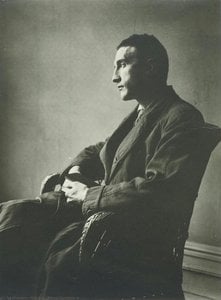
Portrait of Man Ray
Man Ray · 1890 – 1976
Born · died
1890 – 1976, Philadelphia
Movement
Surrealism
Works in our catalogue
142
Most famous
La Galerie Surréaliste, rue Jacques Callot
Most works at
Museu Oscar Niemeyer

Man Ray: the ten masterpieces

La Galerie Surréaliste, rue Jacques Callot by Man Ray
1

La Galerie Surréaliste, rue Jacques Callot

Acrylic On Canvas · Museu Oscar Niemeyer, Curitiba

La Galerie Surréaliste et l'Étoile Scellée : Un Voyage au Cœur de la Créativité Dadaiste La Galerie Surréaliste, située rue Jacques Callot à Paris, fut bien plus qu’une simple adresse artistique ; elle incarnait les aspirations radicales d’une génération marquée par les bouleversements du début du XXe siècle. Fondée en 1926 et dirigée avec passion par Marcel Duchamp et Sophie Babet, cette galerie devint un véritable laboratoire d'expérimentation esthétique et…

Pisces (1938) by Man Ray
2

Pisces

1938 · Oil

Introduction to Man Ray and Surrealism Man Ray, born Emmanuel Radnitzky in 1890, was an American visual artist who spent most of his career in France. He was a significant contributor to the Dada and Surrealist movements, although his ties to each were informal. Man Ray produced major works in a variety of media but considered himself a painter above all. Surrealism is an art movement that emerged in the…

Rayograph (The Kiss) (1922) by Man Ray
3

Rayograph (The Kiss)

1922 · Black and White Photography · MoMA - Muzej moderne umetnosti, New York City

A Dance Between Light and Shadow: Exploring Man Ray’s “The Kiss” Man Ray's "The Kiss," created in 1922 during the heady days of Dada and Surrealism, transcends mere photographic representation; it embodies a radical reimagining of artistic process and perception. This striking photogram—a technique pioneered by Ray himself—captures an intimate moment frozen in time, transforming commonplace objects into symbols of desire and connection. Unlike traditional painting, where artists meticulously render…

Solarisation (1931) by Man Ray
4

Solarisation

1931 · Black and White Photography

In this 1931 black and white photograph, titled Solarisation, Man Ray presents us with a quiet, intimate moment of repose. The subject is a man lying down, his head resting upon his arm in a state of sleep or deep rest. There is a profound sense of stillness here, a pause in time captured through the lens of a man who sought to redefine how we perceive the physical form.

The Pavillion of Elegance by Man Ray
5

The Pavillion of Elegance

Black and White Photography · Museu Oscar Niemeyer, Curitiba

To gaze upon this image is to step directly into the shimmering, slightly unsettling dreamscape of 1925 Paris. It captures not merely a moment in time, but an entire cultural sensibility—the breathless anticipation surrounding modern fashion and the burgeoning power of the photographic gaze. The subject, a woman draped in what appears to be an ocean green Georgette crepe, moves with an almost choreographed grace down a sun-dappled thoroughfare or…

Tristan Tzara and Jean Cocteau by Man Ray
6

Tristan Tzara and Jean Cocteau

Black and White Photography · Museu Oscar Niemeyer, Curitiba

This evocative black and white photograph transports us directly into the vibrant, often bewildering intellectual ferment of the early 20th century. It captures a moment steeped in the spirit of Dadaism and the burgeoning currents of Surrealism—movements that dared to dismantle the very definition of reality. The composition itself feels less like a mere documentation and more like a carefully staged dream sequence, inviting the viewer to question what they…

Nusch eluard with mirror (1935) by Man Ray
7

Nusch eluard with mirror

1935 · Black and White Photography · Kobe Fashion Museum, Kyoto

In the hauntingly beautiful monochrome of "Nusch Eluard with Mirror," captured in 1935, we are invited into a private, ephemeral moment that transcends the boundaries of traditional portraiture. The photograph features Nusch Eluard, a woman who was not only a muse but a profound presence in the Surrealist circle, draped in a delicate veil that clings to her form like a soft shadow. As she holds a mirror before her…

Indestructible Object (or Object to Be Destroyed) (1923) by Man Ray
8

Indestructible Object (or Object to Be Destroyed)

1923 · Photography · MoMA - Muzej moderne umetnosti, New York City

In the annals of modern art, few images possess the unsettling, magnetic pull of Man Ray’s 1923 masterpiece, Indestructible Object (often known as Object to Be Destroyed). To gaze upon this work is to step directly into the fractured psyche of the Surrealist movement, where the boundaries between the living and the mechanical begin to dissolve. The composition presents a disconcerting tableau: a stark, wooden structure that serves as a…

Veiled Erotica by Man Ray
9

Veiled Erotica

Black and White Photography · Museu Oscar Niemeyer, Curitiba

Born in Philadelphia to Russian Jewish immigrant parents, Emmanuel Radnitzky—known universally as Man Ray—was a restless spirit who defied easy categorization. His formative years coincided with the tumultuous period of Dadaism, born from disillusionment with World War I’s horrors and fueled by an uncompromising critique of bourgeois values. Marcel Duchamp's provocative embrace of “ready-made” objects – like *The Gift* – served as a catalyst for Dada artists to dismantle accepted…

(Untitled) by Man Ray
10

(Untitled)

Black and White Photography · Museu Oscar Niemeyer, Curitiba

In the quiet, evocative realm of Man Ray’s photography, we encounter a profound dialogue between the mundane and the metaphysical. This stark black and white composition, often associated with the enigmatic spirit of “The Gift,” transcends mere documentation to become a window into the avant-garde mind. At first glance, the viewer is presented with an abstract arrangement of draped fabric—perhaps a heavy wool—rendered in exquisite detail against a textured surface.…

More Man Ray masterpieces, 11 to 100

The Enigma of Isidore Ducasse (1920) by Man Ray
#11

The Enigma of Isidore Ducasse

1920 · National Gallery of Australia

The Enigma of Isidore Ducasse is an assemblage created by the artist Man Ray. This work originated in 1920 and was later remade in 1972. The object consists…

Nusch with Mirror by Man Ray
#12

Nusch with Mirror

Museu Oscar Niemeyer

In the hauntingly beautiful photograph Nusch with Mirror, the boundaries between reality and illusion dissolve into a singular, breathtaking moment of modernist introspection. Captured by the legendary American…

Dada Portrait by Man Ray
#13

Dada Portrait

Museu Oscar Niemeyer

In the realm of early twentieth-century avant-garde, few names resonate with as much transformative power as Man Ray. His 1923 masterpiece, Dada Portrait, stands as a profound testament…

Natalie Paley Wearing a Sequined Gown by Lelong by Man Ray
#14

Natalie Paley Wearing a Sequined Gown by Lelong

Museu Oscar Niemeyer

Ultimately, “Natalie Paley Wearing a Sequined Gown by Lelong” stands as an enduring emblem of artistic experimentation—a captivating portrait that exemplifies Man Ray’s visionary genius and cements his…

Marcel Duchamp by Man Ray
#15

Marcel Duchamp

Museu Oscar Niemeyer

The photograph by Man Ray of Marcel Duchamp, captured in 1920-21, isn't merely a portrait; it’s a carefully constructed tableau of intellectualism and quiet contemplation. More than just…

Rayograph - 1925 (1925) by Man Ray
#17

Rayograph - 1925

1925 · Museum Boijmans Van Beuningen

Rayograph - 1925 is a Dadaist photogram photographic print created by the artist Man Ray in 1925. This work belongs to the Dadaist movement, a period characterized by…

Café Man Ray by Man Ray
#18

Café Man Ray

Museu Oscar Niemeyer

Café Man Ray: A Surrealist Reverie Revisited The American artist Man Ray (1890-1976) fundamentally reshaped the perception of photography, elevating it from mere documentation to an expressive art…

Dust Breeding (detail) by Man Ray
#19

Dust Breeding (detail)

Museu Oscar Niemeyer

In the hauntingly beautiful detail of Man Ray’s 1920 masterpiece, Dust Breeding, we are invited into a world where the boundaries between reality and dream dissolve into a…

Noire et Blanche by Man Ray
#23

Noire et Blanche

Museu Oscar Niemeyer

Man Ray’s evocative photograph, Noire et Blanche, immediately draws the viewer into a realm where identity blurs and cultural narratives collide. This piece is more than a mere…

Georges Braque by Man Ray
#24

Georges Braque

Museu Oscar Niemeyer

This striking black and white photograph transports us into a moment suspended between the familiar and the avant-garde. At its heart stands a commanding figure, whose direct gaze…

The couple (1914) by Man Ray
#25

The couple

1914 · Sezon Museum of Modern Art

Born Emmanuel Radnitzky in 1890 in Philadelphia, Man Ray was a leading artist of 20th century America. Man Ray awakened to the European avant-garde art at Armory Show…

Pablo Picasso at the Count Étienne de Beaumont’s Ball by Man Ray
#26

Pablo Picasso at the Count Étienne de Beaumont’s Ball

Museu Oscar Niemeyer

Man Ray's captivating photograph, "Pablo Picasso at the Count Étienne de Beaumont’s Ball," isn’t merely a snapshot; it’s a meticulously constructed tableau vivant, a frozen moment brimming with…

Gertrude Stein by Man Ray
#27

Gertrude Stein

Museu Oscar Niemeyer

In the quiet, monochromatic depths of Man Ray’s portrait of Gertrude Stein, we encounter more than just a photographic likeness; we enter a profound dialogue between light and…

Count Étienne de Beaumont by Man Ray
#28

Count Étienne de Beaumont

Museu Oscar Niemeyer

Man Ray’s portrait of Count Étienne de Beaumont isn't merely a likeness; it’s a carefully constructed tableau vivant, a frozen moment capturing the essence of 1920s Parisian high…

ABC by Man Ray
#29

ABC

Museu Oscar Niemeyer

Man Ray's “ABC,” created in 1947, isn’t merely a photograph; it’s an invitation to deconstruct visual language and embrace the inherent ambiguity of perception. Born Emmanuel Radnitzky, later…

Square by Man Ray
#30

Square

Museu Oscar Niemeyer

The Enigma of the Spiral In the quiet intensity of Man Ray’s Square, one is immediately drawn into a rhythmic, swirling dance of typography and form. Created during…

Magnolia by Man Ray
#32

Magnolia

Museu Oscar Niemeyer

In the quiet intersection of reality and dreamscape lies Man Ray’s Magnolia, a breathtaking monochrome study that transcends the boundaries of traditional photography. At first glance, the viewer…

(Untitled) by Man Ray
#33

(Untitled)

Museu Oscar Niemeyer

In the quiet, evocative realm of Man Ray’s “Untitled,” we encounter a profound dialogue between the mundane and the metaphysical. At first glance, the viewer is presented with…

Untitled (D2X7S9) (1916) by Man Ray
#35

Untitled (D2X7S9)

1916 · Metropolitanski muzej umetnosti

A Dance Frozen in Time: Examining Man Ray’s “The Mime” Man Ray's "The Mime," painted in 1916, transcends mere representation; it embodies the spirit of Surrealism and captures…

Self-Portrait by Man Ray
#37

Self-Portrait

Museu Oscar Niemeyer

Man Ray's "Self-Portrait," painted in 1927, isn’t merely a depiction of an individual; it’s a carefully constructed meditation on identity, the gaze, and the very act of representation.…

Glass Tears by Man Ray
#38

Glass Tears

Museu Oscar Niemeyer

Man Ray's "Glass Tears," created between 1930 and 1932, isn’t merely a photograph; it’s a distilled emotion captured in stark black and white. The image, a close-up of…

Butterflies by Man Ray
#39

Butterflies

Museu Oscar Niemeyer

Man Ray’s “Butterflies,” created between 1930 and 1935, isn't merely a photograph; it’s a shimmering portal into the heart of Surrealism. This arresting image, captured during a pivotal…

Serious Man, or The Serious One by Man Ray
#40

Serious Man, or The Serious One

Museu Oscar Niemeyer

Serious Man, or The Serious One The American artist Man Ray (1890-1976) fundamentally reshaped photography’s role—shifting it from mere documentation of reality into an expressive art form itself.…

Kiki in Mechanical Ballet, by Fernand Léger by Man Ray
#44

Kiki in Mechanical Ballet, by Fernand Léger

Museu Oscar Niemeyer

Fernand Léger’s “Kiki in Mechanical Ballet,” painted in 1924, isn't merely a depiction of a woman dancing; it’s an immersive plunge into the heart of early 20th-century anxieties…

Lee Miller by Man Ray
#46

Lee Miller

Museu Oscar Niemeyer

In this mesmerizing black and white photograph, the boundaries between reality and dreamscape dissolve, inviting the viewer into the intimate world of Man Ray and his muse, Lee…

Dora Maar by Man Ray
#47

Dora Maar

Museu Oscar Niemeyer

Man Ray’s Dora Maar: A Portrait of Surrealist Intensity Dora Maar, Picasso's muse and enigmatic collaborator, occupies a singular place in the canon of 20th-century art. Man Ray’s…

Yves Tanguy by Man Ray
#49

Yves Tanguy

Museu Oscar Niemeyer

Yves Tanguy: A Surrealist Landscape of Inner Consciousness Yves Tanguy’s “The J. Paul Getty Museum Collection” isn't merely a depiction of an artist; it’s a portal into the…

Untitled (Aztec figurine of the goddess Tlazoteotl) (1932) by Man Ray
#50

Untitled (Aztec figurine of the goddess Tlazoteotl)

1932 · MoMA - Muzej moderne umetnosti

To gaze upon this photograph is to encounter a profound dialogue across millennia—a conversation between the vibrant spiritual life of ancient Mesoamerica and the experimental, shadow-drenched vision of…

Reflections by Man Ray
#51

Reflections

Museu Oscar Niemeyer

Man Ray’s “Reflections,” painted in 1931, stands as a testament to the burgeoning surrealist movement’s fascination with exploring subconscious landscapes and challenging conventional perceptions of reality. Created during…

Arnold Schönberg by Man Ray
#54

Arnold Schönberg

Museu Oscar Niemeyer

Man Ray's 1924 photograph of Arnold Schoenberg isn’t merely a likeness; it’s a carefully constructed tableau, a visual embodiment of the composer’s complex and revolutionary spirit. Captured during…

Kiki by Man Ray
#55

Kiki

Museu Oscar Niemeyer

Man Ray's Kiki de Montparnasse: A Portrait of Liberation The photograph by Man Ray, titled “Kiki de Montparnasse,” transcends mere documentation; it’s an emblem of the exuberant spirit…

Flying Dutchman (1920) by Man Ray
#73

Flying Dutchman

1920 · Metropolitanski muzej umetnosti

In the realm of early twentieth-century modernism, few works capture the ephemeral boundary between reality and imagination as hauntingly as Man Ray’s Flying Dutchman. Created in 1920, this…

Landscape (Paysage Fauve) (1913) by Man Ray
#75

Landscape (Paysage Fauve)

1913 · Smithsonian American Art Museum

We are looking at Landscape (Paysage Fauve), a painting by Man Ray. Created in 1913, this work captures the artist during a formative period of his early career.…

Me, She (1934) by Man Ray
#76

Me, She

1934

A Surreal Encounter: Exploring Man Ray's "Me, She" Man Ray’s “Me, She,” created in 1934, is a captivating example of surrealist photography that continues to intrigue and inspire.…

The Coat Stand (1920) by Man Ray
#77

The Coat Stand

1920

A Surreal Encounter: Deconstructing Identity in Man Ray's "The Coat Stand" Man Ray’s “The Coat Stand” (1920) is a striking black and white photograph that encapsulates the spirit…

Juan Gris by Man Ray
#78

Juan Gris

Museu Oscar Niemeyer

Juan Gris: A Geometric Vision of Surrealism Juan Gris (José Victoriano González-Pérez), born in Madrid in 1887, stands as an enigmatic figure within the vibrant tapestry of early…

Percolator (1917) by Man Ray
#79

Percolator

1917 · Art Institute of Chicago

The work, titled Percolator, is an oil on board painting dating from 1917. It presents a non-representational arrangement of geometric and organic shapes. A vertical, pole-like element occupies…

Departure of Summer (1914) by Man Ray
#80

Departure of Summer

1914 · Art Institute of Chicago

The canvas holds the tension of a moment frozen in 1914. In this oil on canvas work, titled Departure of Summer, the artist Man Ray explores a world…

The Mime (1916) by Man Ray
#87

The Mime

1916 · Metropolitanski muzej umetnosti

Man Ray's paintings by period

The subjects Man Ray painted most

The four subjects that return most often among these masterpieces, with the finest example of each.

Where to see Man Ray's paintings

The 8 museums that hold the most of the paintings on this page.

Museum City Works by Man Ray Paintings from this list
Museu Oscar Niemeyer, CuritibaMuseu Oscar Niemeyer Curitiba 40 La Galerie Surréaliste, rue Jacques Callot, The Pavillion of Elegance, Tristan Tzara and Jean Cocteau
MoMA - Muzej moderne umetnosti, New York CityMoMA - Muzej moderne umetnosti New York City 3 Rayograph (The Kiss), Indestructible Object (or Object to Be Destroyed), Untitled (Aztec figurine of the goddess Tlazoteotl)
Metropolitanski muzej umetnosti, New YorkMetropolitanski muzej umetnosti New York 3 Untitled (D2X7S9), Flying Dutchman, The Mime
Museum Boijmans Van Beuningen, RotterdamMuseum Boijmans Van Beuningen Rotterdam 2 Rayograph - 1925, The Riddle of Isidore Ducasse
Smithsonian American Art Museum, Washington, D.C.Smithsonian American Art Museum Washington, D.C. 2 Tableau (Untitled), Landscape (Paysage Fauve)
Art Institute of Chicago, ChicagoArt Institute of Chicago Chicago 2 Percolator, Departure of Summer
Izraelski muzej, JeruzalemIzraelski muzej Jeruzalem 4 The Village
Sezon Museum of Modern Art, KaruizawaSezon Museum of Modern Art Karuizawa 2 The couple

Man Ray, decade by decade: the defining painting of each

  1. 1900s
  2. 1910s
    The couple (1914) by Man Ray
    #25 of 100

    The couple

    Age 20 – 29 · Sezon Museum of Modern Art

    Born Emmanuel Radnitzky in 1890 in Philadelphia, Man Ray was a leading artist of 20th century America. Man Ray awakened to the European avant-garde art at Armory Show…

  3. 1920s
    Rayograph (The Kiss) (1922) by Man Ray
    #3 of 100

    Rayograph (The Kiss)

    Age 30 – 39 · MoMA - Muzej moderne umetnosti

    A Dance Between Light and Shadow: Exploring Man Ray’s “The Kiss” Man Ray's "The Kiss," created in 1922 during the heady days of Dada and Surrealism, transcends mere…

  4. 1930s
    Pisces (1938) by Man Ray
    Rank 2 / 100

    Pisces

    Age 40 – 49

    Introduction to Man Ray and Surrealism Man Ray, born Emmanuel Radnitzky in 1890, was an American visual artist who spent most of his career in France. He was…

  5. 1940s
  6. 1960s
  7. 1970s
    Cadeau (1972) by Man Ray
    No. 48 of 100

    Cadeau

    Age 80 – 86

Man Ray's masterpieces: questions and answers

Which painting is Man Ray best known for?Show the answer

La Galerie Surréaliste, rue Jacques Callot, Museu Oscar Niemeyer, Curitiba. Next come Pisces (1938) and Rayograph (The Kiss) (1922).

What are Man Ray's ten greatest paintings?Show the answer

La Galerie Surréaliste, rue Jacques Callot, Pisces, Rayograph (The Kiss), Solarisation, The Pavillion of Elegance, Tristan Tzara and Jean Cocteau, Nusch eluard with mirror, Indestructible Object (or Object to Be Destroyed), Veiled Erotica and (Untitled). The ranking above gives the year and the museum of each.

How many works did Man Ray paint?Show the answer

Our catalogue lists 142 works by Man Ray, dated from 1908 to 1972.

In which museums can I see Man Ray's masterpieces?Show the answer

Most of them are in Museu Oscar Niemeyer (Curitiba), MoMA - Muzej moderne umetnosti (New York City) and Metropolitanski muzej umetnosti (New York). The table above lists the museums one by one.

When did Man Ray paint the masterpieces?Show the answer

In 1910s: 19 of the 100 works on this page date from then, among them The couple.

What are the first and last famous paintings of Man Ray?Show the answer

The earliest on this page is Untitled (1908), the latest Cadeau (1972).

What were Man Ray's favourite subjects?Show the answer

Photography (27), Black and white (10) and Woman (7), among the 100 works on this page.

Which technique did Man Ray favour?Show the answer

Acrylic On Canvas: 17 of the 100 works on this page.

What art movement is Man Ray part of?Show the answer

Surrealism and Dadaism, as the paintings on this page show.

Which masterpieces by Man Ray hang at the Museu Oscar Niemeyer?Show the answer

La Galerie Surréaliste, rue Jacques Callot, The Pavillion of Elegance and Tristan Tzara and Jean Cocteau are among the 35 works on this page held by the Museu Oscar Niemeyer, Curitiba.

The life of Man Ray

Življenje v senci: Pot Man Raya

Emmanuel Radnitzky, svetovno znan kot Man Ray, je bil nemiren duh, ki se ni dal ujeti v stroge okvire umetniških kategorij. Rojstnik Philadelphie leta 1890, sin ruskih judovskih priseljencev, je s svojim potovanjem od ambicioznega slikarja do pionirskega fotografa in filmskega ustvarjalca utelešal radikalno umetniško vzdušje zgodnjega 20. stoletja. Sama sprememba imena z “Manny” Radnitzky v enigmatičnega “Man Raya” priča o umetniku, odločenem skovati novo identiteto – identiteto, ki ni bila vezana na konvencije. Preselitev družine v New York City je bila ključna, saj ga je izpostavila bujnemu modernističnemu gibanju in mu vzbudila življenjsko fascinacijo z eksperimentiranjem. Zgodnji vplivi so vključevali evropsko avantgardo, predstavljeno v galeriji 291 Alfreda Stieglitza, in surovi realizem šole Ashcan – mešanica, ki bi subtilno oblikovala njegovo kasnejše delo. Čeprav je bil sprva posvečen slikarstvu, je bila fotografija tisto sredstvo, ki ga je končno opremilo z močjo raziskovanja meja zaznave in resničnosti. Ni samo zajemal podobe; izumljal je nove načine *gledanja*. Njegovi začetni umetniški poskusi so bili zaznamovani s željo po odcepitvi od tradicionalnih stilov, ki jo je spodbudila izpostavljenost evropskemu modernizmu in surovemu naboju newyorškega življenja. Ferrerjev center, z njegovimi anarhističnimi nagibnostmi in poudarkom na svobodi izražanja, se je izkazal za posebej pomemben v tem obdobju, saj je spodbudil okolje, kjer ni bil eksperiment samo dovoljen, ampak pričakovan.

Dada, Surrealizem in iskanje nemogožega

Umetniška pot Man Raya je doživela dramatičen preobrat s srečanjem z Marcelom Duchampom v New Yorku okoli leta 1915. Ta sestanek je sprožil skupno fascinacijo z izzivanjem tradicionalnih pojmov umetnosti, kar je vodilo do raziskovanja “ready-made” predmetov – običajnih izdelanih predmetov, ki so bili povzdignjeni v status umetniškega dela. Ta uporniški duh ga je popeljal v srce Dada gibanja, protiumetnostnega protesta, rojenega iz razočaranja prve svetovne vojne. Leta 1921 se je odločil za pomemben korak selitve v Pariz in postal osrednja figura tako dadaističnih kot surrealističnih krogov, ki so tam cveteli. Čeprav se ni nikoli popolnoma uskladil z nočeno umetniško dogmo, je Ray sprejel raziskovanje podzavesti, sanj in iracionalnega s strani Surrealisticov. Njegovo delo v tem obdobju je značilna sanjska kakovost, pogosto nemirna, a nedvomno očarljiva. Ni ga zanimala upodobitev resničnosti kot takšne, ampak kot *čuti* – fragmentirana, poprevržena in prežeta s skritimi pomeni. Ta sprejem podzavesti mu je omogočil premik od mere reprezentacije k raziskovanju psiholoških stanj in čustvenega odmeva v njegovi umetnosti. Njegova sodelovanja z drugimi surrealističnimi umetniki, kot je Salvador Dalí, so dodatno utrdila njegov položaj v gibanju, čeprav si je vedno ohranjal določeno neodvisnost v svoji umetniški viziji.

Rayografi in alkimija svetlobe

Morda je Man Ray najbolj znan po izumu “rayografa”, kameralne fotografske tehnike, na katero se je naključno naletel. Te podobe – ustvarjene z neposrednim postavljanjem predmetov na občutljiv papir in njihovo izpostavljenost svetlobi – so povzročile eterične, duhovne kompozicije, ki so nasprotovale konvencionalni fotografski reprezentaciji. Rayograf ni bil samo alternativna metoda; bila je filozofska izjava o naravi same fotografije. Z odpravo leče kamere je Ray odstranil iluzijo objektivnosti in razkril inherentno subjektivnost medija. To niso bile reprezentacije *stvari*, ampak neposredni vtisi *iz* njih, prežeti z občutkom skrivnosti in nadzemeljskosti. Poleg rayografov so njegove fotografske portrete – še posebej tistih umetnikov, kot je Lee Miller (ki je postala njegova muza in sodelavka) – znani po osupljivih kompozicijah in psihološki globini. Nenehno je eksperimentiral s solarizacijo, večkratnimi izpostavitvami in manipulacijo v temnici ter premikal meje dosegljivega v fotografiji. *Solarizacija* je postala značilna tehnika, ki je ustvarjala dramatične obrate tonov in dodajala element čudnega v njegove portrete.

Onkraj mirnosti: Film in trajno zapuščina

Umetniška radovednost Man Raya se je razširila onkraj statičnih slik v film. Njegovi eksperimentalni filmi, kot sta *Le Retour à la Raison* (1923) in *L'Étoile de Mer* (1928), so bili značilni po nadrealističnih podobah, nekonvencionalnih tehnikah montaže in zavrnitvi narativnih konvencij. To niso bile zgodbe, povedane v tradicionalnem smislu; to so bile vizualne pesmi, raziskovanja oblike, ritma in podzavesti. Pogosto je uporabljal inovativne tehnike, kot sta animacija s postavitvijo in superpozicija, da bi ustvaril dezorientirajoče in sanjske učinke. Čeprav je bilo njegovo filmsko delo relativno majhnega obsega, je imelo globok vpliv na naslednje generacije avangardnih filmarjev. Skozi dolgo kariero je Man Ray nenehno izzival umetniške norme in se zavračal podrediti oznakam ali pričakovanjem. Umrl je v Parizu leta 1976 in za seboj pustil delo, ki še naprej navdihuje in provocira. Njegova zapuščina ne le v njegovih tehničnih inovacijah, ampak tudi v njegovi neomajni zavezanosti umetniški svobodi in njegovem neumornem iskanju nemogožega – pravega pionirja, ki je za vedno spremenil naše dojemanje umetnosti in resničnosti. Njegov vpliv je mogoče opaziti na različnih področjih, od sodobne fotografije in filma do mode in oblikovanja, kar dokazuje trajno moč njegove vizije.

Stalni vpliv

  • Fotografija: Man Rayjeve tehnike, zlasti rayografija in solarizacija, še naprej raziskujejo sodobni fotografi.
  • Surrealizem: Njegovi prispevki so utrdili vizualni jezik gibanja in navdihnili nešteto umetnikov na različnih področjih.
  • Eksperimentalni film: Njegovo pionirsko delo v filmu je položilo temelje prihodnjim generacijam avangardnih filmarjev.
  • Modna fotografija: Rayjev inovativni pristop k portretiranju in kompoziciji je vplival na razvoj sodobne modne fotografije.
Man Rayjev vpliv sega daleč onkraj njegove lastne življenjske dobe, kar dokazuje njegova pripravljenost eksperimentirati, zavračati konvencije in neomajna zavezanost umetniški svobodi – močan vir navdiha za tiste, ki si prizadevajo premikati meje ustvarjalnega izražanja. Ostaja ključna osebnost v umetnosti 20. stoletja, katere delo še naprej izziva, provocira in navdušuje.

All 142 works by Man Ray →