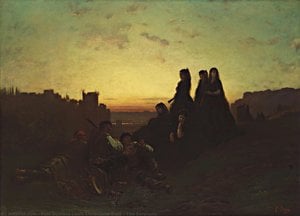
Gustave Doré, 1832 – 1883

The 100 Most Famous Paintings by Gustave Doré

The painting that made Gustave Doré famous is The Acrobats; it hangs in the Musée d'Art Roger-Quilliot, Clermont-Ferrand. The Christian Martyrs and The Inferno, Canto 9, lines 87-89. To the gate He came, and with his wand touch’d it, whereat Open without impediment it flew. follow it in the hearts of collectors and museum visitors. Of the 1,501 works by Gustave Doré in our catalogue, these 100 are the most admired, each presented with its date, its museum and what sets it apart.

Ranked by our popularity score, which combines the searches, visits and orders for each work. Updated oktober 2026. Every masterpiece on this page can be ordered as a museum-quality, hand-painted oil reproduction or a fine art print, at the size you choose.

Portrait of Gustave Doré
Gustave Doré · 1832 – 1883
Born · died
1832 – 1883, Strasbourg
Movement
Romantic illustration
Works in our catalogue
1.501
Most famous
The Acrobats
Most works at
Musée d'Art Moderne et Contemporain de Strasbourg

Gustave Doré: the ten masterpieces

The Acrobats by Gustave Doré
1

The Acrobats

Acrylic On Canvas · Musée d'Art Roger-Quilliot, Clermont-Ferrand

Paul Gustave Doré's "The Acrobats" is not merely a depiction of a scene; it’s an immersion into a world brimming with theatricality, melancholy, and the quiet drama of everyday life. Painted in his signature style – a masterful blend of Romanticism and burgeoning Realism – this work captures a fleeting moment, likely intended for illustration within a larger narrative, yet possessing a profound emotional resonance that transcends its original purpose.…

The Christian Martyrs by Gustave Doré
2

The Christian Martyrs

Paul Gustave Doré's "The Christian Martyrs" is a powerful and emotionally charged painting that vividly portrays the suffering of early Christians facing persecution. Rooted in the Romantic style, this artwork emphasizes dramatic intensity, emotional expression, and a sense of awe-inspiring grandeur. The scene depicts a group of fallen martyrs under a dark, star-studded night sky, with three angelic figures hovering above, observing or perhaps intervening in their plight.

The Inferno, Canto 9, lines 87-89. To the gate He came, and with his wand touch’d it, whereat Open without impediment it flew. by Gustave Doré
3

The Inferno, Canto 9, lines 87-89. To the gate He came, and with his wand touch’d it, whereat Open without impediment it flew.

Engraving

Paul Gustave Doré’s “The Inferno, Canto 9, lines 87-89,” is more than just an illustration; it’s a visceral plunge into the heart of Dante Alighieri’s epic poem. Executed as a meticulously detailed black and white engraving, this artwork captures a pivotal moment – the arrival of an angel who opens the gate to Hell itself. Born in Strasbourg in 1832, Doré was a master of dramatic illustration, renowned for his…

Paradise Lost by Gustave Doré
4

Paradise Lost

Acrylic On Canvas

Gustave Doré’s “Paradise Lost,” etched onto a copper plate with meticulous precision, stands as an unparalleled testament to Romantic artistic fervor. Created in 1867, this monumental engraving isn't merely a depiction of Milton’s epic poem; it’s a visceral embodiment of its core themes – rebellion against divine authority and the devastating consequences of pride – rendered with breathtaking dramatic realism.

Gd 0001 Red Riding Hood meets old Father Wolf GustaveDore sqs by Gustave Doré
5

Gd 0001 Red Riding Hood meets old Father Wolf GustaveDore sqs

Engraving

In this monochrome scene, we find ourselves drawn into a dense, wooded thicket where the boundaries between innocence and danger feel remarkably thin. A young girl, draped in her characteristic attire, stands positioned slightly off-center, facing the imposing presence of a large wolf. The creature dominates the left side of the frame, its massive form emerging from the gloom of the forest. There is a quiet tension in their proximity,…

"Inferno", Canto 22, rdek 70. V lovišču je zato širil, izjekal. "Ti si zajet." by Gustave Doré
6

"Inferno", Canto 22, rdek 70. V lovišču je zato širil, izjekal. "Ti si zajet."

Graviranje

A Descent into Darkness: Analyzing Gustave Doré’s “The Inferno, Canto XXII, Line 70” Paul Gustave Doré's engraving of Dante Alighieri’s *Inferno*, specifically Canto XXII, line seventy, stands as a monumental achievement in Romantic illustration—a testament to both artistic skill and the enduring power of literary narrative. Published in 1869, this print captures a pivotal moment within Dante’s epic poem, depicting Satan’s triumphant assertion over his captives amidst the tumultuous landscape…

Souvenir of Loch Lomond (1875) by Gustave Doré
7

Souvenir of Loch Lomond

1875 · Acrylic On Canvas · Narodna galerija Kanade, Ottawa

Gustave Doré's "Souvenir of Loch Lomond," painted in 1875, isn’t merely a landscape; it’s a meticulously crafted distillation of Victorian romanticism and the burgeoning fascination with the sublime. More than just depicting a picturesque Scottish loch, this work invites us into a world steeped in atmosphere, emotion, and a profound sense of melancholy. The scene unfolds beneath a brooding sky, heavy with suggestion rather than explicit detail – a hallmark…

Satan's Flight Through Chaos (1868) by Gustave Doré
8

Satan's Flight Through Chaos

1868 · Engraving

Satan's Flight Through Chaos: A Descent into Romantic Turmoil Paul Gustave Doré’s “Satan’s Flight Through Chaos,” created around 1868, is not merely an illustration; it’s a visceral plunge into the heart of despair and defiance. Born from the depths of Milton’s *Paradise Lost*, this black-and-white engraving captures a pivotal moment – Satan's tumultuous descent after his expulsion from Heaven. The artwork transcends its literary origins, becoming a powerful exploration of…

The Valley of Tears by Gustave Doré
9

The Valley of Tears

Oil On Canvas

Gustave Doré’s “The Valley of Tears” is not merely a painting; it's an immersive experience, a plunge into the depths of human sorrow and redemption. Completed in 1883, this monumental canvas – measuring a staggering 413.5 cm x 627 cm – transcends its physical dimensions to become a profound meditation on faith, suffering, and the universality of pain. Doré, a master of dramatic composition and evocative light, achieves an unparalleled…

Dante in pape Adrian V (1868) by Gustave Doré
10

Dante in pape Adrian V

1868 · Graviranje

A Descent into Darkness: Examining Gustave Doré’s Dante and Pope Adrian V The engraving “Dante and Pope Adrian V,” created by Paul Gustave Doré in 1868, stands as a monumental testament to Romantic artistic fervor and the enduring power of literary inspiration. More than just a depiction of Dante Alighieri's Inferno—a cornerstone of Western literature—it’s an immersive experience for the viewer, meticulously crafted to convey not only the narrative but…

More Gustave Doré masterpieces, 11 to 100

Paradise Lost (11) by Gustave Doré
#11

Paradise Lost (11)

Paradise Lost (11) by Gustave Doré presents a landscape characterized by desolation and a sense of foreboding. The scene depicts an infernal or hellish environment, populated by various…

Bring it home →
Godfrey enters Jerusalem (1877) by Gustave Doré
#12

Godfrey enters Jerusalem

1877

Paul Gustave Doré’s “Godfrey Enters Jerusalem,” completed in 1877, stands as a monumental achievement of Romantic illustration—a visceral depiction of the siege and triumph that marked the culmination…

Order a reproduction →
Dore Gustave - (66) by Gustave Doré
#13

Dore Gustave - (66)

Gustave Doré, born in Strasbourg in 1832, stands as a monumental figure within the artistic landscape of the Victorian era. More than just an illustrator—though he excelled spectacularly…

Order a reproduction →
Izgubljena paradisa by Gustave Doré
#14

Izgubljena paradisa

Raziskovanje Dramatične Časti: Poglobljena Preglednica Engravinga "Paradise Lost" od Paula Gustava Doréa Paul Gustave Doré je bil umetnik, ki je z izjemno maestralnostjo kombiniral ilustracijo, slikanje in kiparstvo…

Bring it home →
Condemned Christ (1877) by Gustave Doré
#15

Condemned Christ

1877 · Musée d'Art Moderne et Contemporain de Strasbourg

The air feels heavy, thick with the weight of an impending judgment. A single, piercing light source cuts through the darkness from the upper left, striking the subject…

Commission a hand-painted copy →
Portret Danteja Alighiera (1860) by Gustave Doré
#16

Portret Danteja Alighiera

1860

A Portrait Steeped in Literary Legacy: Gustave Doré’s Dante Alighieri Paul Gustave Doré's "Portrait of Dante Alighieri," executed in 1860, stands as a testament to the Romantic spirit’s…

Order a reproduction →
The Styx-The Irascible by Gustave Doré
#17

The Styx-The Irascible

The Styx-The Irascible is a profound work by Gustave Doré. This piece functions as an illustration for Canto VII of Dante's Inferno. It captures a specific, harrowing moment…

Order a reproduction →
Ljepota svjetlosti (1875) by Gustave Doré
#19

Ljepota svjetlosti

1875

Gustave Doré’s “A Celestial Light” stands as an arresting testament to the Romantic movement’s obsession with grand narratives and visceral emotion—a preoccupation that finds its most potent expression…

Commission a hand-painted copy →
Ogrom Antaeus (1868) by Gustave Doré
#20

Ogrom Antaeus

1868

A Descent Into Darkness: Exploring Gustave Doré’s “The Giant Antaeus” Paul Gustave Doré's "The Giant Antaeus" isn’t merely an engraving; it’s a visceral journey into the heart of…

Bring it home →
Purgatorio Canto 30 by Gustave Doré
#23

Purgatorio Canto 30

A Celestial Ascent: Decoding Gustave Doré’s *Purgatorio Canto 30* Paul Gustave Doré's *Purgatorio Canto 30*, an engraving that captures a pivotal moment in Dante Alighieri’s epic poem, transcends…

Order a reproduction →
Ecce Homo (1877) by Gustave Doré
#24

Ecce Homo

1877

Doréjevo »Ecce Homo«, dokončano leta 1877, ni le prikaz biblične scene; je poglobljena izkušnja, potitev v samo srce človeškega trpljenja in božjega obsoanja. S svojih monumentalnih dimenzij 354…

Order a reproduction →
Don Kihota by Gustave Doré
#25

Don Kihota

Don Quixote: A Triumph of Romantic Realism The engraving by Paul Gustave Doré depicting Don Quixote’s fall from his horse stands as a poignant emblem of disillusionment and…

Bring it home →
Doré Gustáva by Gustave Doré
#26

Doré Gustáva

Paul Gustave Doré: A Master of Dramatic Narrative Through Wood Engraving Doré’s “dore gustave - (36)” is more than just an image; it's a portal into the Romantic…

Bring it home →
dsjslafls by Gustave Doré
#28

dsjslafls

A Descent into Darkness: Analyzing Gustave Doré’s Engraving of Dante's Inferno The artwork, titled “dsjslafls,” is a monumental black-and-white engraving by Paul Gustave Doré that captures the visceral…

Bring it home →
Hipokriti by Gustave Doré
#32

Hipokriti

A Descent Into Darkness: Analyzing Gustave Doré’s “The Hypocrites” Gustave Doré's "The Hypocrites," etched from copper plate and destined for Dante Alighieri’s *Inferno*, transcends mere illustration; it embodies…

Bring it home →
Satan In Beelzebub by Gustave Doré
#34

Satan In Beelzebub

Razpadanje Števljajoče Temno: Analiza Gustave Doréjevega “Satan And Beelzebub” Gustave Doréjev engraving "Satan And Beelzebub," ustvarjen leta 1867, je izjemna dosežko viktorijanske grafike in osupljiva predstavitev biblijskega narativa.…

Order a reproduction →
Paolo e Francesca by Gustave Doré
#35

Paolo e Francesca

A Dramatic Encounter: Paolo and Francesca by Gustave Doré Paul Gustave Doré’s engraving, “Paolo and Francesca,” transcends mere visual representation; it's a visceral distillation of Dante Alighieri’s Inferno—a…

Commission a hand-painted copy →
Le reve du moine (Monkova sanja) (1880) by Gustave Doré
#36

Le reve du moine (Monkova sanja)

1880 · Art Gallery of Hamilton

Umetniško del “Le Reve du Moine” (San menaha) presega okvire preproste slike; gre za natančno utemeljeno jedrilo romantične obsedenosti duhovnostjo in sublimnim. To oljno sliko na platnu, ustvarjeno…

Order a reproduction →
The Penny Gaff In Whitechapel by Gustave Doré
#37

The Penny Gaff In Whitechapel

Gustave Doré's “The Penny Gaff In Whitechapel” isn’t merely an illustration; it’s a meticulously crafted distillation of Victorian society, captured in stark monochrome and imbued with a palpable…

Order a reproduction →
untitled (4172) by Gustave Doré
#38

untitled (4172)

The scene unfolds within the dramatic lines of untitled (4172), a work that carries the unmistakable hand of the artist Gustave Doré. This piece emerges from a life…

Order a reproduction →
Forest at Twilight (1865) by Gustave Doré
#40

Forest at Twilight

1865

In Forest at Twilight by Gustave Doré, the composition centers on a forest scene captured during the twilight hours. A stream runs through the middle of the scene,…

Bring it home →
The Serenade (1863) by Gustave Doré
#42

The Serenade

1863 · Museo de Arte de Ponce

Paul Gustave Doré's "The Serenade," completed in 1863, transcends mere depiction; it embodies a profound exploration of human connection and the melancholic beauty inherent in fleeting moments. Painted…

Commission a hand-painted copy →
Bitja križijskih vojn pri Nikiji by Gustave Doré
#43

Bitja križijskih vojn pri Nikiji

Bitja Boj proti Nikiji – Dramatična Ilustracija Gustave Doréa Bitja boj proti Nikiji je osupljiv umetniški projekt Gustavea Doréa, mojstra ilustracije znanega po svoji dramski estetiki in izjemnem…

Bring it home →
Don Quixote (122) by Gustave Doré
#44

Don Quixote (122)

Paul Gustave Doré’s “Don Quixote” isn't merely an illustration; it’s a meticulously crafted distillation of Cervantes’ epic tale into a visual language that speaks volumes about ambition, delusion,…

Commission a hand-painted copy →
Inferno Canto 5 by Gustave Doré
#46

Inferno Canto 5

Inferno Canto 5: A Descent into Darkness Rendered with Doré’s Masterful Technique The artwork, “Inferno Canto 5,” by Gustave Doré—a monumental engraving after Dante Alighieri's seminal poem—captures a…

Commission a hand-painted copy →
Don Quixote (146) by Gustave Doré
#47

Don Quixote (146)

Gustave Doré’s “Don Quixote” isn't merely an illustration; it’s a distillation of Cervantes’ epic tale into a powerfully emotive monochrome print. Executed in the Romantic style, Doré captures…

Commission a hand-painted copy →
Don Quixote (83) by Gustave Doré
#48

Don Quixote (83)

A Dramatic Encounter: Exploring Gustave Doré’s “Don Quixote” Paul Gustave Doré's "Don Quixote" isn’t merely an illustration; it’s a meticulously crafted tableau vivant—a living picture—that captures the essence…

Bring it home →
Smrt Almoadama (1877) by Gustave Doré
#50

Smrt Almoadama

1877

Gustave Doré’s “Death of Almoadam,” created in 1877, stands as a testament to Romantic illustration's ability to convey both visceral emotion and meticulous detail. This lithograph depicts a…

Order a reproduction →
The Eagle by Gustave Doré
#52

The Eagle

Gustave Doré's 'The Eagle,' a monumental wood engraving, isn’t merely an illustration; it’s a visceral experience. Completed in 1883, this artwork, originally conceived as part of the lavish…

Commission a hand-painted copy →
Ugolino and Gaddo by Gustave Doré
#53

Ugolino and Gaddo

In the engraving titled Ugolino and Gaddo, the artist Gustave Doré depicts a specific scene from Canto IX of Dante Alighieri's Inferno. The work illustrates the final moments…

Bring it home →
The Race - Tekma by Gustave Doré
#54

The Race - Tekma

Gustave Doré’s “The Race,” completed in 1872, isn't merely an illustration; it’s a meticulously crafted tableau vivant—a living picture—that captures the fervent energy of a Victorian seaside spectacle.…

Commission a hand-painted copy →
Mirra by Gustave Doré
#55

Mirra

Paul Gustave Doré: A Symphony of Shadow and Suffering – An Exploration of ‘Myrrha’ Paul Gustave Doré je umetnik, ki je z zanimivimi kombinacijami ilustracije, slikanja in kiparstva…

Bring it home →
Modrost Materinstva by Gustave Doré
#56

Modrost Materinstva

Gustave Doré’s “The Courage of a Mother” stands as a testament to the enduring power of Romantic art—a genre characterized by its fervent emotion, dramatic narratives, and meticulous…

Bring it home →
Buonconte Da Montefeltro by Gustave Doré
#57

Buonconte Da Montefeltro

Gustave Doré’s “Buonconte Da Montefeltro,” a monumental wood engraving from his masterful adaptation of Dante Alighieri’s *Inferno*, stands as an enduring testament to Romanticism’s fascination with dramatic storytelling…

Commission a hand-painted copy →
Be none of you outrageous. by Gustave Doré
#58

Be none of you outrageous.

Človek je ustvaril impresiven pogled na svet Dantejeve Inferno – svet pekeljskega strahu, bolečine in smrti. Človek je uporabljal tehniko graviranja, ki jo je znan umetnik uporabljal za…

Bring it home →
Kristov v Sinagogi by Gustave Doré
#59

Kristov v Sinagogi

A Dramatic Encounter: Gustave Doré’s “Christ in The Synagogue” Gustave Doré's "Christ in The Synagogue" stands as a testament to Romanticism’s enduring fascination with biblical narratives and its…

Commission a hand-painted copy →
Lambeth Gas Works by Gustave Doré
#61

Lambeth Gas Works

Captivating Urban Industrial Scene Immerse yourself in a powerful depiction of London's industrial heart, vividly brought to life through Gustave Doré’s masterful engraving. This artwork captures the bustling…

Bring it home →
Don Quixote (81) by Gustave Doré
#62

Don Quixote (81)

Gustave Doré’s “Don Quixote” (81) isn't merely an illustration; it’s a visceral plunge into the heart of Cervantes’ epic tale. Executed in stark black and white, this double-page…

Bring it home →
Vidljivost smrti by Gustave Doré
#65

Vidljivost smrti

A Descent Into Darkness: Exploring Doré’s “The Vision of Death” Paul Gustave Doré's "The Vision of Death" isn’t merely an engraving; it’s a visceral journey into the heart…

Bring it home →
Tumult In Escape by Gustave Doré
#66

Tumult In Escape

Tumult and Escape: A Descent into Dramatic Imagination A chilling glimpse into the abyss of human experience, Gustave Doré’s “Tumult and Escape” transcends mere visual representation; it embodies…

Order a reproduction →
Otroci Ubijajo Medvedje by Gustave Doré
#68

Otroci Ubijajo Medvedje

A Symphony of Shadow and Suffering: Examining Gustave Doré’s ‘The Children Destroyed By Bears’ Paul Gustave Doré's “The Children Destroyed By Bears,” etched with breathtaking precision onto copper…

Bring it home →
Krik Žetelja by Gustave Doré
#72

Krik Žetelja

A Game Of Croquet: A Snapshot of Victorian Leisure Paul Gustave Doré, mojestriran umetnosti iz rokopisnega rezbarstva in ilustracije, je ustvarjal svet, ki je bil poln dramatičnih podob…

Commission a hand-painted copy →
Redenje šivaljstva by Gustave Doré
#74

Redenje šivaljstva

Paul Gustave Doré: Maestralna Ilustracija Romantične Resničnosti in Čudovita Fantastična Vizualna Podoba Gustav Doré (1832–1883), francoski umetnik, je bil izjemno raznolika figura, ki je kombinirala ilustracijo, slikanje in…

Commission a hand-painted copy →
Odhod duhov by Gustave Doré
#75

Odhod duhov

Gustave Doré: Maestralna Ilustracija Danteove Divje Komedije Paul Gustave Louis Christophe Doré je bil umetnik izjemnega talenta, ki je kombiniral znanja risanja, kiparstva in ilustracije z osupljivimi dramatičnimi…

Bring it home →
Kazenske kazni Simonistov by Gustave Doré
#76

Kazenske kazni Simonistov

A Descent Into Darkness: Analyzing Gustave Doré’s “The Punishment of the Simonists” Paul Gustave Doré's "The Punishment of the Simonists," created around 1868, stands as a chilling testament…

Order a reproduction →
Adam In Eve by Gustave Doré
#78

Adam In Eve

Ob gledanju na grafiko "Adam in Eva" od Paul Gustavea Doréa, ne gre samo za ogled klasičnega biblijskega motiva. Gre za doživetje močnega čustvenega izkušnje, ki je značilna…

Commission a hand-painted copy →
Ruth and Boaz by Gustave Doré
#79

Ruth and Boaz

Gustave Doré’s “Ruth and Boaz” stands as a testament to Romantic Realism, an engraving that transcends mere depiction to convey profound moral themes within the framework of biblical…

Bring it home →
untitled (5737) by Gustave Doré
#83

untitled (5737)

A Dramatic Leap Across Desolation: Exploring Gustave Doré’s Untitled (5737) Paul Gustave Doré's *untitled (5737)* isn’t merely an image; it’s a visceral experience captured in monochrome. Executed as…

Commission a hand-painted copy →
Don Quixote (87) by Gustave Doré
#84

Don Quixote (87)

Don Quixote (87) – A Symphony of Shadow and Steel by Gustave Doré Paul Gustave Doré je umetnik, ki je z impresivno kombinacijo ilustracije, slikanja in kiparstva osvetlil…

Order a reproduction →
Thieves by Gustave Doré
#87

Thieves

In "Thieves," executed in 1873, Gustave Doré presents a scene of profound struggle. The monochrome engraving captures figures caught in a desperate movement amidst a rugged, mountainous terrain.…

Bring it home →
Теа by Gustave Doré
#88

Теа

Gustave Doré’s “Thais” is more than just an illustration; it's a visceral distillation of Romantic sensibilities—a confrontation between passion, regret, and the inescapable grip of divine judgment. Executed…

Commission a hand-painted copy →
Izgon kupcev in prodajalcev iz templja by Gustave Doré
#91

Izgon kupcev in prodajalcev iz templja

Gustav Doréjev "Prodajalci in kupci izgonjeni iz templja" je vrhunski primer romantične ilustracije, ki z impresivno pozornostjo podrobnosti prikazuje Jezusovo odločitev proti trgovanju v Jeruzalemu. Izdelan s pomočjo…

Bring it home →
Brunetto Latini by Gustave Doré
#92

Brunetto Latini

Brunetto Latini: A Descent Into Dante’s Inferno Paul Gustave Doré's engraving of Brunetto Latini stands as a chilling testament to Romantic illustration and its masterful ability to convey…

Order a reproduction →
Križarski pohod by Gustave Doré
#97

Križarski pohod

Paul Gustave Doré: Maestralna Ilustracija Časov Doré je bil francoski umetnik, ki je kombiniral ilustracijo, slikarstvo in kiparstvo z izjemno ustvarjalnostjo. Rojstva leta 1832 v Strasbourgu je življenje…

Order a reproduction →
Don Quixote (26) by Gustave Doré
#98

Don Quixote (26)

Paul Gustave Doréevo "Don Quixote (I, 23)" ni samo ilustracija; to je skrbno ustvarjen pogled v srce Cervantesovega neomajno zgodbe. Izpeljana leta 1876, ta grafika uhaša ključni trenutek…

Bring it home →

Gustave Doré's paintings by period

The subjects Gustave Doré painted most

The four subjects that return most often among these masterpieces, with the finest example of each.

Where to see Gustave Doré's paintings

The 6 museums that hold the most of the paintings on this page.

Museum City Works by Gustave Doré Paintings from this list
Musée d'Art Moderne et Contemporain de Strasbourg, StrasbourgMusée d'Art Moderne et Contemporain de Strasbourg Strasbourg 10 The Christian Martyrs, Condemned Christ
Narodna galerija Kanade, OttawaNarodna galerija Kanade Ottawa 2 Souvenir of Loch Lomond
Art Gallery of Hamilton, HamiltonArt Gallery of Hamilton Hamilton 2 Le reve du moine (Monkova sanja)
Musée d'Art Roger-Quilliot, Clermont-FerrandMusée d'Art Roger-Quilliot Clermont-Ferrand 1 The Acrobats
Chrysler Museum of Art, NorfolkChrysler Museum of Art Norfolk 1 The Neophyte (First Experience of the Monastery)
Museo de Arte de Ponce, PonceMuseo de Arte de Ponce Ponce 1 The Serenade

Gustave Doré, decade by decade: the defining painting of each

  1. 1860s
    Satan's Flight Through Chaos (1868) by Gustave Doré
    #8 of 100

    Satan's Flight Through Chaos

    Age 28 – 37

    Satan's Flight Through Chaos: A Descent into Romantic Turmoil Paul Gustave Doré’s “Satan’s Flight Through Chaos,” created around 1868, is not merely an illustration; it’s a visceral plunge…

  2. 1870s
    Souvenir of Loch Lomond (1875) by Gustave Doré
    Rank 7 / 100

    Souvenir of Loch Lomond

    Age 38 – 47 · Narodna galerija Kanade

    Gustave Doré's "Souvenir of Loch Lomond," painted in 1875, isn’t merely a landscape; it’s a meticulously crafted distillation of Victorian romanticism and the burgeoning fascination with the sublime.…

  3. 1880s
    Le reve du moine (Monkova sanja) (1880) by Gustave Doré
    #36 of 100

    Le reve du moine (Monkova sanja)

    Age 48 – 51 · Art Gallery of Hamilton

    Umetniško del “Le Reve du Moine” (San menaha) presega okvire preproste slike; gre za natančno utemeljeno jedrilo romantične obsedenosti duhovnostjo in sublimnim. To oljno sliko na platnu, ustvarjeno…

Gustave Doré's masterpieces: questions and answers

Which painting is Gustave Doré best known for?Show the answer

The Acrobats, Musée d'Art Roger-Quilliot, Clermont-Ferrand. Next come The Christian Martyrs and The Inferno, Canto 9, lines 87-89. To the gate He came, and with his wand touch’d it, whereat Open without impediment it flew..

What are Gustave Doré's ten greatest paintings?Show the answer

The Acrobats, The Christian Martyrs, The Inferno, Canto 9, lines 87-89. To the gate He came, and with his wand touch’d it, whereat Open without impediment it flew., Paradise Lost, Gd 0001 Red Riding Hood meets old Father Wolf GustaveDore sqs, "Inferno", Canto 22, rdek 70. V lovišču je zato širil, izjekal. "Ti si zajet.", Souvenir of Loch Lomond, Satan's Flight Through Chaos, The Valley of Tears and Dante in pape Adrian V. The ranking above gives the year and the museum of each.

How many works did Gustave Doré paint?Show the answer

Our catalogue lists 1,501 works by Gustave Doré, dated from 1860 to 1880.

In which museums can I see Gustave Doré's masterpieces?Show the answer

Most of them are in Musée d'Art Moderne et Contemporain de Strasbourg (Strasbourg), Narodna galerija Kanade (Ottawa) and Art Gallery of Hamilton (Hamilton). The table above lists the museums one by one.

When did Gustave Doré paint the masterpieces?Show the answer

In 1860s: 9 of the 100 works on this page date from then, among them Satan's Flight Through Chaos.

What are the first and last famous paintings of Gustave Doré?Show the answer

The earliest on this page is Portret Danteja Alighiera (1860), the latest Le reve du moine (Monkova sanja) (1880).

What were Gustave Doré's favourite subjects?Show the answer

Dramatic lighting (21), Engraving technique (15) and Hellscape (13), among the 100 works on this page.

Which technique did Gustave Doré favour?Show the answer

Graviranje: 38 of the 100 works on this page.

What art movement is Gustave Doré part of?Show the answer

Romantic illustration, as the paintings on this page show.

Which masterpieces by Gustave Doré hang at the Musée d'Art Moderne et Contemporain de Strasbourg?Show the answer

The Christian Martyrs and Condemned Christ are among the 2 works on this page held by the Musée d'Art Moderne et Contemporain de Strasbourg, Strasbourg.

Can I own a reproduction of a Gustave Doré masterpiece?Show the answer

Yes. Every painting on this page can be ordered as a museum-quality, hand-painted oil reproduction or a fine art print, in the size you choose, from the painting's own page.

The life of Gustave Doré

Življenje Gustava Doréja

Strasbourg, Francija, 6. januar 1832. To je kraj, kjer se začne življenje Paula Gustava Louisa Christophe Doréja. V svet umetniških preoblikov, ki se krepet od Rhenu do veselega in hiterga življenja Pariza, vstopa mladenič s neprebranim potencialom. Že pri petnajstih letih se že odklicava skozi satirično pokrajino časopisa Le Journal pour rire, kjer deluje kot karikaturist. Otrok, ki s svojo izjemno nadenostjo že v zgodnjih letih premoga črtico, se hitro preobrazi v profesionalno moč; njegove roke se prestopijo od preprostih skic do kompleksnih zahtev velikih lesenih gravir.

Njegova poklicna pot se odvija z nenadnim, intenzivnim gibanjem. Med različnimi vlogami oblikovalca, slikarja in kiparja se premika brez trdnega pristajanja v eni enotni smeri. V Londonu vzpostavi svojo prisotnost z odprtjem galerije Doré na Bond Street, njegovo ime pa postane ključni del viktorijanske dobe. Naviguje skozi visoko pritiskov svet masovne proizvodnje, kjer zaposluje ekipe tiskarjev, ki njegove vizije prevajajo v drsive lesene gravure, ki preplavijo mednarodni trg. Obseg njegovega dela je neprebojen, pogojen z neustavljivim tempom, ki ga vodi skozi sredino in konec 19. stoletja.

Ta neustavljivi zagon se konča v Parizu. 23. januarja 1883 Paul Gustave Doré umre po kratki bolezni in srčni težavi. Za sobą pusti masivno dediščevo del, ki obsega celoten spekter človeških čustev, od božanskega do grotesknega.

Z early life in umetniški začetki

Strasbourg v Franciji postavlja kuliso za začetek življenja, ki ga je opredelila vizualna natančnost. Že pri desetih letih je ta fant samodelavec in tehnik. Ne čaka na formalno poučevanje, da bi ovdalov lažni črt, temveč razvija tehnično veščitost, ki obide tradicionalne učilnice. Ta zgodnja avtonomija označuje začetek plodnega ustvarjalnega dela, ki bo sčasaj preseglo več različnih medijev.

Prehod iz zasebnega ustvarjanja v profesionalno delo nastopi z nenadnim tempom. Pri petnajstih letih vstopi v živahno, satirično vzdušje francoskega časopisa Le Journal pour rire. Deluje kot karikaturist, s svojim perom pa prečišča družbena in politična napetja svojega obdobja. To obdobje dela izostri njegovo sposobnost opazovanja in izvleči kompleksne človeške izrazitve v ostre, neposredne podobe. To je bila šola za ekonomičnost in vizualni učinek.

Medtem ko je njegovo pero našlo uspeh v tiskarski svet, njegova formalna izobrazba zavrti bolj taktilno, drugačno smer. Svoje študije usmerja v kiparstvo. Ta raziskava tridimenzionalne oblike vpliva na njegovo razumevanje volumna in težave, tudi ko se njegova kariera premika v dvodimenzionalni svet graviranja in ilustracije. Disciplina kiparja ostaja temeljni element njegovega tehničnega pristopa.

Zastopniki, delavnica in ključni naročila

Obseg Doréjevega umetniškega dela je zahteval skoraj industrijsko operacijo. Gustave Doré ni delal sam v tihi studiu; namesto tega je vodil specializirano delavnico, ki je bila pripravljena na zahteve svetovnega tiskarstva. Na vrhuncu svoje produktivnosti je zaposloval ekipko približno 40 tiskarjev in gravirjev. Ti vrhunski rokofor je bil zadolžen za izjemno težko nalogo prevajanja njegovih zapletenih zasnov v lesene gravure, kjer so z drobnimi rezami ustvarjali črtice, ki so jih kasneje v milijonih primerkov tisnili valbasti tiskalniki. Ta veriga talentov je omogočila, da so njegove vizualne pripovedi hkrati dosegle občinstva v Parizu, Londonu in New Yorku.

Komercialni uspeh je sledil njegovi sposobnosti, da je premostil razpino med visoko umetnostjo in masovnimi mediji. Leta 1853 je naročilo za ilustriranje del lorda Byrona označilo pomemben vzpon v njegovem profesionalnem statusu. Ta momentum se je nadaljeval skozi sodelovanja z velikimi založniki, kar je vodilo do visokostojnih projektov, ki so prinašali izjemna honorja. Do leta 1883 je že delal na ogromni izdaji dela Edgarja Allana Poea »Vran«, projekta, ki mu je od Harper & Brothers prinesel 30.000 frankov. Ta zadnja, masivna naloga ostaja dokaz neprecenjene komercialne vrednosti, ki jo je njegova vizija predstavljala za mednarodno založništvo.

  • Legenda o zapuščenem Judu (1856)
  • Don Quixote (šestdeseta leta 19. stoletja)
  • Božstvena komedija (1860)

Tehnika in umetniški slog

Proces lesenega graviranja je temeljilni element njegovega vizualnega jezika. Gustave Doré je deloval predvsem kot načrtovalec in oblikovalec, ki je ustvarjal zapletene risbe, ki jih je celotna ekipa gravirjev prenašala na lesene tiskarske bloke. Ta metoda je omogočila masovno reproduksovanje njegovih del, pri čemer je za izpolnjevanje zahtev mednarodnega tiskarstva uporabljena tudi tehnika elektrotipa. Rezultati njegovega dela prepoščutno temeljijo na močni uporabi chiaroscuro tehnike, kjer globoka črna in prodorna bela barva ustvarjata občutek dramatične napetosti. Vsaka črta v njegovih delih služi določenemu namenu pri gradnji teksture in globine.

Njegove kompozicije tesno drži nepopustna podrobnost. S tehnikami šrafiranja in prečrtavanja je površine, kot so dlaka živali ali hrapkost kamna, prikazal z izjemno taktilno natančnostjo. Ta tehnična rigoroznost se razširja tudi na njegovo delo v drugih medijih. Med potovanjem v Škotsko leta 1873 je razvil tudi specifično znanje v akvarelu. Njegov pristop pogosto predaja ekspresivno moč in drzne kompozicije strogi akademski realizmi. Skozi igro svetlobe in sence gradi celotna okolja, s čim ustvarja filmsko vzdušje, ki deluje težko, oprijemljivo in fizično prisotno.

Ključna dela in literarne ilustracije

Obseg njegovega umetniškega izvajanja je pogosto odražal epsko naravo tem, ki jih je zajemljal. Leta 1856 je ustvaril dvajezdelovni ilustracijski ciklus v formatu folio za Legendo o zapuščenem Judu, delo, ki je potrdilo njegovo izjemno sposobnost oblikovanja velikih, kompleksnih pripovednih narativ. Do šestdesetih let 20. stoletja se je njegova vizija usmerila v svet Cervantesovih likov. Njegove interpretacije Don Quixota in Sancho Panze so postale nedeljna vizualna merila za te likove, saj so s svojo močjo vplivale na to, kako so si tako bralci kot umetniki predstavljali viteza in njegovega skrbnika.

Ko se je njegova umetnost premikala v sfere božetnega in zakletega, so se tudi sklenile in poglobile sence. Grozljive vizije Dantejeve Božstvene komedije je prevajal v drame lesenih gravir, vključno z pretresljivimi scenami iz Dantejevega Infernoja. Ti dizajni niso bili le skice, temveč celoviti načrti za masovno produkcijo tiskov. Leta 1866 je svojo pozornost usmeril v Miltonovo Izgubljenoes paradise, kjer je isti dramatični intenzitet prisilil v portrete padlih angelov in nebesne bitke, ki jih opisuje ta epski poem.

  • Legenda o zapuščenem Judu (1856)
  • Don Quixote (1860-ih)
  • Izgubljeno es paradise (1866)

Pozne leta in smrt

Leto 1861 prinaša pomembno preoblikovanje njegovega statusa, ko ga je francosko vlada častno imenovala za viteza Legije časti. To priznanje se je izrazilo v trenutku, ko se je njegov umetniški vpliv širil čez meje Francije in dosegal nove obsežne vihore. Do leta 1868 se je osredje njegove profesionalne poti premaknilo v London. Tam je v Bond Street ustanovil Doré galerijo, prostor, ki se je razvil v ključno središče njegovega dela in utrdil njegovo prisotnost na britanski umetniški sceni.

Njegova kreativna energija je ostala neustavljiva in intenzivna vse do zadnjih trenutkov življenja. Ob smrti je bil še vedno aktivno vključen v zasvaranje nove serije ilustracij za Shakespearejeve drame. To delo je še vedno potekalo, ko se je njegovo zdravje začelo prelomiti. Umrl je v Parizu po kratki bolezni, ki jo je povzročil srčni infarkt.

Dediščina in trajna vpliv

Vpliv njegovega dela sega daleč čez tiskano stran in zaseda prostor, kjer se prepletajo visoka umetnost in pripovedovanje zgodov. Njegove ilustracije za Biblijo iz leta 1866 so dosegle ogroman uspeh, saj so utrdile vizualni jezik za svete besedila, ki še danes živi v kolektivni domišljiji javnosti. Ta sposobnost prevajanja kompleksnih narativov v vizualno močne, skorostne podobe je pustila neizbrisno znamen ito na gigantih naslednje generacije. Na primer, Vincent van Gogh je našel globoko navdih v Doréjevih prikazih človeškega trpljenja in težkih življenjskih izkušenj.

Njegov vpliv pogosto določa način, kako si vizualiziramo literarne arhetipe. Specifična fizična podoba Don Quixota in Sancho Panze, kot sta bila prikazana v njegovih ilustracijah iz leta 1860ih, je postala standard za kasnejše bralce in umetnike. On ni le ilustriral likov; on je določil njihovo vizualno identiteto za sodobno dobo. Ta dediščina traja skozi preživetje njegovih originalnih zasnov in neminljivo prisotnost njegovih dramatičnih kompozicij v svetovnih zbirkah.

  • The Legend of The Wandering Jew (1856)
  • Don Quixote (1860s)
  • The Divine Comedy (1860)

Kje videti njegova dela danes

Fizični ostanki Doréjeve plodne umetnosti so razpršeni po več kontinentih, ohranjeni v institucijah, ki v svojih zbirkah čuvajo njegovo raznoliko umetniško izražanje. V Franciji Musée de Grenoble vzdržuje kolekcijo njegovih akvarel nothing, ta dela pa ponujajo povsem drugačno perspektivo od visokokontrastnih lesenih gravir, ki so bile temelj njegovega komercialnega uspeha. Umetnikova prisotnost v pomembnih javnih zbirkah se razširja tudi do Narodne galerije v Kanadi v Ottawi, kjer je zastopana njegova katalogizacija.

V Združenih kraljestvih Walker Art Gallery v Liverpoolu ohranja dela iz njegovega obsežnega umetniškega dediščva. Njegov vpliv se nadaljuje tudi v Ameriki, kjer Museo de Arte de Ponce v svoji ponudi nudi dela iz njegovega kataloga. Te zbirke omogočajo neposredno opazovanje razmerja in detajnosti njegovih kompleksnih kompozicij.

All 1501 works by Gustave Doré →