

Saint Louis Forgiving Pierre de Bretagne (1817) je najbolj znano sliko avtorja Georges Rouget, ki se nahaja v muzeju Musée des Beaux-Arts de Quimper v mestu Quimper. Sketch for the church Saint Gervais "Ecce Homo" (1819) in Jean-Nicolas Houchard (1835) sta naslednji dve dela, ki jih svet najbolje pozna. Od 39 del umetnika Georges Rouget v našem katalogu so tu tista 39, ki jih zbiratelji in obiskovalci muzejev najpogosteje opazujejo, vključno z letnico, muzejom in zgodbojo vsakega dela.
Uvrščeno glede na naš skoraj priljubljenosti, ki združuje število iskanj, obiskov in naročil za vsako delo. Posodobljeno oktober 2026. Vsako podobno delo na tej strani je mogoče naročiti kot muzejsko kakovostno ročno slikano oljno reprodukcijo ali umetniški natisk v izbrani velikosti.


A middle-aged man sits in a moment of profound stillness, his gaze drifting toward the upper right as if caught by a sudden, unspoken thought. He is draped in the heavy, dark navy blue of a jacket that absorbs the light, contrasting sharply against the crisp, creamy white of his cravat. The light strikes the left side of his face with a deliberate intensity, sculpting the sharp lines of his…


The canvas before you presents not merely a likeness, but an embodiment of the 19th century’s fascination with portraiture – a meticulously rendered study in dignity and quiet authority. Painted by Georges Rouget between 1803 and 1857, this depiction of Jean Pierre Thenot is more than just a representation; it's a window into a specific moment in French history, imbued with the formal elegance and restrained emotion characteristic of his…


Georges Rouget's "Mesdemoiselles Mollien," painted in 1811, is more than just a portrait; it’s a window into the refined world of early 19th-century French society and a testament…
Naročite reprodukcijo →
Georges Rouget: Francijo vodil v napoleonski veličastni Francouzski umetnik Georges Rouget (1783–1869) je ostal dokaz velikega umetniškega žara zgodnje druge polovice XIX. stoletja, še posebej pod vladavino Napoleona…
Naročite ročno naslikano kopijo →
This striking portrait depicts Emmanuel de Grouchy, Colonel du 2e Dragon in 1792. Painted by Georges Rouget, a neoclassical French painter known for his historical scenes and association…
Naročite reprodukcijo →Četiri teme, ki se najpogosteje pojavljajo med temi mojstrovinami, s najboljšim primerom za vsako izmed njih.
8 muzejev, ki vsebujo največ slik na tej strani.
| Muzej | Mesto | Sloga Georges Rouget | Slike iz tega seznama |
|---|---|---|---|
 Opera House |
Versailles | 6 | Achille Alexandre Alphonse, Viscount de Cailleux (1788-1876), Director of the Musées royaux, ALEXANDRE FRANCOIS MARIE, VICOMTE DE BEAUHARNAIS, GENERAL EN CHEF DE L'ARMEE DU RHIN (1760 1794), VICTOR GUY BARON DUPERRE, MATELOT EN 1792 (1775 1846) |
 Louvre |
Pariz | 2 | JEAN PIERRE THENOT (1803 1857), MESDEMOISELLES MOLLIEN |
 Musée des Beaux-Arts de Quimper |
Quimper | 1 | Saint Louis Forgiving Pierre de Bretagne |
 Petit Palais |
Pariz | 1 | Sketch for the church Saint Gervais "Ecce Homo" |
 Musée de l'Armée |
Pariz | 1 | Jean-Nicolas Houchard |
 Bavarske državne slikopisne zbirke |
München | 1 | Jacques-Louis David |
 Musée Fesch |
Aix-en-Provence | 1 | The King of Rome in the Tuileries Garden |
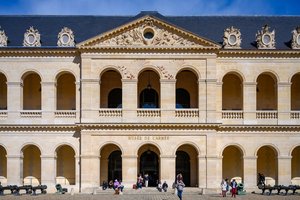 Ministère de la Défense Nationale |
Pariz | 1 | FRANCOIS CHASSELOUP LAUBAT, GENERAL DE DIVISION - Žirondinski general in vojni mojster |


Saint Louis Forgiving Pierre de Bretagne (1817), Musée des Beaux-Arts de Quimper, Quimper. Nato sledeta Sketch for the church Saint Gervais "Ecce Homo" (1819) in Jean-Nicolas Houchard (1835).
34 let: delo Saint Louis Forgiving Pierre de Bretagne iz leta 1817, pri čemer je Georges Rouget rodil/a v 1783.
Saint Louis Forgiving Pierre de Bretagne, Sketch for the church Saint Gervais "Ecce Homo", Jean-Nicolas Houchard, Jacques-Louis David, Achille Alexandre Alphonse, Viscount de Cailleux (1788-1876), Director of the Musées royaux, The King of Rome in the Tuileries Garden, JEAN PIERRE THENOT (1803 1857), DEBARQUEMENT DE SAINT LOUIS EN EGYPTE.4 JUIN 1249, ALEXANDRE FRANCOIS MARIE, VICOMTE DE BEAUHARNAIS, GENERAL EN CHEF DE L'ARMEE DU RHIN (1760 1794) in FRANCOIS CHRISTOPHE KELLERMAN, GENERAL EN CHEF DE L'ARMEE DE LA MOSELLE EN 1792 (1735 1820). Zgornja lestica prikazuje leto in muzej za vsako od njih.
V našem katalogu je navedenih 39 del avtorja Georges Rouget, datiranih od 1817 do 1850.
Večina njih se nahaja v Opera House (Versailles), Louvre (Pariz) in Musée des Beaux-Arts de Quimper (Quimper). Zgornja tabela navaja muzeje posamezno.
V obdobju 1810s: 2 od 39 del na tej strani izvira iz tega obdobja, med katerimi je Saint Louis Forgiving Pierre de Bretagne.
Najstarejšo delo na tej strani je iz Saint Louis Forgiving Pierre de Bretagne (1817), najnovejše pa iz The King of Rome in the Tuileries Garden (1850).
Portrait (4), Dignified (3) in Formal (2), med 39 dela na tej strani.
Oil On Canvas: 3 od 39 del na tej strani.
Neoclassicism, kot to pokažejo slike na tej strani.
Achille Alexandre Alphonse, Viscount de Cailleux (1788-1876), Director of the Musées royaux, ALEXANDRE FRANCOIS MARIE, VICOMTE DE BEAUHARNAIS, GENERAL EN CHEF DE L'ARMEE DU RHIN (1760 1794) in VICTOR GUY BARON DUPERRE, MATELOT EN 1792 (1775 1846) so med 6 dela na tej strani, ki jih hrani Opera House, Versailles.
Da. Vsako sliko na tej strani lahko naročite kot muzejsko kakovostno ročno naslikano oljno reprodukcijo ali umetniški natisk v izbrani velikosti neposredno s strani posamezne slike.

