Edward Lear, 1812 – 1888

Slike avtorja Edward Lear: 100 najbolj znanih del, uvrščena po popularnosti

Najbolj znano sliko umetnika Edward Lear je Cogoleto, Italy. Z Crescenza in Blue And Yellow Macaw se dopolnjujejo tri dela, ki jih vsi prepoznajo. Naš katalog vsebuje 419 del avtorja Edward Lear; spodaj je 100 del, ki jih svet najbolj obišče, od katerih vsaka vključuje leto nastanka, muzej, ki jo hrani, in razlog za njen pomen.

Uvrščeno glede na naš skoraj priljubljenosti, ki združuje število iskanj, obiskov in naročil za vsako delo. Posodobljeno oktober 2026. Vsako podobno delo na tej strani je mogoče naročiti kot muzejsko kakovostno ročno slikano oljno reprodukcijo ali umetniški natisk v izbrani velikosti.

Portret Edward Lear
Edward Lear · 1812 – 1888
Rodil se · umrl
1812 – 1888, Highgate
Gibanje
Romanticism
Delo v našem katalogu
419
Najbolj znana
Cogoleto, Italy
Največ del v
Yale Center for British Art

10 najbolj znanih slik umetnika Edward Lear

Cogoleto, Italy avtorja Edward Lear
1

Cogoleto, Italy

Watercolor

The sun rests upon a sandy shore in Cogoleto, Italy. A mountain rises in the background, its silhouette watching over the water. Along the edge of the sea, small figures move through the light. Some people gather near the tide, while others linger further away, lost in the vastness of the landscape. A single dog wanders toward the right, a small presence against the expanse of the beach. The scene…

The Temple of Apollo at Bassae (1855) avtorja Edward Lear
7

The Temple of Apollo at Bassae

1855 · Oil On Canvas · Fitzwilliam College, Cambridge

The ruins of the Temple of Apollo at Bassae emerge from a rugged landscape, defined by heavy stone columns that support a weathered roof structure. In the foreground, the primary temple dominates the view, its pillars standing as silent witnesses to a lost era. Beyond this central structure, two smaller temples are visible in the distance, partially obscured by the natural terrain. The composition places the viewer amidst a scattering…

Edward Lear, slike od 11 do 100

Philae, Egypt (1863) avtorja Edward Lear
#14

Philae, Egypt

1863 · Yale Center for British Art

Edward Lear's "Philae, Egypt, 1863" isn’t merely a landscape painting; it’s a portal. A meticulously rendered vista of the ancient Egyptian island city of Philae, nestled within the…

Naročite reprodukcijo →
Between Olavano and Civitella (1842) avtorja Edward Lear
#16

Between Olavano and Civitella

1842 · Yale Center for British Art

Between Olavano and Civitella by Edward Lear presents a serene and atmospheric landscape. In the right foreground, a large, detailed tree dominates the composition, its heavy branches extending…

Naročite reprodukcijo →
The Mountains of Thermopylae (1852) avtorja Edward Lear
#18

The Mountains of Thermopylae

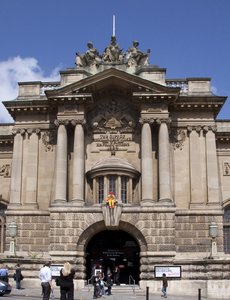
1852 · Bristol Museum - Art Gallery

Edward Lear’s Thermopylae: A Landscape of Quiet Resolve Edward Lear (1812–1888), a figure largely remembered for his delightfully absurd verse and whimsical illustrations—particularly “The Owl and the Pussy…

Naročite reprodukcijo →
Thermopylae (1872) avtorja Edward Lear
#45

Thermopylae

1872 · Muzej umetnosti in arheologije Ashmolean

In his 1872 masterpiece, Thermopylae, Edward Lear invites the viewer to step beyond the boundaries of the everyday and into a realm where the majesty of the earth…

Prinesite si domov →

Motivi, ki jih je Edward Lear naslikal največ

Četiri teme, ki se najpogosteje pojavljajo med temi mojstrovinami, s najboljšim primerom za vsako izmed njih.

Kje si lahko ogledate slike avtorja Edward Lear

8 muzejev, ki vsebujo največ slik na tej strani.

Muzej Mesto Sloga Edward Lear Slike iz tega seznama
Yale Center for British Art, New HavenYale Center for British Art New Haven 16 Philae, Egypt, Between Olavano and Civitella, A Study of Ferns, Civitella
Government Art Collection, LondonGovernment Art Collection London 5 View of Florence from Villa San Firenze, A View of Adam's Peak, Ceylon
Muzej umetnosti in arheologije Ashmolean, OxfordMuzej umetnosti in arheologije Ashmolean Oxford 3 The Plains of Lombardy from Monte Generoso, Thermopylae
Izraelski muzej, JeruzalemIzraelski muzej Jeruzalem 2 View of Bethlehem, Jerusalem from the Mount of Olives
Fitzwilliam College, CambridgeFitzwilliam College Cambridge 1 The Temple of Apollo at Bassae
Bristol Museum - Art Gallery, BristolBristol Museum - Art Gallery Bristol 1 The Mountains of Thermopylae
Toledo Museum of Art, ToledoToledo Museum of Art Toledo 1 Venosa
Rhode Island School of Design Museum of Art, ProvidenceRhode Island School of Design Museum of Art Providence 1 Corfu from near the Village of Virós

Najbolj znana slika umetnika Edward Lear v vsaki desetletji

  1. 1830s
  2. 1840s
    Between Olavano and Civitella (1842) avtorja Edward Lear
    #16 od 100

    Between Olavano and Civitella

    Starost 28 – 37 · Yale Center for British Art

    Between Olavano and Civitella by Edward Lear presents a serene and atmospheric landscape. In the right foreground, a large, detailed tree dominates the composition, its heavy branches extending…

  3. 1850s
  4. 1860s
    Philae, Egypt (1863) avtorja Edward Lear
    #14 od 100

    Philae, Egypt

    Starost 48 – 57 · Yale Center for British Art

    Edward Lear's "Philae, Egypt, 1863" isn’t merely a landscape painting; it’s a portal. A meticulously rendered vista of the ancient Egyptian island city of Philae, nestled within the…

  5. 1870s
  6. 1880s
    The Plains of Lombardy from Monte Generoso (1880) avtorja Edward Lear
    Rang 15 / 100

    The Plains of Lombardy from Monte Generoso

    Starost 68 – 76 · Muzej umetnosti in arheologije Ashmolean

    In the quiet majesty of The Plains of Lombardy from Monte Generoso, we are invited to stand upon a precipice of history and nature. Created in 1880 by…

Vprašanja o slikah umetnika Edward Lear

Katero je najbolj znano sliko umetnika Edward Lear?Prikaži odgovor

Cogoleto, Italy. Nato sledeta Crescenza in Blue And Yellow Macaw.

Kakšnih 10 najboljjših slik avtorja Edward Lear je?Prikaži odgovor

Cogoleto, Italy, Crescenza, Blue And Yellow Macaw, View of Taormina in Sicily with Etna in the distance, View of Bethlehem, The Pyramids of Ghizeh, The Temple of Apollo at Bassae, Plains Of Ashdod, Israel, View Of Eze, Italy in Ithaca, Ionian Islands. Zgornja lestica prikazuje leto in muzej za vsako od njih.

Koliko slik je ustvaril Edward Lear?Prikaži odgovor

V našem katalogu je navedenih 419 del avtorja Edward Lear, datiranih od 1839 do 1884.

Kje so najbolj znana slika umetnika Edward Lear?Prikaži odgovor

Večina njih se nahaja v Yale Center for British Art (New Haven), Government Art Collection (London) in Muzej umetnosti in arheologije Ashmolean (Oxford). Zgornja tabela navaja muzeje posamezno.

Kdaj je Edward Lear naslikal svoja najbolj znana dela?Prikaži odgovor

V obdobju 1860s: 14 od 100 del na tej strani izvira iz tega obdobja, med katerimi je Philae, Egypt.

Kakšna so najstarejše in najnovejše znana slika umetnika Edward Lear?Prikaži odgovor

Najstarejšo delo na tej strani je iz Civita Castellana (1839), najnovejše pa iz Argos from Mycene (1884).

Kaj je Edward Lear najpogosteje slikočil?Prikaži odgovor

Landscape (11), Scenes (11) in Italy (11), med 100 dela na tej strani.

Katero meansko tehniko je Edward Lear najpogosteje uporabljal/a?Prikaži odgovor

Watercolor: 2 od 100 del na tej strani.

Kateri umetniški slog zastopa Edward Lear?Prikaži odgovor

Romanticism, kot to pokažejo slike na tej strani.

Ktora dela Edward Lear lahko vidim v muzeju Yale Center for British Art?Prikaži odgovor

Philae, Egypt, Between Olavano and Civitella in A Study of Ferns, Civitella so med 14 dela na tej strani, ki jih hrani Yale Center for British Art, New Haven.

Ali lahko kupim reprodukcijo slike avtorja Edward Lear?Prikaži odgovor

Da. Vsako sliko na tej strani lahko naročite kot muzejsko kakovostno ročno naslikano oljno reprodukcijo ali umetniški natisk v izbrani velikosti neposredno s strani posamezne slike.

O umetniku Edward Lear

Edward Lear (1812-1888): The Poet of Nonsense and Painter of Light

Edward Lear, a name synonymous with whimsical verse and delightfully peculiar illustrations, was far more than the purveyor of limericks and fantastical creatures that often define his legacy. Born in 1812 in Holloway, North London, into a family teeming with twenty-one children, Lear’s early life was marked by both financial instability and a burgeoning artistic talent. His father, Jeremiah Lear, faced hardship after the Napoleonic Wars, forcing young Edward to begin earning a living through his drawings at the tender age of fifteen. This necessity, however, ignited a lifelong passion that would see him traverse continents and capture the world in vibrant hues and playful lines. The shadow of familial difficulty, coupled with early health challenges – including epilepsy and bouts of melancholia he termed “the Morbids” – instilled within Lear a sense of gentle solitude and an inclination towards imaginative escape, qualities profoundly reflected in his art and writing.

Early Influences: Precision and Observation

Lear’s artistic journey began with meticulous precision. Initially employed by the Zoological Society, he honed his skills illustrating birds and animals, demonstrating a remarkable eye for detail and anatomical accuracy. This early work brought him to the attention of Edward Stanley, the 13th Earl of Derby, who commissioned Lear to document the exotic creatures within his private menagerie at Knowsley Hall. These years spent amongst lions, tigers, and parrots not only refined his draftsmanship but also fostered a deep connection with the natural world – a connection that would permeate his later landscapes. The demand for grand scientific illustrations surged during the Victorian era as Britain embarked on its imperial expansion, fueled by an eagerness to catalog and depict the wonders of distant lands. Lear’s training emphasized careful observation and accurate representation, shaping his artistic approach throughout his career. He meticulously studied animal anatomy, rendering feathers, scales, and musculature with remarkable realism—a skill that would serve him well in his subsequent landscape paintings.

Travel & Landscape Painting: Capturing the Essence of Place

However, failing eyesight and respiratory issues eventually led him away from the exacting demands of ornithological illustration. He turned instead to landscape painting, embarking on extensive travels throughout Europe and beyond. Italy became a particular haven, offering not only respite for his health but also an abundance of inspiring vistas—rolling hills bathed in Tuscan sunlight, dramatic Alpine peaks crowned with snow, and serene Venetian canals reflecting the glow of twilight. These journeys profoundly influenced Lear’s artistic vision, prompting him to experiment with new techniques and explore unconventional perspectives. He absorbed the light, colors, and textures of these diverse regions, developing a distinctive style characterized by atmospheric perspective—the subtle blending of hues to convey depth and distance—and delicate brushwork that captured the ephemeral beauty of fleeting moments. Lear’s landscapes are imbued with a sense of melancholy and contemplation, reflecting his own personal experiences as a wanderer—a theme that recurs throughout his oeuvre.

The Poet of Nonsense: A Revolution in Verse

While celebrated as a painter, it is perhaps for his literary contributions that Edward Lear is most widely remembered. His “nonsense” poetry – particularly his limericks – revolutionized children’s literature and captivated audiences of all ages. *A Book of Nonsense*, published in 1846 under the pseudonym "Derry down Derry," introduced a world populated by owls and pussycats sailing in pea-green boats, dongs with luminous noses, and other delightfully absurd creations. These verses weren’t merely frivolous; they were imbued with a subtle melancholy and a playful subversion of conventional logic. Lear didn't simply invent nonsense words; he crafted entire worlds governed by their own internal rules, inviting readers to suspend disbelief and embrace the joy of imagination. His limericks often explored themes of loneliness, longing, and the absurdity of existence, cloaked within a veneer of whimsicality—a stylistic choice that mirrored his own introspective tendencies. He challenged poetic conventions, liberating verse from rigid structures and embracing playful experimentation—a bold move for its time.

Legacy & Enduring Charm

Lear’s influence extends far beyond the realm of children's literature. He pioneered a new form of poetic expression, liberating verse from rigid structures and embracing playful experimentation. His landscapes, though often overshadowed by his poetry, demonstrate a keen artistic sensibility and a mastery of watercolor technique. He was a true polymath – artist, illustrator, musician (he composed musical settings for Tennyson’s poems), author, and poet—whose diverse talents converged to create a unique and enduring legacy. His paintings can be found in esteemed collections like The Ashmolean Museum, Oxford, a testament to his skill as a landscape artist. Lear’s life, marked by both personal struggles and creative triumphs, serves as a poignant reminder that even amidst darkness, there is always room for light, laughter, and the boundless possibilities of the human spirit. He remains an icon of Victorian eccentricity—a figure whose art continues to inspire wonder and delight generations after his death in 1888.

Vsa dela avtorja Edward Lear: 419 →