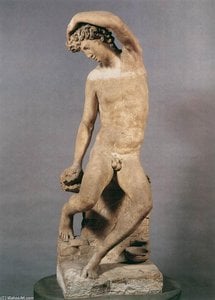
Benvenuto Cellini, 1500 – 1571

Slike avtorja Benvenuto Cellini: 80 najbolj znanih del, uvrščena po popularnosti

Najbolj znano delo umetnika Benvenuto Cellini je Solnica (1540), ki se nahaja v muzeju Kunsthistorisches Museum v mestu Dunaj. Z Jupiter (1545) in Crucifix (detail) (1562) se dopolnjujejo tri dela, ki jih vsi prepoznajo. Naš katalog vsebuje 80 del avtorja Benvenuto Cellini; spodaj je 80 del, ki jih svet najbolj obišče, od katerih vsaka vključuje leto nastanka, muzej, ki jo hrani, in razlog za njen pomen.

Uvrščeno glede na naš skoraj priljubljenosti, ki združuje število iskanj, obiskov in naročil za vsako delo. Posodobljeno oktober 2026. Vsako podobno delo na tej strani je mogoče naročiti kot muzejsko kakovostno ročno slikano oljno reprodukcijo ali umetniški natisk v izbrani velikosti.

Portret Benvenuto Cellini
Benvenuto Cellini · 1500 – 1571
Rodil se · umrl
1500 – 1571, Firence
Gibanje
Manierizem
Delo v našem katalogu
80
Najbolj znana
Solnica (1540)
Največ del v
Museo Nazionale del Bargello

10 najbolj znanih slik umetnika Benvenuto Cellini

Solnica (1540) avtorja Benvenuto Cellini
1

Solnica

1540 · Zlato · Kunsthistorisches Museum, Dunaj

Saliera, izdelana iz valjanega zlata, jo je Benvenuto Cellini ustvaril za francoskega kralja Frančiška I. med letoma 1540 in 1543. Od njegovega potomka, Charlesa IX, je ta dragocen predmet prešla v last Arhimandrita Ferdinanda II. Solnica predstavlja alegorijo Zemlje ter neprestanega vplivnega odnosa med kopnotjo in morjem. Na njeni desni strani vidimo moškega s tridentom in ladjo, ki simbolizirata vodo, medtem ko njena leva stran prikazuje žensko kot personifikacijo Zemlje.…

Jupiter (1545) avtorja Benvenuto Cellini
2

Jupiter

1545 · Bronze · Museo Nazionale del Bargello, Florence

To stand before this magnificent depiction of Jupiter is to confront raw, untamed power rendered in the enduring majesty of bronze. This sculpture does not merely represent a god; it embodies the very force of nature—the thunderous authority that commands the skies. The figure dominates the space with an undeniable gravitas, his musculature meticulously articulated as if carved by the passing winds themselves. Observe the dynamic tension captured in his…

Crucifix (detail) (1562) avtorja Benvenuto Cellini
3

Crucifix (detail)

1562 · Marble · Monasterio de San Lorenzo, Escorial

Benvenuto Cellini’s 1562 marble sculpture, “Crucifix (detail),” is not merely a depiction of Christ’s suffering; it’s an immersive experience. Within the dimly lit confines of El Escorial, this intimate piece draws you into a world of profound emotion and technical mastery – a testament to Cellini's genius as both goldsmith and sculptor. The sculpture immediately commands attention with its stark realism and the palpable sense of agony radiating from the…

Morion for Francesco I de' Medici (1570) avtorja Benvenuto Cellini
4

Morion for Francesco I de' Medici

1570 · Metalwork · Staatliche Kunstsammlungen, Dresden

In the grand tapestry of the Italian Renaissance, few objects capture the intersection of martial prestige and artistic virtuosity as profoundly as the Morion for Francesco I de' Medici. Created in 1570 by the legendary polymath Benvenuto Cellini, this is far more than a mere piece of protective headgear; it is a sculptural triumph rendered in metal. As a quintessential example of Mannerism, the Morion rejects the tranquil equilibrium of…

Danae and her Son Perseus (1545) avtorja Benvenuto Cellini
5

Danae and her Son Perseus

1545 · Bronze · Museo Nazionale del Bargello, Florence

The bronze sculpture Danae and her Son Perseus by Benvenuto Cellini captures a moment of divine intersection. Created between 1545 and 1553 for Cosimo I de' Medici, the work depicts the mythological event where Zeus visits Danae in the form of golden rain. This Renaissance Mannerist piece resides within the Museo Nazionale del Bargello in Florence, Italy.

Nymph of Fontainebleau (1542) avtorja Benvenuto Cellini
6

Nymph of Fontainebleau

1542 · Bronze · Louvre, Pariz

To stand before the Nymph of Fontainebleau is to step directly into the languid, sun-dappled world of the Italian Renaissance. This magnificent bronze sculpture by Benvenuto Cellini does more than merely depict a figure; it captures an ephemeral moment—a breath held between slumber and awakening. The central subject, the reclining nymph, embodies a timeless confluence of nature’s grace and mythological mystery. Her pose is one of exquisite repose, her body…

Perseus (1540) avtorja Benvenuto Cellini
7

Perseus

1540 · Bronze · Museo Nazionale del Bargello, Florence

In the heart of Florence’s Piazza della Signoria, amidst the architectural grandeur of the Loggia dei Lanzi, stands a masterpiece that captures the very essence of Mannerist tension and heroic triumph. Benvenuto Cellini’s Perseus is not merely a sculpture; it is a dramatic performance frozen in bronze. Created between 1545 and 1554, this monumental work depicts the legendary hero Perseus at the climactic moment of his mythic journey. He stands…

Bust of Cosimo I (detail) (1546) avtorja Benvenuto Cellini
8

Bust of Cosimo I (detail)

1546 · Bronze · Museo Nazionale del Bargello, Florence

In the heart of the Italian Renaissance, where the pursuit of beauty met the raw ambition of political power, Benvenuto Cellini forged a masterpiece that transcends mere portraiture. The Bust of Cosimo I is not simply a likeness of the Grand Duke of Tuscany; it is a profound meditation on authority, captured in the enduring medium of bronze. To gaze upon this work is to step into the vibrant, often…

Bust of Bindo Altoviti (1549) avtorja Benvenuto Cellini
9

Bust of Bindo Altoviti

Benvenuto Cellini's “Bust of Bindo Altoviti,” crafted in 1549, isn’t merely a sculpted likeness; it’s a meticulously constructed window into the heart of Renaissance Florence. This bronze masterpiece, now residing within the Isabella Stewart Gardner Museum in Boston, transcends simple portraiture to become a profound meditation on wealth, power, and the very essence of human representation. The subject, Bindo Altoviti, a prominent Florentine banker and astute political player, is rendered…

Perseus (1540) avtorja Benvenuto Cellini
10

Perseus

1540 · Bronze · Museo Nazionale del Bargello, Florence

In the heart of Florence, amidst the architectural grandeur of the Loggia dei Lanzi, stands a masterpiece that captures the very essence of human struggle and divine victory. Benvenuto Cellini’s Perseus is not merely a sculpture; it is a breathtaking moment frozen in bronze, a dramatic climax of Greek mythology brought to life through the virtuosity of the Mannerist style. As the light dances across its aged patina, the figure…

Benvenuto Cellini, slike od 11 do 80

Crucifix (1562) avtorja Benvenuto Cellini
#11

Crucifix

1562 · Monasterio de San Lorenzo

Benvenuto Cellini's 1562 bronze sculpture, “Crucifix,” stands as a profoundly moving testament to the Renaissance spirit—a collision of technical mastery, religious fervor, and deeply personal emotion. More than…

Nymph of Fontainebleau (detail) (1542) avtorja Benvenuto Cellini
#12

Nymph of Fontainebleau (detail)

1542 · Louvre

To encounter a detail of Benvenuto Cellini’s Nymph of Fontainebleau is to step directly into the languid, sun-dappled world of the High Renaissance. This exquisite bronze sculpture, cast…

Minerva (1545) avtorja Benvenuto Cellini
#13

Minerva

1545 · Museo Nazionale del Bargello

Benvenuto Cellini's "Minerva," crafted in 1545 during the twilight of the High Renaissance, isn't merely a bronze sculpture; it’s a meticulously constructed embodiment of Roman virtue and strategic…

Mercury (1545) avtorja Benvenuto Cellini
#14

Mercury

1545 · Museo Nazionale del Bargello

In the quiet presence of this bronze, one senses the shifting tides of the sixteenth century. Completed in 1545, Benvenuto Cellini’s Mercury marks a departure from the balanced…

Nymph of Fontainebleau (detail) (1542) avtorja Benvenuto Cellini
#15

Nymph of Fontainebleau (detail)

1542 · Louvre

The bronze surface holds a quiet tension, as if the figure might stir at any moment. In this close view, we find ourselves pressed against the smooth, cool…

Perseus (15) (1545) avtorja Benvenuto Cellini
#16

Perseus (15)

1545 · Loggia dei Lanzi

To stand before Benvenuto Cellini's monumental bronze, Perseus with the Head of Medusa, is to be arrested by a moment of sublime, violent apotheosis. This sculpture does not…

Salt Cellar (1540) avtorja Benvenuto Cellini
#17

Salt Cellar

1540 · Kunsthistorisches Museum

To behold Benvenuto Cellini’s Saliera is to step into the opulent heart of the Italian Renaissance, where the boundaries between functional object and profound sculpture dissolve entirely. This…

Salt Cellar (detail) (1540) avtorja Benvenuto Cellini
#18

Salt Cellar (detail)

1540 · Kunsthistorisches Museum

In the hallowed halls of the Kunsthistorisches Museum in Vienna, there exists a treasure that transcends the boundaries of mere functional objecthood to become a profound meditation on…

Ganymede (1548) avtorja Benvenuto Cellini
#19

Ganymede

1548 · Museo Nazionale del Bargello

To stand before Benvenuto Cellini's bronze depiction of Ganymede is to encounter a moment suspended between divine beauty and youthful vulnerability. This masterful sculpture, executed in the vibrant…

Salt Cellar (detail) (1540) avtorja Benvenuto Cellini
#20

Salt Cellar (detail)

1540 · Kunsthistorisches Museum

In the grand tapestry of the Italian Renaissance, few objects capture the audacious spirit of Mannerism as vibrantly as Benvenuto Cellini’s Salt Cellar. Created around 1543 for the…

Bust of Cosimo I (detail) (1546) avtorja Benvenuto Cellini
#21

Bust of Cosimo I (detail)

1546 · Museo Nazionale del Bargello

To gaze upon this detail from Benvenuto Cellini's Bust of Cosimo I is to encounter not merely a portrait, but a monumental declaration of power and Renaissance ambition.…

Juno (1540) avtorja Benvenuto Cellini
#22

Juno

1540 · Louvre

To stand before Benvenuto Cellini's depiction of Juno is to encounter a moment suspended in the golden haze of the Renaissance. This work, executed around 1540, transcends mere…

Prinesite si domov →
Salt Cellar (1540) avtorja Benvenuto Cellini
#23

Salt Cellar

1540 · Kunsthistorisches Museum

Benvenuto Cellini's Salt Cellar, a shimmering testament to the heights of Renaissance goldsmithing, isn’t merely a container for salt; it’s a miniature cosmos, a meticulously crafted allegory brimming…

Perseus (1545) avtorja Benvenuto Cellini
#24

Perseus

1545 · Loggia dei Lanzi

In the heart of Florence’s sun-drenched Loggia dei Lanzi, where the shadows of history dance against classical stone, stands one of the most arresting spectacles of the Mannerist…

Medallion with Leda and the Swan (1520) avtorja Benvenuto Cellini
#25

Medallion with Leda and the Swan

1520 · Museo Nazionale del Bargello

In the delicate, shimmering expanse of Benvenuto Cellini’s Medallion with Leda and the Swan, we find a moment suspended in the amber of the Italian Renaissance. Created around…

Cope pin (front and back) (1520) avtorja Benvenuto Cellini
#26

Cope pin (front and back)

1520 · British Museum

Benvenuto Cellini's "Cope Pin (Front and Back)," crafted in 1520 for Pope Clement VII, transcends the boundaries of a mere decorative object. It’s a potent emblem of Renaissance…

Perseus (1545) avtorja Benvenuto Cellini
#27

Perseus

1545 · Loggia dei Lanzi

In the heart of Florence, within the sun-drenched, open-air majesty of the Loggia dei Lanzi, stands a masterpiece that captures the very essence of human struggle and divine…

Salt Cellar (8) (1540) avtorja Benvenuto Cellini
#28

Salt Cellar (8)

1540 · Kunsthistorisches Museum

Benvenuto Cellini's “Salt Cellar” (Saliera), completed in 1543 for King Francis I of France, isn’t merely a container for seasoning; it’s a shimmering embodiment of the Renaissance spirit—a…

Salt Cellar (detail) (16) (1540) avtorja Benvenuto Cellini
#29

Salt Cellar (detail) (16)

1540 · Kunsthistorisches Museum

The Kunsthistorisches Museum in Vienna holds within its walls not merely a container for salt, but a miniature drama sculpted in gold and enamel—Benvenuto Cellini’s celebrated “Salt Cellar,”…

Prinesite si domov →
Apollo and Hyacinth (detail) (1540) avtorja Benvenuto Cellini
#30

Apollo and Hyacinth (detail)

1540 · Museo Nazionale del Bargello

Benvenuto Cellini’s “Apollo and Hyacinth,” a meticulously rendered marble sculpture from the 1540s, isn’t merely a depiction of a tragic myth; it’s a profound meditation on loss, divine…

Perseus (detail) (12) (1545) avtorja Benvenuto Cellini
#31

Perseus (detail) (12)

1545 · Loggia dei Lanzi

Benvenuto Cellini's “Perseus (detail) (12)” isn’t merely a depiction of the legendary hero; it’s a visceral embodiment of Renaissance ambition, technical prowess, and a profound engagement with classical…

Perseus (detail) (1545) avtorja Benvenuto Cellini
#32

Perseus (detail)

1545 · Loggia dei Lanzi

In the sun-drenched, open-air majesty of Florence’s Loggia dei Lanzi, a breathtaking moment remains frozen in bronze. Benvenuto Cellini’s Perseus with the Head of Medusa is far more…

Perseus (detail) (1545) avtorja Benvenuto Cellini
#33

Perseus (detail)

1545 · Loggia dei Lanzi

The bronze sculpture of Perseus holding aloft the severed head of Medusa, attributed to Benvenuto Cellini and crafted in 1545, stands as a monumental achievement within the Italian…

Shield (1572) avtorja Benvenuto Cellini
#34

Shield

1572 · Louvre

Benvenuto Cellini’s “Shield,” completed in 1572, stands as a captivating emblem of the High Renaissance's waning influence and the burgeoning Mannerist style. Currently residing within the Louvre Museum’s…

Perseus (1540) avtorja Benvenuto Cellini
#35

Perseus

1540 · Museo Nazionale del Bargello

The bronze sculpture titled Perseus was created by the artist Benvenuto Cellini. This work depicts the mythological figure Perseus holding the severed head of the Gorgon Medusa. The…

Seal of Cardinal Ippolito d'Este (1540) avtorja Benvenuto Cellini
#36

Seal of Cardinal Ippolito d'Este

1540 · Musée des Beaux-Arts de Lyon

Commissioned in 1540 by Cardinal Ippolito d'Este, this relief sculpture embodies the stylistic shifts of the Florentine Renaissance. Moving away from the balanced ideals of the High Renaissance,…

Cope pin (profile) (1520) avtorja Benvenuto Cellini
#37

Cope pin (profile)

1520 · British Museum

The drawing titled Cope pin (profile) was executed by the goldsmith and sculptor Benvenuto Cellini. Created around 1520, the work represents a detailed design for a liturgical accessory.…

Prinesite si domov →
Gunpowder case (1570) avtorja Benvenuto Cellini
#38

Gunpowder case

1570 · Royal Armouries

In the grand tapestry of the Italian Renaissance, few names resonate with as much dramatic flair and technical virtuosity as Benvenuto Cellini. His Gunpowder Case, crafted around 1570,…

Portrait Bust of Cosimo I de avtorja Benvenuto Cellini
#39

Portrait Bust of Cosimo I de

Legija časti

In the heart of the Italian Renaissance, where the shadows of political intrigue met the brilliance of humanistic discovery, Benvenuto Cellini breathed life into metal. His Portrait Bust…

Shield for Francesco I de' Medici (detail) (11) (1570) avtorja Benvenuto Cellini
#40

Shield for Francesco I de' Medici (detail) (11)

1570 · Staatliche Kunstsammlungen

To gaze upon the Shield for Francesco I de' Medici is to step directly into the heart of the Italian Renaissance, where metalwork transcends utility to become high…

Shield for Francesco I de' Medici (detail) (1570) avtorja Benvenuto Cellini
#44

Shield for Francesco I de' Medici (detail)

1570 · Staatliche Kunstsammlungen

To behold the detail of Benvenuto Cellini’s Shield for Francesco I de' Medici is to step directly into the shimmering heart of the late Renaissance. Crafted around 1570,…

Ganymede (8) (1548) avtorja Benvenuto Cellini
#45

Ganymede (8)

1548 · Museo Nazionale del Bargello

The bronze surface catches the light in a way that mimics the warmth of skin. In this 1548 sculpture, a youth stands caught in a sudden, muscular tension.…

Project for a seal (1563) avtorja Benvenuto Cellini
#46

Project for a seal

1563 · British Museum

In the heart of the sixteenth century, amidst the vibrant intellectual ferment of Florence, Benvenuto Cellini breathed life into a vision that would serve as a cornerstone for…

Prinesite si domov →
Shield for Francesco I de' Medici (1570) avtorja Benvenuto Cellini
#47

Shield for Francesco I de' Medici

1570 · Staatliche Kunstsammlungen

To behold Benvenuto Cellini’s Shield for Francesco I de' Medici is to step directly into the shimmering heart of the High Renaissance. Crafted around 1570, this extraordinary metalwork…

Bust of Cosimo I (1546) avtorja Benvenuto Cellini
#48

Bust of Cosimo I

1546 · Museo Nazionale del Bargello

Benvenuto Cellini’s “Bust of Cosimo I” is more than just a sculpted likeness; it's a meticulously crafted embodiment of power, ambition, and the very spirit of the Florentine…

Medal of Alessandro de' Medici (1530) avtorja Benvenuto Cellini
#49

Medal of Alessandro de' Medici

1530 · Museo Nazionale del Bargello

Benvenuto Cellini’s “Medal of Alessandro de’ Medici,” a small yet profoundly resonant bronze piece from 1530, isn’t merely a commemorative coin; it’s a meticulously crafted microcosm of Renaissance…

Prinesite si domov →
The Rescue of Andromeda (detail) (1550) avtorja Benvenuto Cellini
#50

The Rescue of Andromeda (detail)

1550 · Museo Nazionale del Bargello

Benvenuto Cellini’s “The Rescue of Andromeda” is more than just a bronze sculpture; it's a vibrant tableau of myth, heroism, and the burgeoning spirit of Mannerism that defined…

'Giulio' of Alessandro de' Medici (1530) avtorja Benvenuto Cellini
#51

'Giulio' of Alessandro de' Medici

1530 · Museo Nazionale del Bargello

A Glimpse Into Renaissance Power: Examining Cellini’s ‘Giulio’ of Alessandro de' Medici Coin The coin before us—a diminutive yet powerfully resonant testament to the Florentine Renaissance—represents more than…

Francis I, King of France (1537) avtorja Benvenuto Cellini
#53

Francis I, King of France

1537 · Fitzwilliam College

In the delicate interplay of light and shadow upon a polished bronze surface, one encounters more than just a portrait; one meets the very essence of Renaissance sovereignty.…

Medal of Clement VII (obverse) (1534) avtorja Benvenuto Cellini
#54

Medal of Clement VII (obverse)

1534 · Museo Nazionale del Bargello

In the delicate, shimmering expanse of a mere four centimeters, Benvenuto Cellini managed to capture the weight of an entire era. The Medal of Clement VII is not…

Shield for Francesco I de' Medici (detail) (1570) avtorja Benvenuto Cellini
#58

Shield for Francesco I de' Medici (detail)

1570 · Staatliche Kunstsammlungen

The Shield for Francesco I de' Medici (detail), created around 1570, stands as a mesmerizing testament to the extraordinary skill of Benvenuto Cellini. This intricately crafted metalwork piece…

Bust of Cosimo I (detail) (1546) avtorja Benvenuto Cellini
#59

Bust of Cosimo I (detail)

1546 · Museo Nazionale del Bargello

The bronze figure of Cosimo I de' Medici, ruler of Florence and Tuscany, stands as more than just a portrait; it is a meticulously crafted embodiment of Renaissance…

Prinesite si domov →
Shield for Francesco I de' Medici (detail) (10) (1570) avtorja Benvenuto Cellini
#60

Shield for Francesco I de' Medici (detail) (10)

1570 · Staatliche Kunstsammlungen

In the heart of the late Renaissance, where the boundaries between craftsmanship and fine art dissolved into pure brilliance, Benvenuto Cellini forged a legacy that transcends mere metalwork.…

Salt Cellar (detail) (1540) avtorja Benvenuto Cellini
#61

Salt Cellar (detail)

1540 · Kunsthistorisches Museum

The Salt Cellar of Francis I, crafted by the Florentine master Benvenuto Cellini between 1540 and 1543, is more than just a container for salt and pepper; it's…

Prinesite si domov →
Apollo and Hyacinth (1540) avtorja Benvenuto Cellini
#62

Apollo and Hyacinth

1540 · Museo Nazionale del Bargello

In the hallowed halls of the Galleria Nazionale di Palazzo Barberini in Rome, there exists a profound meditation on loss and divine grace captured in stone. Benvenuto Cellini’s…

Salt Cellar (detail) (1540) avtorja Benvenuto Cellini
#63

Salt Cellar (detail)

1540 · Kunsthistorisches Museum

Within the hallowed halls of the Kunsthistorisches Museum in Vienna resides a treasure that transcends its humble function as a salt cellar – Benvenuto Cellini’s 1543 masterpiece, “Salt…

Naročite ročno naslikano kopijo →
Study for a seal (1560) avtorja Benvenuto Cellini
#64

Study for a seal

1560 · Louvre

The world of 16th-century Florence pulsed with artistic fervor, a crucible where innovation and tradition intertwined to forge masterpieces that continue to captivate us centuries later. Among the…

Prinesite si domov →
The Rescue of Andromeda (detail) (1550) avtorja Benvenuto Cellini
#66

The Rescue of Andromeda (detail)

1550 · Museo Nazionale del Bargello

Benvenuto Cellini's "The Rescue of Andromeda" – specifically this exquisite detail depicting the confrontation between Perseus and Medusa – is more than just a bronze sculpture; it’s a…

Helmet (1570) avtorja Benvenuto Cellini
#67

Helmet

1570 · Louvre

Benvenuto Cellini’s “Helmet,” created around 1570, stands as a testament to the zenith of Renaissance artistry and the flamboyant spirit of Mannerism. More than just armor—though exquisitely crafted—it…

Naročite reprodukcijo →
Perseus (13) (1540) avtorja Benvenuto Cellini
#68

Perseus (13)

1540 · Museo Nazionale del Bargello

Benvenuto Cellini's bronze sculpture of Perseus with the Head of Medusa, completed around 1545-1554 for Duke Cosimo I de’ Medici in Florence, is far more than a mere…

Naročite reprodukcijo →
The Rescue of Andromeda (1550) avtorja Benvenuto Cellini
#69

The Rescue of Andromeda

1550 · Museo Nazionale del Bargello

Benvenuto Cellini's "The Rescue of Andromeda," completed around 1550, is more than just a bronze sculpture; it’s a vibrant distillation of Renaissance mythology, a testament to the artist’s…

Ganymede (1540) avtorja Benvenuto Cellini
#71

Ganymede

1540 · Museo Nazionale del Bargello

Benvenuto Cellini’s sculpture of Ganymede stands as a testament to the artistic fervor of the Mannerist period, capturing a moment of profound beauty and spiritual contemplation. Executed in…

Medal of François I (1540) avtorja Benvenuto Cellini
#72

Medal of François I

1540 · Museo Nazionale del Bargello

Benvenuto Cellini’s *Medal of François I*, created in 1543 for the French King, stands as a pinnacle of Renaissance sculpture and embodies the stylistic fervor of Mannerism. More…

Narcissus (1540) avtorja Benvenuto Cellini
#73

Narcissus

1540 · Museo Nazionale del Bargello

Narcissus by CELLINI, Benvenuto Benvenuto Cellini’s “Narcissus” stands as a testament to Renaissance artistry—a sculpture embodying both meticulous craftsmanship and profound contemplation. Created in 1540 during Cellini's prolific…

Prinesite si domov →
Sakuki Greyhound avtorja Benvenuto Cellini
#79

Sakuki Greyhound

Museo Nazionale del Bargello

In the quiet halls of the Museo Nazionale del Bargello in Florence, there exists a small yet profound masterpiece that commands attention through its sheer vitality. Benvenuto Cellini’s…

Satyr avtorja Benvenuto Cellini
#80

Satyr

National Gallery of Art

Benvenuto Cellini’s “Satyr” stands as a captivating testament to the dynamism and sensual allure that defined the Mannerist period in Italian art. Completed around 1545, this bronze sculpture…

Prinesite si domov →

Slike umetnika Benvenuto Cellini po obdobjih

Motivi, ki jih je Benvenuto Cellini naslikal največ

Četiri teme, ki se najpogosteje pojavljajo med temi mojstrovinami, s najboljšim primerom za vsako izmed njih.

Kje si lahko ogledate slike avtorja Benvenuto Cellini

8 muzejev, ki vsebujo največ slik na tej strani.

Muzej Mesto Sloga Benvenuto Cellini Slike iz tega seznama
Museo Nazionale del Bargello, FlorenceMuseo Nazionale del Bargello Florence 30 Jupiter, Danae and her Son Perseus, Perseus
Kunsthistorisches Museum, DunajKunsthistorisches Museum Dunaj 10 Solnica, Salt Cellar, Salt Cellar (detail)
Louvre, ParizLouvre Pariz 7 Nymph of Fontainebleau, Nymph of Fontainebleau (detail), Nymph of Fontainebleau (detail)
Loggia dei Lanzi, FirenceLoggia dei Lanzi Firence 7 Perseus (15), Perseus, Perseus
Staatliche Kunstsammlungen, DresdenStaatliche Kunstsammlungen Dresden 6 Morion for Francesco I de' Medici, Shield for Francesco I de' Medici (detail) (11), Shield for Francesco I de' Medici (detail)
Museo Glauco Lombardi, ParmaMuseo Glauco Lombardi Parma 5 Gold and amethyst parure donated by Maria Luigia to one of her palace ladies, Detail of the gold and amethyst parure donated by Maria Luigia to one of her palace ladies, Gold and amethyst parure donated by Maria Luigia to one of her palace ladies
British Museum, LondonBritish Museum London 3 Cope pin (front and back), Cope pin (profile), Project for a seal
Monasterio de San Lorenzo, EscorialMonasterio de San Lorenzo Escorial 2 Crucifix (detail), Crucifix

Najbolj znana slika umetnika Benvenuto Cellini v vsaki desetletji

  1. 1520s
    Medallion with Leda and the Swan (1520) avtorja Benvenuto Cellini
    Rang 25 / 80

    Medallion with Leda and the Swan

    Starost 20 – 29 · Museo Nazionale del Bargello

    In the delicate, shimmering expanse of Benvenuto Cellini’s Medallion with Leda and the Swan, we find a moment suspended in the amber of the Italian Renaissance. Created around…

  2. 1530s
  3. 1540s
    Solnica (1540) avtorja Benvenuto Cellini
    Rang 1 / 80

    Solnica

    Starost 40 – 49 · Kunsthistorisches Museum

    Saliera, izdelana iz valjanega zlata, jo je Benvenuto Cellini ustvaril za francoskega kralja Frančiška I. med letoma 1540 in 1543. Od njegovega potomka, Charlesa IX, je ta dragocen…

  4. 1550s
    The Rescue of Andromeda (detail) (1550) avtorja Benvenuto Cellini
    50. od 80

    The Rescue of Andromeda (detail)

    Starost 50 – 59 · Museo Nazionale del Bargello

    Benvenuto Cellini’s “The Rescue of Andromeda” is more than just a bronze sculpture; it's a vibrant tableau of myth, heroism, and the burgeoning spirit of Mannerism that defined…

  5. 1560s
    Crucifix (detail) (1562) avtorja Benvenuto Cellini
    #3 od 80

    Crucifix (detail)

    Starost 60 – 69 · Monasterio de San Lorenzo

    Benvenuto Cellini’s 1562 marble sculpture, “Crucifix (detail),” is not merely a depiction of Christ’s suffering; it’s an immersive experience. Within the dimly lit confines of El Escorial, this…

  6. 1570s
    Morion for Francesco I de' Medici (1570) avtorja Benvenuto Cellini
    4. od 80

    Morion for Francesco I de' Medici

    Starost 70 – 71 · Staatliche Kunstsammlungen

    In the grand tapestry of the Italian Renaissance, few objects capture the intersection of martial prestige and artistic virtuosity as profoundly as the Morion for Francesco I de'…

Vprašanja o slikah umetnika Benvenuto Cellini

Katero je najbolj znano sliko umetnika Benvenuto Cellini?Prikaži odgovor

Solnica (1540), Kunsthistorisches Museum, Dunaj. Nato sledeta Jupiter (1545) in Crucifix (detail) (1562).

Koliko je bil Benvenuto Cellini let, ko je bilo naslikano delo Solnica?Prikaži odgovor

40 let: delo Solnica iz leta 1540, pri čemer je Benvenuto Cellini rodil/a v 1500.

Kakšnih 10 najboljjših slik avtorja Benvenuto Cellini je?Prikaži odgovor

Solnica, Jupiter, Crucifix (detail), Morion for Francesco I de' Medici, Danae and her Son Perseus, Nymph of Fontainebleau, Perseus, Bust of Cosimo I (detail), Bust of Bindo Altoviti in Perseus. Zgornja lestica prikazuje leto in muzej za vsako od njih.

Koliko slik je ustvaril Benvenuto Cellini?Prikaži odgovor

V našem katalogu je navedenih 80 del avtorja Benvenuto Cellini, datiranih od 1520 do 1570.

Kje so najbolj znana slika umetnika Benvenuto Cellini?Prikaži odgovor

Večina njih se nahaja v Museo Nazionale del Bargello (Florence), Kunsthistorisches Museum (Dunaj) in Louvre (Pariz). Zgornja tabela navaja muzeje posamezno.

Kdaj je Benvenuto Cellini naslikal svoja najbolj znana dela?Prikaži odgovor

V obdobju 1540s: 42 od 80 del na tej strani izvira iz tega obdobja, med katerimi je Solnica.

Kakšna so najstarejše in najnovejše znana slika umetnika Benvenuto Cellini?Prikaži odgovor

Najstarejšo delo na tej strani je iz Medallion with Leda and the Swan (1520), najnovejše pa iz Morion for Francesco I de' Medici (1570).

Kaj je Benvenuto Cellini najpogosteje slikočil?Prikaži odgovor

Renaissance (37), Mythology (34) in Sculpture (23), med 80 dela na tej strani.

Katero meansko tehniko je Benvenuto Cellini najpogosteje uporabljal/a?Prikaži odgovor

Bronze: 30 od 80 del na tej strani.

Kateri umetniški slog zastopa Benvenuto Cellini?Prikaži odgovor

Manierizem, kot to pokažejo slike na tej strani.

Ktora dela Benvenuto Cellini lahko vidim v muzeju Museo Nazionale del Bargello?Prikaži odgovor

Jupiter, Danae and her Son Perseus in Perseus so med 30 dela na tej strani, ki jih hrani Museo Nazionale del Bargello, Florence.

Ali lahko kupim reprodukcijo slike avtorja Benvenuto Cellini?Prikaži odgovor

Da. Vsako sliko na tej strani lahko naročite kot muzejsko kakovostno ročno naslikano oljno reprodukcijo ali umetniški natisk v izbrani velikosti neposredno s strani posamezne slike.

O umetniku Benvenuto Cellini

Benvenuto Cellini: Renesančni Polimat

Benvenuto Cellini, rojen v Firencah leta 1500 in umrl tam leta 1571, je bil izjemna osebnost italijanske renesanse. Njegovo ime se ne povezuje le z zlatarstvom in kiparstvom, temveč tudi s slikarstvom, vojaštvom, glasbo in pisateljstvom. Cellinijeva življenjska pot je bila izjemno pestra in dinamična, njegov avtobiografski spis pa velja za pomembno literarno delo, ki dopolnjuje njegove umetniške dosežke. Značilnosti njegovega ustvarjanja odražajo duh manierizma – obdobja po visokem renesansi, zaznamovanega z dramatičnim izrazom in stilsko kompleksnostjo.

Zgodnje življenje in umetniška pot

Cellini se je rodil v družini s glasbenimi talenti; njegov oče je bil muzikant in izdelovalec instrumentov. Sprva je pokazal zanimanje za glasbo, vendar se je pri petnajstih letih odločil za poklic zlatarja. Svojemu oklevajočemu očetu je uspel prepričati, da ga je vzel v učnost k Antoniju di Sandru, znanem kot Marcone. To je bil začetek njegove formalne umetniške izobrazbe. Njegova mladost ni bila brez zapletov; pri šestnajstih letih se je zapletel v prepir s prijatelji, kar ga je privedlo do izgnanstva iz Firenc in kasnejšega dela v Sieni pod zlatarjem Fracastorom. Ta zgodnji incident je nakazal njegovo strastveno naravo in pripravljenost tvegati.

Pomembna umetniška dela in stil

Cellinijeva ustvarjalnost se kaže v izjemno dovršenih delih, ki odražajo njegovo tehnično spretnost in estetsko občutljivost. Med njegova najpomembnejša dela spadajo:

  • Solilnica: Ta veličastna srebrna mojstrovina, naročena s strani francoskega kralja Francisa I., je morda njegovo najbolj znano delo. Odlikuje jo izjemno podrobnost in dinamične figure, ki so danes shranjene v Kunsthistorischemu muzeju na Dunaju. Solilnica ni zgolj uporabni predmet, temveč simbol kraljeve moči in bogastva.
  • Perzej z glavo Meduze: Bronasta skulptura, ki prikazuje Perzeja s ponosom držečo odrezano glavo Meduze, je izraz Cellinijevega mojstrstva oblike in dramatične kompozicije. Stoji kot dokaz njegove spretnosti pri ujemanju gibanja in čustev v kovini. Skulptura ni le tehnično dovršena, temveč tudi polna simbolike – zmaga nad zlom in triumf heroja.
  • Zlati medaljon Lede in laboda: Ustvarjen za Gonfaloniere Gabriella Cesarina, ta medaljon kaže Cellinijevo sposobnost prepletanja klasične mitologije z izjemno izdelavo. Medaljon je majhen dragoceni predmet, ki pa vsebuje bogato zgodbo in umetniško vrednost.
  • Skica pečata: Risba, shranjena v Britanskem muzeju, prikazuje njegovo oblikovalsko sposobnost. Ta skica ponuja vpogled v Cellinijevo ustvarjalno razmišljanje in pozornost do detajlov.

Cellinijev slog je značilen po dinamiki, realizmu in pozornosti do podrobnosti. Navdihoval se je pri klasični antiki in Michelangelovih močnih figurah, vendar je svojemu delu vnesel tudi značilno manieristično občutljivost – podolgovate oblike, pretirane poze in dramatičnost.

Življenje onkraj umetnosti: vojak, muzikant in avtobiograf

Cellinijevo življenje se ni omejilo na delavnico. Služboval je kot vojak med obleganji, trdil pa je, da je igral ključno vlogo pri obrambi Rima pred cesarskimi silami. Bil je tudi sposoben muzikant, ki je igral kornet in flavto na papeškem dvoru. Vendar ga avtobiografija resnično postavlja v ospredje.

  • Življenje Benvenuta Cellinija: Ta iskren in pogosto pohlepni spis ponuja dragocene vpoglede v renesančno umetnost, kulturo in družbo. Je prepričljiva pripoved, polna anekdot o pokroviteljih, tekmecih in osebnih dogodivščinah, ki ponuja edinstven pogled na to obdobje.

Njegova avtobiografija ni zgolj popis dogodkov; je skrbno konstruiran samoportret, zasnovan za prikaz njegovega talenta in upravičenje njegovih dejanj. Čeprav je včasih nezanesljiva zaradi Cellinijeve lastne pristranskosti, ostaja bistven primarni vir za razumevanje renesančnega življenja.

Zapuščina in zgodovinski pomen

Benvenuto Cellini je umrl v Firencah leta 1571 in za seboj pustil zapuščino kot enega najpomembnejših umetnikov manierizma. Njegova tehnična spretnost, umetniška inovacija in očarljiva avtobiografija še naprej navdihujeta umetnike in ljubitelje umetnosti po vsem svetu. Predstavlja kvintesencialni renesančni ideal – polimata, ki je bil vešč več disciplin, pogojen z ambicijami in ni imel strahu izraziti svoje individualnosti. Njegova dela so slavna po svoji lepoti, izdelavi in dramatični moči, kar utrjuje njegov položaj kot ključne figure v zahodni umetnostni zgodovini.

Vsa dela avtorja Benvenuto Cellini: 80 →