Anthonis van Dyck, 1599 – 1641

Anthonis van Dyck: The 100 Most Famous Paintings

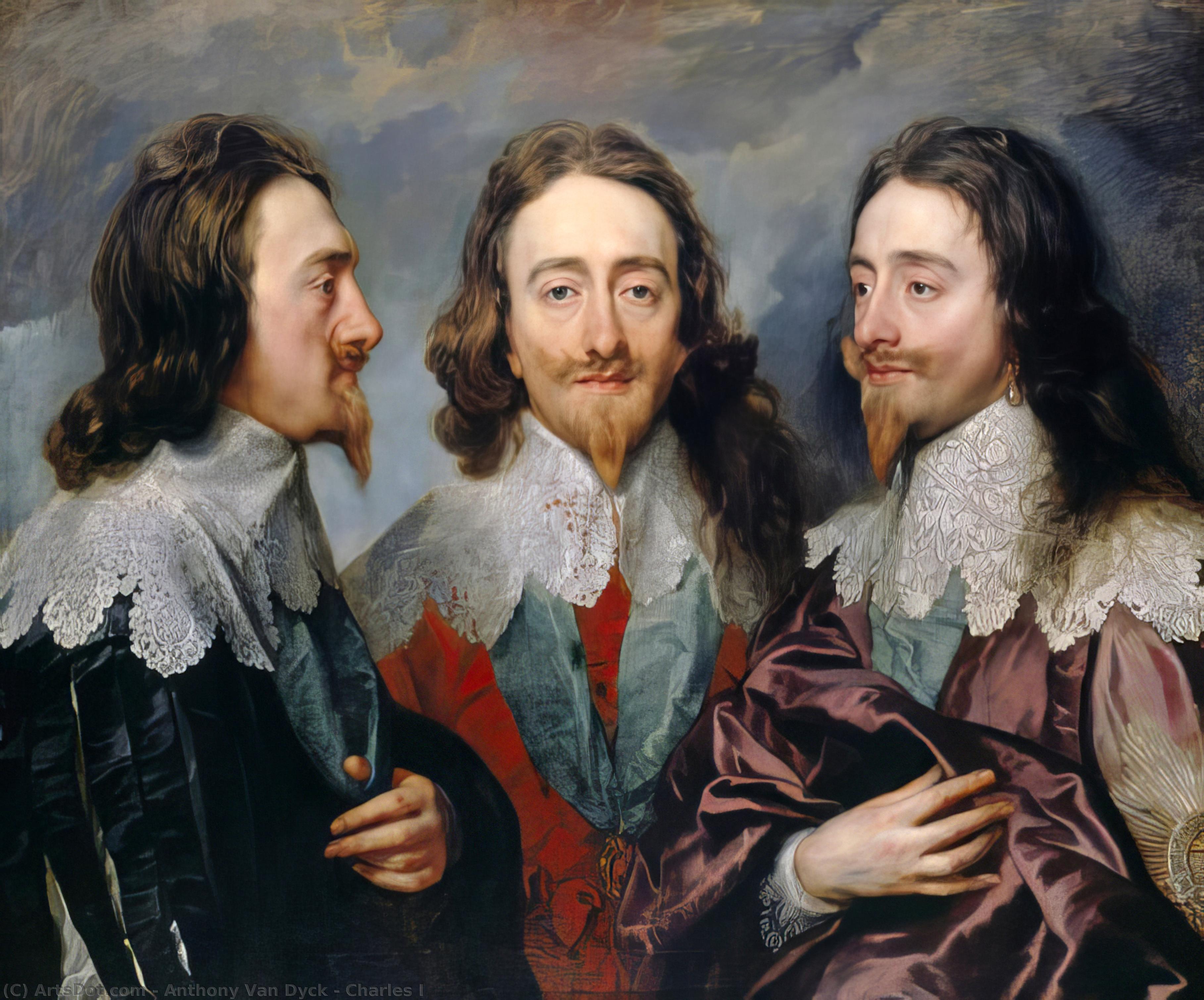
Charles I v treh položajih (1636) is the most famous painting by Anthonis van Dyck, held by the Kraljeva zbirka in London. Family Portrait (1621) and Portrait of Isabella Clara Eugenia as Widow (1628) are the next two works the world knows best. From the 1,620 works of Anthonis van Dyck in our catalogue, here are the 100 that collectors and museum visitors look at most, with the year, the museum and the story of each.

Ranked by our popularity score, which combines the searches, visits and orders for each work. Updated oktober 2026. Every masterpiece on this page can be ordered as a museum-quality, hand-painted oil reproduction or a fine art print, at the size you choose.

Portrait of Anthonis van Dyck
Anthonis van Dyck · 1599 – 1641
Born · died
1599 – 1641, Antwerpen
Movement
Baroque realism
Works in our catalogue
1.620
Most famous
Charles I v treh položajih (1636)
Most works at
Bavarske državne slikopisne zbirke

Top 10: Anthonis van Dyck's best-known paintings

Charles I v treh položajih (1636) by Anthonis van Dyck
1

Charles I v treh položajih

1636 · Olje na platnu · Kraljeva zbirka, London

"Charles I v treh položajih" predstavlja izjemno utemeljitev mojstra baroknega portretiranja, sir Anthonyja van Dycka. To popolnoma dovršeno platno, naslikano med letoma 1635 in 1636, razkriva izstopajoče umetniško znanje flamškega mojstra ter njegov globok vpliv na evropsko umetnost. Slika, ki je del prestižne kraljeve zbirke, danes postaja v Kraljevi recepcijski salonu v Windsor zamku, kjer še vedno s svojo prisotnostjo navdušuje obiskovalce.

Family Portrait (1621) by Anthonis van Dyck
2

Family Portrait

1621 · Oil On Canvas · Ermitaž, Sankt Peterburg

To gaze upon this magnificent family portrait is to step directly into the opulent drawing rooms of the early seventeenth century. It captures not merely three figures—a distinguished man, an elegant woman, and a cherished child—but an entire tableau of familial pride and societal standing. The composition itself speaks volumes; every fold of fabric, every carefully placed hand, contributes to a narrative of enduring connection. The rich, dramatic red background…

Portrait of Isabella Clara Eugenia as Widow (1628) by Anthonis van Dyck
3

Portrait of Isabella Clara Eugenia as Widow

1628 · Oil On Canvas · Museo de Arte de Ponce, Ponce

Sir Anthony van Dyck’s “Portrait of Isabella Clara Eugenia as Widow” is more than just a depiction of a noblewoman; it's a carefully constructed tableau of power, grief, and the enduring legacy of a formidable ruler. Painted in 1628, this oil-on-canvas work transports us to the heart of the Spanish Netherlands during a period of significant political and personal upheaval. Isabella Clara Eugenia, daughter of Philip II of Spain, served…

Jacqueline van Caestre (1622) by Anthonis van Dyck
4

Jacqueline van Caestre

1622 · Oil On Panel · Royal Łazienki Museum, Varšava

The portrait of Jacqueline van Caestre, painted in 1622 by the masterful Sir Anthony van Dyck, is more than a mere likeness; it’s a carefully constructed tableau of wealth, status, and burgeoning domesticity. Within its richly layered composition lies a captivating story of a noblewoman navigating the complexities of marriage and courtly life in 17th-century Antwerp. Van Dyck, already establishing his signature style—characterized by an almost sensual realism and a…

Susanna and the Elders (1622) by Anthonis van Dyck
5

Susanna and the Elders

1622 · Olje na platnu · Alte Pinakothek, München

In the grand tapestry of the Flemish Baroque, few works capture the visceral intersection of vulnerability and voyeurism as profoundly as Sir Anthony van Dyck’s Susanna and the Elders. Painted around 1622, this monumental canvas is far more than a mere biblical illustration; it is a psychological drama frozen in time. The scene centers on Susanna, a figure of profound grace and purity, caught in a moment of harrowing intrusion.…

Genoese Noblewoman (1622) by Anthonis van Dyck
6

Genoese Noblewoman

1622 · Oil On Canvas · The Frick Collection, New York City

Anthony van Dyck's "Genoese Noblewoman," painted circa 1625-1627, isn’t merely a portrait; it’s a meticulously crafted window into the opulent world of early 17th-century Genoa. This captivating work, now residing within The Frick Collection in New York City, offers a rare glimpse into the refined tastes and social dynamics of a wealthy Italian city-state – a vibrant hub of commerce, art, and cultural exchange during a period of immense artistic…

Henrietta Maria (1635) by Anthonis van Dyck
7

Henrietta Maria

1635 · Oil On Canvas

The gaze of Henrietta Maria meets the viewer through this commanding portrait by Anthony van Dyck. Executed in 1636, the work captures Henrietta Maria of France in a moment of poised royal dignity. She exists here as the Queen of England, a position she holds through her marriage to King Charles I. The painting functions as a visual declaration of her status and her presence within the English court.

Portrait of Queen Henrietta-Maria (1638) by Anthonis van Dyck
8

Portrait of Queen Henrietta-Maria

1638 · Oil On Canvas · Ermitaž, Sankt Peterburg

To stand before this portrait is to encounter the quiet gravity of the seventeenth-century English court. The Queen stands slightly off-center, her figure anchored by the heavy weight of crimson drapery and a draped table. There is a certain stillness here, a moment caught between the political tensions of 1638 and the personal dignity of the sitter. Van Dyck uses light to sculpt her form, pulling her face and chest…

The healing of the paralytic (1620) by Anthonis van Dyck
9

The healing of the paralytic

1620 · Oil On Canvas · Bavarske državne slikopisne zbirke, München

In this oil painting, titled The healing of the paralytic, Anthony van Dyck explores a moment of profound spiritual intervention. The work, which dates to about 1618-20, captures the immediate aftermath of a miracle. We find ourselves witnessing the precise instant of transition between infirmity and restoration. The subject matter is drawn from the New Testament, specifically the narratives found in Matthew 9:1-8 or John 5:1-15.

Portrait of Alexandre della Faille (1589-1653) (1632) by Anthonis van Dyck
10

Portrait of Alexandre della Faille (1589-1653)

1632 · Oil On Canvas · Kraljevi muzeji lepih umetnosti na Belgiji, Bruselj

A dignified three-quarter length portrait, this work captures a middle-aged man positioned centrally against a dark, atmospheric background. The subject, Alexandre della Faille, is rendered with a sense of quiet authority and formal composure. A voluminous white ruff collar acts as the primary focal point, its crisp texture contrasting sharply against the heavy, dark fabric of his cloak. Light enters from the upper left, casting soft shadows across the right…

The rest of the Anthonis van Dyck ranking, 11 to 100

The Pietà (1629) by Anthonis van Dyck
#12

The Pietà

1629 · Muzej Prado

Step closer to observe the weight of this scene. In this 1629 composition, we find the Virgin Mary cradling the limp, pale body of Christ. The arrangement is…

Order a reproduction →
The Lomellini Family (1627) by Anthonis van Dyck
#16

The Lomellini Family

1627

To stand before 'The Lomellini Family' is to step directly into the gilded drawing rooms of 17th-century Genoese aristocracy. Anthony van Dyck, a painter whose elegance seemed to…

Order a reproduction →
Moses and the Brazen Serpent (1530) by Anthonis van Dyck
#19

Moses and the Brazen Serpent

1530

Moses and the Brazen Serpent by Anthony van Dyck captures a moment of divine intervention from the Book of Numbers. The oil painting on canvas depicts the biblical…

Samson and Delilah (1630) by Anthonis van Dyck
#24

Samson and Delilah

1630 · Kunsthistorisches Museum

In the grand tapestry of the Flemish Baroque, few moments capture the tension between divine strength and human frailty as poignantly as Sir Anthony van Dyck’s Samson and…

Bring it home →
Charles I (1600-49) on Horseback (1635) by Anthonis van Dyck
#26

Charles I (1600-49) on Horseback

1635 · Hampton Court Palace

The scene unfolds with the commanding presence of Charles I (1600-49) on Horseback, a work by the artist Anthony van Dyck. Created in 1635, the portrait captures the…

Bring it home →
Cupid and Psyche (1640) by Anthonis van Dyck
#27

Cupid and Psyche

1640 · Kraljeva zbirka

Anthony van Dyck's "Cupid and Psyche," painted in 1640, is more than just a depiction of a mythological romance; it’s a distillation of the Baroque spirit – a…

Bring it home →
Queen Henrietta Maria of England (1620) by Anthonis van Dyck
#28

Queen Henrietta Maria of England

1620 · Bavarske državne slikopisne zbirke

In this three-quarter length portrait, Anthony van Dyck positions Queen Henrietta Maria of England slightly off-center. This subtle shift creates a quiet tension within the frame. A luminous…

Bring it home →
Queen Henrietta Maria of England (1639) by Anthonis van Dyck
#30

Queen Henrietta Maria of England

1639 · Statens Museum For Kunst

Queen Henrietta Maria of England, painted by Anthony van Dyck, captures the queen consort of Charles I. Dated 1636, the portrait presents the woman who was born in…

Bring it home →
Saint Sebastian and the Angel (1631) by Anthonis van Dyck
#31

Saint Sebastian and the Angel

1631 · Galleria Sabauda

A diagonal line cuts through the composition, pulling the eye from the descending angel down to the slumped, pale form of Saint Sebastian. The saint’s skin is luminous,…

Bring it home →
Portrait of a painter (1640) by Anthonis van Dyck
#32

Portrait of a painter

1640 · Kunstmuseum Basel

We are looking at Portrait of a painter, a work by Sir Anthony van Dyck. Created about 1640, this piece presents a man whose identity is tied closely…

Bring it home →
St Jerome (1620) by Anthonis van Dyck
#35

St Jerome

1620 · Nationalmuseum

The composition centers on the muscular, elderly figure of St. Jerome, positioned in a wilderness setting. His torso is partially exposed, draped in a voluminous red cloth that…

Order a reproduction →
Venetia, Lady Digby (1634) by Anthonis van Dyck
#36

Venetia, Lady Digby

1634

To stand before this magnificent portrait is to step directly into the dramatic heart of the seventeenth century. Sir Anthony van Dyck’s depiction of Venetia, Lady Digby is…

Order a reproduction →
Crucifixion (1622) by Anthonis van Dyck
#38

Crucifixion

1622 · San Zaccaria

Sir Anthony van Dyck's 1622 depiction of the Crucifixion is not merely a representation of a biblical event; it’s a visceral exploration of human suffering and spiritual anguish,…

Commission a hand-painted copy →
Ottaviano Canevari (1627) by Anthonis van Dyck
#40

Ottaviano Canevari

1627 · The Frick Collection

Sir Anthony van Dyck’s 1627 portrait of Ottaviano Canevari is more than simply a likeness; it's a carefully constructed tableau of intellect, status, and the quiet dignity of…

Bring it home →
Lamentation of Christ (1620) by Anthonis van Dyck
#41

Lamentation of Christ

1620 · Bavarske državne slikopisne zbirke

In this 1620 work, we find ourselves drawn into a tight, pyramidal arrangement of figures that centers entirely on the lifeless body of Christ. A heavy, sacred silence…

Commission a hand-painted copy →
Saint Sebastian (1620) by Anthonis van Dyck
#44

Saint Sebastian

1620 · Bavarske državne slikopisne zbirke

The oil on canvas known as Saint Sebastian is an artwork by Anthony van Dyck. Created about 1620, the painting captures a moment of martyrdom. The figure is…

Order a reproduction →
Sir Kenelm Digby (1640) by Anthonis van Dyck
#47

Sir Kenelm Digby

1640 · National Portrait Gallery

To gaze upon this portrait of Sir Kenelm Digby is to step directly into the opulent, charged atmosphere of the early seventeenth century English court. The subject, depicted…

Commission a hand-painted copy →
Portrait of an Old Man (1618) by Anthonis van Dyck
#49

Portrait of an Old Man

1618 · Liechtenstein Museum

Sir Anthony van Dyck's "Portrait of an Old Man," painted circa 1618, is more than a simple likeness; it’s a profound meditation on time, wisdom, and the quiet…

Order a reproduction →
Portrait of a Man (1922) by Anthonis van Dyck
#50

Portrait of a Man

1922 · Bavarske državne slikopisne zbirke

This work is a Portrait of a Man by the Flemish Baroque artist Anthony van Dyck. Dated 1922, the painting presents a formal, full-length composition. The subject is…

Order a reproduction →
Charles I in Three Positions (1636) by Anthonis van Dyck
#51

Charles I in Three Positions

1636 · Kraljeva zbirka

In the grand tapestry of Baroque portraiture, few works command the room with as much quiet authority as Sir Anthony van Dyck’s “Charles I in Three Positions.” Completed…

Order a reproduction →
Portrait of a Genovese Gentleman (1621) by Anthonis van Dyck
#53

Portrait of a Genovese Gentleman

1621 · Gemäldegalerie

To stand before this portrait is to step directly into the opulent, sophisticated world of early 17th-century European aristocracy. Sir Anthony van Dyck, the Flemish master whose brushstrokes…

Order a reproduction →
Portrait of a Man (1618) by Anthonis van Dyck
#58

Portrait of a Man

1618 · Liechtenstein Museum

Sir Anthony van Dyck's “Portrait of a Man,” painted circa 1618-1619, is not merely a likeness; it’s a carefully constructed meditation on presence and authority. This small yet…

Commission a hand-painted copy →
Marie de Raet (1631) by Anthonis van Dyck
#59

Marie de Raet

1631 · Wallace Collection

To stand before Marie de Raet is to be enveloped in the profound stillness of the early seventeenth century. This magnificent portrait by Sir Anthony van Dyck, dating…

Bring it home →
The Virgin and Child (1631) by Anthonis van Dyck
#63

The Virgin and Child

1631 · Buckingham Palace

In this Baroque oil painting, the Virgin Mary is positioned at the center of a pyramidal structure, cradling the Christ Child. She wears a rose-colored tunic beneath a…

Order a reproduction →
Lord George Stuart (1638) by Anthonis van Dyck
#64

Lord George Stuart

1638 · National Portrait Gallery

To gaze upon this portrait of Lord George Stuart is to step directly into the opulent, yet deeply thoughtful, world of early seventeenth-century English aristocracy. Sir Anthony van…

Order a reproduction →
Queen Henrietta Maria (1760) by Anthonis van Dyck
#66

Queen Henrietta Maria

1760 · Birmingham Museum and Art Gallery

In this oil on canvas work from 1636, Sir Anthony van Dyck presents Queen Henrietta Maria. The portrait captures the queen, who lived from 1609 to 1669, with…

Order a reproduction →
The Polish Rider (1620) by Anthonis van Dyck
#69

The Polish Rider

1620 · Bavarske državne slikopisne zbirke

The composition is dominated by the diagonal movement of the horse and rider. This movement creates a sense of forward momentum across the canvas. The subject is a…

Order a reproduction →
Kraljica Henrietta Maria (1636) by Anthonis van Dyck
#73

Kraljica Henrietta Maria

1636 · Metropolitanski muzej umetnosti

Anthony van Dyck's "Queen Henrietta Maria," painted in 1636, is more than just a portrait; it’s a meticulously crafted document of power, faith, and the intricate dance of…

Order a reproduction →
Lady Dacre (1633) by Anthonis van Dyck
#74

Lady Dacre

1633 · Denver Art Museum

Sir Anthony van Dyck’s “Lady Dacre” is not merely a portrait; it's a carefully constructed tableau of Renaissance elegance, imbued with subtle symbolism and the quiet dignity of…

Commission a hand-painted copy →
Charles i - (16) by Anthonis van Dyck
#76

Charles i - (16)

In this work, titled Charles i - (16), Anthony van Dyck presents a formal bust-length depiction of the monarch. The subject is Charles I, who held the titles…

Bring it home →
Deux têtes d (1650) by Anthonis van Dyck
#77

Deux têtes d

1650 · Museum of Fine Arts

Sir Anthony van Dyck's "Deux têtes d" – literally, “Two Heads” – is not merely a painting; it’s an arresting tableau of psychological depth and subtle drama. Completed…

Bring it home →
Christ carrying the Cross by Anthonis van Dyck
#83

Christ carrying the Cross

Musei di Strada Nuova

In Christ carrying the Cross by Anthony van Dyck, the viewer is met with a tightly cropped, bust-length portrait. The composition focuses entirely on the upper torso and…

Bring it home →
Ecce Homo (1626) by Anthonis van Dyck
#85

Ecce Homo

1626 · The Barber Institute of Fine Arts

Sir Anthony van Dyck’s “Ecce Homo,” painted circa 1625-1626, is not merely a depiction of Christ before Pilate; it's an intensely human portrayal of sorrow, humility, and the…

Bring it home →
Margareta Snyders (1620) by Anthonis van Dyck
#86

Margareta Snyders

1620

To gaze upon Anthony Van Dyck's portrait of Margareta Snyders is to step directly into the opulent, emotionally charged world of the early seventeenth century. This painting, executed…

Bring it home →
Margareta de Vos (1620) by Anthonis van Dyck
#87

Margareta de Vos

1620 · The Frick Collection

Sir Anthony van Dyck’s “Margareta de Vos,” painted in 1620, is more than just a portrait; it's a meticulously crafted tableau of wealth, status, and subtle artistry. This…

Order a reproduction →
Portrait of a Man (1618) by Anthonis van Dyck
#90

Portrait of a Man

1618 · Liechtenstein Museum

In this formal portrait from 1618, Sir Anthony van Dyck presents a man positioned slightly off-center, facing forward to engage the viewer directly. The composition is characterized by…

Bring it home →
Portrait of James Hamilton (1630) by Anthonis van Dyck
#92

Portrait of James Hamilton

1630 · Liechtenstein Museum

A Noble Presence: Unveiling Anthony van Dyck’s Portrait of James Hamilton The image before you captures not merely a likeness, but the very essence of 17th-century power and…

Bring it home →
Charles I on Horseback (1635) by Anthonis van Dyck
#93

Charles I on Horseback

1635 · National Gallery

Sir Anthony van Dyck's “Charles I on Horseback,” painted in 1635, is more than just a portrait; it’s a carefully constructed statement about power, authority, and the evolving…

Bring it home →
The Lomellini Family (1626) by Anthonis van Dyck
#96

The Lomellini Family

1626 · National Gallery of Scotland

To stand before Sir Anthony van Dyck’s “The Lomellini Family” is to step directly into the gilded drawing rooms of seventeenth-century Genoa, where the air feels heavy with…

Commission a hand-painted copy →
Samson in Dalila (1620) by Anthonis van Dyck
#97

Samson in Dalila

1620

Očarljiv motiv in narativna globina To močno pravočasno mojstrovino živopisno prikazuje biblijsko zgodbo o Samsonu in Delilah, ki zajema ključni trenutek, poln napetosti, izdaje in čustvene intenzivnosti. Scena…

Order a reproduction →
Abraham and Isaac (1617) by Anthonis van Dyck
#98

Abraham and Isaac

1617 · Národní Galerie

Sir Anthony van Dyck's “Abraham and Isaac,” painted in 1617, is more than just a biblical scene; it’s a profound meditation on faith, obedience, and the agonizing weight…

Commission a hand-painted copy →
Portrait of Anna van Craesbecke (1635) by Anthonis van Dyck
#99

Portrait of Anna van Craesbecke

1635 · Staatliche Museen

Sir Anthony van Dyck’s “Portrait of Anna van Craesbecke,” painted in 1635, is more than just a likeness; it's a meticulously crafted tableau of aristocratic life and the…

Bring it home →
A wooded ridge (1630) by Anthonis van Dyck
#100

A wooded ridge

1630 · Art Gallery of South Australia

Sir Anthony van Dyck's "A Wooded Ridge," painted around 1630, isn’t merely a landscape; it’s an invitation into a hushed and contemplative realm. This evocative piece, rendered in…

Bring it home →

Anthonis van Dyck's paintings by period

The subjects Anthonis van Dyck painted most

The four subjects that return most often among these masterpieces, with the finest example of each.

Where to see Anthonis van Dyck's paintings

The 8 museums that hold the most of the paintings on this page.

Museum City Works by Anthonis van Dyck Paintings from this list
Bavarske državne slikopisne zbirke, MünchenBavarske državne slikopisne zbirke München 57 The healing of the paralytic, Equestrian Portrait of Charles I of England, Queen Henrietta Maria of England
Ermitaž, Sankt PeterburgErmitaž Sankt Peterburg 25 Family Portrait, Portrait of Queen Henrietta-Maria, Portrait of Charles I, King of the Great Britain (1600-1649)
Kraljeva zbirka, LondonKraljeva zbirka London 29 Charles I v treh položajih, Cupid and Psyche, Charles I in Three Positions
Liechtenstein Museum, BenetignanoLiechtenstein Museum Benetignano 23 Portrait of an Old Man, Portrait of a Man, Portrait of a Man
The Frick Collection, New York CityThe Frick Collection New York City 8 Genoese Noblewoman, Ottaviano Canevari, Margareta de Vos
Wallace Collection, LondonWallace Collection London 9 Queen Henrietta Maria, Marie de Raet
National Portrait Gallery, LondonNational Portrait Gallery London 6 Sir Kenelm Digby, Lord George Stuart
Scottish National Portrait Gallery, EdinburghScottish National Portrait Gallery Edinburgh 5 Thomas Hamilton, 2nd Earl of Haddington, 1600 - 1640, Alexander Henderson (c.1583–1646), Presbyterian Divine and Diplomatist

Anthonis van Dyck through the decades: one masterpiece for each

  1. 1610s
    The Martyrdom of Saint Sebastian (1616) by Anthonis van Dyck
    #45 of 100

    The Martyrdom of Saint Sebastian

    Age 11 – 20 · Bavarske državne slikopisne zbirke

    The Martyrdom of Saint Sebastian emerges from the shadows of the Baroque era, a religious work that captures a moment of profound transition. In this painting by Sir…

  2. 1620s
    Family Portrait (1621) by Anthonis van Dyck
    #2 of 100

    Family Portrait

    Age 21 – 30 · Ermitaž

    To gaze upon this magnificent family portrait is to step directly into the opulent drawing rooms of the early seventeenth century. It captures not merely three figures—a distinguished…

  3. 1630s
    Charles I v treh položajih (1636) by Anthonis van Dyck
    Rank 1 / 100

    Charles I v treh položajih

    Age 31 – 40 · Kraljeva zbirka

    "Charles I v treh položajih" predstavlja izjemno utemeljitev mojstra baroknega portretiranja, sir Anthonyja van Dycka. To popolnoma dovršeno platno, naslikano med letoma 1635 in 1636, razkriva izstopajoče umetniško…

  4. 1640s
    Queen Henrietta Maria (1640) by Anthonis van Dyck
    No. 17 of 100

    Queen Henrietta Maria

    Age 41 – 42 · Wallace Collection

    The Queen sits in a moment of quiet poise, her figure angled slightly away from the viewer to create a sense of graceful movement. She is draped in…

Anthonis van Dyck's paintings: frequently asked questions

What is the most famous Anthonis van Dyck painting?Show the answer

Charles I v treh položajih (1636), Kraljeva zbirka, London. Next come Family Portrait (1621) and Portrait of Isabella Clara Eugenia as Widow (1628).

At what age did Anthonis van Dyck paint Charles I v treh položajih?Show the answer

37 years old: Charles I v treh položajih dates from 1636 and Anthonis van Dyck was born in 1599.

Which are the 10 most famous Anthonis van Dyck paintings?Show the answer

Charles I v treh položajih, Family Portrait, Portrait of Isabella Clara Eugenia as Widow, Jacqueline van Caestre, Susanna and the Elders, Genoese Noblewoman, Henrietta Maria, Portrait of Queen Henrietta-Maria, The healing of the paralytic and Portrait of Alexandre della Faille (1589-1653). The ranking above gives the year and the museum of each.

How many paintings by Anthonis van Dyck are there?Show the answer

Our catalogue lists 1,620 works by Anthonis van Dyck, dated from 1616 to 1641.

Where can I see the most famous Anthonis van Dyck paintings?Show the answer

Most of them are in Bavarske državne slikopisne zbirke (München), Ermitaž (Sankt Peterburg) and Kraljeva zbirka (London). The table above lists the museums one by one.

In which period did Anthonis van Dyck paint the best-known works?Show the answer

In 1630s: 44 of the 100 works on this page date from then, among them Charles I v treh položajih.

What is the earliest famous Anthonis van Dyck painting, and the latest?Show the answer

The earliest on this page is The Martyrdom of Saint Sebastian (1616), the latest Portrait of Prince Charles Louis, Elector Palatine (1641).

What subjects did Anthonis van Dyck paint?Show the answer

Man (22), Portraiture (20) and Portrait (17), among the 100 works on this page.

What did Anthonis van Dyck paint on, and with what?Show the answer

Oil On Canvas: 75 of the 100 works on this page.

Which movement does Anthonis van Dyck's art belong to?Show the answer

Baroque realism, as the paintings on this page show.

What Anthonis van Dyck paintings does the Bavarske državne slikopisne zbirke hold?Show the answer

The healing of the paralytic, Equestrian Portrait of Charles I of England and Queen Henrietta Maria of England are among the 10 works on this page held by the Bavarske državne slikopisne zbirke, München.

Where can I buy a Anthonis van Dyck reproduction?Show the answer

Yes. Every painting on this page can be ordered as a museum-quality, hand-painted oil reproduction or a fine art print, in the size you choose, from the painting's own page.

Anthonis van Dyck: biography

Mladost, družina in šola

Sir Anthony Van Dyck se je rodil v Antwerpenu 22. marca 1599, v svetu, ki je bil prežarjen trgovino in vrhunskim poklicnim znanjem. Kot sedmi iz dvajestih otrok Marije Cupers in Francoïsa »Fransa« van Dijcka, svilenarja, je odrasel v prosperousnem gospodinjstvu, ki mu je nudilo stabilno temelj za razvoj izjemnega, zgodaj razvitega talenta za vizualno umetnost. Že zgolj z desetletnim starostjo je začel svojo formalno pot v slikarstvu pod mentorstvom Hendricka van Balena starejšega, kjer se je začela oblikovati njegova umetniška duša.

Njegova pot je bila zaznamovana z izjemno hitrim vzponom skozi tradicionalne strukture flamskega umetnostnega sveta. Ni dolgo ostal le v statusu učenca; njegova tehnična dovršenost mu je omogočila, da se je z izredno hitrostjo premaknil v yön direction neodvisnosti. Do 18. oktobra 1617 je dosegel pomembno mejnik, ko je bil sprejet v Antwerpensko ceh svetega Luke kot svobodni mojster. To zgodnje profesionalno priznanje je napovedilo prihod talenta, ki bo kmalu preseglo meje njegove rodne mestne obščine.

  • Samoportret (datiran 1613–14)

Vpliv Petra Pavla Rubensa

Smer v karieri, ki jo je sledil Sir Anthony Van Dyck, je bila temeljito oblikovana z njegovo obdobjem v studiu, kjer delal Peter Paul Rubens. To ni bilo le navadno učenišče; mladi umetnik se je vzponil v položaj glavnega asistenta mojstra, kar je zahtevalo tako tehnično natančnost kot sposobnost globoko razumevanja kompleksnega vizualnega jezika. Sam Rubens je prepoznal izjemen talent svojega protežija in mladega moza močno opisal kot najboljšega med svojimi učenci. Ta mentorstvo je Sir Anthony Van Dyck omogočilo neposreden stik z vodilnimi umetnostnimi tokovi sedemnajstega stoletja, saj je lahko z lastnimi očmi opazoval ustvarjanje monumentalnih kompozicij in vodenje izjemno plodne umetnostne delavnice.

Rubensov vpliv na mladega umetnika se je izrazil skozi skupni poudarek na ekspresiji, gesti in obliki. Čeprav je Sir Anthony Van Dyck kasneje razvil bolj prefinjen in umirjen slog, so se njegove zgodnje leta pretekle v posnemaniu energije in globoke opazovalnosti svojega mentorja. Naučil se je prevajati vitalnost življenja v olje in pigmente, kar je bila veščina, ki mu je pozneje omogočila, da se je premaknil od robustne energije Rubensovega sloga k nečem veliko bolj subtilnemu. Tehnične temelj, postavljene v tem studiu, so mu zagotovile nujno orodje za njegov kasnejši vzpon na kraljeve dvore Evrope.

Z umetniškimi potovanji po Italiji in Genovi

Že v poznih mladniških letih je Sir Anthony Van Dyck dosegel uspeh kot samostojni slikar, dosežek, ki mu je podelil impulz za odhod iz Nizozemske. Med letoma 1621 in koncem leta 1627 je potoval skozi Italijo, obdobje, ki mu je izpopolnilo sposobnost navigacije skozi zapletene družbene hierarhije evropskega nobilityja. To obdobje potovanj ni bilo le samostojno bivanje, temveč strateška potopitev v vizualni jezik mediteranske elite.

Njegov čas v Genovi se je izkazal za posebej pomemben. Med genovškimi patriciji je našel stalno stranko, katere aristokratska senzibilnost se je skladovala z njegovim razvijajočim se slogom. Njegove interpretacije teh lokalnih družin so v mestu bile z velike naklonjenosti sprejete, kar ga je uveljavilo kot slikarja, ki je zmožen zajeti specifično dostojnost, ki jo zahteva visoka družba. V teh portretih se je premaknil dlje od zgolj fizične podobnosti, saj je s platnom zajemal socialni status in notranji značaj svojih modelov.

Služba na angleškem dvoru

Sir Anthony Van Dyck je bil povezan z angleško krono že dolgo pred svojim dokončnim nastanitvijo v Londonu. Leta 1620 je vstopil v službo kralja Jakoba I., kar je bil le kratek preddenjašči njegovih obsežnih potovanj skozi Italijo in španske เนี่ยderlande. Ti leta nenehnega gibanja in raznolikih naročil so ga pripravila na globoko in nepozabno prisotnost v kraljevski družbi. Do leta 1632 se je vrnilo v Anglijo in se ulegl na dvoru, kjer se je njegova slava vrhunskega portretista dokončno utrdila. V istem letu je bil imenovan za »glavnega uradnega slikarja majestat**, položaj, ki ga je postavil v sam srgce kralješkega življenja.

Njegova prisotnost v Londonu je temeljito preoblikovala vizualni jezik monarhije. Odmaknil se je od strogih, formalnih portretov preteklosti in se namesto tega odločil, da kralja in aristokratijo predstavi z občutkom lahkotne elegance in naravne avtoritete. S svojo sposobnostjo, da je zajel notranjo naravo svojih modelov, je postal vodeči dvorski slikar v Angliji. Njegova umetnost ni bila le beleženje obrazov; on je gradil podobo moči, ki je generacije vplivala na angleški dvor. Njegovo delo v tem obdobju je prineslo občutek dostojanstva in poise, ki je definiral estetiko celotne dobe.

Tehnika in umetniški slog

Sir Anthony Van Dyck je posedel izjemno tehnično vsestranskost, ki mu je omogočala, da se brezhibno premikati med debelo, plastično uporabo oljne barve in natančne, ostremu črtami tiskovnice. Kot izjemno veščit risar je razumel strukturno nujnost močne podlage, preden je na platno dodal barvo. Njegove kompozicije so se pogosto opirale na mojstorsko razporeditev oblike, kjer je dramatična igra svetlobe in senke služila za definiranje kontur njegovih motivov. Ta uporaba chiaroscuro je v njegovih delih prinesla občutek globine in volumna, še posebej v religijskih in mitoloških scenah, kjer se je zdalo, da svetloba izvira iz teme, da bi osvetlila določeni gib ali izraz obraza.

Njegova paleta je bila značilna po globokih, nasičenih barvah in izjemni pozornosti drobnostim v teksturi. Ne glede na to, ali je prikazoval lesk svilja ali subtilno teksturo kože, je ohranil občutek rafiniranosti, ki se je izogibati težavnosti in neukemnosti nekaterih njegovih sodobnikov. Ta natančnost se ni omejevala le na uradne naročine; njegova sposobnost zajema giba in značaja mu je omogočila izstopanje v različnih žanrih, od veličastnosti mitoloških pričevanj do intimne psihološke globine portretov. Imel je poseben talent za uporabo svetlobe, ki je nakazovala družbeni status ali notranji temperament modela, pri čemer je pogosto uporabljal široke, elegantne geste in skrbno izbrane ozadja, da bi v okviru postavil posameznika.

Dediščina in trajni vpliv

Smrt, ki je Sir Anthony Van Dyck doživela v Londonu 9. decembra 1641, je označila konec kariere, ki je že predhodno preoblikovala vizualni jezik evropskih dvorišč. Kot naslednik Peter Paul Rubens je izstopil kot najpomembnejši flamski slikar sedemnajstega stoletja. Njegova prisotnost na angleškem dvoru je vzpostavila standard portretne umetnosti, ki je usmerjal razvoj umetnosti naslednjih 150 let. Imeval je edinstveno sposobnost, da je skozi prefinjeno tehniko opredelil družbeni status in notranjo naravo svojih modelov, kar je postalo merilo za vse novejšre generacije slikarjev.

Njegov vpliv se je razprostiral daleč čez meje Anglije. Skozi celotno obdobje je njegovo delo izvajalo globok vpliv na umetnost, ustvarljeno po vse Evropi. Ta doseg je bil podporedan z njegovo izjemno vsestranostjo, saj se je brez težav premikalo med zahtevami religioznih zapovedi in sofisticiranimi potrebami aristokratije. Sir Anthony Van Dyck ni zgolj beležil obrazov; konstruiral je podobo avtoritete in elegancije, ki je postala prednostna estetika za tiste, ki so si želeli izpostaviti svojo moč in status.

  • Charles I in trije položaji (1636)
  • Otroci Balbi
  • Samoportret (1622)

All 1620 works by Anthonis van Dyck →