
1
Great Expectations
Ročno slikana oljna reprodukcija od $324 43 × 23 cm
Velikost kot pri originalu $638 137 × 76 cm Naročite v originalni velikosti →

Great Expectations (1879) je najbolj znano sliko avtorja Robert Mcgregor, ki se nahaja v muzeju Scottish National Gallery v mestu Edinburgh. The Turnip Field (1880) in Aitken Dott, 1815 - about 1880. Art dealer (1891) sta naslednji dve dela, ki jih svet najbolje pozna. Od 16 del umetnika Robert Mcgregor v našem katalogu so tu tista 16, ki jih zbiratelji in obiskovalci muzejev najpogosteje opazujejo, vključno z letnico, muzejom in zgodbojo vsakega dela.
Uvrščeno na podlagi naše ocene priljubljenosti, ki združuje število iskanj, obiskov in naročil za vsako delo. Posodobljeno november 2026. Vsako podobno delo na tej strani je mogoče naročiti kot muzejsko kakovostno ročno slikano oljno reprodukcijo ali umetniški natisk v izbrani velikosti.


3 muzejev, ki vsebujo največ slik na tej strani.
| Muzeji | Mesto | Sloga Robert Mcgregor | Slike iz tega seznama |
|---|---|---|---|
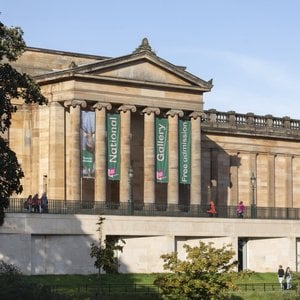 Scottish National Gallery |
Edinburgh | 1 | Great Expectations |
 The Hunterian Museum and Art Gallery |
Glasgow | 1 | The Turnip Field |
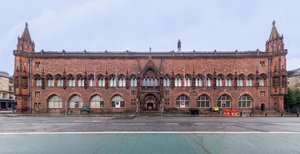 Scottish National Portrait Gallery |
Edinburgh | 1 | Aitken Dott, 1815 - about 1880. Art dealer |


Great Expectations (1879), Scottish National Gallery, Edinburgh. Nato sledeta The Turnip Field (1880) in Aitken Dott, 1815 - about 1880. Art dealer (1891).
32 let: delo Great Expectations iz leta 1879, pri čemer je Robert Mcgregor rodil/a v 1847.
Great Expectations, The Turnip Field, Aitken Dott, 1815 - about 1880. Art dealer, Les Moulières, Villerville, Collecting cockles, The and of the day, The water-carrier, Scottish fisherfolk, Breakfast time in In the orchard. Zgornja lestica prikazuje leto in muzej za vsako od njih.
V našem katalogu je navedenih 16 del avtorja Robert Mcgregor, datiranih od 1879 do 1902.
Večina njih se nahaja v Scottish National Gallery (Edinburgh), The Hunterian Museum and Art Gallery (Glasgow) in Scottish National Portrait Gallery (Edinburgh). Zgornja tabela navaja muzeje posamezno.
Najstarejšo delo na tej strani je iz Great Expectations (1879), najnovejše pa iz Les Moulières, Villerville (1902).
Da. Vsako sliko na tej strani lahko naročite kot muzejsko kakovostno ročno naslikano oljno reprodukcijo ali umetniški natisk v izbrani velikosti neposredno s strani posamezne slike.
Born in Bradford, England, in 1847 to Scottish parents, Robert McGregor’s artistic journey was a testament to the enduring appeal of depicting the realities of rural British life. While his early years were spent outside Scotland, a deep connection to his heritage and a keen observation of the landscape ultimately shaped his distinctive style and subject matter. McGregor's career unfolded primarily in Edinburgh, where he established himself as a respected artist known for his realistic portrayals of Scottish fisherfolk, farmers, and the ever-changing rhythms of the countryside.
McGregor’s artistic development was significantly influenced by the prevailing Realist movement, which sought to capture everyday life with honesty and detail. He drew inspiration from artists like Jean-François Millet, whose depictions of rural laborers resonated deeply with McGregor's desire to portray the dignity and hardship of working people. The Dutch School of painting, particularly its emphasis on light and atmosphere, also played a crucial role in shaping his technique. His travels to France and the Netherlands provided invaluable opportunities for study and experimentation, allowing him to refine his skills and develop a unique visual language.
McGregor’s paintings are overwhelmingly characterized by their meticulous attention to detail and their ability to evoke a strong sense of place. He rarely idealized his subjects; instead, he presented them with unflinching honesty, capturing the weariness of labor, the beauty of the natural world, and the quiet dignity of ordinary lives. His compositions often feature expansive landscapes—rolling hills, windswept moors, and dramatic skies—against which the figures of his subjects are set. These scenes aren’t merely backdrops; they actively contribute to the narrative, reflecting the characters' connection to their environment.
His most celebrated works depict Scottish fisherfolk engaged in their daily routines – hauling nets, mending sails, and braving the elements. These paintings offer a poignant glimpse into a vanishing way of life, capturing the resilience and stoicism of these men as they faced the challenges of the sea. Equally compelling are his depictions of rural laborers—farmers tending their fields, shepherds guiding their flocks, and children playing in the meadows. McGregor’s ability to convey both the physical demands of work and the emotional lives of his subjects is a hallmark of his artistic achievement.
McGregor was primarily a painter of oil on canvas, employing a technique characterized by its solidity and depth. He utilized a limited palette—primarily earthy tones—to create a sense of realism and to emphasize the textures of the landscape and the clothing of his subjects. His brushwork is generally smooth and controlled, yet he skillfully used variations in tone and color to suggest light, shadow, and atmosphere. He was particularly adept at capturing the effects of weather – rain, mist, and sunlight – on the landscape, imbuing his paintings with a palpable sense of mood.
His compositions often follow a pyramidal structure, drawing the viewer’s eye towards the central figure or subject. This technique creates a sense of stability and balance while also emphasizing the importance of the individual within the larger context of the scene. McGregor's work demonstrates a deep understanding of perspective and spatial relationships, contributing to the overall realism and visual impact of his paintings.
Robert McGregor’s artistic career spanned several decades, during which he gained recognition as one of Scotland’s leading Realist painters. He exhibited regularly at the Royal Scottish Academy and other prestigious venues, earning critical acclaim for his honest depictions of rural life. His work was particularly appreciated for its ability to capture the spirit of a bygone era—a time when agriculture and fishing were central to the lives of many Scots.
Today, McGregor’s paintings are housed in public collections across Scotland and beyond, serving as valuable reminders of a rich cultural heritage. His legacy extends not only through his artistic achievements but also through his commitment to portraying the dignity and resilience of ordinary people. He remains an important figure in Scottish art history, celebrated for his ability to capture the beauty and complexity of rural life with remarkable skill and sensitivity.


