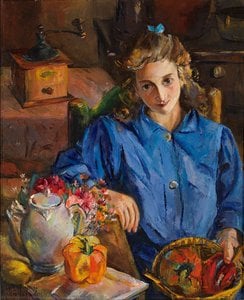
Življenje potopljeno v barvo in kulturo
Lois Mailou Jones, ime, ki je postalo sinonim za inovativno umetnost in neomajno predanost zastopanju afroameričke identitete, se je rodila v Bostonu, v Massachusettsu, 3. novembra 1905. Že od najstarejših let je odrastala v okolju, ki je cenilo ustvarjalnost; njeni starši, advokat Thomas Vreeland Jones in kozmetičarka Carolyn Adams Jones, sta spodbudjala njen vročen talent za risanje in slikanje, še posebej pri fluidni eleganci akvarelov. Poletja na Martha's Vineyard so bila oblikujoča, saj so mladega Lois predstavila na konstelacijo vplivnih osebnosti – vključno s kiparko Meto Warrick Fuller, skladateljem Harryjem T. Burleighem in avtorico Dorothy West –, ki bodo subtilno oblikovali njene umetniške občutljivosti. Ta zgodnja izpostavljenost ji je vgradila ne le občutek uživanja v umetnost, temveč tudi kulturno ponos in pomen mentorstva, vrednosti, ki jih bo nosila skozi celo življenje. Njena formalna izobrazba se je začela na High School of Practical Arts v Bostonu (1av 1919–1923), nato pa so sledile nočne predavanja na Boston Museum of Fine Arts, ki si jih je zagotovila s težko prisluženim šolskim zadostnikom. Ključno pripravništvo pri oblikovalci kostumov Grace Ripley je še dodatno razširilo njene umetniške obzorja in v njej vzbudilo zgodnjo fascinacijo nad afriškimi maskami ter njihovo potencialno simbolno izraževalnostjo. Še kot mladostnica je Jones pokazala izjemno ambicioznost, saj je že s sedemnimi leti pripravila svojo prvo samostojno razstavo na Martha’s Vineyard. Svoje znanje je nadaljevala na School of the Museum of Fine Arts v Bostonu (1923–1927), kjer je redno osvajala šolsko stipendijo Susan Minot Lane, svoje študije pa je dopolnila z rokami na Boston Normal Art School, kar je kulminiralo z diplomsko izobrazbo v oblikovanju na Design Art School of Boston leta 1928.Od oblikovanja tekstilja do umetnične neodvisnosti
Jonesova je svojo začetno profesionalno pot narisala v svet oblikovanja tekstila, kjer je delala za podjetji F. A. Foster Company v Bostonu in Schumacher Company v New Yorku. Vendar pa je transformativno poletje na Univerzi Harvard leta 1928 v njej vzbudilo globljo željo – da se v celoti posveti slikarstvu. Ta odločitev se je skladala z vzpostavljanjem Harlem Renaissance, intelektualnega in umetniškega gibanja, ki je globoko vplivalo na njeno delo. Vpliv umetnika Aarona Douglasa je postal še posebej pomemben; njegova stilizirana prikazovanja afroameričkega življenja in vključevanje afriških motivov sta globoko resonirala z njeno lastno prihajajočo estetsko vizijo. Njena pomembna skladba, The Ascent of Ethiopia, stoji kot spomenik temu obdobju, saj odraža tako Douglasov stilski vpliv kot njeno naraščajoče predanost slavljenju afriškega dediščine. Vendar Jones ni bila zadovoljna le s prostori enega umetniškega gibanja ali geografske lokacije. Odpravila se je na extensive potovanja po Evropi, Africi in Karibih, pri čemer je vsako potovanje pustilo neizbrisen след na njen razvijajoči se slog. Te izkušnje so razširile njeno paleto, tako dobesedno kot simbolično, saj jo je izpostavila različnim kulturam, živahnim barvam in novim načinom opazovanja sveta. Njena poroka s haitijskim grafičnim oblikovalcem Louisom Vergniaudom Pierre-Noëlom leta 1953 je še dodatno obogotila njen umetniški jezik, saj so v njene kompozicije vstopili drzni vzorci in svetle barve, značilne za haitijsko umetnost. Čez čas se je Jonesov slog čudovito preoblikoval, pri čemer se je od zgodnjih impresionističnih tendenc premaknil v bolj dinamično mešanjo kubističnih elementov in abstrakcije, vedno pa je ohranil svojo edinstveno osebno noto.Dediščina, utopljena v izobraževanje in zagovarjanje
Poleg svojih dosežkov kot umetnica je Lois Mailou Jones velik del svojega življenja posvetila izobraževanju in zagovarjanju pravic. Podajanje je začela kmalu po končani študiji, vendar se je soočila z razočarajočo diskriminacijo, ko je direktor Boston Museum School predlagal, naj si poišče zaposlitev na jugu namesto v njihovem zavodu. Neustrašena je leta 1928 ustanovila oddelek za umetnost na Palmer Memorial Institute v Severni Karolini, pri čemer je pokazala izjemno vsestranost, saj je trenirala košarko, poučevala ljudski ples in glasbeno spremljala cerkvene obrednosti. Leta juč 1930 se je pridružila profesoratu Univerze Howard v Washingtonu, D.C., pod vodstvom Jamesa Vernonja Herringa, kjer je ostala kot profesorica oblikovanja in akvaretnega slikarstva do upokojitve leta 1977. Na Howardu je Jones postala mentorica generacij afroameričkih umetnikov, vključno z velikani, kot so David Driskell, Elizabeth Catlett in Sylvia Snowden, pri čemer je negovala njihove talente in jim nudila spodbudo, ki jo potrebujejo za premagovanje sistemsnih ovir. Skozi celotno svojo karierno je neusmiljeno zagovarjala prepoznavnost afroameriške umetnosti in umetnikov, izzivala prevladujoče pristranske mnenja in spodbujala raznolikost v umetniškem svetu. V 1970ih je služila kot kulturna ambasadora za Afriko v agenciji United States Information Agency, s čimer je še utrdila svojo vlogo mostu med kulturami in močnega glasu za umetniško izmenjavo.Trajen vpliv pionirke
Prispevki Lois Mailou Jones k ameriški umetnosti so neizmerni. Njeno del je zdaj vključen v prestižne zbirke, med drugim Smithsonian American Art Museum, The Metropolitan Museum of Art in National Museum of Women in the Arts, kar je dokaz njenega trajnega dediščine. Razbila je ovire za afroameriške umetnike in dokazala, da talent ne pozna rasnih meja. Njene izložbe s fundacijo William E. Harmon leta 1929 ("Negro Youth") so pomagale pritegniti pozornost na prihajajoče črne umetnike v obdobju, ko so bile priložnosti omejene. Sama Jones je pogosto izjavljala, da je njen največji prispevek bil "dokaz talenta črnega umetnika". Njena umetniška pot, ki sega skozi desetletja in objema različne vlivaje, odraža življenjsko predanost raziskovanju tem afriške dediščine, ameriškega starševstva, kulturne identitete in družbenih težav, s katerimi se soočajo Afroameričanci. Stilski premike je spremljala z eleganco in inovativnostjo, vedno pa je ostala zvesta svoji edinstveni viziji. Lois Mailot Jones je umrla v Washingtonu, D.C., 9. junija 1998, in za pustila bogato umetniško dediščino, ki še danes navdihuje in izziva gledalce. Njene slike niso le prikazi sveta; so živahna praznovanja življenja, kulture in neizmerne moči človeškega duha.Vprašanja in odgovori
Ali lahko dela umetnika Lois Mailou Jones pregledam po umetnostnim smernicam?
Raziskujte dela umetnika Lois Mailou Jones po umetniškem slogu na njegovi strani Vsi umetnostni slogi.
Kje se je rodil/a Lois Mailou Jones in v kateri državi?
Lois Mailou Jones se je rodil/a v mestu Boston v državi Združene države Amerike.
Katere barve je Lois Mailou Jones najpogosteje uporabljal/a?
Genom palete umetnika Lois Mailou Jones je stran, ki predstavlja barvni profil celotnega umetniškega dela tega avtorja.