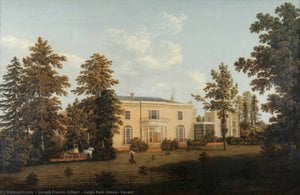
Joseph Francis Gilbert: A Sussex Painter of Rural Beauty
Joseph Francis Gilbert (1792 – 1855) emerges from the mist of early Victorian England as a quietly significant landscape painter, primarily associated with the rolling hills and historic estates of Sussex. Born into a family steeped in inventive ingenuity—his father was an inventor of ingenious bomb designs—Gilbert’s artistic journey began amidst personal hardship, shaping his perspective on the world and informing the serene yet subtly melancholic quality of his work. He wasn't a flamboyant figure, nor did he seek grand recognition; instead, Gilbert dedicated himself to capturing the essence of rural England, particularly the landscapes surrounding Chichester and Goodwood Racecourse, creating images that resonate with a timeless beauty.Early Life and Artistic Beginnings
Details regarding Gilbert’s formal artistic training remain somewhat elusive, shrouded in the typical obscurity of artists working outside the established academies. However, it's believed he honed his skills through observation and perhaps informal instruction, absorbing influences from earlier Sussex landscape painters like George Smith and William Pether – artists known for their depictions of local scenes and a focus on the “sublime” and “picturesque.” He began exhibiting his work in 1813 at the Royal Academy and subsequently at institutions such as the British Institution and the Society of Artists, steadily building a reputation for capturing the light and atmosphere of the Sussex countryside. His early works demonstrate a clear debt to these predecessors, utilizing similar compositional techniques and a focus on depicting the natural world with a degree of romanticism.The Goodwood Years and Regional Style
Gilbert’s most celebrated period unfolded during his residence in Chichester and his frequent depictions of Goodwood Racecourse. These paintings aren't merely topographical records; they are imbued with a sense of place, capturing the drama of the races, the grandeur of the estate, and the quiet beauty of the surrounding landscape. The meticulous detail evident in works like “Priam winning the Gold Cup” reveals a keen eye for observation and an ability to translate complex scenes onto canvas. His style during this time developed into a distinct regional aesthetic – characterized by a muted palette, a sensitivity to light and shadow, and a focus on capturing the subtle nuances of rural life. He wasn’t interested in dramatic vistas or heroic figures; instead, he sought to portray the everyday beauty of Sussex, its fields, farms, and historic buildings.Technique and Influences
Gilbert's technique was rooted in traditional landscape painting practices, employing oil paints on canvas with a careful attention to detail and atmospheric perspective. He demonstrated a mastery of light and shadow, skillfully rendering the changing conditions of Sussex weather. While he undoubtedly drew inspiration from his predecessors, Gilbert’s work also reflects the broader artistic trends of the early Victorian era – a growing interest in nature, a celebration of rural life, and a desire to capture the beauty of the British landscape. The influence of the Romantic movement is evident in his emphasis on emotion and imagination, though he tempered this with a more restrained and observational approach.Legacy and Historical Significance
Joseph Francis Gilbert’s contribution to English landscape painting may not be widely recognized today, but his work holds considerable historical significance. He represents a vital link between the earlier generations of Sussex artists and the development of Victorian landscape painting. His paintings offer valuable insights into the social and cultural life of 19th-century England, capturing a sense of place and time that is both evocative and enduring. His depictions of Goodwood Racecourse, in particular, provide a fascinating glimpse into the leisure activities and social customs of the landed gentry. Furthermore, his work resides within the collection of the Government Art Collection, ensuring its continued preservation and accessibility for future generations of art enthusiasts. Gilbert’s legacy lies not in grand pronouncements or revolutionary innovations, but in the quiet beauty and enduring charm of his Sussex landscapes – a testament to the power of observation and the timeless appeal of the English countryside.Vprašanja in odgovori
Koliko umetnin umetnika Joseph Francis Gilbert je na voljo za ogled?
Na strani Vsi umetniški slogi si lahko ogledate 14 umetnin del umetnika Joseph Francis Gilbert.
Kako najdem dela umetnika Joseph Francis Gilbert v določeni barvni paleti?
Delo umetnika Joseph Francis Gilbert si lahko ogledate po barvni paleti na njegovi strani Po barvnih paletah.
V katerem zgodovinskem obdobju je delal/a Joseph Francis Gilbert?
Joseph Francis Gilbert je delal v obdobju 19th Century. To obdobje umetnikovo dejavnost umešča v zgodovinski okvir.