Joseph Dadoune: A Cartographer of Tension
Born in Nice, France, in 1975, Joseph Dadoune’s artistic journey is a deeply personal and profoundly political exploration of the spaces between worlds – East and West, sacred and secular, power and vulnerability. His work isn't merely visual; it’s an immersive experience that confronts viewers with the complexities of identity, exile, and the lingering echoes of colonialism. From his childhood spent in the Negev desert alongside his father, a shipbuilder, Dadoune developed a unique perspective shaped by contrasting landscapes and cultural narratives. This formative period instilled within him a fascination with the tension inherent in borders – both physical and symbolic – and a desire to map these zones of friction through diverse media, including video, photography, performance, drawing, and installation.
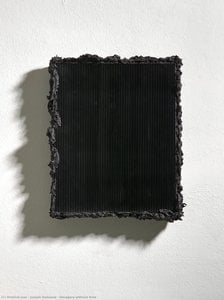
Dadoune’s artistic practice is rooted in a meticulous investigation of materiality. He frequently employs tar, a viscous, black substance reminiscent of asphalt and ancient rituals, as a central element in his work. This choice isn't arbitrary; the tar acts as a metaphor for memory, history, and the layers of sediment that accumulate over time. It’s a material that both obscures and reveals, mirroring the artist’s own approach to confronting difficult subjects. His use of food – pomegranate juice, honey, bread dough – further amplifies this thematic resonance, connecting his work to ancient traditions of sustenance, sacrifice, and communal experience.
The Desert and the Archive
Following his early years in Israel, Dadoune’s artistic focus shifted towards the development town of Ofakim in the Negev desert. This region, a site of rapid urbanization and economic transition, became the subject of “In the Desert” (2008), a multi-faceted project that sought to expose the realities of life within this ‘non-place.’ The project involved extensive research, including the collection of archival documents, guided tours, and collaborative filmmaking. Dadoune’s intention wasn't simply to document Ofakim; he aimed to actively engage with its inhabitants, fostering a critical dialogue about their experiences and challenging prevailing narratives.
This engagement extended beyond mere documentation. Dadoune utilized film, drawing, and performance to create layered representations of the town, revealing both its physical landscape and its social fabric. The resulting works interrogated the complexities of development, displacement, and the struggle for identity in a rapidly changing environment. “Impossible Calendars” (2013), exhibited at Tel Aviv Museum of Art as part of Dada’s centennial celebration, exemplifies this approach – a minimalist photographic installation that uses abstract panels and stone to explore the passage of time and the constructed nature of calendars themselves.
Performance, Drawing, and Autobiographical Narratives
Dadoune's artistic practice has evolved significantly over time, incorporating performance and drawing as central components. His early work, particularly “À l’intérieur de la zone” (Inside the Zone) (1998-2000), explored themes of flesh, food, and ritual through a series of provocative performances and photographs. He adorned himself with animal parts – guts, skins – transforming his own body into a site of symbolic transformation. This period marked a shift towards a more intensely personal and often unsettling aesthetic.
Later works, such as “Barrière protectrice” (2017), demonstrate this evolution further. This series of autobiographical war drawings, published as a book by Éditions Arnaud Bizalion, delves into Dadoune’s childhood memories of shipyards in Brittany and his experiences in the Negev desert. These drawings are not simply representations of events; they are visceral expressions of memory, trauma, and resilience. The use of tar in these works adds another layer of complexity, suggesting a connection to ancient rituals and the enduring power of history.
Recognition and Legacy
Joseph Dadoune’s work has garnered significant recognition within the international art world. He was named a Knight of Arts and Letters by the French Minister of Culture in 2017, a testament to his artistic merit and contribution to contemporary culture. His projects have been exhibited at prestigious institutions worldwide, including the Louvre, Centre Pompidou, Tel Aviv Museum of Art, and Fondation Ricard. Notably, “An Arab Spring” (2013), a collection of over 230 photographs and 17 videos documenting the events of the Arab uprisings, was acquired by the Centre Pompidou in 2017, solidifying his place as a significant voice addressing contemporary social and political issues.
Dadoune’s work continues to evolve, exploring themes of exile, identity, and the intersection of memory and history. His practice is characterized by a willingness to confront difficult subjects with honesty and vulnerability, inviting viewers to engage in critical reflection on the complexities of our shared human experience. His unique combination of media – tar, drawing, performance, photography – creates works that are both visually arresting and intellectually stimulating, cementing his position as a vital contemporary artist.