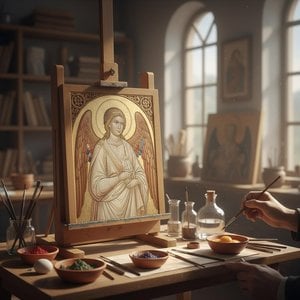
John Dickson Batten (1860–1932): A Pioneer of Egg Tempera and Enchanting Fairy Tale Illustrations
John Dickson Batten, born in 1860, was a British artist who achieved considerable renown for his distinctive style of egg tempera painting and his captivating illustrations of fairy tales—particularly those inspired by Celtic folklore. He stands as a pivotal figure in the revival of this traditional medium during the Edwardian era, marking a significant moment in British art history.
Batten’s artistic journey began with an early fascination for ornithology and animal flight studies, which profoundly influenced his approach to painting. This passion translated into meticulous observation and detailed rendering—characteristics that would become hallmarks of his oeuvre. He honed his skills through self-study and experimentation, eventually establishing himself as a respected artist in Birmingham alongside fellow tempera enthusiasts like Arthur Gaskin. Their collaborative efforts fostered a renewed appreciation for the technique’s luminosity and expressive potential.
A defining achievement was undoubtedly Batten's monumental fresco depicting Atlanta and Milanion—a retelling of Celtic legend commissioned for Reading University—which exemplifies his mastery of egg tempera and showcases his ability to convey narrative depth with visual precision. This ambitious project cemented his reputation as a visionary artist committed to preserving cultural heritage through art.
Batten’s artistic output extended beyond monumental frescoes, encompassing a diverse range of subjects including biblical scenes and imaginative depictions of fairy tales. He skillfully adapted the egg tempera technique to illuminate narratives from Arabian Nights and Dante's Inferno, demonstrating versatility and intellectual curiosity. His illustrations for “Snow White and the Seven Dwarfs” and "Europa’s Fairy Book" are celebrated for their delicate beauty and evocative storytelling—testaments to his artistic vision.
Furthermore, Batten was a prolific writer, delving into poetry and exploring themes of flight and imagination. He published two volumes of verse that captured the spirit of his time, reflecting both scientific observation and lyrical contemplation. His contribution to art scholarship included an insightful article on tempera painting practice, furthering understanding of this artistic tradition.
Batten’s legacy resides not only in his stunning paintings but also in his role as a champion of egg tempera—a medium that had largely faded from prominence by the early 20th century. He revitalized interest in its expressive qualities and ensured its continued presence within British art, securing his place as an enduring figure in artistic history. His work continues to inspire admiration for its meticulous detail, luminous color palette, and ability to transport viewers into worlds of myth and wonder.
Uredništvo WahooArt.com
Umetniški kviz
Pri vsakem vprašanju je na voljo le eden pravilen odgovor.
Unveil the sacred secrets of egg tempera on panel. Journey through the technical mastery and profound artistry of the Old Masters, from Giotto to Botticelli. An essential educational guide for Renaissance art enthusiasts seeking deep historical insight and expertise.