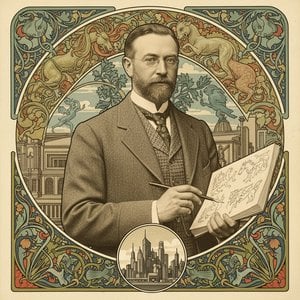
Hermann Volz: A Sculptor of Shadows and Symbolism
Hermann Volz (1877-1941) wasn’t a name that immediately resonates within the grand halls of art history, yet his work possesses a quiet intensity, a haunting beauty born from a deep engagement with German social realities and a profound understanding of symbolic representation. Born in Karlsruhe, Germany – a city steeped in artistic tradition – Volz's life unfolded against the backdrop of rapid industrialization and shifting political landscapes, profoundly shaping the themes and techniques that would define his distinctive oeuvre. Initially trained in decorative arts, he quickly gravitated towards sculpture, finding within it a means to explore complex narratives and evoke powerful emotions. His career wasn’t one of flamboyant exhibitions or celebrity status; rather, it was characterized by dedicated service to public art projects, particularly during the turbulent years of the Weimar Republic and the subsequent rise of Nazism, offering a poignant reflection on his era.
Early Influences and Artistic Development
Volz’s artistic journey began with formal training at the Art und Gewerbeschule in Karlsruhe and later at the Academy of Fine Arts in Vienna. These early experiences exposed him to diverse stylistic influences – from the meticulous detail of academic sculpture to the burgeoning currents of Jugendstil (Art Nouveau) and the nascent explorations of Expressionism. However, it was his time spent traveling through Europe—France, Spain, Italy, Africa, and Holland—that truly ignited his artistic sensibility. These journeys weren’t merely vacations; they were immersive experiences that broadened his perspective on human life, social structures, and the relationship between humanity and its environment. He developed a keen eye for detail, an appreciation for craftsmanship, and a fascination with the textures of everyday objects – elements which would later become central to his artistic vocabulary. Crucially, he began to absorb the stark realities of industrialization, witnessing firsthand the transformations sweeping across Europe and documenting them in his work.
Public Commissions and Social Commentary
Volz’s most significant contribution to the art world lies in his extensive body of public sculptures and murals, particularly those created during the Federal Art Project (FAP) under President Roosevelt's New Deal initiative in the United States. These commissions provided him with a unique opportunity to engage directly with the social fabric of American life. His works for the Golden Gate International Exposition in San Francisco, including the monumental murals depicting “The Conquest of the West by Land” and “The Conquest of the West by Sea,” are particularly noteworthy. These weren’t simply decorative pieces; they were deliberate statements about labor, progress, and the relationship between man and nature. He frequently depicted working-class men – dockworkers, railroad laborers, factory employees – portraying them with a dignity and realism that challenged prevailing social stereotypes. His style during this period leaned heavily into a simplified, almost brutalist aesthetic, reflecting the harsh realities of industrial life while simultaneously conveying a sense of stoic resilience.
Symbolism and Recurring Motifs
Despite his engagement with contemporary subjects, Volz’s work is deeply rooted in symbolism. He frequently employed recurring motifs – shadows, doorways, bridges, and fragmented figures – to explore themes of transition, uncertainty, and the human condition. The use of shadow was particularly significant; he often depicted figures partially obscured by darkness, suggesting a sense of hidden anxieties or unresolved conflicts. Doorways and arches served as metaphors for thresholds—moments of decision, passage between states, or transitions in life. His sculptures frequently featured fragmented forms, hinting at brokenness, loss, or the disintegration of established order. This symbolic language, combined with his meticulous attention to detail and masterful use of materials – often incorporating rough-hewn stone and weathered metal – created a powerfully evocative visual vocabulary.
Legacy and Historical Significance
Hermann Volz’s artistic legacy is one of quiet significance. He wasn't a revolutionary artist seeking to overturn established conventions, but rather a skilled craftsman who used his art to document the social realities of his time. His work offers a valuable window into the anxieties and aspirations of early 20th-century Germany and America. While overshadowed by more flamboyant figures in the art world, his public commissions—particularly those reflecting the struggles of working people—remain powerful testaments to the transformative potential of art as a tool for social commentary. His sculptures continue to resonate with viewers today, prompting reflection on themes of labor, identity, and the enduring challenges of navigating an increasingly complex world. His work is now housed in various museums and public spaces across the United States and Europe, ensuring that his unique artistic vision will be appreciated for generations to come.