A Fresco Master of Renaissance Rome: Goro di Gregorio
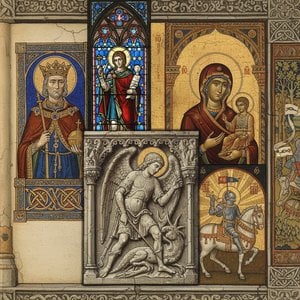
Goro di Gregorio, a name perhaps less celebrated than some of his contemporaries, nevertheless occupies a vital position in the artistic landscape of early Renaissance Italy. While biographical details remain somewhat elusive, his surviving frescoes offer compelling evidence of a skilled and sensitive artist deeply engaged with the religious fervor and burgeoning humanism of his time. Emerging from the late medieval tradition, Goro di Gregorio’s work bridges the gap between the stylized forms of Byzantine art and the more naturalistic depictions that would come to define the High Renaissance. His canvases are not merely decorative; they are vibrant narratives imbued with emotional depth and meticulous attention to detail, offering a fascinating glimpse into the artistic climate of 15th-century Rome.
Life and Context
Information regarding Goro di Gregorio’s life is fragmented, primarily gleaned from surviving artworks and historical records associated with his commissions. He was active in Rome during the first quarter of the 15th century – a period marked by political instability, papal patronage, and a renewed interest in classical antiquity. The city itself served as a crucible for artistic innovation, attracting artists from across Italy and beyond. While we lack precise dates for his birth and death, it is generally accepted that he flourished between approximately 1400 and 1435. His work suggests an apprenticeship within a traditional workshop, likely exposed to the Sienese school of painting before establishing himself in Rome. The context of his commissions – primarily religious institutions like churches and monasteries – reveals a clientele deeply invested in devotional imagery and the propagation of faith. He was not a court artist, but rather one who served the needs of the Church, creating works intended to inspire piety and reinforce theological doctrines.
The Frescoes of St. Cerbone
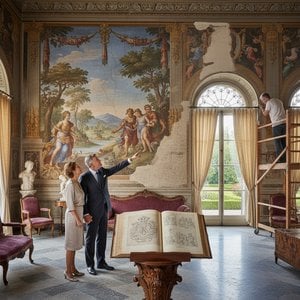
Goro di Gregorio is most renowned for his extensive fresco cycle adorning the walls of the monastery of San Cerbone in Rome. These frescoes, depicting scenes from the life of Saint Cerbone, a 3rd-century bishop and hermit, represent the pinnacle of his artistic achievement. The narrative unfolds with remarkable clarity and dramatic intensity, showcasing Goro’s ability to convey complex emotions through gesture, expression, and composition.
The “Arrival of the Ambassadors from Rome”, for example, is a particularly striking panel, teeming with figures engaged in lively interaction. The artist masterfully captures the opulence of courtly life while simultaneously emphasizing the saint's humility and spiritual authority. Other panels depict scenes of martyrdom, miracles, and visions, each rendered with meticulous detail and a keen understanding of human anatomy.
The frescoes are not simply illustrations of biblical stories; they are carefully constructed visual sermons designed to educate and inspire viewers. Goro’s use of color is particularly noteworthy – rich blues, vibrant reds, and luminous golds create a sense of otherworldly beauty and spiritual transcendence. The figures themselves possess a distinct physicality, yet retain a certain degree of stylized elegance characteristic of the late medieval tradition.
The attention to detail in the drapery, architecture, and landscape elements further enhances the realism and immersive quality of the frescoes.
Influences and Artistic Development
Identifying Goro di Gregorio’s specific artistic influences is a complex undertaking. His work demonstrates a clear debt to the Sienese school of painting, particularly the works of artists like Duccio di Buoninsegna and Simone Martini. The elegant linearity, refined color palette, and emphasis on narrative detail all point to this influence. However, Goro also reveals an awareness of contemporary Florentine developments, such as the pioneering realism of Masaccio and the sculptural forms of Donatello.
His style represents a synthesis of these diverse influences – a blending of medieval elegance with Renaissance naturalism. Over the course of his career, he gradually moved away from the more stylized conventions of Byzantine art towards a greater emphasis on anatomical accuracy and spatial depth. This evolution is evident in the increasing realism of his figures and the more sophisticated use of perspective in his later works.
Legacy and Historical Significance
While Goro di Gregorio may not be as widely recognized as some of his Renaissance peers, his contribution to the artistic landscape of early 15th-century Rome should not be underestimated. His frescoes at San Cerbone represent a significant example of religious art during a period of transition – bridging the gap between the medieval and Renaissance traditions.
- His meticulous attention to detail and dramatic narrative style influenced subsequent generations of Roman artists.
- The frescoes provide valuable insights into the religious beliefs and artistic tastes of the time.
- Goro’s work demonstrates a keen understanding of human anatomy, emotion, and composition.
His legacy lies not in groundbreaking innovation but rather in his skillful execution of established conventions – elevating them to new heights of beauty and expressiveness. He was a master storyteller, capable of conveying complex theological concepts through vibrant imagery and compelling narratives. As such, Goro di Gregorio remains an important figure in the history of Italian Renaissance art—a testament to the enduring power of fresco painting and the artistic spirit of early Rome.