The Enchanted Worlds of George Marks: A Victorian Vision
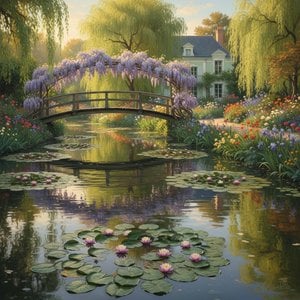
George Marks, though perhaps less celebrated than some of his contemporaries, occupies a fascinating niche in the landscape of Victorian art. He wasn't a revolutionary iconoclast challenging established norms; rather, he was a master storyteller, weaving intricate narratives onto canvas with a delicate touch and a keen eye for historical detail. His work, often imbued with a gentle humor and romantic sensibility, transports viewers to idyllic gardens, bustling medieval scenes, and the captivating realms of Shakespearean drama. To understand Marks is to appreciate a particular strain within Victorian painting – one that valued meticulous craftsmanship, literary allusion, and an escape into idealized pasts. He was deeply connected to the St John’s Wood Clique, a group of artists who favored narrative subjects and refined technique, and his paintings reflect this shared aesthetic sensibility.Early Life and Artistic Formation
Born in 1832, George Marks' early life remains somewhat shrouded in mystery. What is known is that he received formal artistic training, though the specifics are undocumented. He quickly demonstrated a talent for detailed rendering and composition, skills which would become hallmarks of his mature style. The influence of the Pre-Raphaelites is palpable in his early works – a fascination with rich color, precise botanical accuracy, and a commitment to depicting scenes with historical authenticity. However, Marks diverged from the often intense emotionalism of the Pre-Raphaelites, opting instead for a more lighthearted and decorative approach. He exhibited at the Royal Academy and the British Institution from 1857 onwards, steadily gaining recognition for his charming depictions of everyday life and literary subjects. His early success allowed him to establish a comfortable studio practice, enabling him to fully dedicate himself to his artistic pursuits.A Flourishing Career: Gardens, Medieval Life & Shakespeare
Marks’ career truly blossomed in the latter half of the 19th century. He became particularly renowned for his paintings of gardens – lush, vibrant spaces teeming with life and detail. These weren't merely representations of botanical beauty; they were carefully constructed worlds, often populated by figures engaged in leisurely activities or romantic encounters. His depictions of medieval life also proved popular, showcasing bustling market scenes, grand feasts, and intimate moments within castle walls. However, it was his Shakespearean paintings that cemented his reputation. Marks didn’t focus on dramatic climaxes; instead, he chose quieter, more introspective scenes – a contemplative Hamlet in the orchard, a playful Rosalind disguised as Ganymede, or a tender exchange between Beatrice and Benedick. These works are characterized by their exquisite attention to costume detail, atmospheric lighting, and a subtle psychological depth. He collaborated closely with his wife, Mary Eliza Marks (née Pattison), who was also an accomplished artist, often working on shared canvases and contributing significantly to the overall aesthetic of their paintings.Influences & Artistic Style
Marks’ artistic style was shaped by a confluence of influences. The Pre-Raphaelites provided a foundation in meticulous detail and historical accuracy. He admired the Dutch Masters for their mastery of light and shadow, and the works of Victorian genre painters like David Wilkie informed his ability to capture everyday life with charm and wit.- Pre-Raphaelite Influence: Detailed realism, rich color palettes, and a focus on literary themes.
- Dutch Masters: Mastery of light, shadow, and atmospheric perspective.
- Victorian Genre Painting: Ability to depict everyday life with charm and narrative skill.
Legacy & Historical Significance
While George Marks may not be a household name today, his work remains highly valued by collectors and art historians. He represents a significant strand within Victorian painting – one that prioritized craftsmanship, literary allusion, and an escape into idealized pasts. His paintings offer a fascinating glimpse into the Victorian imagination, revealing a society captivated by history, romance, and the beauty of the natural world. His contribution lies in his ability to create visually stunning narratives that transport viewers to another time and place. He was instrumental in popularizing Shakespearean themes within Victorian art, making these classic stories accessible to a wider audience. Furthermore, his paintings provide valuable insights into Victorian social customs, fashion, and garden design. His work continues to be exhibited in museums and galleries around the world, ensuring that his enchanting worlds will continue to captivate audiences for generations to come. He is remembered as a skilled craftsman, a charming storyteller, and a true representative of the Victorian aesthetic sensibility.Vprašanja in odgovori
Kako najdem vse dela umetnika George Marks v določeni tehniki?
Stran Vse tehnike razvršča dela umetnika George Marks po tehniki.
V katerih umetnostnih smereh je deloval/a George Marks?
Raziskujte dela umetnika George Marks po umetniškem slogu na njegovi strani Vsi umetnostni slogi.
Ali lahko raziskujem dela umetnika George Marks po tematikah?
Delo umetnika George Marks lahko raziskujete po temah na njegovi strani Atlas motivov.