Introduction
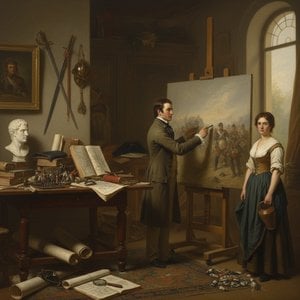
The 19th century—a period defined by sweeping transformations, from the Industrial Revolution’s relentless march to the burgeoning seeds of modern thought and artistic expression. It was an era of unprecedented change, a collision of tradition and innovation that birthed both utopian dreams and stark realities. This collection of ten artworks serves as a portal into this complex world, offering glimpses into the social, political, and emotional landscapes of a century grappling with its own identity.
The art of the 19th century wasn’t merely decorative; it was often a mirror reflecting the anxieties and aspirations of a society undergoing profound upheaval. Romanticism gave way to Realism, which in turn paved the path for Impressionism and Post-Impressionism—each movement a response to the one before, each seeking new ways to capture the essence of human experience. From the grand historical canvases that celebrated national narratives to the intimate portraits that revealed the inner lives of individuals, artists wrestled with themes of power, progress, alienation, and beauty.
These ten works—each a masterpiece in its own right—are not simply relics of the past. They continue to resonate today because they speak to universal human concerns: our relationship to nature, our search for meaning, our struggles with morality, and our enduring fascination with the complexities of the human condition. They challenge us to confront uncomfortable truths, to question established norms, and to appreciate the power of art to both reflect and shape our world.
Prepare to embark on a journey through time and emotion as we explore these iconic paintings—each one a window into the soul of the 19th century. We invite you to look closely, to feel deeply, and to discover the enduring legacy of this remarkable era."
"The Peasants of Flagey Returning from the Fair - Gustave Courbet
 The Peasants of Flagey Returning from the Fair - Gustave Courbet
Imagine the scent of hay and damp earth rising from a French village road as twilight descends. This is the world Gustave Courbet invites us into with “The Peasants of Flagey Returning from the Fair” (1855). More than just a scene, it’s a bold declaration—a rejection of romanticized landscapes for the raw, unvarnished truth of rural life.
Courbet, a pioneer of Realism, wasn't interested in idealizing his subjects. He presents these villagers not as picturesque figures, but as individuals weathered by labor, their dignity residing in their very ordinariness. The monumental scale of the canvas—and its deliberately asymmetrical composition—forces us to confront their presence, to acknowledge their lives with a respect rarely afforded to the working class in 19th-century art.
Notice the interplay of light and shadow, the earthy palette that grounds the scene in reality. The restless energy of the horses pulls your eye across the canvas, mirroring the rhythm of rural existence. This isn’t a static portrait; it's a fleeting moment captured with remarkable detail—a testament to Courbet’s meticulous observation.
“The Peasants of Flagey” offers more than just a glimpse into 19th-century France; it invites us to contemplate the beauty in simplicity, the power of everyday life. A reproduction of this artwork can bring that same sense of groundedness and quiet dignity to your space—a reminder to appreciate the unvarnished truths and enduring spirit of humanity."
"The Artist (Portrait of Gilbert Marcellin Desboutin) - Édouard Manet
 The Artist (Portrait of Gilbert Marcellin Desboutin) - Édouard Manet
Imagine a Parisian afternoon, sunlight filtering through studio windows, illuminating dust motes dancing in the air. A quiet intensity hangs between two friends—a shared understanding of artistic ambition and the weight of challenging convention. This is the atmosphere Édouard Manet captures in “The Artist (Portrait of Gilbert Marcellin Desboutin)” (1875).
More than a simple likeness, this portrait is a window into the soul of a fellow artist—and a reflection of the burgeoning modernity of 19th-century France. Manet eschews academic polish, instead embracing loose brushstrokes and direct observation to capture Desboutin’s presence with remarkable honesty. The muted palette and intimate setting draw us in, inviting us to share in this quiet moment of camaraderie.
Notice the subtle play of light on Desboutin's face, the palpable texture created by Manet’s impasto technique. This isn’t a static image; it feels alive, imbued with the energy of artistic creation. The inclusion of his dog adds a touch of domesticity—a grounding element amidst the intellectual fervor.
“The Artist” belongs in any collection exploring 19th-century art because it embodies the spirit of change and the courage to challenge established norms. A reproduction of this work can bring that same sense of quiet contemplation and artistic energy into your space—a reminder to embrace individuality and find beauty in the everyday."
"The Waitress - Édouard Manet
 The Waitress - Édouard Manet
Picture a dimly lit Parisian café, the clinking of glasses and murmur of conversation filling the air. A sense of quiet observation hangs heavy—a feeling of detachment amidst the bustle of modern life. This is the world Édouard Manet invites us into with “The Waitress.”
More than a simple genre scene, this painting captures a profound moment of alienation in 19th-century France. The waitress stands before us, her expression unreadable, seemingly lost in thought despite the activity surrounding her. Manet’s masterful use of light and shadow emphasizes her isolation, while his loose brushstrokes convey a sense of immediacy and realism.
“The Waitress” belongs among the Top 10 artworks exploring this era because it fearlessly confronts the complexities of urban existence—the loneliness that can exist even in crowded spaces. It’s a poignant reminder of the human condition, rendered with remarkable sensitivity and artistic skill.
A reproduction of this work can bring that same sense of quiet contemplation into your home—a subtle invitation to pause, reflect, and appreciate the beauty in everyday moments. It's a powerful piece for those seeking art that provokes thought and evokes emotion."
"Fishing Boats on the Deauville Beach - Gustave Courbet
 Fishing Boats on the Deauville Beach - Gustave Courbet
Imagine the salty air on your skin, the cries of gulls overhead, and the rhythmic crash of waves against the shore. This is the world Gustave Courbet invites us into with “Fishing Boats on the Deauville Beach” (1866). More than just a seascape, it’s a powerful statement about artistic honesty—a rejection of idealized landscapes for the raw beauty of everyday life.
Courbet, a pioneer of Realism, wasn't interested in romanticizing his subjects. He presents these weathered fishing boats with remarkable detail and an unwavering commitment to capturing the textures of light and shadow. The balanced composition—anchored by the two vessels—creates a sense of stability amidst the dynamism of the ocean.
This painting belongs among the Top 10 artworks exploring 19th-century France because it embodies the spirit of change and the courage to challenge artistic conventions. Courbet elevated genre paintings, demonstrating that beauty could be found in the ordinary—in the lives of working people and the landscapes they inhabited.
A reproduction of this work can bring that same sense of tranquility and connection to nature into your space—a reminder to appreciate the simple pleasures and enduring power of the natural world. It’s a piece for those seeking art that evokes serenity and inspires contemplation."
"The gulf stream, Metropolitan Mus - Winslow Homer
 The gulf stream, Metropolitan Mus - Winslow Homer
Imagine the relentless surge of ocean waves, the chilling spray on your face, and a profound sense of isolation under an unforgiving sky. This is the world Winslow Homer captures in *The Gulf Stream* (1899). More than just a depiction of a maritime struggle, it’s a powerful meditation on humanity's vulnerability—and resilience—in the face of nature’s immense power.
This painting belongs among the Top 10 artworks exploring 19th-century themes because it transcends genre. Homer doesn’t offer a simple narrative of rescue; instead, he presents us with a stoic figure battling overwhelming odds—a lone sailor adrift in a turbulent sea surrounded by circling sharks.
The bold brushstrokes and dramatic composition convey a sense of immediacy and chaos, while the muted color palette emphasizes the painting’s somber mood. *The Gulf Stream* is often interpreted as a metaphor for the struggles faced by African Americans following the Civil War—a testament to their courage and perseverance in the face of adversity.
A reproduction of this work can bring that same sense of quiet strength and contemplative power into your space—a reminder of our own vulnerability and the enduring spirit of those who navigate life’s turbulent waters. It's a piece for those seeking art that evokes emotion, inspires reflection, and sparks meaningful conversation."
"Farmhouse in Mahantango Valley - Winslow Homer
 Farmhouse in Mahantango Valley - Winslow Homer
Imagine a warm afternoon sun casting long shadows across rolling hills, the scent of hay and wildflowers filling the air. This is the world Winslow Homer invites us into with *Farmhouse in Mahantango Valley* (1880). More than just a depiction of rural life, it’s an evocative poem rendered in oil—a testament to the quiet beauty of the American landscape.
This painting belongs among the Top 10 artworks exploring 19th-century themes because it embodies a distinctly American sensibility. Homer wasn't interested in grand narratives or European landscapes; he found inspiration in the everyday lives and scenes of his homeland, capturing them with remarkable clarity and emotional resonance.
Notice the masterful use of light and shadow, creating a palpable sense of atmosphere. The warm glow illuminating the farmhouse contrasts beautifully with the cooler tones of the surrounding fields. This isn’t just about accuracy; it's about conveying a feeling—a longing for simplicity and connection to nature.
A reproduction of this work can bring that same sense of tranquility into your space—a reminder to appreciate the beauty in everyday moments and the enduring power of the American spirit. It’s a piece for those seeking art that evokes serenity, inspires contemplation, and celebrates the simple pleasures of life."
"rotherhithe - James Abbott McNeill Whistler
 rotherhithe - James Abbott McNeill Whistler
Imagine a quiet harbor evening, the gentle lapping of waves against wooden hulls, and the distant cries of gulls overhead. This is the world James Abbott McNeill Whistler invites us into with *Rotherhithe*—a captivating monochromatic drawing that transcends mere depiction to become an evocative study in atmosphere and mood.
This work belongs among the Top 10 artworks exploring 19th-century themes because it embodies the spirit of the Aesthetic Movement. Whistler wasn’t interested in telling a story; he prioritized “art for art's sake,” focusing on harmonious arrangements of tone and line over narrative detail.
Notice the loose, expressive brushstrokes—reminiscent of early printmaking techniques—and the masterful use of hatching and cross-hatching to create depth and texture. The diffused lighting envelops the scene in a soft haze, enhancing its somber beauty. *Rotherhithe* is a testament to Whistler’s unique artistic vision—a celebration of form, color (or lack thereof), and the power of suggestion.
A reproduction of this work can bring that same sense of tranquility and contemplative beauty into your space—a reminder to appreciate art for its own sake. At WahooArt, we faithfully recreate Whistler’s delicate lines and subtle tonal variations, preserving the emotion and texture of the original."
"Woman baking bread - Jean-François Millet
 Woman baking bread - Jean-François Millet
Imagine the scent of warm bread rising from a stone hearth, the soft glow of light illuminating a simple kitchen—a world where time moves with the rhythms of nature and sustenance is earned through quiet labor. This is the atmosphere Jean-François Millet invites us into with *Woman Baking Bread* (1854).
More than just a depiction of domesticity, this painting is a deeply resonant meditation on the dignity inherent in everyday existence. Millet wasn’t interested in romanticizing rural life; he sought to portray it with profound respect and unwavering honesty.
Notice the broad, expressive brushstrokes that imbue the scene with movement and texture—you can almost feel the roughness of the stone walls and the weight of the flour beneath her hands. The predominantly monochromatic palette amplifies this authenticity, directing your attention to the fundamental elements of form and light.
A reproduction of this work can bring that same sense of tranquility and groundedness into your space—a reminder to appreciate the simple pleasures and enduring power of human connection. It’s a piece for those seeking art that evokes serenity, inspires reflection, and celebrates the beauty in everyday moments."
"Four Men Cutting Wood - Vincent Willem van Gogh
 Four Men Cutting Wood - Vincent Willem van Gogh
Imagine the crisp air of a Dutch countryside morning, the rhythmic thud of axes against wood, and the quiet determination etched on the faces of working men. This is the world Vincent van Gogh invites us into with *Four Men Cutting Wood* (1882). More than just a depiction of labor, it’s a poignant study in human resilience—and a glimpse into the artist's early artistic development.
This work belongs among the Top 10 artworks exploring 19th-century themes because it foreshadows Van Gogh’s signature style—his bold brushwork and empathetic portrayal of everyday life. Though created before his most iconic paintings, *Four Men Cutting Wood* reveals a remarkable sensitivity to form and texture.
Notice the meticulous detail with which Van Gogh captures the physical exertion involved in this arduous task. The chalk and watercolor medium allows for subtle gradations in tone, creating a textured surface that mimics the roughness of wood and bark. This isn’t just about representing a scene; it's about conveying a feeling—a sense of quiet dignity and shared effort.
A reproduction of this work can bring that same sense of groundedness and appreciation for simple labor into your space—a reminder to find beauty in the everyday and celebrate the enduring power of human connection. It’s a piece for those seeking art that evokes serenity, inspires reflection, and honors the dignity of work."
"Village Street, Sketch - Vincent Willem van Gogh
 Village Street, Sketch - Vincent Willem van Gogh
Imagine a quiet afternoon in rural France, sunlight dappling on humble rooftops, and the gentle murmur of village life unfolding around you. This is the atmosphere Vincent van Gogh captures with *Village Street, Sketch* (1890)—a poignant glimpse into his evolving vision and deep connection to the landscapes he inhabited.
This work belongs among the Top 10 artworks exploring 19th-century themes because it embodies Van Gogh’s burgeoning Post-Impressionist style—a vibrant synthesis of observation, emotion, and innovative technique. Painted shortly before his untimely death, this sketch reveals a growing optimism and fascination with capturing the beauty in everyday life.
Notice the delicate precision of the chalk lines, particularly evident in the rendering of architectural details and subtle tonal variations. The seemingly simple scene—modest dwellings, figures going about their routines—holds a wealth of artistic exploration. It’s not merely *about* representing a street; it's about conveying a feeling—a sense of quiet dignity and the fleeting quality of time.
A reproduction of this work can bring that same sense of serenity and contemplative beauty into your space—a reminder to find wonder in the ordinary. At WahooArt, we faithfully recreate Van Gogh’s delicate lines and subtle textures, allowing you to experience the emotion and energy of his art firsthand."
"Conclusion
As we close our journey through these ten remarkable paintings, it’s not merely a farewell to historic treasures—but rather an invitation to continue a dialogue that spans centuries. These artworks are not confined to museum walls; they live on in the collective imagination, shaping how we perceive beauty, emotion, and the very fabric of everyday life.
Consider the quiet dignity of Millet’s *Woman Baking Bread*, or the vibrant energy of Van Gogh’s landscapes. These aren't simply images—they are windows into human experience, reflections of our shared hopes, struggles, and aspirations. They remind us that even in the simplest scenes, there is profound meaning to be found.
And it is this enduring power—this ability to move hearts and inspire creativity—that makes these masterpieces so deeply resonant today. At WahooArt, we believe that art should not be exclusive; it should be accessible to all who seek beauty and inspiration in their homes. We are honored to offer faithful reproductions of these iconic works, allowing you to experience their emotion and texture firsthand.
We invite you to explore our full collection of 19th-century art—and discover the pieces that speak most deeply to your soul. May these timeless images continue to enrich your life, spark conversation, and remind you of the enduring power of human creativity."
"