BREZPLAČNO POSVETOVANJE O UMETNOSTI

x
Kupi tiskanino Kupi tiskaninoNaročite reprodukcijo Naročite reprodukcijo PošljiPošlji
PodrobnostiPodrobnosti Dodaj v priljubljene Dodaj v priljubljene PrenesiPrenesi Podobni izdelkiPodobni izdelki Rentgenski posnetekRentgenski posnetek Predvajaj diaporamaPredvajaj diaporama

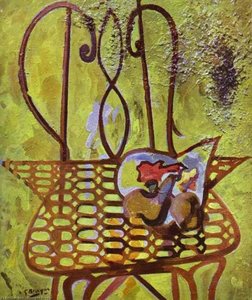
The Eco

Georges Braque je francoski slikar, ki je vodil kubistično revolucijo skupaj z Pablo Picassojem. Znani so po inovativnih slikah, kot sta "Hiše pri L'Estaque" in osupljivih kolažih, ki so spremenile umetnost 20. stoletja.

Kupite digitalno sliko visoke ločljivosti z izboljšano kakovostjo, ki je precej boljša od spletnega predogleda.

Vsaka datoteka je pod natančnim nadzorom naših strokovnjakov, ki uporabljajo napredna orodja in strokovno ročno obdelavo. Zagotovimo, da ima vsaka slika izjemno jasnost, natančnost barv in fine podrobnosti.

Končna datoteka je po e-pošti dostavljena v 72 urah, optimizirana za takojšnjo uporabo v profesionalnem, uredniškem in tiskarskem okolju. To je kakovost, ki ji zaupajo vrhunska oblikovalna studia, založniki in galerije.

Digitalna slika

Prenesite datoteko visoke ločljivosti za osebno uporabo, tiskanje in kreativne projekte.

Skupna cena

$9.99

Vključeno v vsako naročilo digitalne slike

Zagotovljena strokovna digitalna dostava

Ko izberete WahooArt.com, ne prejmete le slike – prejmete digitalno umetniško delo, ki je profesionalno urejeno, izdelano z natančnostostjo in zavestno zagotovljeno z garancijo za zadovoljstvo. Tukaj je vse, kar samodejno prejmete z vašim naročilom:

shipping_icon
Hitra dostava prek e-pošte

Vaša digitalna slika visoke ločljivosti bo na vaš e-naslov poslana v roku 72 ur od zaklopa naročila – pripravljena za takojšnjo uporabo.

canvas_icon
Digitalna datoteka z umetno inteligenco

Vaše umetniško delo je strokovno optimizirano z uporabo naprednih orodij umetne inteligence in ročne obdelave, kar zagotavlja največjo stopnjo podrobnosti, jasnosti in barvne natančnosti.

insurance_icon
Brezplačna ponovna dostava za vse življenje

Ste zaradi nespremietne napake izgubili ali izbrisali svojo datoteko? Ni težav – vam jo bomo ponovno poslali kadar koli in brezplačno.

tax_icon
Brez uvoznih pristojbin – vedno

Uživajte v svojem umetniškem delu takoj, brez carin, davkov ali stroškov dostave – digitalni prenosi so vedno brezdavčni.

color_icon
Zagotovilo natančnosti barv

Z uporabo profesionalnih orodij in upravljanja barv zagotavljamo, da vaša digitalna slika čim bolj natančno odraža prvotne barve.

return_icon
60-dnevna garancija zadovoljstva

Če niste zadovoljni s svojo digitalno sliko, jo bomo uredili ali vam v 60 dneh povrnili 100% denarja – brez kakršnih koli vprašanj.

guarantee_icon
100% Garancija povračila denarja

Niste zadovoljni? Zagovрите popoln povračilo sredstev v 60 dneh po prejemu digitalne datoteke – brez kakršnih koli vprašanj.

discount_icon
Popusti pri večjem številu naročil

Kupite 3 slike, prihranite 10% - Kupite 5 slik, prihranite 15% - Kupite 10+ slik, prihranite 20%. Odlično za kreativne projekte, galerije in agencije.

Ključni podatki

  • Artistic style: Analytical Cubism
  • Influences: Pablo Picasso
  • Location: Private Collection
  • Subject or theme: Still Life
  • Title: The Echo
  • Artist: Georges Braque
  • Year: 1954

Opis digitalnega artefakta

Georges Braque’s “The Echo”: A Fragmented Reflection of Artistic Innovation

“The Echo,” created circa 1954 by Georges Braque, stands as a testament to the enduring legacy of Cubism—a movement that irrevocably altered the course of modern art. This seemingly simple still life, housed in WikiArt’s impressive database (The Echo), transcends mere representation; it embodies Braque's masterful manipulation of form and color to convey a profound sense of contemplation.

Subject Matter & Composition: The painting depicts a meticulously arranged assemblage of objects—primarily flowers and plants, alongside dishware and newspapers—a hallmark of Braque’s stylistic approach. However, it is the central figure – a bird adorned with a hat – that immediately draws the eye. Positioned strategically within the canvas, this avian emblem isn't merely decorative; it acts as a focal point, subtly directing the viewer’s gaze across the fragmented planes of color and texture.

Cubist Technique & Style: Braque’s signature Cubist style is evident in every brushstroke. He employs geometric shapes—cubes, cylinders, and cones—to dissect objects into multiple perspectives simultaneously. Rather than striving for realistic depiction, Braque prioritizes conveying the essence of form itself. The muted palette – dominated by reds and browns – contributes to an atmosphere of subdued intensity, mirroring the quiet contemplation suggested by the composition.

Historical Context & Influence: “The Echo” emerged during Braque’s mature period, following his collaboration with Pablo Picasso on groundbreaking works like “Les Demoiselles d'Avignon.” This partnership solidified Cubism as a dominant force in European art, challenging traditional conventions and paving the way for subsequent artistic explorations. Braque’s meticulous attention to detail—particularly in capturing the textures of petals and paper—demonstrates his unwavering commitment to pushing the boundaries of artistic expression.

Symbolism & Emotional Resonance: The bird with a hat carries symbolic weight, representing aspiration and perhaps even an element of theatricality. Its placement within the composition reinforces the idea that reality is viewed through multiple lenses, prompting viewers to consider alternative interpretations. Ultimately, “The Echo” invites us to engage in a dialogue with art itself—to appreciate its intellectual rigor alongside its emotional depth.


Biografija umetnika

Georges Braque

Georges Braque was born in Argenteuil, Val-d'Oise, France, on May 13, 1882. He grew up in Le Havre and trained to be a house painter and decorator like his father and grandfather. However, he also studied artistic painting during evenings at the École supérieure d’art et design Le Havre-Rouen, previously known as the École supérieure des Arts in Le Havre, from about 1897 to 1899. In Paris, he apprenticed with a decorator and was awarded his certificate in 1902. The next year, he attended the Académie Humbert, also in Paris, and painted there until 1904. It was here that he met Marie Laurencin and Francis Picabia, forging connections that would shape his early development. His initial works reflected the prevailing influences of Impressionism and Post-Impressionism, but a pivotal encounter with the bold colors and expressive freedom of Fauvism in 1905 ignited a new direction in his artistic exploration.

Fauvism

Braque’s adoption of Fauvist principles—characterized by intense, non-naturalistic color and emotional expression—is vividly exemplified in paintings like *The Patience*. This period saw him working alongside artists such as Henri Matisse and André Derain, experimenting with vibrant palettes and simplified forms. However, Braque's engagement with Fauvism was not merely imitative; he infused it with a unique sensibility, tempering the movement’s unrestrained exuberance with a more restrained and analytical approach. He worked most closely with the artists Raoul Dufy and Othon Friesz, who shared Braque's hometown of Le Havre, to develop a somewhat more subdued Fauvist style. In 1906, he traveled with Friesz to L’Estaque, to Antwerp, and home to Le Havre to paint. The Fauves, a group that included Henri Matisse and André Derain among others, used brilliant colors and loose structures of forms to capture the most intense emotional response. Braque showed this in the oil painting “Houses at L'estaque”.

The Dawn of Cubism

A turning point arrived in 1907 with his exposure to the retrospective exhibition of Paul Cézanne's work. Cézanne’s emphasis on geometric forms and multiple perspectives profoundly impacted Braque, setting the stage for his groundbreaking collaboration with Pablo Picasso. Beginning in 1908, these two artistic titans embarked on an intense intellectual exchange that would give birth to Cubism—a revolutionary movement that shattered traditional notions of representation. Together, Braque and Picasso developed Analytical Cubism, dissecting objects into fragmented geometric shapes and presenting multiple viewpoints simultaneously. Works like *Houses at L'Estaque* demonstrate this early phase, showcasing a radical departure from conventional perspective and a focus on the underlying structure of forms. Their palette became deliberately muted, emphasizing form over color, as they sought to represent the totality of an object’s presence rather than merely its appearance.

Collaboration with Picasso

Braque's partnership with Pablo Picasso continued to push the boundaries of artistic expression, leading to the development of Synthetic Cubism around 1912. This phase saw the introduction of collage—the incorporation of real-world materials such as newspaper clippings, wallpaper, and fabric into paintings. This innovation challenged the traditional hierarchy between painting and sculpture, blurring the lines between art and life. Braque’s pioneering use of *papier collé* (pasted paper) marked a significant turning point in his artistic evolution. By integrating fragments of everyday objects into his compositions, he disrupted the illusionistic space of traditional painting and introduced a new level of materiality and texture. This technique not only expanded the formal possibilities of art but also reflected a growing interest in the relationship between representation and reality.

Legacy

Throughout his career, Braque remained committed to exploring the fundamental principles of form, space, and representation. He continued to experiment with different materials and techniques, pushing the boundaries of artistic expression until his death in 1963. His influence on subsequent generations of artists is immeasurable, shaping the course of modern art and inspiring countless painters, sculptors, and collagists. Georges Braque’s legacy extends beyond his individual artworks; he fundamentally altered our understanding of how we perceive and represent the world around us. His collaborative spirit with Picasso, coupled with his own unique artistic vision, cemented his place as a true pioneer of modern art—a master who dared to challenge conventions and redefine the possibilities of painting.

Žorž Braq

Žorž Braq

1882 - 1963 , Francija

Ključne informacije

  • Artistic Movement Or Style: Kubizem
  • Artists Who Influenced This Artist:
    • Henri Matisse
    • André Derain
    • Paul Cézanne
  • Date Of Birth: 13 maj 1882
  • Date Of Death: 31 avgust 1963
  • Full Name: Georges Braque
  • Nationality: Francoz
  • Notable Artworks:
    • Živali na L'Estaque
    • Četrtičje
    • Violino in pipa
  • Place Of Birth: Argenteuil, Francija