BREZPLAČNO POSVETOVANJE O UMETNOSTI

x
Naročite reprodukcijo Naročite reprodukcijoKupi digitalno sliko Kupi digitalno sliko PošljiPošlji
PodrobnostiPodrobnosti Dodaj v priljubljene Dodaj v priljubljene PrenesiPrenesi Podobni izdelkiPodobni izdelki Rentgenski posnetekRentgenski posnetek Predvajaj diaporamaPredvajaj diaporama

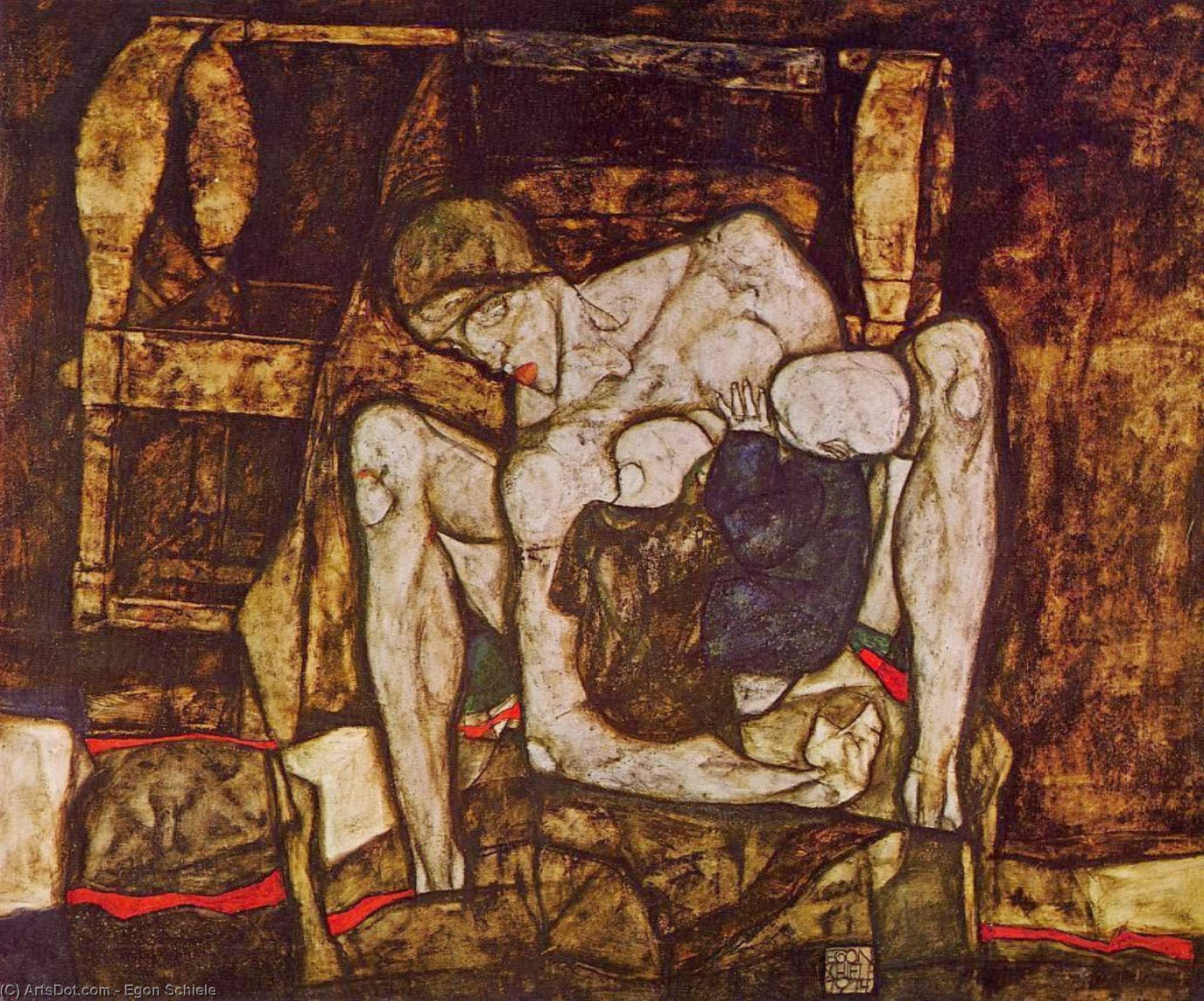
Blind Mother

Raziskujte intenzivne ekspresionistične umetnosti Egon Schieleja (1890-1918): izrazite portrete, psihološke teme in edinstvene črte. Odkrijte reprodukcije že danes!

Giclée tisk / Umetniški tisk

Giclée ali platnati odtis muzejske kakovosti z hitro proizvodnjo in prilagodljivimi možnostmi končne obdelave.

Standard
custom
CM
INCH

Izberite eno od naših vnaprej določenih velikosti, ki ustrezajo prvotnim proporcijam umetničkega dela.

širina
višina

Svoje dimenzije lahko vnesete sami, da bodo ustrezne za določen okvir ali prostor. Če izbrana velikost ne bo skladna z razmerji izvirne slike, bomo umetniško delo orezali ali podaljšali s pomočjo ogledalnega odraza ali barvno polnega roba. Pred začetkom proizvodnje vam bomo poslali digitalni predogled za potrditev.
Upoštevajte, da predogled na zaslonu ne prikazuje dejanskega orezovanja ali podaljševanja. Le digitalni predogled bo natančno prikazal končno kompozicijo.
Čeprav so na voljo prilagojene velikosti, priporočamo izbiro dimenzije s predhodno določenega seznama, da ohranite prvotna razmerja.

Globalna dostava () v 2 tednih namesto standardnih 4/5 tednov. (7 julij)

why_choose_icon
Brezplačna ekspresna dostava po vsem svetu
why_choose_icon
Visokokakovostno laneno platno
why_choose_icon
Popolno zavarovanje pošiljke
why_choose_icon
Garancija povračila carine in uvoznih davkov
why_choose_icon
Garancija popolnega ujemanja barv
why_choose_icon
60-dnevna politika vračanja (le v primeru napak)
why_choose_icon
Garancija 100% povračila denarja
why_choose_icon
Popust pri večjem naročilu

Skupna cena

-

reproduction

Blind Mother

Giclée tisk / Umetniški tisk

Velikost reprodukcije

-

Skupna končna cena

-

Ključni podatki

  • Artist: Egon Schiele
  • Movement: Expressionism
  • Notable elements or techniques: Bold lines, vibrant colors
  • Artistic style: Distorted forms
  • Subject or theme: Motherhood, Vulnerability
  • Influences: Symbolism
  • Year: 1914

Umetniški kviz

Pri vsakem vprašanju je na voljo le eden pravilen odgovor.

Vprašanje 1:
What artistic movement is Egon Schiele’s ‘Blind Mother’ primarily associated with?
Vprašanje 2:
The painting depicts a woman nursing her child. What stylistic characteristic is prominent in Schiele's depiction of the figures?
Vprašanje 3:
What was a significant cultural shift occurring during the early 20th century that influenced Schiele’s artistic approach?
Vprašanje 4:
How does Schiele utilize light in ‘Blind Mother’?
Vprašanje 5:
‘Blind Mother’ exemplifies Expressionist art's focus on conveying what?

Opis zbirateljskega predmeta

A Tender Moment Captured in Expressionist Brilliance: Exploring Egon Schiele’s “Blind Mother”

Egon Schiele's "Blind Mother," painted in 1914, stands as a hauntingly beautiful testament to the anxieties and passions simmering beneath the surface of early 20th-century Vienna. More than just a depiction of maternal care, it’s an emblem of Expressionist art—a movement that prioritized emotional truth over photographic realism—and delves into profound themes of vulnerability, loss, and the inescapable awareness of mortality. The painting immediately draws the eye with its stark simplicity: a woman seated on a chair cradling her child, enveloped in soft light against a backdrop of muted tones. Yet, beneath this apparent tranquility lies an unsettling dynamism conveyed through Schiele’s masterful use of line and color.

Composition and Technique – Distortion as Revelation

Schiele's technique is characterized by bold, angular lines that sculpt the figures with palpable tension. Unlike traditional portraiture which strives for idealized beauty, Schiele deliberately distorts proportions—elongated limbs, flattened faces—creating a visual language that reflects inner turmoil. This distortion isn’t merely stylistic; it serves as a crucial mechanism for conveying psychological states. The chair itself is rendered in detail, grounding the scene but simultaneously emphasizing the woman's confinement and perhaps hinting at an unspoken burden. Notice how Schiele employs a palette dominated by earthy browns and ochres—colors that evoke warmth yet simultaneously convey a sense of solemnity. These hues contribute to the painting’s overall mood, mirroring the quiet desperation inherent in the depicted relationship.

Historical Context: Modernism's Embrace of Emotion

“Blind Mother” emerged during a period of seismic cultural shifts – the dawn of Modernism—as Europe wrestled with secularization and the burgeoning influence of scientific thought. Artists like Schiele rejected academic conventions, rejecting the pursuit of objective representation in favor of subjective experience. Expressionist painters sought to capture not what they *saw*, but what they *felt*. The anxieties surrounding impending war, coupled with a growing awareness of psychological complexities, fueled this artistic impulse. Schiele’s work reflects these concerns directly, mirroring the broader cultural preoccupation with confronting uncomfortable truths about human existence.

Symbolism – Light and Darkness: A Dialogue of Emotion

The soft, diffused light bathing the scene is deliberately paradoxical. It suggests comfort and intimacy—the nurturing warmth of motherhood—yet simultaneously casts shadows that conceal unspoken anxieties. This interplay between light and darkness isn’t accidental; it symbolizes the duality inherent in human experience—the balance between joy and sorrow, hope and despair. The child's gaze, averted from the viewer, adds to this sense of vulnerability and reinforces the painting’s core message: a poignant reminder that even amidst tenderness, there exists an awareness of fragility and impending loss.

Legacy and Relevance Today – Inspiration Beyond Time

“Blind Mother” continues to resonate powerfully with contemporary audiences because it speaks directly to universal themes of love, grief, and the human condition. Its influence can be seen in countless artistic endeavors—from film noir to abstract expressionism—demonstrating Schiele’s enduring ability to capture the essence of emotion with uncompromising honesty. The Imperial War Museum showcases artworks grappling with similar anxieties surrounding conflict and trauma, underscoring the painting's timeless relevance as a meditation on human vulnerability and resilience. A reproduction of “Blind Mother” offers not merely an aesthetic pleasure but also an invitation to contemplate these profound questions—a beautiful reminder that art can illuminate the darkest corners of our inner lives.

Sorodna umetniška dela


Biografija umetnika

Egon Schiele: Austrian Expressionist Painter

Austrian art has since acquired legendary status in interdisciplinary cultural studies. Histories of modern Austrian art generally begin with the architectural boom that swept Vienna in the second half of the nineteenth century. During this period of strong economic growth, the Emperor Franz Josef constructed a necklace of public edifices along the broad Ringstrasse that encircles Vienna’s inner city, prompting artists to flock to the capital from all over to compete for decorative mural commissions. The most renowned painter of the era was Hans Makart, but the young Gustav Klimt also earned his reputation executing commissions on the interior walls of structures such as theaters and museums. The favored style combined a sort of blowsy eroticism with a firm grip on classical and historical allegory. Starting from his masterpiece *The Kiss*, Klimt gradually moved away from the accepted formula, however, evolving a personal symbolism that was less conventionally readable as well as more overtly sexual. This combination proved devastating so far as the tasted of staid Vienna were concerned: Klimt was banished from the ranks of public muralists, and henceforth had to seek support solely from well-heeled private patrons.

Early Life & Influences

Egon Schiele was born in Tulln an der Donau – a picturesque region with vineyards, onion-domed towers and Baroque monasteries. Yet this idyllic setting is hardly reflected in his work.
Instead, many of his landscapes appear melancholic, sometimes sombre. Perhaps he was processing the early death of his father from syphilis and the subsequent loss of his sister Elvira.
Raised initially by his mother and then under the somewhat controlling guardianship of his uncle Leopold Czihaczek, Schiele’s childhood lacked conventional stability but fostered a fiercely independent spirit. Even as a boy, he displayed an intense fascination with trains—a motif that subtly reappeared in later paintings—and a burgeoning talent for drawing, though this was initially met with disapproval from his father who saw it as a distraction from more practical pursuits. The early death of his sister Elvira also cast a long shadow over the young artist’s psyche. These formative experiences instilled within him a sensitivity and an emotional rawness that would become hallmarks of his artistic expression, a constant grappling with themes of life, death, and the human condition.

Vienna Secession & Artistic Breakthrough

Schiele's formal artistic training began at the Kunstgewerbeschule (School of Arts and Crafts) in Vienna, but he quickly found itself stifled by its conservative approach. He transferred to the Akademie der bildenden Künste (Academy of Fine Arts), only to become further disillusioned with its rigid academic traditions. This dissatisfaction led him to abandon formal training altogether, choosing instead to forge his own path, a testament to his unwavering artistic conviction.
The influence of Gustav Klimt was pivotal during these early years; Schiele admired Klimt’s decorative style and exploration of symbolism, even receiving mentorship from the established artist.
He co-founded the Neues Wiener Kunstgruppe (New Viennese Art Group) in 1909, aligning himself with other progressive artists who challenged the prevailing artistic norms. His distinctive style features elongated figures, contorted poses, and expressive lines that convey a sense of unease and emotional intensity.

Style Characteristics & Recurring Themes

Schiele’s art is immediately recognizable for its raw honesty and psychological depth.
He fearlessly confronted themes often considered taboo – sexuality, death, anxiety, isolation – with an unflinching gaze.
His distinctive style features elongated figures, contorted poses, and expressive lines that convey a sense of unease and emotional intensity. The human form, particularly the nude, became his primary subject, not as an object of idealized beauty but as a vessel for exploring the complexities of human experience.
Schiele didn’t shy away from depicting himself in unflattering or vulnerable poses, revealing a profound level of self-awareness and introspection.

Legacy & Recognition

Despite facing censorship and legal challenges – including a brief imprisonment for allegedly corrupting minors with his art – Schiele gained recognition within Vienna’s avant-garde circles.
His work challenged the conventions of the time, provoking both admiration and outrage.
By the time of his untimely death during the Spanish flu pandemic in 1918 at the age of twenty-eight, he had established himself as a leading figure in Austrian Expressionism. Significant works such as *Self-Portrait with Physalis*, *Couple Embracing*, and *Field Landscape (Kreuzberg near Krumau)* stand as testaments to his artistic genius.
His influence on subsequent generations of artists is undeniable, particularly those interested in exploring psychological themes and challenging conventional artistic norms.

Egon Ščile

Egon Ščile

1890 - 1918 , Avstrija

Hitri podatki

  • Artistic Movement Or Style: Expresionismo
  • Artists Who Influenced This Artist: ['Gustav Klimt']
  • Date Of Birth: 12 giugno 1890
  • Date Of Death: 31 octubre 1918
  • Full Name: Egon Schiele
  • Nationality: Austriaco
  • Notable Artworks:
    • Autoritratto con Physalis
    • Giovane coppia
    • Paesaggio campo (Kreuzberg)
  • Place Of Birth: Tulln an der Donau, Austria
Raziščite umetniška dela, razvrščena po temah, slogih in značilnostih.